
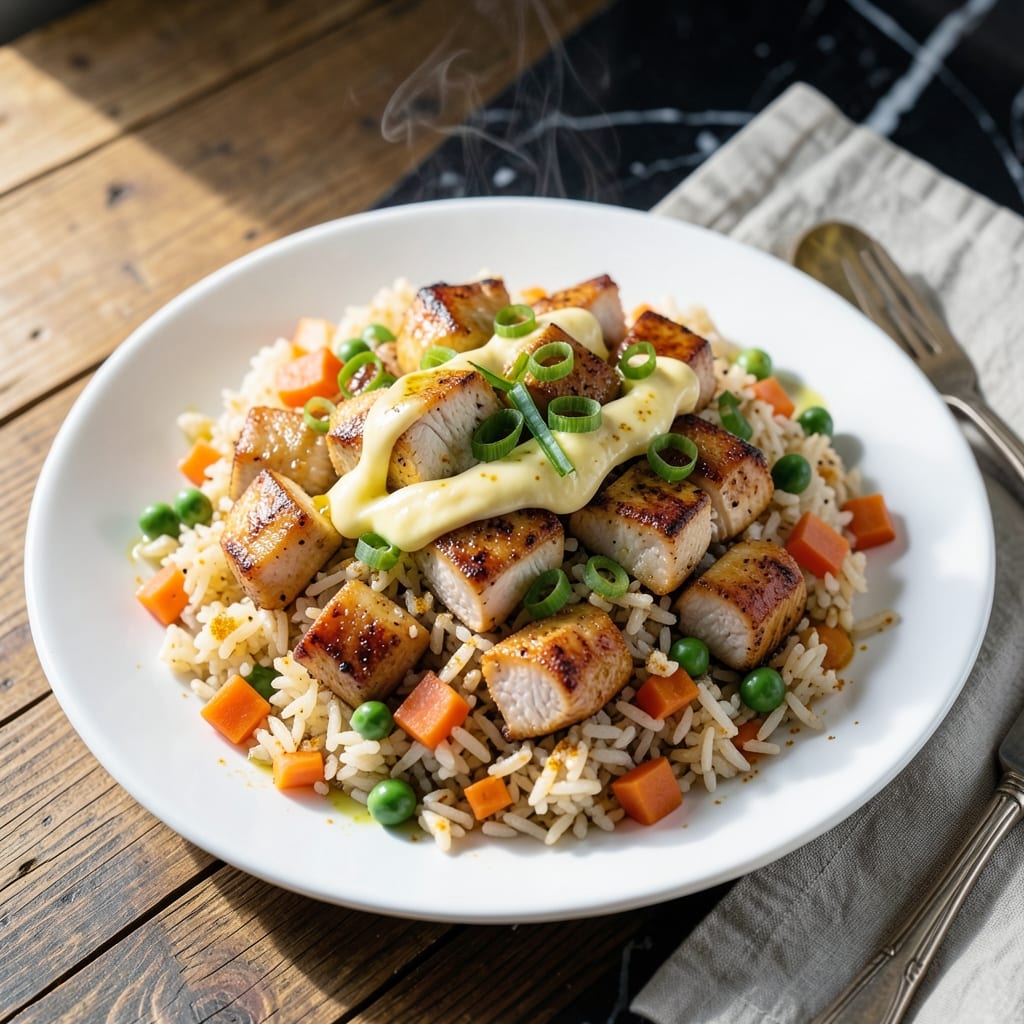
There’s nothing quite like the sizzle of a wok transforming simple ingredients into something extraordinary. This dish brings restaurant-quality flavor to your home kitchen with minimal effort.
I’ve tested this recipe in my modest Boston kitchen, perfecting the balance of soy sauce, fresh vegetables, and tender chicken. The key is high heat and constant motion to achieve that signature wok-tossed texture.
The result is a colorful, aromatic meal with umami depth from the sauce and satisfying crunch from the vegetables. Each bite delivers layers of flavor without overwhelming any single element.
Ready in under 30 minutes, this becomes a weeknight staple that tastes anything but ordinary. The technique is forgiving, making it ideal for home cooks at any skill level.
Ingredients for Chicken Fried Rice Recipe Home Cooking
Transform everyday pantry staples into a vibrant, aromatic wok masterpiece with these essential components.
| Ingredient | Amount | Notes |
|---|---|---|
| Boneless Skinless Chicken Breast 🍗 | 1 ½ lb | Cut into small, even cubes |
| Long-Grain White Rice 🍚 | 3 cups | Day-old, cooked and cooled |
| Large Eggs 🥚 | 3 whole | Lightly beaten for scrambling |
| Carrots 🥕 | 2 whole | Medium, finely diced |
| Green Onions 🧅 | 4 whole | Thinly sliced, whites and greens separated |
| Frozen Peas 🌱 | 1 cup | Thawed under cold water |
| Garlic Cloves 🧄 | 4 cloves | Minced to fine paste |
| Fresh Ginger Root 🌿 | 1 tbsp | Peeled and minced |
| Soy Sauce 🫒 | ⅓ cup | Low-sodium preferred for control |
| Oyster Sauce 🥜 | 2 tbsp | Vegetarian oyster sauce if needed |
| Sesame Oil 🫒 | 2 tsp | Toasted, for finishing aromatics |
| Neutral Oil 🫒 | 3 tbsp | Peanut or vegetable oil, high smoke point |
| Salt 🧂 | ½ tsp | Diamond Crystal kosher preferred |
| White Pepper 🌶️ | ¼ tsp | Freshly ground for authentic flavor |
The chicken must be cut into uniform, bite-sized pieces for even cooking. Whole Foods or Market Basket offer quality boneless, skinless breasts. For the rice, day-old is critical—jasmine or long-grain holds up best to the wok’s heat. Fresh ginger and garlic should be firm and fragrant; avoid any with soft spots or sprouting. The soy sauce selection matters: Kikkoman low-sodium provides consistent umami without overpowering saltiness.
No oyster sauce? Hoisin mixed with a touch of soy provides similar depth. Fresh peas can replace frozen (blanch first), but frozen are more convenient. For a gluten-free version, tamari replaces soy sauce at a 1:1 ratio. The green onions add freshness—scallions or chives work as backups. If avoiding eggs, simply omit or add extra vegetables for texture. The sesame oil is non-negotiable for that signature aroma.
Prep all ingredients before heating the wok—mise en place is essential for high-heat cooking. Leftovers keep 3-4 days refrigerated in airtight containers. Reheat in a skillet with a splash of water to restore moisture. For longer storage, freeze portions for up to 2 months. The dish actually improves overnight as flavors meld.
Why You’ll Love This Recipe
- One Pan Wonder: I love that everything cooks together in one skillet—chicken, rice, eggs, and veggies with barely any cleanup.
- Umami Bomb: The soy sauce and chicken create this deep, savory flavor that makes me crave seconds every time.
- Weeknight Hero: Honestly, it’s my go-to for busy evenings when I need something fast and satisfying.
- Stretches Far: Leftovers taste even better the next day, and it feeds my family for two meals on a budget.
Step-by-Step Instructions for Chicken Fried Rice
Master the wok technique with proper heat control and timing for authentic home-style results.
Step 1: Prepare and Season the Chicken
Cut the 1.5 lb boneless skinless chicken breast into small, even cubes. This uniform size ensures quick, even cooking in the hot wok. Toss the chicken with 0.5 tsp salt and 0.25 tsp white pepper—this pre-seasoning builds flavor from the start.
Let the seasoned chicken rest for 5 minutes while you prep the remaining ingredients. This brief rest allows the salt to penetrate the meat slightly, resulting in more flavorful chicken that stays juicy during the high-heat cooking process.
Step 2: Scramble the Eggs and Aromatics
Heat 1 tbsp neutral oil in your wok over high heat until it shimmers. Pour in the 3 whole large eggs and scramble quickly with a spatula, breaking them into small, soft curds. Remove the eggs to a plate while they’re still slightly moist—they’ll finish cooking later.
In the same wok, add another 1 tbsp neutral oil and swirl to coat. Add the minced 4 cloves garlic cloves and 1 tbsp fresh ginger root, stirring constantly for 20-30 seconds until fragrant but not browned. This creates the aromatic foundation for your dish.
Step 3: Cook the Chicken and Vegetables
Add the remaining 1 tbsp neutral oil to the wok. When it’s smoking hot, add the chicken in a single layer. Let it sear undisturbed for 30 seconds before stirring. Cook for 3-4 minutes until the pieces are opaque and lightly browned.
Push the chicken to one side and add the 2 whole carrots (finely diced) and 1 cup frozen peas to the empty space. Stir-fry for 2 minutes until the carrots begin to soften. Add the whites of the 4 whole green onions and cook for another 30 seconds until fragrant.
Step 4: Combine All Elements with Sauce
Add the 3 cups long-grain white rice to the wok, breaking up any clumps with your spatula. Pour the 0.33 cup soy sauce and 2 tbsp oyster sauce evenly over the rice. Stir-fry for 2-3 minutes, allowing the rice to absorb the sauces and develop a light crust.
Return the scrambled eggs to the wok along with the green onion tops. Drizzle with 2 tsp sesame oil and toss everything together for 1-2 minutes until heated through. The rice should be glossy and lightly browned in spots, with all ingredients evenly distributed.
Step 5: Finish and Serve Immediately
Taste and adjust seasoning if needed, though the sauces should provide balanced flavor. The final dish should have distinct textures: tender chicken, crisp vegetables, and rice with a slight chew. The aroma should be fragrant with garlic, ginger, and toasted sesame notes.
Transfer to a serving platter and garnish with any remaining green onion tops. Serve immediately while hot—the texture changes quickly as it cools. This technique ensures each serving delivers the perfect balance of protein, vegetables, and rice in every bite.
Pro Tips For Making Chicken Fried Rice Recipe Home Cooking
- Use Cold Rice: I learned this the hard way—freshly cooked rice turns to mush in the wok. Spread your cooked rice on a tray and refrigerate it for at least 2 hours, or use day-old leftovers.
- Velvet the Chicken: Toss your diced chicken breast with 1 teaspoon of cornstarch and a splash of soy sauce before cooking. It keeps the pieces impossibly tender, even when stir-fried at high heat.
- Push Eggs Aside: When adding the beaten eggs to the wok, pour them in and let them set for 10 seconds before scrambling. Then push them to one side to finish cooking while you start the chicken—no rubbery bits.
- Char the Veggies: Sounds weird, but it works: let your diced carrots hit the hot oil for 30 seconds before stirring. That little char adds depth that steamed carrots just can’t match.
Regional Styles of This Dish
Chinese Takeout Classic
This version stays true to American-Chinese restaurant style, using day-old jasmine rice for that signature slightly dry texture. I add MSG (½ tsp) for that authentic umami kick—it’s optional but traditional in many takeout kitchens. The key is cooking in small batches to prevent steaming the ingredients. 🌟
Thai Pineapple Twist
Add 1 cup diced fresh pineapple along with the vegetables for sweet-tangy contrast. Use fish sauce (1 tbsp) instead of oyster sauce and add red curry paste (1 tsp) with the garlic. Finish with fresh cilantro and lime wedges—this is my go-to summer variation.
Korean Kimchi Fusion
Swap the peas and carrots for 1 cup chopped kimchi (with juices) and add 1 tbsp gochujang to the sauce. The fermented spice adds incredible depth. Top with fried shallots and a drizzle of sriracha for extra heat. I discovered this version at a Cambridge food truck.
Japanese Yakisoba Style
Use yakisoba noodles (8 oz) instead of rice, and add 1 tbsp Worcestershire sauce to the mix. Include cabbage (1 cup shredded) and bean sprouts (½ cup) for texture. The sauce is lighter here, letting the chicken shine through.
Indian Spiced Version
Add 1 tsp garam masala and ½ tsp turmeric when cooking the chicken. Include diced bell peppers for color and 1 tsp cumin seeds with the garlic. Finish with fresh cilantro and a squeeze of lemon. This reminds me of my Irish-Italian family’s love for bold spices.
Nutrition Facts
Frequently Asked Questions
Can I use fresh rice instead of day-old?
Fresh rice is too moist and will turn mushy. Day-old rice is drier and fries better for that perfect texture. Spread newly cooked rice on a tray to cool and dry for 30 minutes if needed.
What’s the best way to reheat leftovers?
Reheat in a skillet over medium-high heat with a splash of water or oil. Stir frequently to prevent sticking. Microwaving can make it soggy.
Can I substitute other proteins?
Try shrimp, pork, or tofu. Cook proteins separately first, then add back at the end. Adjust cooking times based on the protein.
Why does my fried rice taste bland?
Under-seasoning is the most common issue. Use low-sodium soy sauce and taste as you go. Add a pinch of MSG or extra oyster sauce for depth.

- Jollof Rice Sauce Recipe: West African Tomato and Spice Infusion - September 25, 2026
- Japanese Rice Soup Recipe: Umami-Rich Comfort in a Bowl - September 25, 2026
- Homemade Cream Of Rice Recipe: Silk-Smooth Breakfast in Minutes - September 25, 2026