
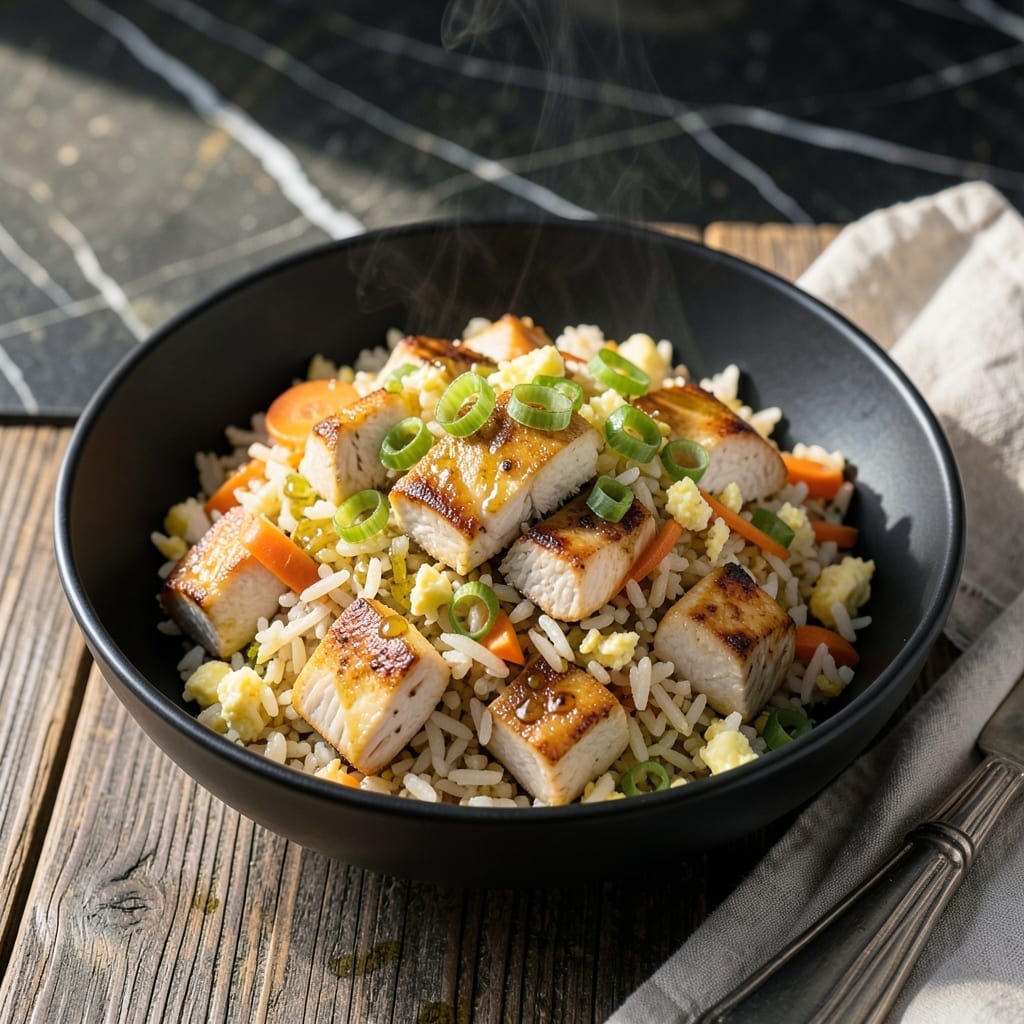
This wok-tossed chicken fried rice delivers restaurant-quality results with minimal effort. The secret lies in using day-old rice and fresh ginger for maximum flavor absorption.
I developed this method to achieve perfectly tender chicken and vegetables with that signature wok hay aroma. The ginger adds a warm, zesty note that elevates every bite.
By cooking everything at high heat and in stages, you ensure each ingredient maintains its texture while blending seamlessly. The result is a dish that’s both comforting and complex.
Serve this as a quick weeknight meal or a satisfying lunch. The technique is simple but the results are anything but ordinary.
Ingredients for Chicken Fried Rice Recipe with Ginger
Restaurant-quality wok-tossed dish starts with cold rice, fresh ginger, and quality proteins.
| Ingredient | Amount | Notes |
|---|---|---|
| Day-Old Cooked White Rice 🍚 | 4 cups | Cold, preferably from fridge |
| Boneless Skinless Chicken Breast 🍗 | 1 lb | Cut into small uniform pieces |
| Fresh Ginger Root 🌿 | 1 ½ tbsp | Peeled and finely grated |
| Garlic Cloves 🧄 | 3 cloves | Minced finely |
| Green Onions 🧅 | 4 whole | Thinly sliced, whites and greens separated |
| Carrots 🥕 | 2 whole | Small dice, about 1/4-inch pieces |
| Frozen Peas 🌱 | 1 cup | No need to thaw |
| Large Eggs 🥚 | 2 whole | Lightly beaten |
| Soy Sauce 💧 | 3 tbsp | Low-sodium preferred |
| Sesame Oil 🫒 | 1 tbsp | Toasted variety for depth |
| Vegetable Oil 🫒 | 2 tbsp | High smoke point, neutral flavor |
| Diamond Crystal Kosher Salt 🧂 | ½ tsp | Adjust to taste |
| Ground White Pepper 🌶️ | ¼ tsp | For authentic wok flavor |
| Granulated Sugar 🍚 | ½ tsp | Balances savory elements |
The rice must be day-old and thoroughly chilled—freshly cooked rice turns to mush in the wok. Jasmine or long-grain white are ideal for that classic texture. For the chicken, thighs can substitute breasts for more juiciness, but keep the pieces uniform for even cooking. Fresh ginger is non-negotiable here; look for firm, smooth roots at your Asian market or grocery produce section.
No fresh ginger? Ground ginger at one-third the amount works in a pinch, though the flavor won’t be as bright. Tamari or coconut aminos can replace soy sauce for gluten-free needs. The peas can be swapped for diced bell peppers or corn. Vegetable oil substitutes include peanut oil (classic for wok cooking) or avocado oil. Skip the sugar if you prefer, but it rounds out the savory notes beautifully.
This keeps 3-4 days refrigerated in airtight containers. Reheat in a skillet with a splash of water to restore moisture. For meal prep, cook the rice and chop veggies ahead—store separately and combine when ready to wok. Freezing isn’t recommended as it softens the texture.
Why You’ll Love This Recipe
- One Pan Meal: I love that everything cooks together in one skillet—no extra dishes, just quick cleanup after.
- Ginger Zing: Honestly, the fresh ginger gives it that warm, spicy kick that makes this fried rice anything but boring.
- Weeknight Hero: Between us, this is my go-to for busy evenings when I need dinner on the table fast.
- Budget Stretcher: I use leftover rice and whatever chicken I have, so it’s as easy on my wallet as it is on my schedule.
Step-by-Step Instructions for Chicken Fried Rice With Ginger
Master the wok technique for perfectly textured fried rice with vibrant aromatic depth.
Step 1: Veloute the Aromatics and Protein
Heat 2 tbsp vegetable oil in a wok or large skillet over high heat until it shimmers. Add the 1 lb boneless skinless chicken breast pieces and stir-fry for 3-4 minutes until they turn opaque and develop light golden edges.
Push the chicken to one side, then add the 1.5 tbsp fresh ginger root and 3 cloves garlic cloves. Stir-fry for 30 seconds until fragrant—the ginger should release its pungent aroma while the garlic turns pale gold without browning.
Remove the chicken and aromatics to a plate, leaving all the rendered oil in the pan. This layering of flavors ensures each bite carries the essence of ginger and garlic.
Step 2: Scramble the Eggs and Prepare Vegetables
In the same hot pan, pour in the 2 whole large eggs and quickly scramble with a spatula. Cook for 45-60 seconds until just set but still slightly runny—they’ll finish cooking when combined with the rice.
Add the 2 whole carrots and 1 cup frozen peas, stir-frying for 2 minutes until the carrots begin to soften slightly and the peas lose their frozen sheen. The carrots should retain a slight bite for texture contrast.
Return the chicken and aromatics to the pan. This sequential cooking prevents overcrowding and ensures even browning.
Step 3: Incorporate Rice and Season
Add the 4 cups day-old cooked white rice, breaking up any clumps with your spatula. The cold rice is crucial—it fries up fluffy rather than mushy. Stir-fry for 3-4 minutes until the grains are separate and heated through.
Drizzle the 3 tbsp soy sauce, 1 tbsp sesame oil, 0.5 tsp Diamond Crystal kosher salt, 0.25 tsp ground white pepper, and 0.5 tsp granulated sugar evenly over the rice. The sesame oil adds depth, while the sugar balances the saltiness.
Toss everything together for 2-3 minutes until the rice is uniformly coated and takes on a light golden hue from the soy sauce.
Step 4: Finish with Green Onions and Final Adjustments
Remove from heat and stir in the 4 whole green onions, reserving some greens for garnish. The residual heat will slightly wilt the whites while keeping the greens vibrant.
Taste and adjust seasoning if needed, though the measured amounts should yield perfect balance. The green onions add a fresh, oniony brightness that cuts through the richness.
Let rest for 2 minutes off heat to allow flavors to meld. Serve immediately, garnished with the remaining green onion greens for a pop of color and freshness.
Pro Tips For Making Chicken Fried Rice Recipe With Ginger
- Crank the Heat: Use the highest heat setting your stove allows—fried rice needs that sizzle to develop the right texture and flavor. I learned this the hard way after too many soggy batches.
- Dry the Rice: Spread day-old rice on a tray and let it sit uncovered for 10 minutes before cooking to remove excess moisture. Sounds weird, but it works: the grains stay separate and crisp up better.
- Prep Ginger Fine: Grate the fresh ginger root instead of mincing—it distributes evenly and infuses every bite with flavor. My grandmother swore by this, and she was right.
- Cook Chicken First: Remove the chicken from the pan once it’s just cooked through, then add it back at the end. This keeps it tender and prevents it from turning rubbery while the rice finishes.
Regional Styles of These Flavors
Chinese Classic Style
This version stays true to Cantonesse roots with finely grated ginger and light soy sauce for delicate flavor. I always use jasmine rice for authentic texture. The key is cooking in batches to avoid steaming the rice.
Thai Inspired Twist
Add 1 stalk lemongrass (bruised) and 2 kaffir lime leaves while cooking the chicken. Finish with fish sauce and fresh cilantro for that distinctive Thai aroma. Remove the lemongrass before serving.
Korean Fusion
Incorporate 1 tbsp gochujang with the soy sauce and add kimchi with the vegetables. The spicy, fermented kick transforms this into Korean-style chicken bokkeumbap. I love the extra depth from the gochujang.
Japanese Yakimeshi
Use short-grain rice for this variation and add 1 tbsp mirin with the soy sauce. Top with nori strips and a drizzle of sriracha for a Japanese-inspired dish. The mirin adds a subtle sweetness.
Indian Spiced Version
Stir in 1 tsp garam masala and ½ tsp turmeric with the ginger and garlic. Finish with fresh cilantro and a squeeze of lime. This creates a fragrant, golden-hued dish that’s packed with warm spices. 🌶️
American Takeout Style
Increase the soy sauce to 4 tbsp and add 1 tsp MSG for that classic takeout flavor. I also toss in bean sprouts for extra crunch. This version always reminds me of my favorite childhood Chinese restaurant.
Nutrition Facts
Frequently Asked Questions
Can I use fresh rice instead of day-old?
No, fresh rice contains too much moisture and will turn mushy. Use cold, day-old jasmine or long-grain rice for the best texture. Spread freshly cooked rice on a tray to cool quickly if needed.
How do I prevent the ginger from overpowering?
Use 1.5 tbsp finely grated ginger as specified. Fresh ginger mellows when cooked, but over-grating can make it bitter. Balance its warmth with the soy sauce and sesame oil in the recipe.
What’s the best oil for high-heat cooking?
Vegetable oil or peanut oil are ideal for their high smoke points. Avoid olive oil, which can burn at wok temperatures. 2 tbsp is perfect for even coating and flavor development.
Can I add other vegetables?
Yes! Try bell peppers, broccoli, or snap peas. Dice uniformly and stir-fry with the carrots. Avoid watery veggies like zucchini, which can make the dish soggy.

- Jollof Rice Sauce Recipe: West African Tomato and Spice Infusion - September 25, 2026
- Japanese Rice Soup Recipe: Umami-Rich Comfort in a Bowl - September 25, 2026
- Homemade Cream Of Rice Recipe: Silk-Smooth Breakfast in Minutes - September 25, 2026