
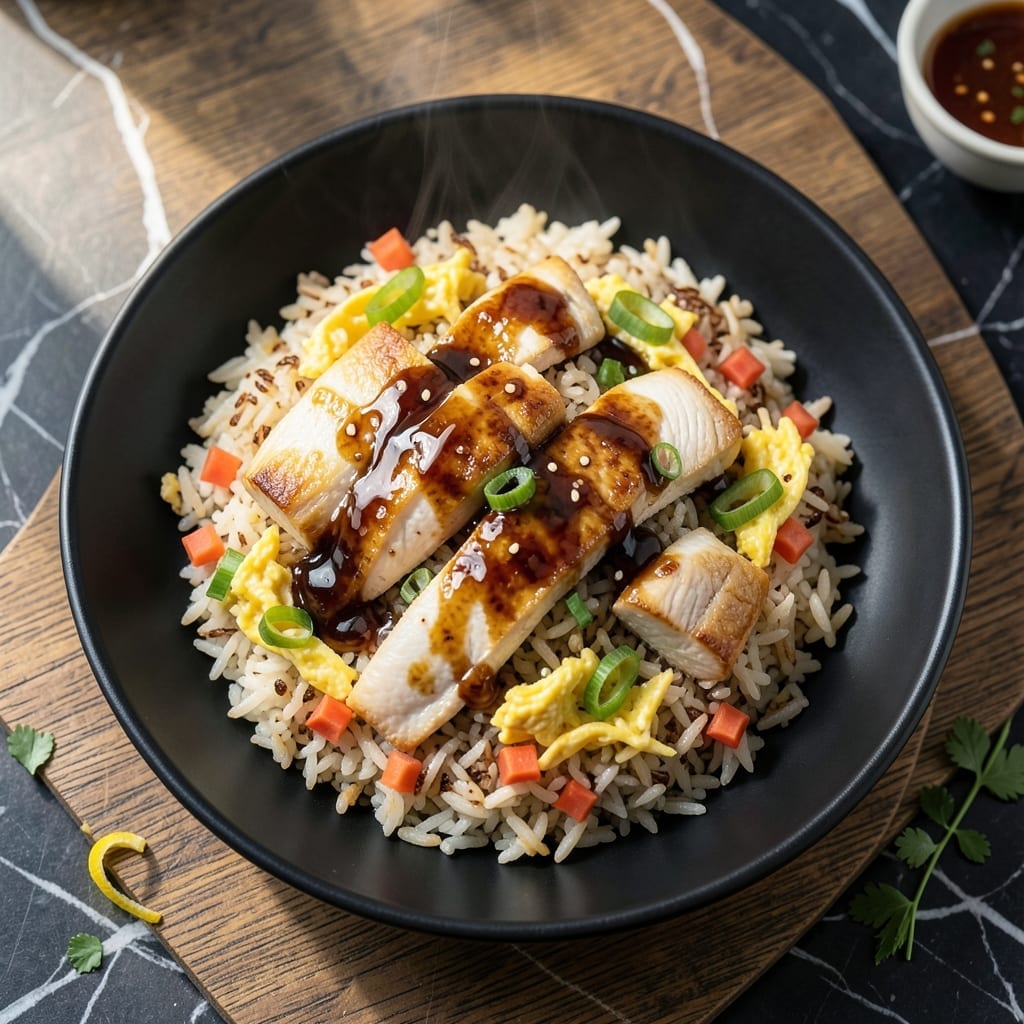
This dish brings authentic wok-tossed flavor to your home kitchen without compromise. I developed this recipe after years of testing to capture the true taste of takeout favorites.
The secret lies in high heat, day-old rice, and quality oyster sauce that creates that signature umami depth. Every grain stays separate while absorbing the rich, savory flavors.
What emerges is perfectly cooked chicken, crisp vegetables, and rice that’s tender yet distinct. The oyster sauce adds its characteristic glossy sheen and complex sweet-salty profile.
Serve this straight from the wok for a meal that tastes like it came from your favorite Chinese restaurant. The technique ensures restaurant-quality results every time.
Ingredients for Chicken Fried Rice Recipe with Oyster Sauce
Authentic Chinese takeout flavor starts with these quality ingredients. Nothing exotic, just right.
| Ingredient | Amount | Notes |
|---|---|---|
| Day-Old Cooked White Rice 🍚 | 4 cups | Cold, preferably overnight chilled |
| Boneless Skinless Chicken Breast 🍗 | 1 lb | Cut into small uniform pieces |
| Large Eggs 🥚 | 2 whole | Lightly beaten for scrambling |
| Oyster Sauce 🫒 | 3 tbsp | High-quality for authentic flavor |
| Soy Sauce 🫒 | 2 tbsp | Regular or light variety |
| Sesame Oil 🫒 | 1 tbsp | Toasted for nutty aroma |
| Garlic Cloves 🧄 | 3 cloves | Minced for maximum flavor |
| Fresh Ginger Root 🌿 | 1 tbsp | Peeled and finely grated |
| Carrot 🥕 | 1 whole | Peeled and diced small |
| Green Onions 🧅 | 3 whole | Thinly sliced, whites and greens separated |
| Frozen Peas 🌱 | ¾ cup | Thawed before cooking |
| Vegetable Oil 🫒 | 3 tbsp | High smoke point for wok frying |
| Kosher Salt 🧂 | ½ tsp | Adjust to taste at end |
| Ground White Pepper 🌶️ | ¼ tsp | Traditional in Chinese cooking |
The rice is non-negotiable—day-old from the fridge (the good stuff, not fresh). High-quality oyster sauce makes all the difference here; I grab Lee Kum Kee or Maekrua brands from the Asian market. The chicken needs to be boneless, skinless breast cut uniformly so it cooks fast and stays tender. For the vegetables, fresh is best but frozen peas work in a pinch (just thaw them first).
No oyster sauce? Hoisin plus a dash of soy gets you 80% there. Swap chicken for shrimp if that’s your preference—just cook it first then add back. Jasmine rice is ideal but any long-grain works. The sesame oil should be toasted (that’s the dark one). Green onions add freshness—don’t skip them. If you’re missing ginger, extra garlic in a pinch (not ideal, but doable).
Leftovers keep 3-4 days in the fridge. Reheat in a wok or skillet with a splash of water to revive the rice. Freezing works for up to 3 months but the texture changes slightly. Best eaten fresh, honestly (that wok-hei doesn’t last).
Why You’ll Love This Recipe
- One Pan Magic: I toss everything in my wok and it’s done in 15 minutes flat—no extra pots, no fuss.
- Umami Bomb: The oyster sauce with soy creates this deep, salty-sweet flavor that hits just right every time.
- Weeknight Hero: Honestly, it’s my go-to after long days when I need dinner fast but still crave something hearty.
- Stretches Far: Leftovers taste even better the next day, and it feeds my family for two meals on a tight budget.
Step-by-Step Instructions for Chicken Fried Rice With Oyster Sauce
Master the wok technique and you’ll achieve that signature smoky flavor authentic to Chinese takeout.
Step 1: Prep and Velvet the Chicken
Cut the boneless skinless chicken breast into ½-inch uniform pieces so they cook evenly. In a bowl, combine the chicken with 1 tablespoon soy sauce, 1 tablespoon oyster sauce, and 1 tablespoon vegetable oil. This velveting step tenderizes the meat and infuses it with flavor.
Let the chicken marinate for 10-15 minutes while you prep the remaining ingredients. The pieces should look glossy and slightly sticky when ready. This ensures the chicken stays juicy and absorbs the sauces deeply during cooking.
Step 2: Scramble Eggs and Aromatics
Heat 1 tablespoon vegetable oil in a wok or large skillet over high heat until shimmering. Pour in the lightly beaten large eggs and scramble quickly with a spatula until just set but still slightly runny—about 30-45 seconds. Remove the eggs and set aside.
In the same hot wok, add 1 tablespoon vegetable oil, then stir in the minced garlic cloves and finely grated fresh ginger root. Sauté for 20-30 seconds until fragrant but not browned. The aroma should be vibrant and sharp, signaling the aromatics are ready for the next ingredients.
Step 3: Cook Chicken and Vegetables
Add the last 1 tablespoon vegetable oil to the wok, then spread the marinated chicken in a single layer. Let it sear undisturbed for 1 minute to develop color, then stir-fry for 2-3 minutes until the pieces are opaque and cooked through.
Push the chicken to one side and add the diced carrot and thawed frozen peas to the empty space. Stir-fry for 2 minutes until the carrots soften slightly but retain a vibrant orange color. The peas should be bright green and warmed through—overcooking will turn them mushy.
Step 4: Combine and Season the Fried Rice
Add the cold day-old cooked white rice to the wok, breaking up any clumps with your spatula. The rice should be dry and separate easily—this prevents steaming. Drizzle the remaining 2 tablespoons oyster sauce and 1 tablespoon soy sauce over the rice, then add the scrambled eggs back in.
Toss everything together vigorously for 2-3 minutes until the rice is evenly coated and heated through. You’ll notice the grains turn a light golden brown as they absorb the sauces. Finish with 1 tablespoon sesame oil, ½ teaspoon kosher salt, and ¼ teaspoon ground white pepper, then fold in the sliced green onions.
Step 5: Finish and Serve Immediately
Give the fried rice a final toss to distribute the green onions, then taste and adjust seasoning if needed. The texture should be slightly crispy in spots with a glossy sheen from the sauces. The rice grains should remain distinct, not mushy.
Transfer to a platter and serve hot, garnished with extra green onion greens. Each bite should deliver a balance of smoky wok hei, savory oyster sauce, and the subtle sweetness of the vegetables. This dish is best enjoyed fresh, right from the wok.
Pro Tips For Making Chicken Fried Rice Recipe With Oyster Sauce
- Break Up the Rice: Use your hands to crumble day-old rice into individual grains before frying—this prevents clumps and guarantees each bite soaks up the oyster sauce evenly.
- Velocity Cooking: Keep the wok or pan screaming hot and work fast once the chicken and eggs hit the surface, or you’ll end up with soggy rice instead of that classic sear.
- Salt the Chicken First: Toss the diced chicken breast with a pinch of soy sauce and cornstarch for 10 minutes before cooking; it stays juicy and browns faster.
- Sauce Last: Drizzle the oyster sauce over the rice only in the final minute of stir-frying—adding it earlier turns the dish limp and steals that glossy finish.
Storing and Reheating This chicken fried rice recipe with oyster sauce
Refrigerator Storage
Let your fried rice cool for no more than 2 hours before transferring to airtight containers. I use glass containers with snap-on lids to keep the rice from absorbing fridge odors. It stays fresh at 40°F or below for up to 4 days. The flavors actually deepen overnight as the sauces meld. ❄️
Freezer Storage
For longer storage, freeze in flat freezer bags for up to 3 months. Squeeze out excess air to prevent freezer burn and leave 1 inch of headspace for expansion. I recommend portioning into meal-sized servings for easy thawing.
Stovetop Reheating
My preferred method: heat in a wok or skillet over medium-high heat with a splash of water or 1 tablespoon vegetable oil. Stir-fry for 3-4 minutes until heated through. This revives the texture better than any other method. 🔥
Microwave Reheating
For quick meals, microwave covered with a damp paper towel on 70% power for 2-3 minutes. Stir halfway through and add a splash of water if it looks dry. The rice won’t be as crispy but will still taste delicious.
Reviving Leftovers
If your fried rice seems dry after storage, sprinkle 1-2 teaspoons water or chicken broth over it before reheating. Toss in a few drops of sesame oil at the end to restore that signature aroma and glossy sheen.
Nutrition Facts
Frequently Asked Questions
Can I use fresh rice instead of day-old?
No, fresh rice contains too much moisture and will turn mushy when stir-fried. Day-old rice is drier and holds its shape better, giving you that perfect texture. Spread freshly cooked rice on a tray and refrigerate uncovered for 1 hour if you’re in a pinch.
What can I substitute for oyster sauce?
Mix 2 tablespoons hoisin sauce with 1 teaspoon soy sauce for a similar sweet-salty flavor. Vegan oyster sauce or fish sauce also work in equal amounts. Avoid skipping it entirely—the sauce adds the signature depth.
How do I prevent my fried rice from being soggy?
Use high heat and cook in small batches to avoid steaming. Keep ingredients moving constantly with a spatula, and ensure your wok or pan is very hot before adding anything. Overcrowding is the most common cause of soggy results.
Can I add other vegetables?
Try bell peppers, broccoli, or mushrooms. Cut them into small, uniform pieces so they cook quickly at high heat. Add harder veggies first, then softer ones like peas or bean sprouts at the end.

- Jollof Rice Sauce Recipe: West African Tomato and Spice Infusion - September 25, 2026
- Japanese Rice Soup Recipe: Umami-Rich Comfort in a Bowl - September 25, 2026
- Homemade Cream Of Rice Recipe: Silk-Smooth Breakfast in Minutes - September 25, 2026