
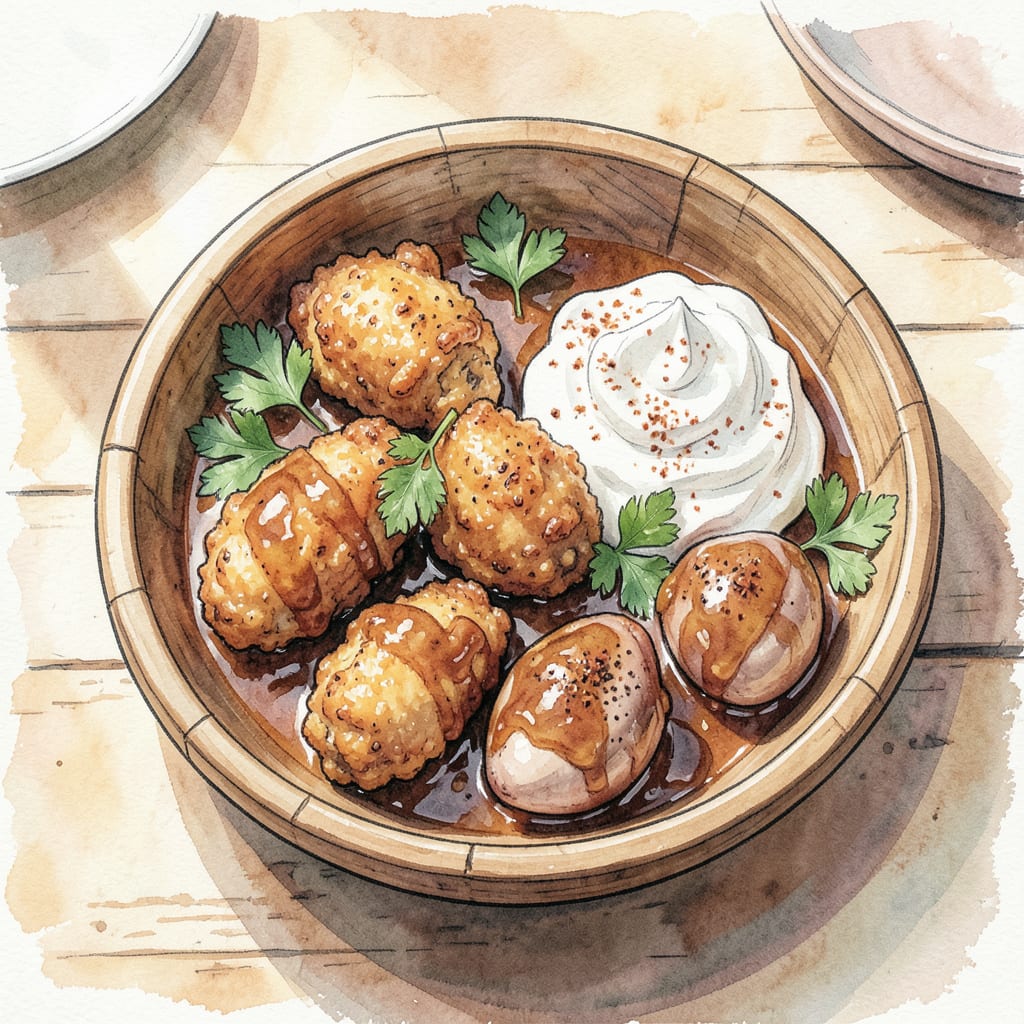
I’ve perfected a recipe for crispy fried chicken gizzards and hearts that delivers restaurant-quality results at home. The secret lies in proper preparation and a foolproof frying technique that ensures crispy exteriors and tender interiors.
This main course recipe serves perfectly with classic Southern sides like mashed potatoes, collard greens, or cornbread. Cooking at 375°F for the right amount of time is crucial for achieving that perfect crispiness while maintaining food safety.
Ingredients for Chicken Gizzards and Hearts
Restaurant-quality crispy fried chicken gizzards and hearts start with these simple ingredients.
| Ingredient | Amount | Notes |
|---|---|---|
| Chicken Gizzards 🍗 | 1 lb | Cleaned, trimmed |
| Chicken Hearts ❤️ | ½ lb | Cleaned, trimmed |
| All-Purpose Flour 🌾 | 1 ½ cups | For dredging |
| Paprika 🌶️ | 1 tbsp | Smoked or sweet |
| Garlic Powder 🧄 | 1 tsp | Not garlic salt |
| Onion Powder 🧅 | 1 tsp | Fresh ground preferred |
| Cayenne Pepper 🔥 | ½ tsp | Adjust for heat |
| Salt 🧂 | 1 tsp | Kosher or sea salt |
| Black Pepper 🌶️ | ½ tsp | Freshly ground |
| Buttermilk 🥛 | 2 cups | For marinating |
| Vegetable Oil 🫒 | 2 cups | For frying |
| Hot Sauce 🌶️ | 2 tbsp | Optional, for marinade |
For the crispiest results, use fresh, never frozen gizzards and hearts. Most butcher counters or specialty poultry stores have them. If you’re buying from a supermarket, make sure they’re properly cleaned and trimmed. I always grab mine from Whole Foods or local butchers when possible.
No buttermilk? Make a substitute with 1 cup milk plus 1 tbsp white vinegar—let it sit 5 minutes. For extra heat, increase the cayenne to 1 tsp or add some red pepper flakes. The smoked paprika adds depth, but regular paprika works too. If you can’t find chicken hearts, you can use all gizzards—the cooking time will be slightly longer.
Fry at 375°F for the perfect crisp. Don’t overcrowd the pot—fry in batches if needed. Leftovers keep in the fridge for 3-4 days. Reheat in the oven to maintain crispiness.
Step-by-Step Instructions for Crispy Fried Chicken Gizzards and Hearts
Mastering this Southern favorite requires attention to detail and precise technique.
Step 1: Prepare the Marinade and Soak the Offal
In a large bowl, whisk together the 2 cups of buttermilk and 2 tbsp of hot sauce until well combined. Add the cleaned and trimmed 1 lb of chicken gizzards and 0.5 lb of chicken hearts to the marinade, ensuring they’re fully submerged. Cover the bowl with plastic wrap and refrigerate for at least 2 hours or overnight for maximum tenderness.
The acidity in the buttermilk will break down the tough connective tissues in the offal, resulting in a tender final product. If you’re short on time, a minimum of 30 minutes will still yield acceptable results, though the texture won’t be as tender.
Step 2: Create the Seasoned Flour Mixture
In a separate large bowl, combine the 1.5 cups of all-purpose flour, 1 tbsp of paprika, 1 tsp of garlic powder, 1 tsp of onion powder, 0.5 tsp of cayenne pepper, 1 tsp of salt, and 0.5 tsp of black pepper. Whisk the mixture thoroughly to ensure even distribution of the spices.
The combination of spices in this dredge provides a balanced flavor profile that complements the rich taste of the offal. For a spicier coating, you can increase the amount of cayenne pepper to taste.
Step 3: Dredge and Fry the Gizzards and Hearts
Heat the 2 cups of vegetable oil in a large, heavy-bottomed pot or deep fryer to 350°F. While the oil is heating, remove the gizzards and hearts from the marinade, allowing any excess to drip off. Dredge the pieces in the seasoned flour mixture, pressing the coating onto the meat to ensure it adheres well.
Carefully add the coated gizzards and hearts to the hot oil in batches, being careful not to overcrowd the pot. Fry for 5-7 minutes or until the coating is golden brown and the internal temperature reaches 165°F. Use a slotted spoon to transfer the fried pieces to a paper towel-lined plate to drain excess oil.
Step 4: Serve the Crispy Fried Delight
Once all the gizzards and hearts are fried, serve them hot. For the best experience, serve immediately while the coating is still crispy. You can keep the fried pieces warm in a 200°F oven for up to 30 minutes if needed, though they’re best consumed fresh.
The result should be a crispy, flavorful exterior giving way to tender, juicy meat inside. The combination of the buttermilk marinade and the seasoned flour coating creates a delicious contrast of textures that makes this dish a true Southern classic.
Regional Styles of chicken gizzards and hearts
Southern Fried Tradition
The Southern United States has a rich history of cooking chicken gizzards and hearts, often serving them as part of a traditional Friday night supper. This dish is deeply rooted in Southern cuisine, where every part of the chicken was used to minimize waste. The combination of gizzards and hearts provides a unique texture and flavor profile that’s both hearty and comforting. 🌶️
Lowcountry Variations
In the Lowcountry region of South Carolina and Georgia, you’ll often find gizzards and hearts prepared with a Cajun and Creole influence. This version typically includes additional spices like cayenne pepper and hot sauce in the marinade, giving the dish an extra kick. The use of smoked paprika adds a distinct Lowcountry flavor that’s both smoky and savory.
Memphis Style
Memphis cooks often add their own twist by using a dry rub before dredging in flour. This Memphis-style variation typically includes a blend of chili powder, garlic powder, and onion powder, creating a bold flavor profile. The dry rub helps form a crust that adds texture to the crispy fried exterior.
Texas Influence
In Texas, you might find gizzards and hearts prepared with a barbecue-inspired twist. Some cooks marinate them in a mixture containing chili powder and lime juice before frying, giving the dish a tangy, Southwestern flavor. This variation pairs well with barbecue sauce on the side for dipping.
Modern Twists
Modern chefs are putting their own spin on traditional fried gizzards and hearts by using different seasonings and cooking techniques. Some variations include using cornstarch instead of flour for an extra crispy coating or adding herbs like thyme or rosemary to the marinade for a fresh flavor. These modern twists keep the dish exciting while maintaining its Southern roots. 🔥
Regional Serving Suggestions
No matter the regional variation, fried gizzards and hearts are typically served with classic Southern sides. Common accompaniments include mashed potatoes, collard greens, or cornbread. For a complete meal, consider serving with a side of coleslaw or hush puppies to round out the Southern comfort food experience.
Nutrition Facts
Frequently Asked Questions
How long should I marinate chicken gizzards and hearts?
For best results, marinate for at least 2 hours or overnight. The acidity in the buttermilk helps tenderize the meat. If you’re short on time, a minimum of 30 minutes will still work, though the texture won’t be as tender.
What’s the best oil for frying gizzards and hearts?
Use a neutral oil with a high smoke point, such as vegetable oil or peanut oil. Heat the oil to 375°F for the perfect crisp. Avoid olive oil as it has a lower smoke point and can burn easily.
How do I ensure food safety when cooking gizzards and hearts?
Cook the gizzards and hearts to an internal temperature of 165°F. Use a meat thermometer to check for doneness. Always handle raw poultry safely and wash your hands thoroughly after handling.
Can I make this recipe without buttermilk?
Yes, you can make a substitute by mixing 1 cup of milk with 1 tablespoon of white vinegar or lemon juice. Let it sit for 5 minutes before using. This mixture will provide a similar acidity to buttermilk.

- Jollof Rice Sauce Recipe: West African Tomato and Spice Infusion - September 25, 2026
- Japanese Rice Soup Recipe: Umami-Rich Comfort in a Bowl - September 25, 2026
- Homemade Cream Of Rice Recipe: Silk-Smooth Breakfast in Minutes - September 25, 2026