
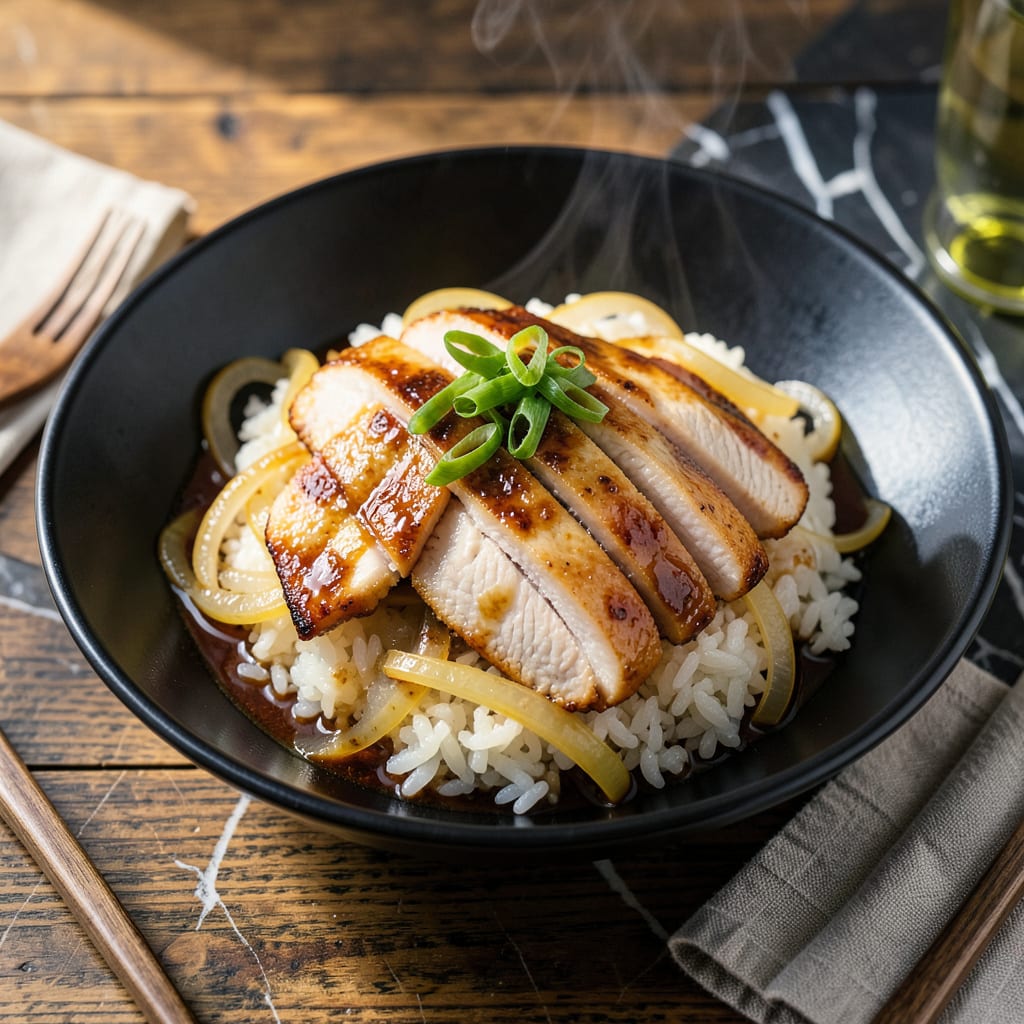
This Japanese comfort bowl delivers sweet and savory flavors in a one-pot meal that’s ready in 20 minutes. Tender chicken and soft onions simmer in a dashi-based sauce for a dish that’s both hearty and simple.
Perfect for busy weeknights, this recipe stays true to tradition while keeping prep effortless. The sauce soaks into the rice, creating a creamy, flavorful base that’s pure comfort in every bite.
Ingredients for Chicken Gyudon Recipe Easy
Thinly sliced chicken, sweet onions, and a dashi-based sauce create this comforting one-pot meal with ease.
| Ingredient | Amount | Notes |
|---|---|---|
| Boneless Skinless Chicken Thighs 🍗 | 1 ½ lb | Thinly sliced for quick cooking |
| Yellow Onion 🧅 | 1 whole | Thinly sliced, about 2 cups |
| Dashi Stock 🍲 | 2 cups | Japanese-style, or substitute chicken broth |
| Soy Sauce 🫙 | 3 tbsp | Low-sodium preferred for balance |
| Mirin 🍶 | 2 tbsp | Sweet rice wine, essential for flavor |
| Sake 🍶 | 2 tbsp | Dry Japanese rice wine |
| Granulated Sugar 🍚 | 1 tbsp | Balances savory elements |
| Japanese Short-Grain Rice 🍚 | 2 cups | Uncooked, rinsed before use |
| Large Eggs 🥚 | 4 whole | Optional garnish, softly poached |
| Green Onions 🌱 | ¼ cup | Thinly sliced for garnish |
| Pickled Ginger 🌿 | 2 tbsp | For serving, optional but recommended |
| Toasted Sesame Seeds 🌰 | 1 tsp | Garnish for texture and aroma |
| Vegetable Oil 🛢️ | 1 tbsp | Neutral flavor, for cooking chicken |
[recipeingredientscaler]
The chicken thighs are non-negotiable here—boneless, skinless for both texture and speed. Costco or Whole Foods have excellent pre-packaged options, but any grocery store brand works if fresh. Dashi stock is traditional, but good chicken broth (low-sodium) gets you 90% there. For mirin and sake, look in the Asian aisle or H Mart for authentic quality. The short-grain rice is key—Koshihikari or Nishiki are top picks.
No mirin? Mix 1 tbsp sugar + 1 tbsp water + 1 tbsp rice vinegar. Out of sake? Dry white wine works, or skip it and add a splash more broth. Tamari can replace soy sauce in a pinch (gluten-free bonus). The sugar balances the saltiness—don’t omit it. For a vegetarian twist, swap chicken for thinly sliced shiitake mushrooms. The eggs on top? Totally optional but highly recommended (trust me on this).
Leftovers keep 4-5 days in the fridge—actually taste better the next day. Freeze the base sauce (without rice) for up to 3 months. Reheat gently with a splash of water to revive the consistency. Always cook rice fresh though. That’s it.
Why You’ll Love This Recipe
- One Pot Meal: I just toss the chicken, onions, and the dashi-soy-mirin mix into a pan—no extra bowls, no fuss.
- Umami Bomb: The mirin caramelizes with the soy sauce, and the dashi gives that deep, savory punch I crave.
- Lunchbox Hero: Honestly, it reheats so well I pack leftovers for work and my coworkers always ask for the recipe.
- Budget Keeper: Boneless thighs stay cheap, and a little soy-mirin goes a long way—feeds four for under ten bucks.
Step-by-Step Instructions for Chicken Gyudon
This method delivers tender chicken and perfectly seasoned broth with minimal effort.
Step 1: Prepare the Chicken and Onions
Thinly slice the 1.5 lb boneless skinless chicken thighs into bite-sized pieces, about ¼-inch thick. This ensures quick, even cooking without toughness. Halve and thinly slice the 1 whole yellow onion—consistent slices cook uniformly and sweeten beautifully in the broth.
I prefer slicing against the grain for the chicken, which shortens muscle fibers and guarantees tenderness. Keep the pieces similar in size so they cook at the same rate. Set both the chicken and onions aside in separate bowls for easy access during cooking.
Step 2: Cook the Rice
Rinse the 2 cups Japanese short-grain rice in a fine-mesh strainer until the water runs clear. This removes excess starch and prevents gummy rice. Add the rinsed rice to your rice cooker or pot with the appropriate amount of water (typically a 1:1.1 ratio for short-grain).
Cook the rice according to your device’s instructions. While it cooks, you’ll prepare the gyudon. The rice should finish just as the chicken and onions are ready, creating a seamless workflow. The grains should be tender, slightly sticky, and glossy when done.
Step 3: Simmer the Chicken and Broth
Heat the 1 tbsp vegetable oil in a large skillet or shallow pot over medium-high heat. Add the sliced onions and cook for 3-4 minutes until they begin to soften and turn translucent. This builds a sweet foundation for the dish.
Add the sliced chicken and cook for 2-3 minutes until the pieces are no longer pink on the outside. Pour in the 2 cups dashi stock, 3 tbsp soy sauce, 2 tbsp mirin, 2 tbsp sake, and 1 tbsp granulated sugar. Stir to combine and bring to a gentle simmer.
Reduce the heat to medium-low and let it cook uncovered for 8-10 minutes, stirring occasionally, until the chicken is fully cooked and the broth has reduced slightly. The liquid should coat the back of a spoon but remain thin enough to soak into the rice.
Step 4: Assemble and Garnish
Divide the cooked rice among four serving bowls. Ladle the hot chicken and broth mixture over the rice, ensuring each portion gets plenty of onions and sauce. The rice will absorb some of the liquid, so work quickly to preserve the ideal texture.
If using, softly poach the 4 whole large eggs and place one on top of each bowl. Garnish with the 0.25 cup green onions, 2 tbsp pickled ginger, and 1 tsp toasted sesame seeds. The contrast of the runny yolk, tangy ginger, and nutty sesame seeds elevates every bite.
Pro Tips For Making Chicken Gyudon Recipe Easy
- Slice Thin, Cook Fast: Cut the chicken thighs into 1/4-inch slices—thin enough to cook through in 3-4 minutes. I learned this the hard way after chewing through rubbery chunks my first few attempts.
- Bloom the Onions: Cook the onions for 4-5 minutes until soft and translucent before adding liquids. Sounds tedious, but it actually changes the outcome by sweetening the base.
- Skip the Boil: Simmer the dashi gently, never boil it, or the flavor turns harsh. My grandmother swore by this, and she was right.
- Double the Mirin: Use a 1:1 ratio of mirin to soy sauce instead of the usual 1:2—it balances the saltiness and adds a subtle sweetness that makes a real difference.
Dietary Considerations for This chicken gyudon recipe easy
Gluten-Free Option
Swap the soy sauce for tamari—it’s naturally gluten-free and delivers the same umami depth. Always check labels, as some tamari brands may still contain wheat. I use San-J Tamari for its rich flavor and reliable quality.
Lower Sodium
Use low-sodium soy sauce and reduce the amount to 2 tbsp. Balance the flavor with an extra 1 tsp mirin or a pinch of monosodium glutamate (MSG) if you have it. The dashi and natural sweetness from the onions will still keep the dish flavorful. 💡
Dairy-Free and Egg-Free
This dish is naturally dairy-free, but skip the optional poached eggs if avoiding eggs entirely. The pickled ginger and green onions add plenty of freshness without any dairy or egg ingredients. It remains just as comforting and satisfying.
Lower Sugar
Replace the 1 tbsp granulated sugar with 1 tsp erythritol or monk fruit sweetener. Alternatively, add 1 extra tbsp mirin, which contains natural sugars but less concentrated sweetness. The onions will caramelize slightly, adding natural sweetness.
Keto Adaptation
Serve the chicken and broth mixture over cauliflower rice instead of short-grain rice. Use 1.5 cups riced cauliflower per serving. The sauce soaks in beautifully, and the dish stays low-carb while keeping all its cozy, savory appeal. 🔥
Vegetarian Version
Replace the chicken with 1.5 lb thinly sliced shiitake mushrooms. Cook them until tender and golden in the same broth. The mushrooms absorb the flavors wonderfully, and the texture mimics the chicken’s bite. Serve with the same garnishes for a hearty meat-free meal.
Nutrition Facts
Frequently Asked Questions
Can I use chicken breast instead of thighs?
You can, but it won’t be as tender. Chicken breast dries out faster, so reduce cooking time to 5-6 minutes in the broth. Thighs stay juicier and are more forgiving.
What if I don’t have dashi stock?
Substitute with 2 cups low-sodium chicken broth plus 1 tsp fish sauce for umami. The flavor will be slightly different but still delicious.
How do I know when the chicken is done?
It’s ready when it reaches 165°F internally. Visual cues: no pink inside and juices run clear. Overcooking makes it tough, so check at 8 minutes.
Can I make this ahead of time?
Yes! Cook the base and refrigerate for up to 3 days. Reheat gently with a splash of water. Cook rice fresh to avoid mushiness.

- Jollof Rice Sauce Recipe: West African Tomato and Spice Infusion - September 25, 2026
- Japanese Rice Soup Recipe: Umami-Rich Comfort in a Bowl - September 25, 2026
- Homemade Cream Of Rice Recipe: Silk-Smooth Breakfast in Minutes - September 25, 2026