
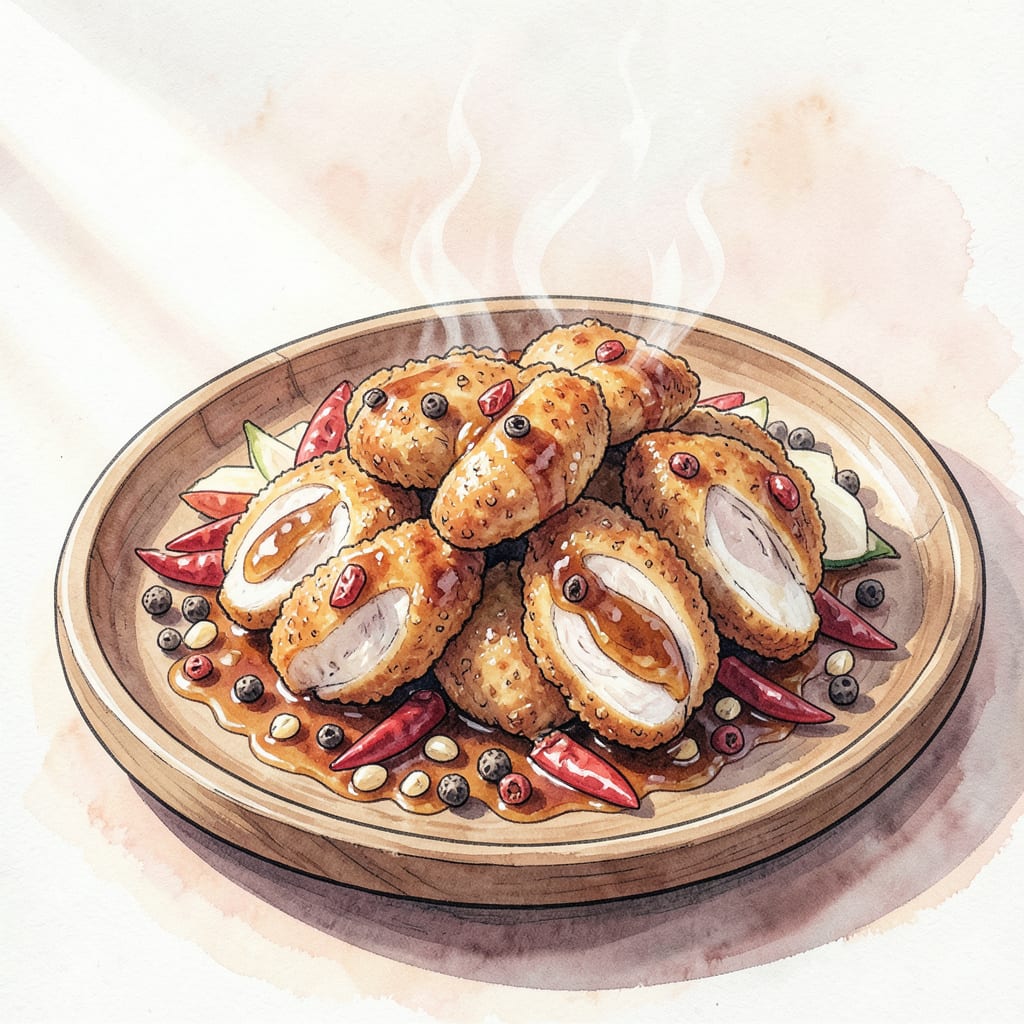
I’ve perfected a traditional Chinese chicken heart recipe that brings authentic Szechuan flavors to your table. This dish features tender chicken hearts marinated in a blend of soy sauce, Szechuan peppercorns, and chili peppers, then stir-fried to perfection.
Cooking at high heat for just 5 minutes yields crispy exteriors and tender interiors. Serve with steamed rice or noodles to complete this perfect Szechuan-inspired meal that’s sure to impress.
Ingredients for Chicken Heart Recipe Chinese
Tender chicken hearts meet bold Szechuan flavors in this quick, impressive dish.
| Ingredient | Amount | Notes |
|---|---|---|
| Chicken Hearts 🍗 | 1 lb | Rinsed, trimmed of excess fat |
| Soy Sauce 🧂 | ¼ cup | Use low-sodium variety |
| Szechuan Peppercorns 🌶️ | 2 tbsp | Toasted and ground |
| Chili Peppers 🌶️ | 4 whole | Sliced, seeds removed |
| Garlic Cloves 🧄 | 4 cloves | Minced |
| Ginger 🫚 | 2 tbsp | Fresh, grated |
| Scallions 🌿 | ½ cup | Chopped, for garnish |
| Vegetable Oil 🫒 | 2 tbsp | For stir-frying |
| Shaoxing Wine 🍸 | 2 tbsp | Or dry sherry |
| Sugar 🍮 | 1 tsp | Granulated |
| Salt 🧂 | ½ tsp | Kosher salt preferred |
| Black Pepper 🌶️ | ¼ tsp | Freshly ground |
For authentic Szechuan flavor, Szechuan peppercorns are essential—toast them in a dry pan until fragrant. Most Asian markets carry them, or check Whole Foods. The chili peppers should be moderately spicy; Szechuan hot peppers or Thai chilies work well. If you can’t find fresh chilies, dried red chili flakes are a decent substitute at half the amount.
No Shaoxing wine? Dry sherry or Japanese sake make good substitutes. For the soy sauce, low-sodium is best since we’re adding salt separately. If you prefer less heat, remove the seeds from the chilies. The ginger can be adjusted to taste—some like it strong, some more subtle. Fresh is key here, so don’t skip it.
Marinated chicken hearts keep for 1 day in the fridge. Cooked, they reheat beautifully in a hot wok or skillet. Store leftovers in an airtight container for up to 3 days. Freezing isn’t recommended as the texture changes. Serve with steamed rice or noodles to soak up that delicious sauce.
Step-by-Step Instructions for Szechuan Spice Perfection
Let’s bring this dish to life with simple, effective steps that deliver perfect results.
Step 1: Prepare the Chicken Hearts
Start by rinsing the 1 lb Chicken Hearts under cold water, then pat them completely dry with paper towels. This step is crucial as it removes excess moisture, allowing the hearts to sear properly later. I like to take my time with this—making sure they’re dry ensures they’ll brown beautifully instead of steaming in the pan.
Once dry, season the chicken hearts with the 0.5 tsp Salt and 0.25 tsp Black Pepper. I find that seasoning them before cooking helps the flavors penetrate deeper into the meat. Make sure to toss them gently to coat evenly.
Step 2: Toast and Grind the Szechuan Peppercorns
Heat a small dry pan over medium heat and add the 2 tbsp Szechuan Peppercorns. Toast them for 2-3 minutes, stirring frequently, until they become fragrant and start to darken slightly. Be careful not to burn them—the moment they start smoking, they’ve gone too far.
Once toasted, let the peppercorns cool, then grind them in a spice grinder until you get a coarse powder. I prefer my Szechuan pepper to have a bit of texture, so I don’t grind it too fine. This step releases their unique aroma and flavor, which is essential for an authentic Szechuan dish.
Step 3: Stir-Fry the Chicken Hearts
Heat 1 tablespoon Vegetable Oil in a large skillet or wok over high heat until it shimmers. Add the chicken hearts in a single layer and sear for 3-4 minutes on each side until they’re brown and crispy. Don’t overcrowd the pan—cook them in batches if necessary. I find that a hot pan is key to getting that perfect sear.
Once browned, remove the chicken hearts from the pan and set them aside. They’ll finish cooking later, so don’t worry if they’re not fully done at this stage.
Step 4: Build the Szechuan Sauce
In the same pan, add the remaining 1 tablespoon Vegetable Oil if necessary. Add the 4 cloves minced Garlic Cloves and 2 tbsp grated Ginger, and stir-fry for 30 seconds until fragrant. Be careful not to burn the garlic—it can go from perfect to burnt in seconds.
Next, add the 4 whole Chili Peppers (sliced, with seeds removed) and continue to stir-fry for another minute. Then, pour in the 0.25 cup Soy Sauce, 2 tbsp Shaoxing Wine, and 1 tsp Sugar. Stir everything together, scraping up any browned bits from the bottom of the pan. Bring the mixture to a simmer and let it cook for 2-3 minutes until it slightly thickens.
Step 5: Finish and Serve
Return the chicken hearts to the pan and toss them in the Szechuan sauce until they’re well coated. Let them simmer together for 1-2 minutes to absorb all the flavors. I like to taste and adjust the seasoning at this point—adding more soy sauce or Szechuan peppercorns if needed.
Finally, garnish with the 0.5 cup chopped Scallions and serve immediately. The dish should be aromatic, with a balance of spicy, savory, and numbing flavors from the Szechuan peppercorns. Enjoy your perfectly cooked Szechuan chicken hearts!
Wine and Beer Pairings for These Flavors
Wine Pairing Essentials
For this Szechuan chicken heart dish, you’ll want a beverage that can stand up to its bold, spicy flavors. I recommend a dry Riesling or Gewürztraminer to complement the heat and complexity. These white wines have enough acidity to cut through the richness of the dish. 🍷
Beer Pairing Options
If you prefer beer, a crisp Tsingtao or other Chinese lager works beautifully. The light, clean flavor won’t overpower the dish while refreshing your palate between bites. For craft beer enthusiasts, a Belgian-style witbier with its citrus and coriander notes can provide an interesting contrast to the Szechuan spices. The beer’s subtle complexity enhances the overall flavor experience. 🍺
Spicy Food Considerations
The chili peppers and Szechuan peppercorns in this dish create a numbing and spicy experience. When choosing a beverage, look for something with high acidity to help tame the heat. Avoid heavy, oaky wines or hoppy beers as they can clash with the delicate balance of spices. Instead, opt for something crisp and refreshing. 🌶️
Regional Beverage Traditions
In Szechuan cuisine, tea is often the beverage of choice. A green tea or jasmine tea can cleanse your palate between bites. If you prefer something alcoholic, Chinese baijiu (a strong distilled liquor) is traditional, though it pairs better with experienced palates. For most Western cooks, a well-chosen wine or beer is more approachable. ☕️
Final Touches
Regardless of your beverage choice, serve it chilled to provide a refreshing contrast to the hot, spicy dish. I like to keep my white wines around 45°F and beers even colder. The right beverage pairing elevates this Szechuan chicken heart dish from great to unforgettable. Cheers!
Nutrition Facts

- Jollof Rice Sauce Recipe: West African Tomato and Spice Infusion - September 25, 2026
- Japanese Rice Soup Recipe: Umami-Rich Comfort in a Bowl - September 25, 2026
- Homemade Cream Of Rice Recipe: Silk-Smooth Breakfast in Minutes - September 25, 2026