
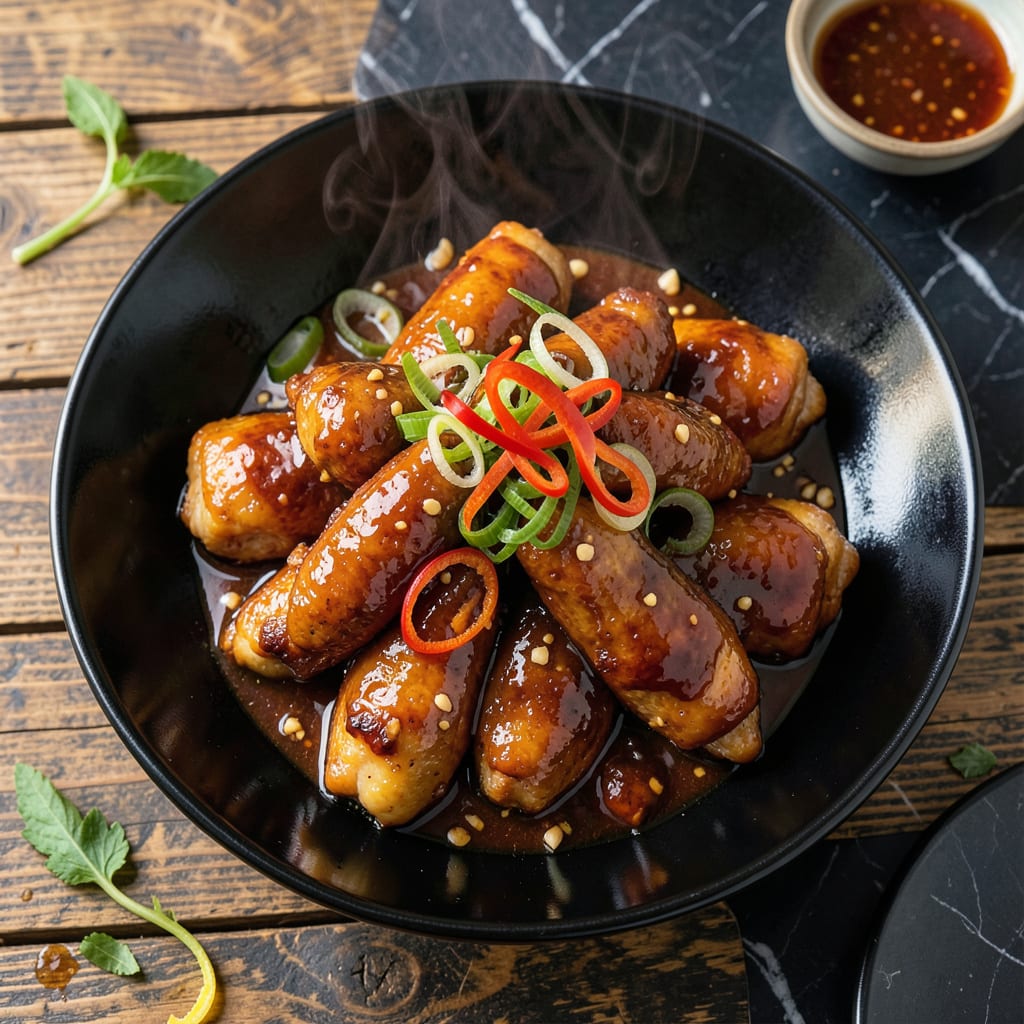
This dish brings authentic Chinese takeout flavors to your kitchen with a perfect balance of sweet and tangy. The secret lies in the traditional Peking sauce technique that transforms simple chicken into a restaurant-quality classic.
With just a few pantry staples and 15 minutes of active cooking, you’ll achieve that signature glossy, flavorful sauce coating tender chicken pieces. It’s the kind of meal that tastes like it came from your favorite neighborhood spot.
Ingredients for Chicken in Peking Sauce
Pantry staples meet fresh aromatics for that takeout magic at home.
| Ingredient | Amount | Notes |
|---|---|---|
| Boneless Chicken Thighs 🍗 | 1 ½ lb | Cut into bite-sized pieces |
| Soy Sauce 🥫 | ⅓ cup | Low-sodium preferred for balance |
| Rice Vinegar 💧 | 3 tbsp | For signature tangy kick |
| Brown Sugar 🍚 | 3 tbsp | Light or dark, packed |
| Hoisin Sauce 🥫 | 2 tbsp | Essential for Peking flavor |
| Garlic Cloves 🧄 | 4 cloves | Minced for maximum flavor |
| Fresh Ginger 🌿 | 1 tbsp | Grated or finely minced |
| Cornstarch 🌾 | 2 tbsp | For velvety sauce thickness |
| Water 💧 | ¼ cup | For cornstarch slurry |
| Vegetable Oil 🫒 | 2 tbsp | High smoke point for frying |
| Sesame Oil 🫒 | 1 tsp | Toasted for aroma |
| Red Pepper Flakes 🌶️ | ½ tsp | Adjust for heat preference |
| Green Onions 🧅 | 4 whole | Thinly sliced for garnish |
| Sesame Seeds 🌰 | 1 tsp | Toasted for crunch |
[recipeingredientscaler]
The chicken is everything here—thighs stay juicier than breasts through the quick high-heat cooking. Costco has great pre-cut options, but any grocery store boneless thighs work. Look for pieces with even thickness so they cook uniformly. For the hoisin, Koon Chun is the gold standard (find it at Asian markets), but any brand gets you 90% there.
No hoisin? Mix 1 tbsp soy sauce + 1 tbsp ketchup + 1 tsp honey in a pinch. Swap chicken breasts if you prefer, but they dry out faster (pound to even thickness). The rice vinegar can be apple cider in a bind, though it’s slightly fruitier. Fresh ginger is non-negotiable—dried won’t give that bright, zingy kick the dish needs.
Sauce thickens as it cools, so thin with a splash of water if needed. Leftovers keep 4-5 days in the fridge, though the chicken’s best fresh. Freeze sauce separately for up to 3 months—just reheat gently.
Why You’ll Love This Recipe
- One Pan Wonder: I just toss the boneless chicken thighs in the sauce and let the oven do the work—no complicated steps.
- Sweet & Sticky Goodness: The blend of hoisin, brown sugar, and rice vinegar gives that perfect balance of tangy and sweet in every bite.
- Weeknight Lifesaver: Honestly, it’s my go-to for busy evenings when I need something fast but still flavorful.
- Stretches Farther: Leftovers taste even better the next day, and the ingredients are all budget-friendly staples.
Step-by-Step Instructions for Chicken in Peking Sauce
Here’s the classic method that delivers restaurant-quality results at home.
Step 1: Velvet the Chicken Thighs
Cut the 1.5 lb Boneless Chicken Thighs into bite-sized pieces and place them in a bowl. In a small dish, mix the 2 tbsp Cornstarch with the 0.25 cup Water until smooth. Pour this slurry over the chicken and stir to coat evenly.
This velveting technique ensures the chicken stays tender and absorbs the sauce beautifully. Let it marinate for 10 minutes while you prepare the remaining ingredients. The pieces should look slightly glossy when ready.
Step 2: Sear the Chicken to Golden Perfection
Heat the 2 tbsp Vegetable Oil in a large skillet or wok over medium-high heat until shimmering. Add the marinated chicken in a single layer, working in batches if needed. Cook undisturbed for 3-4 minutes until the bottoms are golden brown.
Flip the pieces and cook for another 2-3 minutes until cooked through. The chicken should be lightly crispy on the outside but still juicy inside. Transfer to a plate and set aside.
Step 3: Build the Peking Sauce Foundation
In the same skillet, add the 4 cloves Garlic Cloves and 1 tbsp Fresh Ginger, stirring for 30 seconds until fragrant. Pour in the 0.33 cup Soy Sauce, 3 tbsp Rice Vinegar, 3 tbsp Brown Sugar, 2 tbsp Hoisin Sauce, and 0.5 tsp Red Pepper Flakes.
Bring the mixture to a simmer and cook for 2-3 minutes, stirring occasionally, until the sugar dissolves and the sauce thickens slightly. The aroma should be rich and balanced with sweet, tangy, and umami notes.
Step 4: Finish and Garnish
Return the cooked chicken to the skillet and toss to coat evenly in the sauce. Cook for an additional 1-2 minutes until everything is heated through and the chicken is glossy with sauce.
Remove from heat and stir in the 1 tsp Sesame Oil. Garnish with the 4 whole Green Onions (thinly sliced) and 1 tsp Sesame Seeds. The dish should have a vibrant, glossy appearance with visible sesame seeds and green onions scattered throughout.
Pro Tips For Making Chicken In Peking Sauce
- Velvet the Chicken: Toss the boneless thighs with 1 tsp cornstarch and 1 tbsp soy sauce for 10 minutes before cooking—I learned this the hard way after chewy chicken ruined my first three attempts.
- Bloom the Sauce: Cook the hoisin, vinegar, and brown sugar together for 2-3 minutes until it thickens slightly; skipping this leaves the sauce watery and bland.
- Skip the Overcrowding: Fry the chicken in batches with space between pieces, or it’ll steam instead of sear and your Peking sauce won’t cling properly.
- Use Dark Brown Sugar: Light brown sugar works, but dark brown adds a deeper molasses note that balances the hoisin’s sweetness—sounds small, but it actually changes the outcome.
Essential Equipment for This Dish
Wok or Skillet
A 14-inch carbon steel wok is ideal for this dish, as it handles high heat beautifully and provides ample space for stir-frying. I use my Made In wok for even heat distribution. A 12-inch cast iron skillet works too if you don’t have a wok.
High Heat Cookware
For that perfect sear, you need cookware that can handle medium-high to high heat without warping. Avoid nonstick pans here—they can’t reach the necessary temperatures. My Lodge cast iron has never let me down for this recipe. 🔥
Stainless steel is another great option, especially if you have a heavy-bottomed pan that distributes heat evenly.
Mixing Bowls
Have at least 2 mixing bowls ready—one for the cornstarch slurry and another for the sauce ingredients. I prefer stainless steel bowls because they’re lightweight and easy to clean. Glass works too, but avoid plastic for hot ingredients.
Wooden Spoon
A wooden spoon or spatula is essential for stirring the chicken and sauce without scratching your cookware. I keep a bamboo spoon dedicated to my wok. It’s also gentle on nonstick surfaces if you’re using a different pan.
Measuring Tools
Accurate measurements matter for the sauce balance. I use OXO measuring spoons and a 1-cup glass measuring cup for liquids. The sauce comes together quickly, so having everything pre-measured saves time.
For the cornstarch slurry, a small whisk or fork helps prevent lumps.
Nutrition Facts
Frequently Asked Questions
Can I use chicken breast instead of thighs?
Yes, but thighs stay juicier. If using breasts, pound to even 1/2-inch thickness and reduce cooking time to 2-3 minutes per side to prevent drying out.
What if I don’t have hoisin sauce?
Substitute with 1 tbsp soy sauce + 1 tbsp ketchup + 1 tsp honey. The flavor won’t be identical but still delicious. Avoid skipping it entirely.
Can I make this ahead of time?
Cook the sauce up to 3 days ahead. Store chicken separately and combine just before serving. Reheat gently to avoid overcooking.
How do I prevent a lumpy sauce?
Mix cornstarch with cold water first, then slowly add to simmering sauce while stirring. Never add dry cornstarch directly to hot liquid.

- Jollof Rice Sauce Recipe: West African Tomato and Spice Infusion - September 25, 2026
- Japanese Rice Soup Recipe: Umami-Rich Comfort in a Bowl - September 25, 2026
- Homemade Cream Of Rice Recipe: Silk-Smooth Breakfast in Minutes - September 25, 2026