
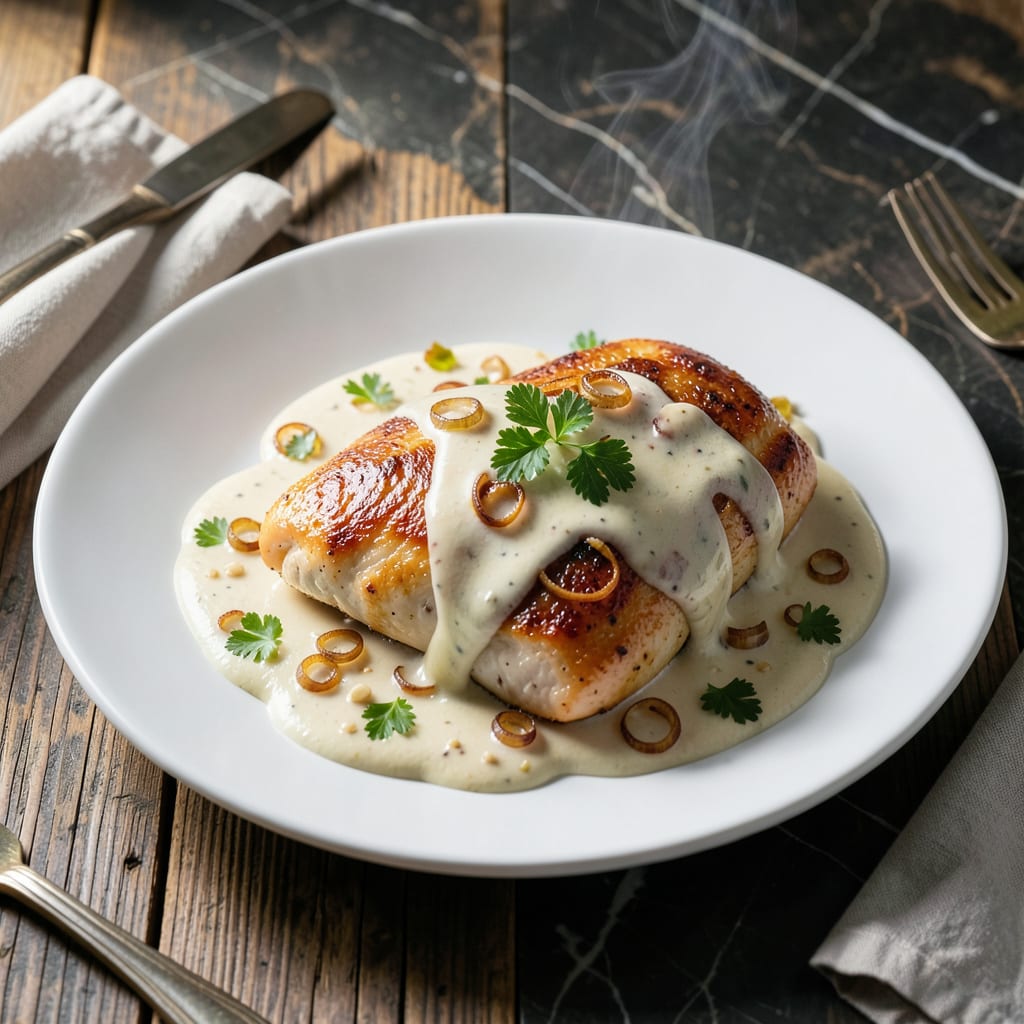
This dish brings restaurant-quality elegance to your home kitchen with minimal effort. The combination of white wine and cream creates a silky, flavorful sauce that complements tender chicken perfectly.
With simple ingredients and traditional techniques, this recipe delivers professional results every time. The garlic-infused sauce adds depth while maintaining a light, sophisticated finish.
Ingredients for Chicken in White Wine Cream Sauce
Restaurant-quality ingredients for silky, elegant chicken at home with professional results every time.
| Ingredient | Amount | Notes |
|---|---|---|
| Boneless Skinless Chicken Breasts 🍗 | 1 ½ lb | Pounded to even thickness |
| All-Purpose Flour 🌾 | ½ cup | For dredging chicken |
| Unsalted Butter 🧈 | 4 tbsp | Divided for cooking and sauce |
| Shallots 🧅 | 2 whole | Finely minced for sauce |
| Garlic Cloves 🧄 | 4 cloves | Minced for depth of flavor |
| Dry White Wine 🍷 | 1 cup | Sauvignon Blanc or Pinot Grigio |
| Chicken Stock 🥘 | ¾ cup | Low-sodium preferred for balance |
| Heavy Cream 🥛 | 1 cup | Full-fat for silky texture |
| Dijon Mustard 🟡 | 1 tbsp | Adds subtle tang to sauce |
| Fresh Thyme Sprigs 🌿 | 4 whole | Leaves stripped for garnish |
| Fresh Parsley 🌿 | ¼ cup | Chopped for final garnish |
| Kosher Salt 🧂 | 1 tsp | Diamond Crystal preferred |
| Freshly Ground Black Pepper 🌶️ | ½ tsp | Adjust to taste preference |
| Olive Oil 🫒 | 1 tbsp | For initial searing |
[recipeingredientscaler]
The chicken quality is paramount for this preparation. Boneless, skinless breasts from Whole Foods or a trusted butcher ensure consistent tenderness. Pounding to an even thickness guarantees uniform cooking—use a meat mallet or rolling pin. For the white wine, select a dry, crisp variety you’d actually drink; Sauvignon Blanc or Pinot Grigio from Trader Joe’s offers excellent value without compromising flavor.
No white wine on hand? Substitute with additional chicken stock and 1 tbsp lemon juice for acidity. Heavy cream can be replaced with half-and-half for a lighter sauce, though the texture will be less opulent. Shallots not available? Yellow onion at half the quantity works, but the flavor profile will be slightly more assertive. Always use freshly ground black pepper—pre-ground lacks the aromatic intensity this dish demands.
The sauce can be prepared 1 day ahead and gently reheated—do not boil, as it may separate. Leftovers keep for 3-4 days refrigerated in an airtight container. For optimal texture, reheat slowly over low heat, stirring occasionally. Fresh herbs are best added just before serving to preserve their vibrant color and aroma.
Why You’ll Love This Recipe
- One Pan Wonder: I love that everything cooks in a single skillet—browning the chicken, sautéing shallots and garlic, then simmering in the wine-cream sauce.
- Ridiculously Good: The white wine and shallots mellow into this rich, velvety sauce that clings to every bite of tender chicken.
- Feeds a Crowd: I’ve served this for date night and for Sunday dinner with the in-laws—always disappears.
- Leftovers? Yes Please: The flavors deepen overnight, so I actually make extra just to have it for lunch the next day.
Step-by-Step Instructions for Chicken in White Wine Cream Sauce
Master the technique behind this elegant dish with precise timing and professional methods.
Step 1: Pound and Dredge the Chicken
Place the 1.5 lb boneless skinless chicken breasts between two sheets of plastic wrap. Pound them to an even ½-inch thickness using a meat mallet. This ensures uniform cooking and prevents dry, overcooked edges.
Season both sides with 1 tsp kosher salt and 0.5 tsp freshly ground black pepper. Lightly dredge each piece in the 0.5 cup all-purpose flour, shaking off any excess. The flour creates a delicate crust and helps thicken the sauce later.
Step 2: Sear the Chicken to Golden Perfection
Heat 1 tbsp olive oil and 2 tbsp unsalted butter in a large skillet over medium-high heat until the butter stops foaming. Add the dredged chicken and cook undisturbed for 4-5 minutes per side until golden brown and just cooked through.
Transfer the chicken to a plate and tent with foil to keep warm. Don’t wipe the skillet—those browned bits are essential for building the sauce’s depth of flavor.
Step 3: Build the Aromatic Sauce Base
In the same skillet, add the remaining 2 tbsp unsalted butter. Once melted, add the 2 whole shallots (finely minced) and cook for 2-3 minutes until translucent and fragrant. Stir in the 4 cloves garlic cloves (minced) and cook for 30 seconds until aromatic but not browned.
Pour in the 1 cup dry white wine and scrape up the browned bits from the bottom of the pan with a wooden spoon. Simmer for 3-4 minutes until the wine reduces by half. This deglazing step extracts maximum flavor.
Step 4: Finish with Cream and Mustard
Add the 0.75 cup chicken stock and 1 tbsp Dijon mustard, stirring to combine. Simmer for 2 minutes, then pour in the 1 cup heavy cream. Reduce the heat to medium and let the sauce simmer for 3-4 minutes until it thickens slightly and coats the back of a spoon.
Return the chicken to the skillet, spooning the sauce over the top. Simmer for 1-2 minutes to heat through and allow the flavors to meld.
Step 5: Garnish and Serve
Remove the skillet from heat. Strip the leaves from the 4 whole fresh thyme sprigs and sprinkle over the chicken along with the 0.25 cup fresh parsley (chopped). Serve immediately, ensuring each portion is generously coated with the silky sauce.
Pro Tips For Making Chicken In White Wine Cream Sauce
- Pound the Chicken: Slice or pound the boneless breasts to an even ½-inch thickness—this guarantees they cook through at the same rate, so no dry edges while waiting for the center to finish.
- Bloom the Shallots: Let the minced shallots and garlic cook in the butter for 2-3 minutes until soft and fragrant before adding wine; I learned this the hard way—rushing this step leaves them raw and harsh in the finished sauce.
- Deglaze While Hot: Pour in the white wine right after removing the chicken, while the pan’s still screaming hot, to lift all those browned bits that make the sauce taste like it simmered for hours.
- Temper the Cream: Stir a spoonful of the hot wine mixture into the cold cream first, then add it to the pan—sounds weird, but it works to prevent curdling every single time.
Make-Ahead Tips for This Recipe
Prep Ahead Strategy
Pound and dredge the chicken up to 12 hours ahead, storing it covered in the fridge. This saves time while keeping the coating intact. I often prep this first thing in the morning for an easy evening meal.
Sauce Base Prep
The sauce base (shallots, garlic, white wine reduction) can be made 1 day in advance. Store it in an airtight container in the fridge. Reheat gently before adding the cream to prevent curdling.
Chicken Storage
Cooked chicken stays fresh in the fridge for 3-4 days in its sauce. Use a shallow, airtight container to maintain quality. I prefer glass containers for even reheating.
Reheating Method
Warm leftovers over low heat on the stove, stirring frequently. Add a splash of chicken stock if the sauce thickens too much. Avoid microwaving, as it can cause separation. 💡
Freezing Tips
This dish freezes well for up to 2 months. Cool completely before transferring to freezer-safe bags. Thaw overnight in the fridge before reheating gently on the stove.
Herb Garnish
Fresh herbs lose their vibrancy when stored with the dish. Keep thyme and parsley separate until serving. Strip thyme leaves just before use for maximum flavor impact.
Nutrition Facts
Frequently Asked Questions
Can I use chicken thighs instead of breasts?
Boneless thighs work well and may stay juicier. Reduce cooking time to 3-4 minutes per side since thighs cook faster. Their richer flavor pairs beautifully with the sauce.
What if my sauce curdles?
Remove from heat immediately and whisk vigorously. If needed, add 1-2 tbsp cold water while whisking to bring it back together. Low heat prevents this issue.
Can I substitute the wine?
Use 1 cup chicken stock + 1 tbsp lemon juice for acidity. The flavor will be milder but still delicious. Avoid cooking wines with added salt.
How do I prevent lumpy sauce?
Whisk constantly when adding cream. If lumps appear, strain through a fine-mesh sieve. The flour from dredging helps thicken smoothly.

- Jollof Rice Sauce Recipe: West African Tomato and Spice Infusion - September 25, 2026
- Japanese Rice Soup Recipe: Umami-Rich Comfort in a Bowl - September 25, 2026
- Homemade Cream Of Rice Recipe: Silk-Smooth Breakfast in Minutes - September 25, 2026