
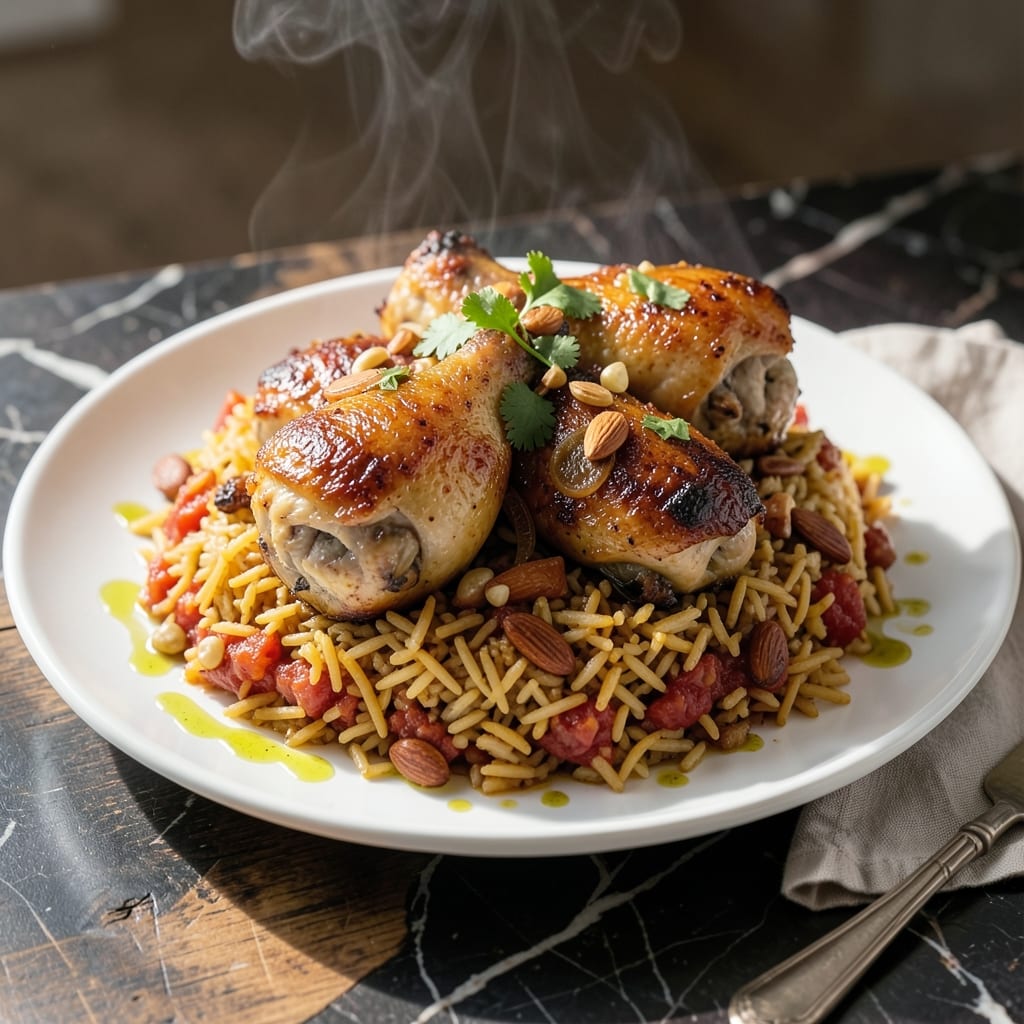
This dish transforms humble ingredients into a fragrant Middle Eastern masterpiece. The blend of warm spices creates an aromatic base that infuses both chicken and rice with complex flavors.
I’ve refined this method to ensure perfectly tender chicken and fluffy, spice-infused rice every time. The secret lies in layering the spices and allowing them to bloom before combining with the main ingredients.
Ingredients for Chicken Kabsa Rice
Fragrant spices and tender chicken create this Middle Eastern masterpiece with fluffy, infused rice.
| Ingredient | Amount | Notes |
|---|---|---|
| Chicken Thighs 🍗 | 2 lb | Boneless, skinless, cut into pieces |
| Basmati Rice 🍚 | 2 cups | Rinsed until water runs clear |
| Onion 🧅 | 1 whole | Large, finely chopped |
| Garlic Cloves 🧄 | 4 cloves | Minced for depth of flavor |
| Tomato Paste 🍅 | 3 tbsp | For rich, concentrated flavor |
| Ground Cumin 🌿 | 1 ½ tsp | Toasted for warmth |
| Ground Coriander 🌿 | 1 ½ tsp | Complements the cumin |
| Ground Cardamom 🌿 | ½ tsp | Key aromatic spice |
| Ground Cinnamon 🌿 | ½ tsp | Adds subtle sweetness |
| Ground Cloves 🌿 | ¼ tsp | Use sparingly for depth |
| Bay Leaves 🍃 | 2 whole | For infusing the rice |
| Chicken Stock 💧 | 3 cups | Low-sodium preferred |
| Olive Oil 🫒 | ¼ cup | Extra-virgin for cooking |
| Salt 🧂 | 1 ½ tsp | Adjust to taste |
| Black Pepper 🌶️ | 1 tsp | Freshly ground |
The spices are non-negotiable for authentic flavor. Penzeys or Whole Foods bulk bins offer the freshest ground cumin, coriander, and cardamom—critical for that layered aroma. Chicken thighs (bone-in or boneless) stay juicier than breasts. For the best Basmati rice, look for aged varieties at Indian grocery stores (better texture, less starchy).
No cardamom? A pinch of allspice works in a bind. Swap ground spices for whole if you have a mortar and pestle—toast and grind them fresh. Chicken stock can be vegetable stock for a lighter version. Tomato paste in a tube (from Trader Joe’s) is perfect for measuring small amounts without waste.
Store dried spices in airtight containers away from light—they keep for 6-12 months. Prep the chicken and rice separately if making ahead. Leftovers reheat well and taste even better the next day, with flavors deepening over 3-4 days in the fridge.
Why You’ll Love This Recipe
- One Pot Wonder: I love that everything cooks together—chicken thighs soak up the garlic and tomato paste while the basmati rice fluffs up right in the same pot.
- Flavor Bomb: The combo of caramelized onion and tomato paste gives this dish a deep, savory richness that’s honestly hard to beat.
- Meal Prep Hero: This keeps beautifully for days, so I can make a big batch and reheat portions all week without losing texture.
- Budget Friendly: Chicken thighs are affordable, and a little goes a long way with the rice stretching the meal to feed a crowd.
Step-by-Step Instructions for Chicken Kabsa Rice
Master this traditional method for perfectly spiced rice and tender chicken every time.
Step 1: Brown the Chicken Thighs
Heat the ¼ cup olive oil in a large, heavy-bottomed pot over medium-high heat. Add the 2 lb chicken thighs and sear for 5-7 minutes per side until deeply golden brown and cooked through.
Work in batches if needed to avoid crowding—this ensures proper browning rather than steaming. The chicken should release easily from the pot when ready to flip. Remove and set aside.
This step builds a flavor base for your dish. Don’t rush it; that caramelized crust adds depth to the final result.
Step 2: Build the Spiced Aromatic Base
In the same pot, add the finely chopped onion and sauté for 3-4 minutes until soft and translucent. Add the minced garlic cloves and cook for 30 seconds until fragrant.
Stir in the 3 tbsp tomato paste and cook for 2 minutes to deepen its flavor. Then add the 1½ tsp ground cumin, 1½ tsp ground coriander, ½ tsp ground cardamom, ½ tsp ground cinnamon, and ¼ tsp ground cloves.
Toast the spices for 1 minute until aromatic. This blooms their flavors, creating the signature kabsa taste profile.
Step 3: Cook the Rice with Infused Broth
Return the chicken to the pot along with any accumulated juices. Add the 2 cups basmati rice, 2 whole bay leaves, 1½ tsp salt, and 1 tsp black pepper. Stir to coat everything in the spiced oil.
Pour in the 3 cups chicken stock and bring to a boil. Once boiling, reduce heat to low, cover, and simmer for 20 minutes.
Resist the urge to peek—the steam trapped inside is what cooks the rice evenly. You’ll know it’s done when the liquid is absorbed and the rice is tender with a slight bite.
Step 4: Rest and Fluff for Perfect Texture
Remove the pot from heat and let it rest, covered, for 10 minutes. This allows the rice to steam in its own moisture, ensuring even doneness throughout.
After resting, remove the bay leaves and gently fluff the rice with a fork. The grains should be separate and fragrant, with the chicken pieces nestled throughout.
Taste and adjust seasoning if needed, though the spices should be well-balanced from the cooking process. Serve immediately for the best texture and flavor.
Pro Tips For Making Chicken Kabsa Rice
- Soak the Rice: Rinse your basmati rice until the water runs clear, then soak it for 20-30 minutes—this keeps the grains long and fluffy instead of clumping together. I learned this the hard way after serving mushy rice to guests.
- Brown the Chicken: Get your chicken thighs golden brown in the pot before adding liquids. It adds a depth of flavor that simmering alone just can’t match, and it only takes an extra 5 minutes.
- Toast the Tomato Paste: Cook the tomato paste with the onions and garlic for 2-3 minutes until it darkens slightly. Sounds weird, but it removes the raw taste and makes the sauce richer.
- Use Bone-In Thighs: Skip the boneless cuts—bone-in chicken thighs stay juicier during the long cooking time and add more flavor to the broth. My grandmother swore by this, and she was right.
Storing and Reheating This chicken kabsa rice
Refrigerator Storage
Let your kabsa cool for no more than 2 hours before transferring to airtight containers. Store in the fridge at 40°F or below for up to 4 days. The spices actually intensify overnight, making leftovers even more flavorful. ❄️
Freezer Storage
For longer storage, freeze in quart-sized freezer bags with excess air removed. It keeps well for up to 3 months without significant quality loss. I recommend portioning into single-serving sizes for easy reheating.
Stovetop Reheating
This is my preferred method. Add kabsa to a heavy pot with ¼ cup chicken stock or water, cover, and heat over medium-low heat for 10-15 minutes. Stir occasionally to prevent sticking. 🔥
Microwave Reheating
For quick meals, microwave individual portions covered with a damp paper towel. Use 70% power for 2-3 minutes, stir, then continue in 1-minute intervals until reaching 165°F. Add a splash of water if it looks dry.
Oven Reheating
Preheat oven to 350°F. Place kabsa in an oven-safe dish, cover with foil, and add 2 tbsp water. Heat for 20-25 minutes, stirring once halfway through. This method works best for larger portions.
Preserving Texture
The rice may dry out slightly during storage. When reheating, always add a little liquid and keep covered to trap steam. I find the chicken stays juicier when reheated gently rather than at high temperatures.
Nutrition Facts
Frequently Asked Questions
Can I use chicken breasts instead of thighs?
Yes, but thighs stay juicier. If using breasts, reduce cooking time to 15 minutes to prevent dryness and consider brining first for extra moisture.
Why does my rice turn out mushy?
Over-stirring or peeking while cooking releases steam. Use the exact 2 cups rice to 3 cups stock ratio and resist lifting the lid during the 20-minute simmer.
What can I substitute for cardamom?
A pinch of allspice works best. Alternatively, use ½ tsp nutmeg for warmth, though the flavor profile will differ slightly.
Can I make this in a rice cooker?
Yes! Sear chicken first, then layer rice and spices on top. Use the 3 cups stock and cook on the standard cycle. Let rest 10 minutes after cooking.

- Jollof Rice Sauce Recipe: West African Tomato and Spice Infusion - September 25, 2026
- Japanese Rice Soup Recipe: Umami-Rich Comfort in a Bowl - September 25, 2026
- Homemade Cream Of Rice Recipe: Silk-Smooth Breakfast in Minutes - September 25, 2026