
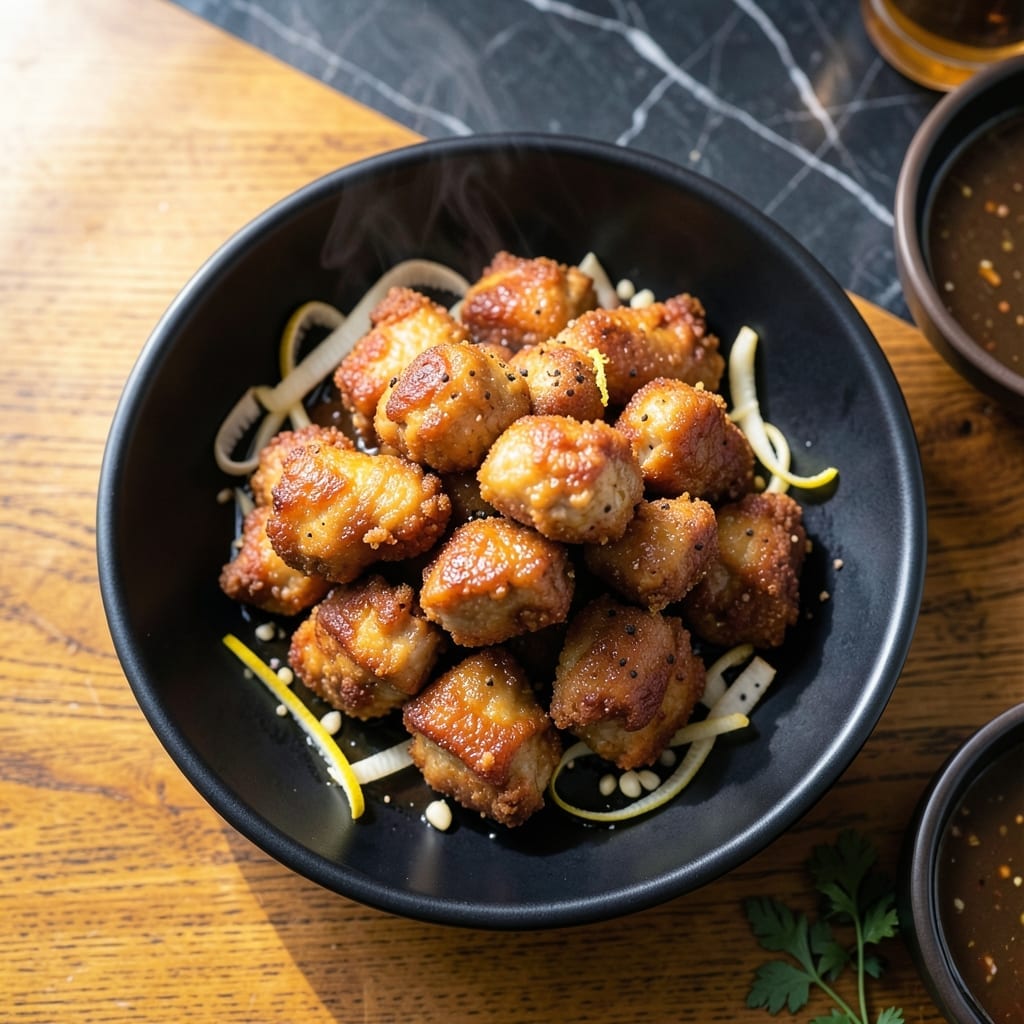
This Japanese fried chicken delivers crispy perfection with every bite, combining tender meat with an irresistibly crunchy exterior. The secret lies in a simple marinade and double-frying technique that locks in flavor while achieving that signature texture.
I developed this method after years of experimenting with different approaches, focusing on creating that ideal balance between juicy interior and shatteringly crispy skin. The soy-ginger marinade infuses the chicken with umami depth before frying.
What emerges from the oil is golden, crispy chicken pieces that stay hot and crunchy for minutes after cooking. The double-fry method ensures the coating develops maximum crunch while keeping the meat moist and flavorful.
Serve immediately with lemon wedges and a side of steamed rice for an authentic experience. This recipe transforms simple ingredients into restaurant-quality results.
Ingredients for Chicken Karage
Transform simple chicken thighs into restaurant-quality Japanese fried chicken with these essential ingredients.
| Ingredient | Amount | Notes |
|---|---|---|
| Boneless Chicken Thighs 🍗 | 1 ½ lb | Skin-on, cut into bite-sized pieces |
| Soy Sauce 🫒 | ¼ cup | Low-sodium preferred for balance |
| Fresh Ginger 🌿 | 1 tbsp | Grated, for marinade depth |
| Garlic Cloves 🧄 | 3 cloves | Minced, essential for aroma |
| Sake 🍶 | 2 tbsp | Dry variety, aids tenderness |
| Potato Starch 🥔 | ½ cup | For ultra-crispy coating |
| Neutral Oil 🛢️ | 4 cups | For deep-frying, high smoke point |
| Lemon 🍋 | 1 whole | Cut into wedges for serving |
| Steamed Rice 🍚 | 2 cups | Cooked, for accompaniment |
| Green Onions 🧅 | 2 whole | Thinly sliced, for garnish |
| Sesame Seeds 🌰 | 1 tsp | Toasted, optional garnish |
| Kosher Salt 🧂 | 1 tsp | For seasoning marinade |
| Black Pepper 🌶️ | ½ tsp | Freshly ground preferred |
| Sugar 🍚 | 1 tsp | Balances soy sauce saltiness |
The chicken thighs are non-negotiable for authentic karage. Skin-on, bone-in pieces yield the juiciest results, though boneless works in a pinch. Sourced from Whole Foods or a trusted butcher ensures quality. For the soy sauce, Kikkoman low-sodium strikes the perfect balance. Potato starch is key—look for it in the baking aisle or at Asian markets for the crispiest coating.
No sake on hand? Dry white wine is an acceptable substitute. Fresh ginger is ideal but ground ginger at half the amount can work. If avoiding alcohol entirely, rice vinegar plus water mimics the acidity. The neutral oil must have a high smoke point—peanut or vegetable oil are reliable choices. Skip the sesame oil for frying; it burns too easily.
Marinate the chicken for at least 30 minutes for maximum flavor. The double-fry method requires patience but guarantees shatteringly crisp skin. Leftovers? Rare, but they reheat best in a toaster oven at 375°F for 10 minutes. Serve immediately for peak crunch.
Why You’ll Love This Recipe
- One Pan Wonder: I toss everything in a bowl, let it marinate, then bake—no fancy techniques, just juicy chicken thighs soaking up soy, ginger, and sake.
- Umami Explosion: That first bite of crispy, sake-kissed chicken with the garlic and ginger marinade? Ridiculously good every single time.
- Meal Prep Hero: I make a big batch on Sunday and it’s my lunch savior for days—still tender, never dry.
- Budget Friendly: Boneless thighs are cheap, and a little soy and sake go a long way. Feeds my family without breaking the bank.
Step-by-Step Instructions for Chicken Karage
Master the technique for achieving that signature ultra-crispy exterior with juicy, flavorful meat.
Step 1: Marinate the Chicken for Maximum Flavor
In a large bowl, combine the 1.5 lb boneless chicken thighs with 0.25 cup soy sauce, 1 tbsp fresh ginger, 3 cloves garlic cloves, 2 tbsp sake, 1 tsp kosher salt, 0.5 tsp black pepper, and 1 tsp sugar. I use my hands to mix thoroughly, ensuring every piece is evenly coated.
The sugar balances the saltiness of the soy sauce while the sake tenderizes the meat. Cover and refrigerate for 30 minutes to 1 hour. This marinating time allows the flavors to penetrate deeply—don’t skip it, as it’s essential for that authentic taste.
Step 2: Coat the Chicken with Potato Starch
Drain the chicken in a colander for 2-3 minutes to remove excess marinade. This prevents the coating from becoming gummy. Pat the pieces dry with paper towels—the drier the surface, the crispier the final result.
Place the 0.5 cup potato starch in a large bowl. Working in batches, toss the chicken pieces in the starch until uniformly coated. Potato starch creates a lighter, crispier crust than flour. Shake off any excess starch—clumps will burn in the oil.
Step 3: Deep-Fry to Golden Perfection
Heat the 4 cups neutral oil in a deep, heavy pot over medium-high heat to 340-350°F. Use a deep-fry thermometer for accuracy. Carefully lower the coated chicken into the oil in batches, avoiding overcrowding—this drops the oil temperature and leads to soggy results.
Fry for 4-5 minutes per batch, turning occasionally, until the chicken is golden brown and cooked through. The internal temperature should reach 165°F. Drain on a wire rack set over a baking sheet to maintain crispiness—paper towels can trap steam.
Step 4: Serve with Traditional Accompaniments
Transfer the fried chicken karage to a serving platter. Garnish with thinly sliced green onions and toasted sesame seeds for visual appeal and added texture. The 1 whole lemon cut into wedges provides a bright, citrusy contrast to the rich chicken.
Serve immediately with 2 cups steamed rice to soak up the flavorful juices. The contrast of the crispy exterior with the tender, marinated meat is what makes this dish truly special. For best results, eat right away while the coating is still at its peak crispiness.
Pro Tips For Making Chicken Karage
- Double Fry for Crisp: Fry the chicken once at 325°F for 4 minutes, rest it, then fry again at 375°F for 2 minutes—this is how you get that shatteringly crisp exterior without drying out the thighs.
- Velvet the Chicken: Toss the thigh pieces with 1 tsp baking soda and 1 tbsp water for 15 minutes before marinating; it tenderizes the meat so it stays juicy even after frying.
- Ditch the Skin: Skip the skin on the thighs—it can make the coating slide off during frying, and the fat renders unevenly, leaving you with soggy spots instead of crunch.
- Grind the Ginger: Use a microplane to grate the ginger instead of mincing it; you’ll get more of its punch in the marinade without chewy bits, and it blends seamlessly with the soy and sake.
Best Sauces and Condiments for These Flavors
Classic Japanese Dips
Serve with Kewpie mayonnaise and tonkatsu sauce for traditional pairing. I mix 2 tbsp Kewpie with 1 tsp rice vinegar and a dash of sriracha for extra kick. These sauces complement the crispy texture perfectly. 🥗
Spicy Mayo Variation
Combine ¼ cup mayonnaise with 1 tbsp sriracha and 1 tsp honey for a sweet-spicy dip. This version adds depth without overpowering the chicken’s soy-ginger marinade. I always keep this in my fridge for quick snacks.
Citrus Ponzu Sauce
Whisk 3 tbsp soy sauce with 2 tbsp lemon juice, 1 tbsp mirin, and 1 tsp grated daikon radish. The bright acidity cuts through the richness beautifully. This is my go-to when I want a lighter option. 🍋
Creamy Garlic Dip
Blend ½ cup Greek yogurt with 1 minced garlic clove, 1 tsp lemon zest, and salt. The tangy creaminess balances the crispy coating wonderfully. I often add chopped dill for freshness.
Sweet Chili Glaze
Simmer ¼ cup sweet chili sauce with 1 tbsp lime juice until slightly thickened. Drizzle lightly over the chicken just before serving. This Thai-inspired option adds a sticky, sweet contrast to the savory karage. ✨
Nutrition Facts
Frequently Asked Questions
Can I use chicken breast instead of thighs?
Thighs are ideal for juiciness, but breast works if pounded to ½-inch thickness. Reduce frying time by 1-2 minutes to prevent dryness. The darker meat in thighs stays moister during frying.
Why potato starch instead of regular flour?
Potato starch creates an ultra-crispy, airy crust that stays crunchy longer. It absorbs less oil than flour, resulting in a lighter texture that’s characteristic of authentic karage.
How do I keep the chicken crispy if serving later?
Place fried pieces on a wire rack in a 200°F oven for up to 20 minutes. Avoid stacking or covering, as trapped steam will soften the coating. Re-fry for 1-2 minutes to restore full crispiness.
What oil works best for frying?
Use neutral oils with a high smoke point like peanut, vegetable, or canola. Avoid olive oil or sesame oil, as they burn at frying temperatures. Maintain oil at 340-350°F throughout.

- Jollof Rice Sauce Recipe: West African Tomato and Spice Infusion - September 25, 2026
- Japanese Rice Soup Recipe: Umami-Rich Comfort in a Bowl - September 25, 2026
- Homemade Cream Of Rice Recipe: Silk-Smooth Breakfast in Minutes - September 25, 2026