
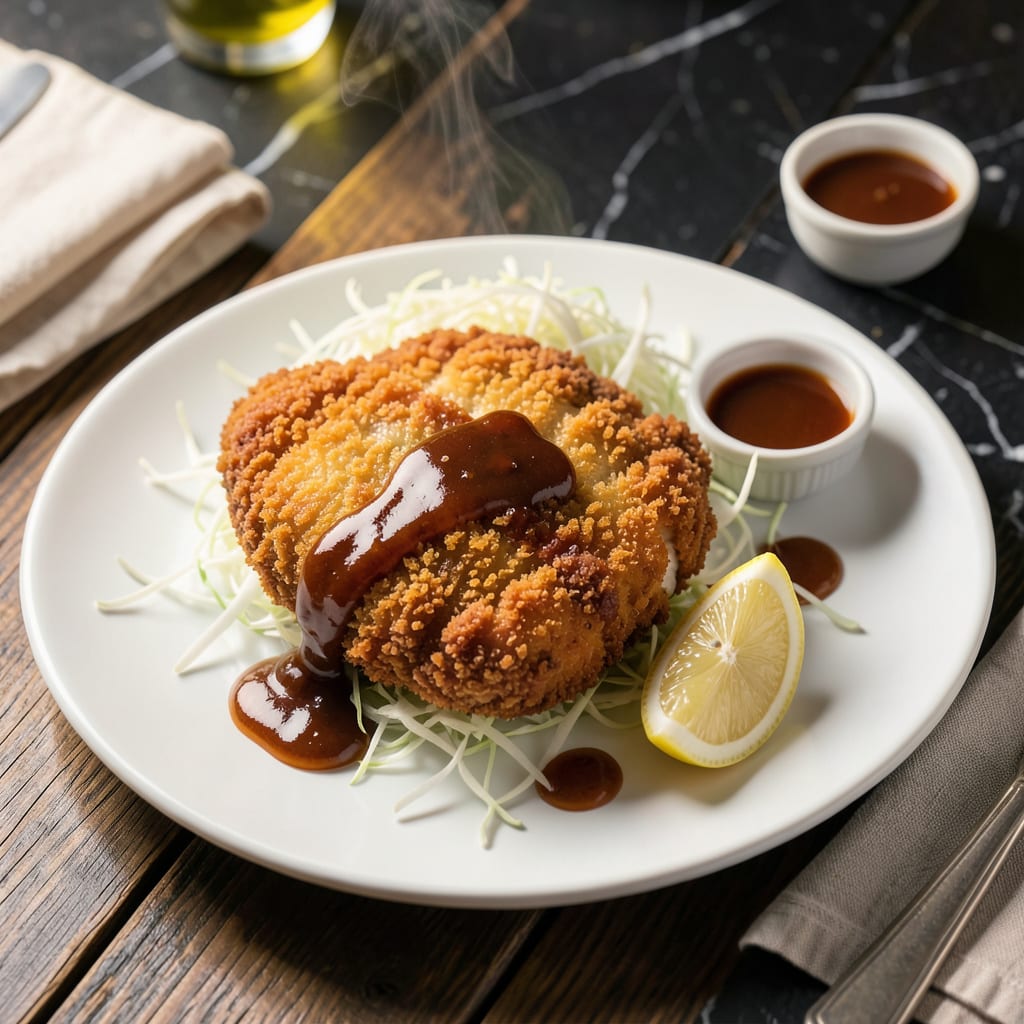
This Japanese-inspired dish delivers a crispy golden cutlet with a perfectly balanced sweet-savory glaze. The secret lies in the double breading technique and hot oil temperature.
The tonkatsu sauce elevates the dish with its tangy, slightly fruity flavor that complements the tender chicken. Serve with steamed rice and shredded cabbage for an authentic experience.
Ingredients for Chicken Katsu with Tonkatsu Sauce
These carefully selected ingredients create a crispy Japanese-style cutlet with rich, tangy tonkatsu glaze.
| Ingredient | Amount | Notes |
|---|---|---|
| Boneless Skinless Chicken Breasts 🍗 | 1 ½ lb | Pounded to 1/2-inch thickness |
| All-Purpose Flour 🌾 | ½ cup | For initial dredging |
| Large Eggs 🥚 | 2 whole | Beaten for egg wash |
| Panko Breadcrumbs 🍞 | 2 cups | Japanese-style for extra crunch |
| Neutral Cooking Oil 🫒 | 3 cups | For deep frying, vegetable or canola |
| Ketchup 🍅 | ½ cup | For tonkatsu sauce base |
| Worcestershire Sauce 💧 | 2 tbsp | Adds umami depth |
| Soy Sauce 🥢 | 2 tbsp | Low-sodium preferred |
| Granulated Sugar 🍚 | 2 tbsp | Balances sauce sweetness |
| Green Cabbage 🥬 | ½ whole | Thinly shredded for serving |
| White Rice 🍚 | 1 ½ cups | Uncooked, for serving |
| Salt 🧂 | 1 tsp | Divided for seasoning |
| Ground Black Pepper 🌶️ | ½ tsp | Freshly ground preferred |
| Garlic Powder 🧄 | ½ tsp | For tonkatsu sauce |
[recipeingredientscaler]
The chicken breasts are critical for texture. Butcher-cut or air-chilled varieties yield better results than pre-packaged. Panko breadcrumbs must be Japanese-style—standard breadcrumbs won’t deliver the signature crunch. For oil, peanut or canola have the high smoke point needed for frying. Most Asian markets carry authentic panko, but Kikkoman brand is widely available in American supermarkets.
No panko? Crush corn flakes with a pinch of salt for emergency substitution. Worried about deep frying? Air fryer method works at 375°F (spray with oil first). For the sauce, substitute oyster sauce for Worcestershire if avoiding anchovies. The cabbage garnish is non-negotiable—it cuts through the richness. Freshly ground pepper makes a noticeable difference in the final dish.
Leftovers keep 3-4 days refrigerated, but reheat in the oven to maintain crispiness. The tonkatsu sauce holds for 1 week in the fridge. For meal prep, bread the chicken and refrigerate uncooked (up to 24 hours) before frying.
Why You’ll Love This Recipe
- Foolproof Process: I just dip, coat, and fry—no fancy techniques, just panko and eggs for that golden crunch.
- Addictive Crunch: The panko stays crispy even with the tangy-sweet tonkatsu sauce drizzled all over.
- Weeknight Hero: Between us, I’ve served this for dinner parties and Tuesday night desperation meals.
- Budget Stretcher: Chicken breasts go far here, and the leftovers make killer sandwiches the next day.
Step-by-Step Instructions for Chicken Katsu With Tonkatsu Sauce
Master the technique for achieving a shatteringly crisp exterior with juicy meat and rich sauce.
Step 1: Prepare and Bread the Chicken
Pound the boneless skinless chicken breasts to an even ½-inch thickness using a meat mallet. Season both sides with ½ tsp salt and ½ tsp ground black pepper. This ensures even cooking and maximum crispiness.
Set up a breading station with three shallow dishes. Place the all-purpose flour in the first, beat the large eggs in the second, and spread the panko breadcrumbs in the third. Dredge each piece in flour, shaking off excess, then dip in egg wash, allowing excess to drip off. Press firmly into panko to create an even, thick coating that will fry to a perfect golden crunch.
Step 2: Fry to Golden Perfection
Heat the neutral cooking oil in a deep, heavy-bottomed skillet or Dutch oven to 350°F. Use a thermometer for precision—this temperature is critical for achieving that signature crisp texture without overcooking the meat.
Carefully lower the breaded chicken into the hot oil. Fry for 4-5 minutes per side until deep golden brown and the internal temperature reaches 165°F. The breading should be uniformly crisp with no pale spots. Work in batches to avoid crowding the pan, which would lower the oil temperature and result in greasy cutlets. Drain on a wire rack set over a baking sheet.
Step 3: Make the Tonkatsu Sauce
In a small saucepan, combine the ketchup, Worcestershire sauce, soy sauce, granulated sugar, and garlic powder. Simmer over medium heat for 3-4 minutes, stirring frequently, until the sauce thickens slightly and the sugar fully dissolves.
Taste and adjust seasoning if needed, though the balance of sweet, tangy, and umami should be perfect as is. The sauce should coat the back of a spoon but still be pourable. Remove from heat and let cool slightly—it will thicken further as it cools.
Step 4: Serve with Traditional Accompaniments
Thinly shred the green cabbage and arrange a generous portion on each serving plate. The crisp, fresh cabbage provides a refreshing contrast to the rich cutlets. Slice the chicken into ½-inch strips and arrange over the cabbage.
Drizzle the warm tonkatsu sauce over the chicken or serve it on the side for dipping. Accompany with steamed white rice to complete the meal. The sauce should cling to each piece of chicken, enhancing the crispy texture with its sweet-savory depth.
Pro Tips For Making Chicken Katsu With Tonkatsu Sauce
- Pound the Chicken: Use a meat mallet or rolling pin to pound the breasts to an even 1/2-inch thickness—this guarantees even cooking and prevents dry, overdone edges while the center finishes.
- Chill Before Frying: After breading, refrigerate the chicken for 10-15 minutes to set the panko coating. I learned this the hard way—without it, the crumbs fall off in the oil.
- Use Fresh Panko: Skip the stale breadcrumbs; fresh panko makes a real difference in texture. Sounds obvious, but I’ve ruined batches with old, soft crumbs that absorbed oil instead of crisping.
- Double-Fry for Crisp: Fry once at 350°F until golden, rest 2 minutes, then fry again at 375°F for 30 seconds. This extra step locks in that shatteringly crisp crust that defines great katsu.
Wine and Beer Pairings for This chicken katsu with tonkatsu sauce
Japanese Beer Pairings
I love serving this dish with a crisp Sapporo Premium or Asahi Super Dry. The light, clean finish of these lagers cuts through the richness of the fried cutlet while complementing the sweet-savory notes of the tonkatsu sauce. 🍺
Sake Selections
A dry junmai sake like Dassai 39 enhances the umami depth. Serve it chilled in small cups between bites. The subtle fruitiness mirrors the sauce’s complexity without overpowering the chicken’s delicate flavor.
White Wine Options
For wine lovers, try an off-dry Riesling from Washington State. The slight sweetness balances the sauce’s tang, while the acidity refreshes your palate. I recommend Chateau Ste. Michelle for consistent quality.
Light Red Alternatives
A chilled Pinot Noir from Oregon works surprisingly well. The red fruit notes complement the sauce’s sweetness, and the light tannins won’t clash with the crispy breading. Domaine Serene offers excellent options.
Non-Alcoholic Choices
For a non-alcoholic pairing, try Calpico mixed with soda water. Its citrusy, slightly sweet profile mirrors the sauce’s flavors. Sparkling green tea also provides a refreshing contrast to the dish’s richness. ✨
Flavor Balance
The key is matching the sauce’s sweet-savory profile. Avoid heavily oaked wines or hoppy IPAs that would compete with the tonkatsu sauce. The best pairings enhance without overwhelming the dish’s delicate balance.
Nutrition Facts
Frequently Asked Questions
Can I use chicken thighs instead?
Yes! Boneless, skinless thighs work well and stay juicier. Pound to ½-inch thickness and adjust frying time to 5-6 minutes per side since dark meat cooks slower.
Why did my breading fall off?
This usually happens if the oil isn’t hot enough (350°F is ideal) or the chicken wasn’t pressed firmly into the panko. Let the breaded cutlets rest 5 minutes before frying to help adhesion.
Can I bake instead of fry?
For a lighter version, bake at 400°F for 20-25 minutes on a wire rack. Spray breaded cutlets with oil first and flip halfway. The texture won’t be as crispy but still delicious.
How do I make the sauce thicker?
Simmer it longer—up to 5-6 minutes on medium-low heat. For instant results, mix 1 tsp cornstarch with water and stir in while simmering.

- Jollof Rice Sauce Recipe: West African Tomato and Spice Infusion - September 25, 2026
- Japanese Rice Soup Recipe: Umami-Rich Comfort in a Bowl - September 25, 2026
- Homemade Cream Of Rice Recipe: Silk-Smooth Breakfast in Minutes - September 25, 2026