
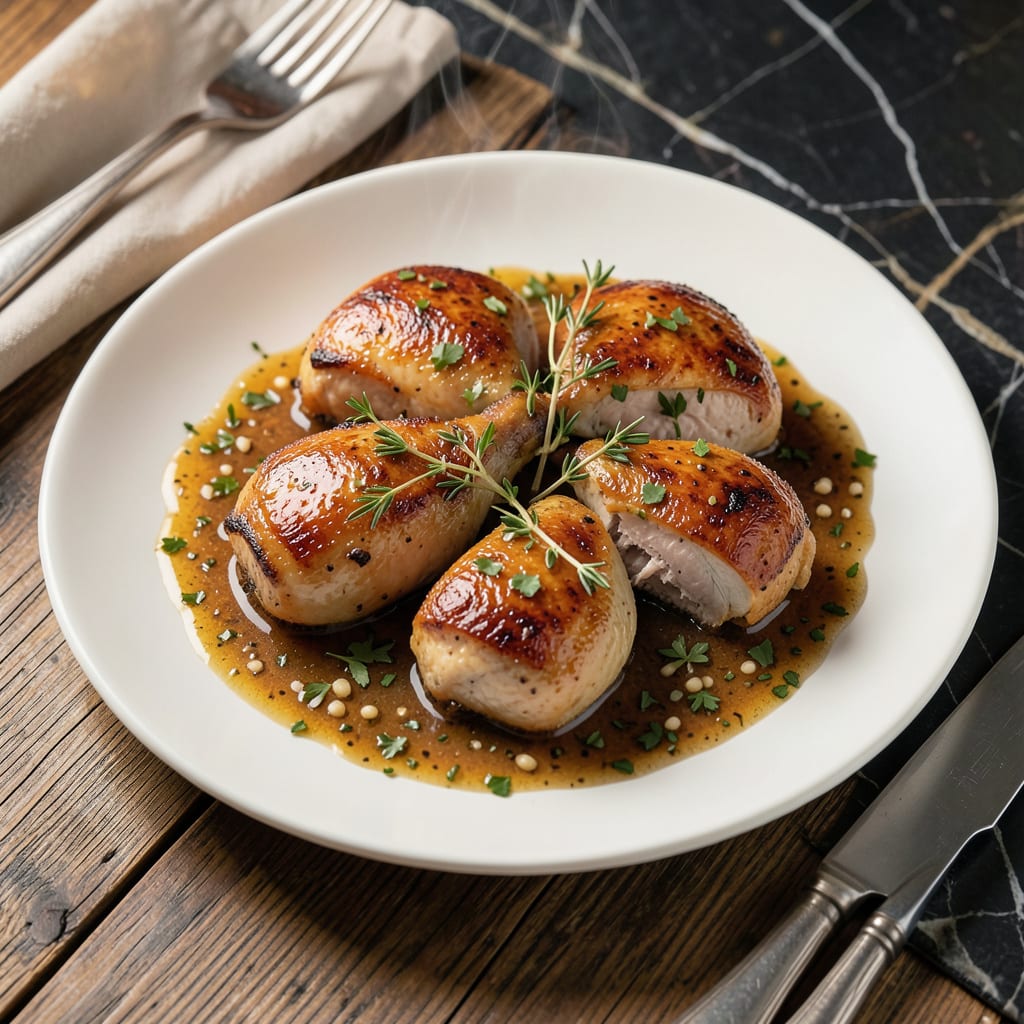
This tangy garlic-herb pan sauce transforms ordinary chicken into a restaurant-quality dish. The secret lies in its perfect balance of bright acidity and aromatic herbs, creating a versatile drizzle that elevates any protein.
Ready in 10 minutes, this foolproof sauce uses pantry staples and delivers bold flavor without complicated techniques. Its smooth consistency makes it ideal for drizzling, dipping, or tossing with your favorite ingredients.
Ingredients for Chicken Kitchen Sauce
Ten everyday ingredients. One restaurant-quality sauce. Ready in ten minutes flat.
| Ingredient | Amount | Notes |
|---|---|---|
| Garlic Cloves 🧄 | 4 cloves | Minced for maximum flavor |
| Fresh Parsley 🌿 | ¼ cup | Finely chopped, flat-leaf preferred |
| Fresh Thyme Leaves 🍃 | 2 tsp | Stems removed, roughly chopped |
| Dijon Mustard 🟡 | 1 tbsp | Smooth, no seeds |
| White Wine Vinegar 💧 | ¼ cup | Bright acidity essential |
| Chicken Broth 🍲 | ½ cup | Low-sodium preferred |
| Unsalted Butter 🧈 | 3 tbsp | Cold, cubed for emulsifying |
| Extra-Virgin Olive Oil 🫒 | 1 tbsp | For sautéing aromatics |
| Honey 🍯 | 1 tsp | Balances acidity naturally |
| Kosher Salt 🧂 | ½ tsp | Diamond Crystal recommended |
The herbs make this sauce sing. Fresh parsley and thyme are non-negotiable—dried just won’t cut it here. Whole Foods or your local farmers market will have the brightest, most fragrant bunches. For the garlic, look for plump cloves with tight skin (avoid any with green sprouts). The Dijon mustard adds depth, so use a good brand like Maille or Grey Poupon.
No white wine vinegar? Apple cider vinegar or lemon juice in a pinch, but reduce by half since they’re more potent. Dried herbs won’t work here, but fresh rosemary at half the amount could sub for thyme. Chicken broth can be swapped for vegetable broth (or even water, though the flavor will be milder). The honey can be maple syrup or agave if you’re avoiding bee products.
This sauce keeps 5 days in the fridge—store in an airtight jar. Reheat gently to avoid separating. Freezes well for 3 months (leave out the butter, add it fresh when reheating). Always bring the broth and vinegar to a simmer before whisking in the butter for that silky finish.
Why You’ll Love This Recipe
- One Pan Magic: No chopping marathons here—just mince the garlic, pluck the thyme, and let the sauce simmer while the chicken cooks.
- Zing in Every Bite: That tangy kick from the Dijon and white wine vinegar? It cuts through the richness like a dream.
- Midweek Lifesaver: I toss this together on busy nights, and it’s just as good cold in tomorrow’s lunch wrap.
- Stretch a Dollar: A handful of pantry staples and fresh herbs turn affordable chicken into something restaurant-worthy.
Step-by-Step Instructions for Chicken Kitchen Sauce
This tangy, herb-forward sauce comes together quickly with a few simple techniques.
Step 1: Bloom Aromatics in Fat
Heat the 1 tablespoon Extra-Virgin Olive Oil in a saucepan over medium heat until it shimmers. Add the 4 cloves Garlic Cloves and sauté for 30-45 seconds until fragrant but not browned. You want the garlic to soften and release its aroma without developing color.
Immediately add the 2 tsp Fresh Thyme Leaves and stir for 15-20 seconds to bloom the herbs. This step extracts the essential oils from both the garlic and thyme, building a flavor foundation for the sauce.
Step 2: Deglaze and Build Acid Base
Pour in the 0.25 cup White Wine Vinegar and scrape up any browned bits from the bottom of the pan. The vinegar should sizzle and reduce by about half in 2-3 minutes of simmering.
Add the 1 tbsp Dijon Mustard and 1 tsp Honey, whisking until smooth. The mustard will emulsify slightly with the vinegar, while the honey mellows the sharp acidity. Continue cooking for 1 minute until the mixture thickens slightly.
Step 3: Emulsify with Broth and Butter
Slowly pour in the 0.5 cup Chicken Broth while whisking constantly. Bring to a gentle simmer and cook for 3-4 minutes until the liquid reduces by about a quarter.
Reduce heat to low and whisk in the 3 tbsp Unsalted Butter, one cube at a time, allowing each piece to melt completely before adding the next. This creates a silky emulsion that gives the sauce its rich, velvety texture.
Step 4: Finish and Season
Remove the saucepan from heat and stir in the 0.25 cup Fresh Parsley and 0.5 tsp Kosher Salt. The parsley should wilt slightly but retain its bright green color.
Let the sauce rest for 2 minutes to allow the flavors to meld completely. Taste and adjust seasoning if needed, though the balance of tangy, sweet, and herbal notes should be just right. Serve warm over chicken or as a dipping sauce.
Pro Tips For Making Chicken Kitchen Sauce
- Mince Garlic Fine: I learned this the hard way—chunky garlic pieces make the sauce bitter. Press or finely mince it so it melts into the sauce.
- Bloom the Herbs: Add thyme leaves to the pan first with a little oil for 30 seconds to wake up their flavor before adding liquids.
- Skip Old Vinegar: White wine vinegar loses its punch after a year. Check the date—flat vinegar makes a dull sauce.
- Whisk Mustard Last: Stir in the Dijon at the very end off the heat. High heat can make it separate, giving you a grainy texture instead of smooth.
Storing and Reheating This Recipe
Refrigerator Storage
Let the sauce cool completely at room temperature for no more than 2 hours before transferring. I use glass mason jars for storage—they’re airtight and let you see the sauce. Store in the fridge at 40°F or below for up to 5 days. ❄️
Freezer Storage
For longer storage, freeze in ice cube trays first, then transfer to freezer bags. This lets you portion out exactly what you need. The sauce freezes well for up to 3 months without the butter—add fresh butter when reheating. Leave ½ inch headspace in containers for expansion.
Stovetop Reheating
Gentle heat is key to prevent separation. Warm over low heat in a small saucepan, whisking constantly. Add 1-2 tsp water or broth if it looks too thick. The emulsion should come back together in 3-4 minutes. 🔥
Microwave Method
Transfer a portion to a microwave-safe bowl and cover with a damp paper towel. Heat on 50% power in 30-second intervals, stirring between each. This prevents hot spots that could break the sauce. Stop when it reaches 140°F.
Reviving Separated Sauce
If the sauce separates during storage, don’t panic. Place the jar in warm water for 5 minutes to soften the butter, then whisk vigorously. A splash of hot water while whisking can help re-emulsify stubborn separations.
Nutrition Facts
Frequently Asked Questions
Can I use dried herbs instead of fresh?
Fresh herbs are essential for the best flavor, but in a pinch, use 1/3 the amount of dried. Keep in mind dried herbs won’t provide the same bright, vibrant taste as fresh parsley and thyme.
What can I use if I don’t have white wine vinegar?
Apple cider vinegar or lemon juice work well as substitutes. Use half the amount since they’re more potent. The acidity is key for balancing the sauce’s sweetness.
How do I prevent the sauce from breaking?
Keep the heat low and whisk constantly when adding butter. If it separates, remove from heat and whisk in 1 tsp hot water to re-emulsify.
Can I make this sauce ahead of time?
Yes! It stores well in the fridge for 5 days or freezes for 3 months. Reheat gently and stir in fresh butter if needed for the best texture.

- Jollof Rice Sauce Recipe: West African Tomato and Spice Infusion - September 25, 2026
- Japanese Rice Soup Recipe: Umami-Rich Comfort in a Bowl - September 25, 2026
- Homemade Cream Of Rice Recipe: Silk-Smooth Breakfast in Minutes - September 25, 2026