
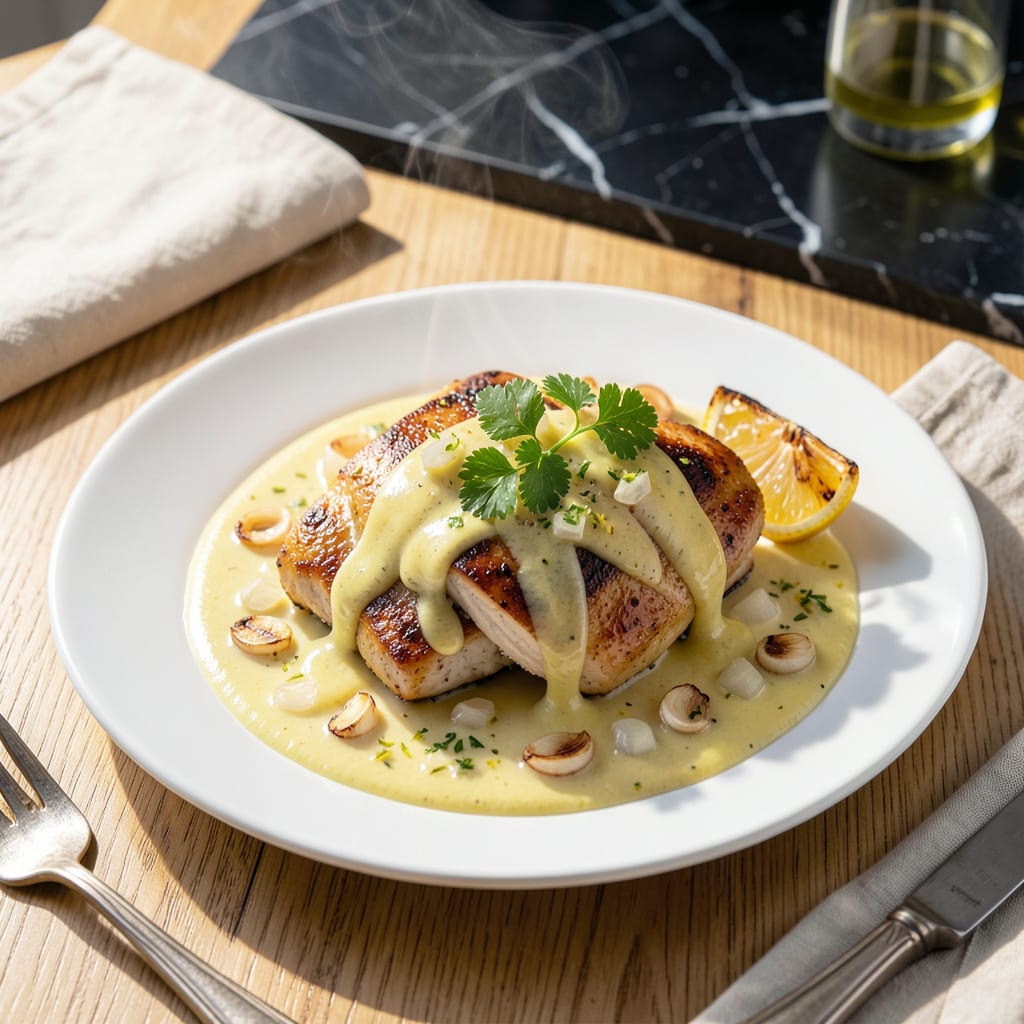
This bright citrus pan sauce transforms simple chicken into a perfect restaurant-quality dish. The combination of fresh lemon juice, butter, and herbs creates a velvety texture that clings beautifully to each bite.
Ready in minutes, this sauce adds a zesty, aromatic finish to grilled or pan-seared chicken. Its balanced acidity cuts through richness while enhancing the natural flavors of the meat.
Ingredients for Chicken Limone Sauce
Ten ingredients create this velvety citrus sauce with restaurant-quality depth and brightness.
| Ingredient | Amount | Notes |
|---|---|---|
| Fresh Lemon Juice 🍋 | ½ cup | Newly squeezed for brightness |
| Unsalted Butter 🧈 | ½ cup | Cut into small cubes |
| Heavy Cream 🥛 | ¼ cup | Full-fat for velvety texture |
| Chicken Stock 🍲 | ½ cup | Low-sodium preferred |
| Garlic Cloves 🧄 | 3 cloves | Minced finely for even distribution |
| Shallot 🧅 | 1 whole | Finely diced for subtle sweetness |
| Fresh Thyme Sprigs 🌿 | 3 piece | Leaves stripped from stems |
| Dijon Mustard 🟡 | 1 tbsp | Smooth variety for emulsification |
| Kosher Salt 🧂 | ½ tsp | Diamond Crystal preferred |
| Freshly Ground Black Pepper 🌶️ | ¼ tsp | Coarse grind for texture |
[recipeingredientscaler]
The butter is critical here. Plugrá or European-style delivers superior richness due to higher fat content. For the lemon juice, Meyer lemons (when in season) offer a sweeter, more floral profile than standard Eurekas. Shallots add delicate complexity—Whole Foods carries them year-round. Fresh thyme from the produce section outperforms dried by miles. If sourcing locally, seek out organic chicken stock for cleaner flavor.
No shallots? Substitute red onion at half the quantity (soak in cold water for 10 minutes to mellow). Heavy cream can be swapped for crème fraîche with identical results. Dried thyme works at one-third the amount, but fresh is ideal. For acidity adjustments, taste as you go—more lemon juice can be added at the end. Low-sodium stock prevents over-salting, but homemade is best.
Sauce keeps 3-4 days refrigerated in an airtight container. For longer storage, freeze in ice cube trays for up to 3 months. Reheat gently over low to prevent separation. Always add the butter last—off-heat prevents breaking the emulsion.
Why You’ll Love This Recipe
- One Pan Wonder: I toss everything in a single skillet—the butter, garlic, and lemon juice do all the work while I set the table.
- Bright & Zesty: That first bite of creamy sauce with the sharp lemon cut? I make it just to taste the leftovers off the spoon.
- Weeknight Hero: Between us, it’s my Tuesday night savior—ready before the rice finishes cooking.
- Double Duty: I stretch the sauce for pasta the next day. The garlic and stock taste even better reheated.
Step-by-Step Instructions for Chicken Limone Sauce
Master this technique for a restaurant-quality pan sauce with balanced acidity and rich depth.
Step 1: Sauté Aromatics for the Flavor Base
Heat a medium saucepan over medium heat and add the unsalted butter. Once melted, add the finely diced shallot and cook for 2-3 minutes until translucent and just beginning to soften.
Add the minced garlic cloves and fresh thyme sprigs (leaves stripped) to the pan. Sauté for an additional 30-45 seconds until fragrant—be careful not to let the garlic brown. This builds the aromatic foundation that defines the sauce.
Step 2: Deglaze with Acid and Stock
Pour in the 0.5 cup fresh lemon juice and 0.5 cup chicken stock. Increase heat to medium-high and bring to a gentle boil. Use a wooden spoon to scrape up any browned bits from the bottom of the pan—this incorporates maximum flavor.
Let the mixture reduce by about half, which typically takes 5-7 minutes. You’ll notice the liquid thicken slightly and the sharpness of the lemon mellow as it reduces. This step develops the bright citrus character that makes this sauce so distinctive.
Step 3: Emulsify and Finish the Sauce
Reduce heat to low and stir in the 0.25 cup heavy cream and 1 tbsp Dijon mustard. Whisk constantly for 2-3 minutes until the sauce begins to thicken and take on a velvety texture.
The mustard acts as an emulsifier, binding the fat and liquid components together. You’ll see the sauce transform from separated to uniformly smooth. This is when you know it’s properly emulsified.
Step 4: Season and Adjust to Taste
Remove the sauce from heat and stir in the 0.5 tsp kosher salt and 0.25 tsp freshly ground black pepper. Taste and adjust seasoning if needed—remember that the sauce will mellow slightly as it cools.
For the perfect consistency, the sauce should coat the back of a spoon but still be pourable. If it’s too thick, whisk in a splash of warm water. If too thin, return to medium heat for another 1-2 minutes to reduce further.
Pro Tips For Making Chicken Limone Sauce
- Temper the Cream: Always whisk a spoonful of the hot lemon-butter mixture into the heavy cream before adding it to the pan—this prevents the cream from splitting when it hits the heat.
- Zest First: Grate your lemon zest before juicing, and add it to the sauce with the garlic; the oils in the zest deepen the flavor more than juice alone ever could.
- Low and Slow: After adding the stock, keep the heat at a gentle simmer—boiling it hard makes the sauce break and turns the butter greasy instead of silky.
- Strain the Garlic: Fish out the garlic cloves once they’ve infused the sauce for 2-3 minutes; leaving them in can make the dish bitter, especially if they brown.
Common Mistakes When Making This Recipe
Over-Reducing the Sauce
One of the most common mistakes is reducing the sauce too much. After adding the lemon juice and chicken stock, let it reduce by only about half. If you go beyond this, the sauce can become too thick and lose its bright, vibrant character. I aim for a consistency that coats the back of a spoon but still drizzles easily. 🔥
Burning the Garlic
Garlic burns easily, especially when cooking with butter. After adding the minced garlic, keep the heat at medium and sauté for just 30-45 seconds until fragrant. Burnt garlic turns bitter and can ruin the entire sauce. If you see it browning, remove the pan from heat immediately.
Skipping the Emulsification
The Dijon mustard is more than just a flavor enhancer—it’s your emulsifier. Without it, the butter and lemon juice may separate. Whisk constantly for 2-3 minutes after adding the mustard to ensure a smooth, velvety texture. I’ve found this step is what makes the sauce restaurant-quality.
Adding Cold Butter
Always use room-temperature butter or cube it into small pieces before adding. Cold butter won’t melt evenly, leading to a greasy, separated sauce. I cut my ½ cup butter into 1-inch cubes and let it sit for 10 minutes before starting. This ensures a silky, cohesive finish.
Over-Seasoning Early
Resist the urge to season with salt and pepper until the very end. The sauce reduces significantly, and the flavors concentrate. Taste after adding the ½ tsp kosher salt and adjust as needed. I often find the sauce needs less salt than I initially expect.
Ignoring the Heat Level
This sauce requires careful heat management. Too high, and the cream can scorch; too low, and the sauce won’t reduce properly. Keep the heat at medium for sautéing and medium-high for reducing, then drop to low when adding the cream. Trust me, patience here pays off. ✨
Nutrition Facts
Frequently Asked Questions
Can I make this sauce ahead of time?
Yes, the sauce keeps well in an airtight container in the fridge for 3-4 days. Reheat gently over low heat while whisking to maintain its smooth texture.
What if my sauce separates?
Remove from heat and whisk vigorously. If needed, add 1 tsp cold water or Dijon mustard to help re-emulsify. Avoid high heat once cream is added.
Can I use dried thyme instead of fresh?
Yes, substitute 1/3 tsp dried thyme for every 3 sprigs fresh. Add it with the garlic to bloom the flavor properly.
Is this sauce gluten-free?
All ingredients are naturally gluten-free. Just ensure your chicken stock and Dijon mustard are certified gluten-free.

- Jollof Rice Sauce Recipe: West African Tomato and Spice Infusion - September 25, 2026
- Japanese Rice Soup Recipe: Umami-Rich Comfort in a Bowl - September 25, 2026
- Homemade Cream Of Rice Recipe: Silk-Smooth Breakfast in Minutes - September 25, 2026