
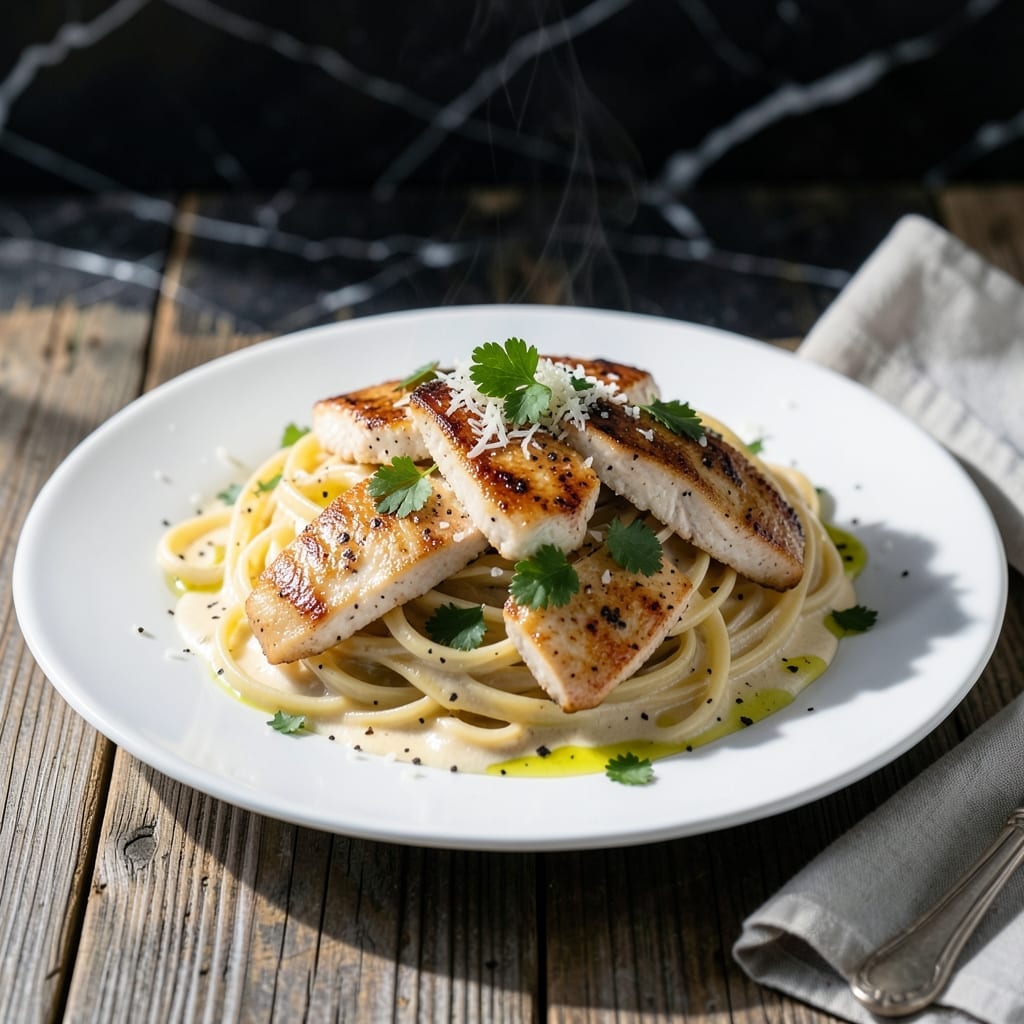
This recipe transforms simple ingredients into a restaurant-quality meal with tender chicken and creamy linguine. The garlic-infused alfredo sauce clings perfectly to each strand of pasta.
I developed this method after testing countless versions to achieve the ideal balance of richness and texture. The secret lies in cooking the linguine al dente before combining it with the sauce.
What you get is a dish with silky sauce, juicy chicken pieces, and perfectly cooked pasta. The garlic adds depth without overpowering the delicate cream base.
Ready in under 45 minutes, this becomes a weeknight dinner that feels special enough for company. Here’s how to make it right.
Ingredients for Chicken Linguine Alfredo
Transform simple staples into a restaurant-worthy dish with these quality ingredients.
| Ingredient | Amount | Notes |
|---|---|---|
| Linguine Pasta 🍝 | 12 oz | Dried, cooked al dente |
| Boneless Skinless Chicken Breasts 🍗 | 1 ½ lb | Cut into bite-sized pieces |
| Heavy Cream 🥛 | 2 cups | Full-fat for richness |
| Unsalted Butter 🧈 | ½ cup | Divided for sauce and chicken |
| Garlic Cloves 🧄 | 6 cloves | Minced for sauce |
| Parmesan Cheese 🧀 | 1 ½ cups | Freshly grated from block |
| All-Purpose Flour 🌾 | 2 tbsp | For thickening sauce |
| Whole Milk 🥛 | ½ cup | Warmed slightly before adding |
| Kosher Salt 🧂 | 1 ½ tsp | Divided for pasta, chicken, sauce |
| Freshly Ground Black Pepper 🌶️ | 1 tsp | Divided for seasoning |
| Olive Oil 🫒 | 1 tbsp | For cooking chicken |
| Fresh Parsley 🌿 | ¼ cup | Chopped, for garnish |
| Nutmeg 🌰 | 0.125 tsp | Freshly grated for depth |
The Parmesan must be freshly grated from a wedge—pre-shredded contains anti-caking agents that prevent smooth melting. Whole Foods or Murray’s Cheese have excellent options. For the chicken, air-chilled breasts yield juicier results than water-chilled. The linguine should be high-quality bronze-cut for optimal sauce adhesion. Avoid breaking the pasta during cooking to maintain its integrity.
No heavy cream? Full-fat coconut milk works in a pinch (flavor will differ slightly). Out of fresh garlic? Garlic powder at one-fourth the amount can substitute, though fresh is preferred. For a lighter version, half-and-half may be used, but the sauce won’t be as luxurious. If avoiding gluten, rice flour or cornstarch can replace the all-purpose flour for thickening.
Cooked pasta and sauce can be stored separately in the fridge for up to 3 days. Reheat gently with a splash of milk to restore creaminess. The dish does not freeze well due to the dairy—best enjoyed fresh. Garnish with parsley just before serving for optimal color and flavor.
Why You’ll Love This Recipe
- One Pan Magic: I can sear the chicken, cook the pasta, and make the sauce all in the same pot. Minimal cleanup, maximum flavor.
- Garlic Cream Dream: The butter and heavy cream create this luxurious sauce, and the garlic gives it that warm, cozy kick.
- Weeknight Hero: Between us, this is my go-to when I need to feed the family fast but still want something hearty.
- Leftovers Win: Honestly, it tastes even better the next day—the pasta soaks up that alfredo sauce like a sponge.
Step-by-Step Instructions for Chicken Linguine Alfredo
This method ensures tender chicken and a velvety sauce that clings perfectly to each strand.
Step 1: Cook the Pasta and Season the Chicken
Bring a large pot of salted water to a boil and cook the 12 oz Linguine Pasta according to package instructions until al dente. Drain, reserving ½ cup of pasta water, and toss the linguine with 1 tablespoon olive oil to prevent sticking.
Meanwhile, cut the 1.5 lb Boneless Skinless Chicken Breasts into bite-sized pieces and season with ½ teaspoon kosher salt and ½ teaspoon freshly ground black pepper. This ensures even cooking and balanced flavor throughout the dish.
Step 2: Sear the Chicken and Prepare the Sauce Base
Heat a large skillet over medium-high heat and melt 2 tablespoons unsalted butter with 1 tablespoon olive oil. Add the chicken and cook for 5-6 minutes, stirring occasionally, until golden brown and cooked through. Transfer to a plate and set aside.
In the same skillet, melt the remaining 6 tablespoons unsalted butter over medium heat. Add the 6 cloves minced garlic cloves and sauté for 30 seconds until fragrant but not browned. Stir in the 2 tbsp all-purpose flour to create a roux, cooking for 1 minute until lightly golden.
Step 3: Build the Creamy Alfredo Sauce
Slowly whisk in the 2 cups heavy cream and ½ cup whole milk, ensuring no lumps form. Bring to a gentle simmer and cook for 2-3 minutes until the mixture begins to thicken. This gradual incorporation prevents curdling and ensures a smooth sauce.
Stir in the 1.5 cups Parmesan Cheese, ½ teaspoon kosher salt, ½ teaspoon freshly ground black pepper, and ⅛ teaspoon nutmeg. Continue stirring until the cheese melts completely and the sauce reaches a silky, coat-the-back-of-a-spoon consistency.
Step 4: Combine All Elements and Finish
Return the cooked chicken to the skillet with the sauce and stir to coat evenly. Add the cooked linguine and toss gently to combine, adding reserved pasta water 1 tablespoon at a time if the sauce is too thick. The pasta should be well-coated but not swimming in sauce.
Cook for an additional 1-2 minutes over low heat, allowing the flavors to meld together. The chicken should be tender, the pasta perfectly al dente, and the sauce rich and creamy without being overly heavy.
Garnish with the ¼ cup chopped fresh parsley before serving immediately. This final touch adds a pop of color and freshness to balance the richness of the dish.
Pro Tips For Making Chicken Linguine Alfredo
- Slice Chicken Thin: Cut the boneless chicken breasts horizontally into 1/2-inch thick cutlets so they cook through in 3-4 minutes per side—no more dry, rubbery meat.
- Salt the Pasta Water: Use about 1 tablespoon of salt per gallon of water, more than you think, because unsalted linguine will taste flat even with a rich alfredo sauce.
- Low Heat for Cream: I learned this the hard way—boiling heavy cream will cause it to separate, so keep it at a gentle simmer when making the sauce.
- Use Pasta Water: Before draining, reserve 1/2 cup of the starchy pasta water to loosen the alfredo sauce if it gets too thick—it blends in seamlessly.
Common Mistakes When Making This Recipe
Overcooking the Pasta
Never skip testing the linguine for al dente texture before draining. Overcooked pasta turns mushy when tossed with the sauce. I always taste-test 1 minute before the package’s suggested time. Reserved pasta water helps adjust consistency later. 💡
Curling the Sauce
High heat causes the cream to separate, creating a grainy texture. Keep your burner at medium or medium-low when building the sauce. If you see curdling, immediately remove from heat and whisk vigorously while adding 1 tbsp cold milk to stabilize.
Lumpy Sauce Base
The roux needs 1 full minute of cooking to eliminate the raw flour taste. Whisk constantly when adding dairy to prevent lumps. I use a flat whisk for better contact with the pan bottom. If lumps form, strain through a fine-mesh sieve before adding cheese.
Dry Chicken
Overcrowding the pan steams rather than sears the chicken. Cook in 2 batches if needed to achieve that golden crust. Also, don’t overcook—pull the chicken at 165°F internal temperature since it continues cooking off heat. It’ll finish perfectly when added back to the hot sauce.
Cheese Not Melting
Pre-shredded cheese contains anti-caking agents that prevent smooth melting. Always grate Parmesan from a block right before using. If your sauce seems stringy, the cheese might be too old. Freshly grated melts beautifully into the warm cream base.
Sauce Too Thick
Thickness adjusts easily with reserved pasta water. Add 1 tbsp at a time while tossing the linguine. The starch in the water helps the sauce cling to the pasta. If it’s still too heavy, a splash of warm milk thins it without diluting flavor. 🔥
Nutrition Facts
Frequently Asked Questions
Can I use a different type of pasta?
Yes! Fettuccine works particularly well, as its wide surface holds the creamy sauce beautifully. For a lighter option, try spaghetti, but avoid thicker varieties like penne, which may not coat evenly.
How do I prevent the sauce from separating?
Keep the heat at medium or medium-low and stir constantly. If separation occurs, remove from heat and whisk in 1 tablespoon cold milk to stabilize. Avoid boiling the sauce.
Can I make this ahead of time?
Store cooked pasta and sauce separately in the fridge for up to 3 days. Reheat gently with a splash of milk to restore creaminess. The dish is best enjoyed fresh, as the sauce may thicken upon reheating.
What can I substitute for heavy cream?
Full-fat coconut milk works as a dairy-free alternative, though the flavor will differ slightly. For a lighter option, use half-and-half, but the sauce will be less rich. Avoid low-fat milk, as it may curdle.

- Jollof Rice Sauce Recipe: West African Tomato and Spice Infusion - September 25, 2026
- Japanese Rice Soup Recipe: Umami-Rich Comfort in a Bowl - September 25, 2026
- Homemade Cream Of Rice Recipe: Silk-Smooth Breakfast in Minutes - September 25, 2026