
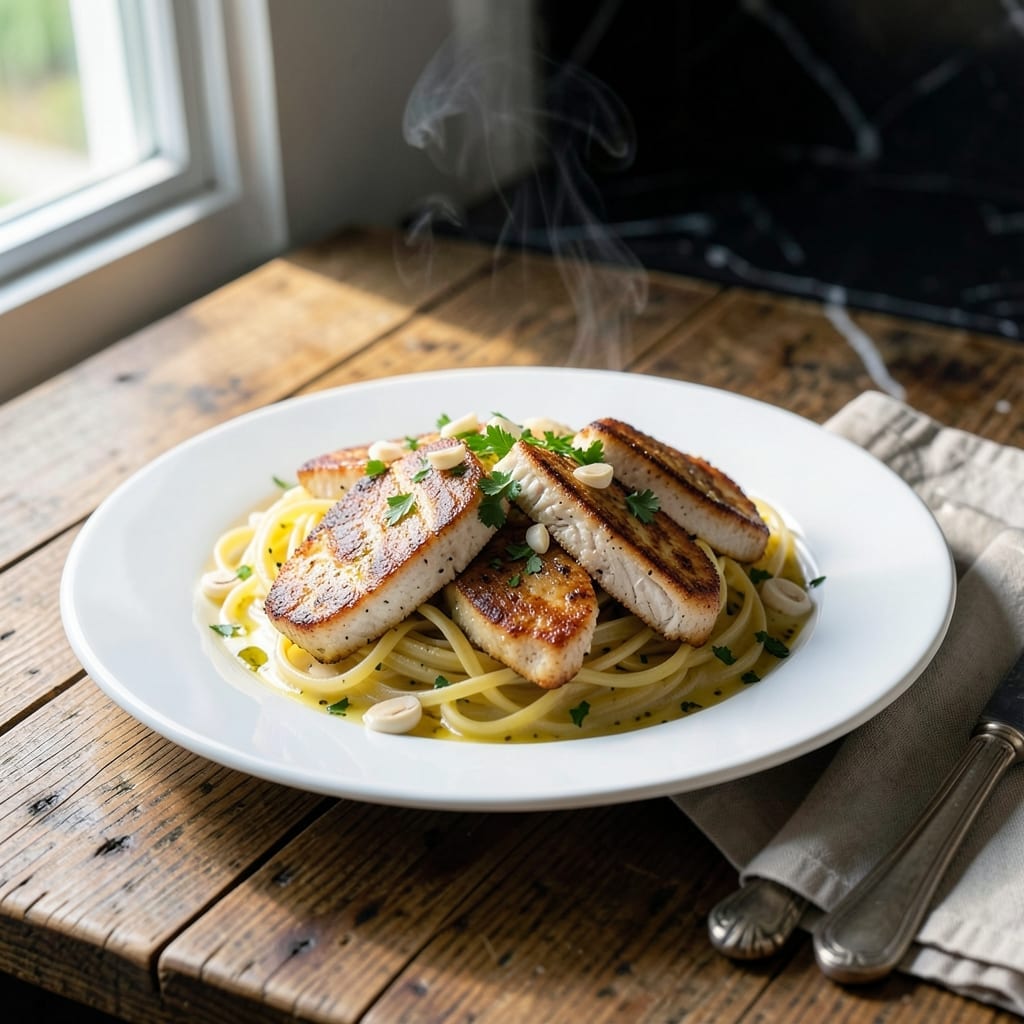
This chicken linguine brings together tender chicken, delicate pasta, and a garlicky white wine sauce that’s rich yet balanced. The spinach adds freshness without overpowering the dish.
I developed this recipe to be approachable without sacrificing depth of flavor. The sauce comes together quickly while the pasta cooks, making it efficient for weeknight dinners.
What you’ll get is a restaurant-quality meal with juicy chicken, perfectly al dente linguine, and a velvety sauce that clings to every strand.
Serve with crusty bread to soak up every last bit. Here’s how to make it.
Ingredients for Chicken Linguine
A handful of quality ingredients creates that restaurant-quality dish at home with ease.
| Ingredient | Amount | Notes |
|---|---|---|
| Linguine Pasta 🍝 | 12 oz | Dried, uncooked linguine strands |
| Boneless Skinless Chicken Breasts 🍗 | 1 ½ lb | Cut into thin cutlets |
| Extra-Virgin Olive Oil 🫒 | 3 tbsp | Divided for cooking and sauce |
| Unsalted Butter 🧈 | 4 tbsp | For rich sauce base |
| Garlic Cloves 🧄 | 6 cloves | Minced finely for sauce |
| Dry White Wine 🍷 | ¾ cup | Sauvignon Blanc or Pinot Grigio |
| Chicken Stock 🥣 | ½ cup | Low-sodium preferred for balance |
| Heavy Cream 🥛 | ½ cup | Full-fat for velvety texture |
| Parmesan Cheese 🧀 | ½ cup | Freshly grated from block |
| Fresh Spinach 🌿 | 5 oz | Baby spinach preferred |
| All-Purpose Flour 🌾 | ¼ cup | For thickening sauce |
| Kosher Salt 🧂 | 1 tsp | Diamond Crystal preferred |
| Freshly Ground Black Pepper 🌶️ | ½ tsp | Coarsely ground for texture |
| Fresh Lemon Juice 🍋 | 1 tbsp | Brightens the sauce |
| Red Pepper Flakes 🔥 | ¼ tsp | Optional for heat |
The chicken is key here. Look for even thickness in the breasts—pound them to ½-inch for consistent cooking. I grab mine from Whole Foods when they’ve got the nice organic ones on sale, but any grocery store’s fresh cut works. The linguine should be high-quality Italian—De Cecco or Barilla hold up better than generic brands. And don’t skimp on the Parm; a wedge of Parmigiano-Reggiano makes all the difference (worth the splurge).
Out of white wine? Substitute chicken stock with a splash of lemon juice. Heavy cream can be half-and-half in a pinch, but the sauce won’t be quite as luscious. No fresh spinach? Frozen works—just thaw and squeeze out the water first. The garlic can be pre-minced from a jar if you’re short on time, but fresh tastes brighter. And if you want extra richness, swap the butter for European-style—higher fat content equals more flavor.
Leftovers keep for about 3 days in the fridge—reheat gently with a splash of water or cream. The sauce thickens as it cools, so thin it out when warming. You can freeze portions for up to 2 months, but the pasta texture changes slightly (still tasty, just softer).
Why You’ll Love This Recipe
- One Pan Wonder: I love that everything cooks together in a single skillet—pasta, chicken, and garlic in one go.
- Garlic Butter Bliss: The combo of butter, olive oil, and fresh garlic makes this dish ridiculously good.
- Weeknight Hero: Between us, this is my go-to when I need dinner on the table fast without sacrificing taste.
- Leftovers Win: Honestly, it tastes even better the next day—if there’s any left, that is.
Step-by-Step Instructions for Chicken Linguine With Garlicky White Wine Sauce
Here’s the foolproof method that brings this dish together with maximum flavor every time.
Step 1: Prep and Sear the Chicken Cutlets
Pat the boneless skinless chicken breasts dry with paper towels and season both sides with 1 tsp kosher salt and 0.5 tsp freshly ground black pepper. Cut into thin cutlets for even cooking. Heat 1 tbsp extra-virgin olive oil in a large skillet over medium-high heat until shimmering.
Add the chicken in a single layer and sear for 3-4 minutes per side until golden brown and cooked through. The cutlets should release easily from the pan when properly seared. Transfer to a plate and tent with foil to keep warm.
Step 2: Build the Garlicky White Wine Sauce Base
In the same skillet, reduce heat to medium and add 1 tbsp extra-virgin olive oil and 4 tbsp unsalted butter. Once the butter melts, add the 6 cloves minced garlic cloves and 0.25 tsp red pepper flakes and sauté for 30-45 seconds until fragrant but not browned.
Stir in the 0.25 cup all-purpose flour and cook for 1 minute to remove the raw taste. This creates a roux that will thicken your sauce beautifully. Slowly pour in the 0.75 cup dry white wine while whisking constantly to prevent lumps. Let it simmer for 2 minutes until the liquid reduces by half.
Step 3: Finish the Sauce with Cream and Parmesan
Add the 0.5 cup chicken stock and 0.5 cup heavy cream to the skillet, stirring to combine. Let the mixture simmer for 3-4 minutes until it thickens enough to coat the back of a spoon. The sauce should look velvety and rich.
Remove from heat and stir in the 0.5 cup parmesan cheese and 1 tbsp fresh lemon juice. The cheese will melt into the sauce, creating a creamy, luxurious texture. Taste and adjust seasoning if needed, though the parmesan adds plenty of saltiness.
Step 4: Combine with Pasta and Spinach
Meanwhile, cook the 12 oz linguine pasta in salted boiling water until 1 minute shy of al dente. Reserve 1 cup of pasta water, then drain. Add the pasta to the skillet with the sauce and toss to coat evenly.
Stir in the 5 oz fresh spinach and cook for 1-2 minutes until just wilted. If the sauce is too thick, add reserved pasta water 1 tablespoon at a time until it reaches your desired consistency. The spinach should be bright green and tender.
Return the chicken to the skillet and nestle it into the pasta. Serve immediately while hot, with extra parmesan if desired.
Pro Tips For Making Chicken Linguine
- Pound the Chicken: Even thickness means even cooking—pound the breasts to ½-inch so they cook through without drying out. I learned this the hard way after too many dry, rubbery bites.
- Salt the Pasta Water: Use about 1-2 tablespoons of salt per gallon of water, more than you think. My grandmother swore by this, and she was right: it’s the only chance to season the pasta itself.
- Skip the Cold Garlic: Let minced garlic sit at room temp for 10 minutes before cooking—it mellows the sharpness and actually changes the flavor. Sounds weird, but it works.
- Reserve Pasta Water: Scoop out a cup before draining—it’s liquid gold for loosening the sauce and helping it cling to the linguine. I was skeptical until I tried it.
Perfect Pairings for This Dish
Wine Pairings
The Sauvignon Blanc or Pinot Grigio used in the sauce makes a perfect pairing. I love a crisp New Zealand Sauvignon Blanc—its citrus notes complement the lemon in the sauce beautifully. Serve chilled at 45-50°F for best results. 🍷
Bread Options
A warm baguette or ciabatta loaf is ideal for soaking up the rich sauce. I toast slices with olive oil and garlic for extra flavor. The crusty texture contrasts perfectly with the tender pasta.
Vegetable Sides
A simple arugula salad with shaved parmesan and lemon vinaigrette adds freshness. Toss 4 cups arugula with 2 tbsp olive oil and 1 tbsp lemon juice. Alternatively, roasted asparagus with a squeeze of lemon works wonderfully.
Starch Pairings
For a heartier meal, serve with garlic mashed potatoes or crusty garlic bread. The potatoes add comfort, while bread keeps it simple. I prefer potatoes with Yukon Gold for their buttery texture. 💛
Dessert Follow-Up
A light lemon sorbet cleanses the palate after this rich dish. Alternatively, tiramisu continues the Italian theme. Both options balance the meal without overwhelming the main course.
Nutrition Facts
Frequently Asked Questions
Can I use chicken thighs instead of breasts?
Chicken thighs stay juicier and are more forgiving. Use 1.5 lb boneless and sear for 4-5 minutes per side at medium-high heat. They add richer flavor to the dish.
What if my sauce is too thin?
Simmer it longer for 2-3 minutes to thicken. If needed, mix 1 tsp cornstarch with 1 tbsp cold water and stir in. The sauce will continue thickening as it cools.
How do I prevent the pasta from sticking?
Use plenty of salted water—at least 4 quarts for 12 oz linguine. Stir occasionally while cooking and add pasta to boiling water, not before. Reserve pasta water for sauce adjustments.

- Jollof Rice Sauce Recipe: West African Tomato and Spice Infusion - September 25, 2026
- Japanese Rice Soup Recipe: Umami-Rich Comfort in a Bowl - September 25, 2026
- Homemade Cream Of Rice Recipe: Silk-Smooth Breakfast in Minutes - September 25, 2026