
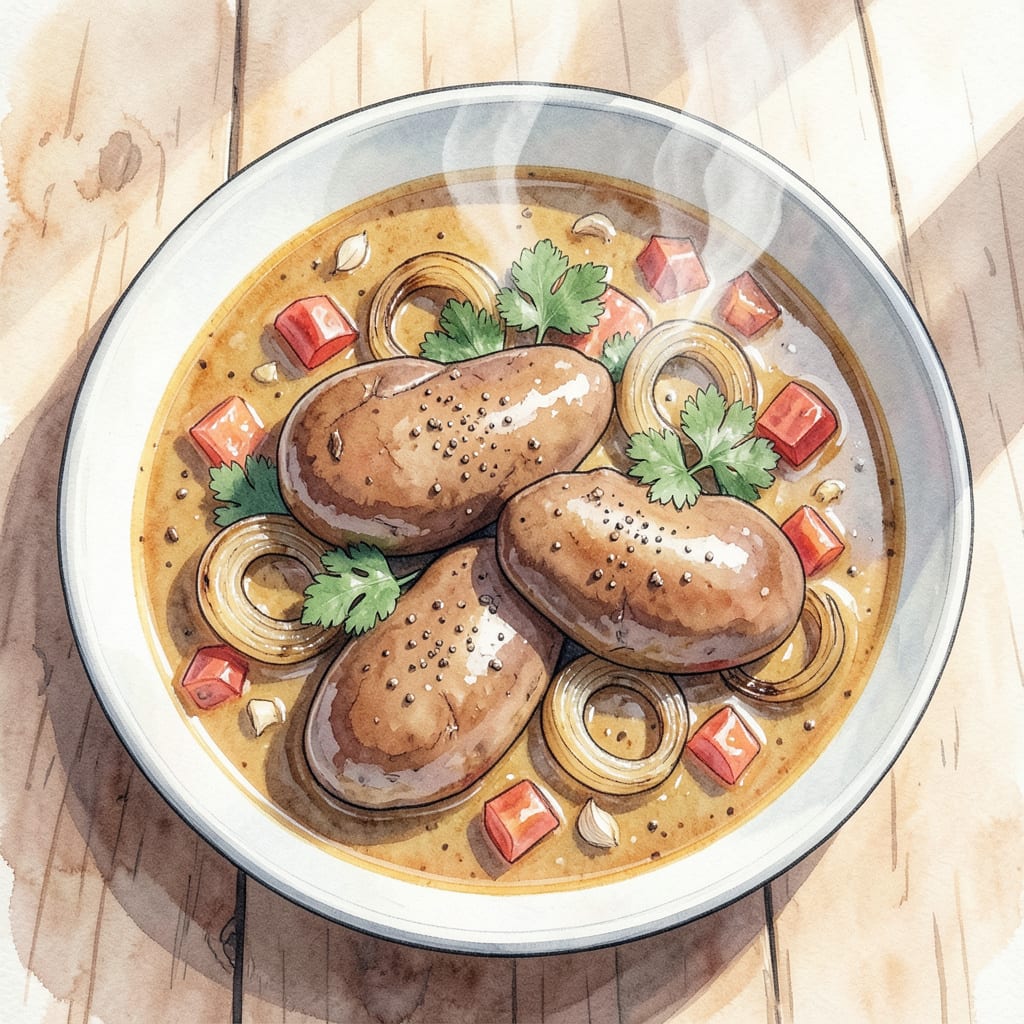
I’m excited to share my chicken liver curry recipe that brings rich Indian flavors to your table in just 30 minutes. This dish is perfect for those looking to explore beyond traditional chicken recipes.
The secret to this curry lies in the balance of spices and the tenderization of the liver, achieved through a simple yet effective cooking process. Serve with rice or naan for a complete meal that’s both satisfying and flavorful.
Ingredients for Chicken Liver Curry
Simple ingredients come together to create this rich and flavorful chicken liver curry.
| Ingredient | Amount | Notes |
|---|---|---|
| Chicken Livers 🍗 | 1 lb | Cleaned, trimmed |
| Onion 🧅 | 1 whole | Thinly sliced |
| Garlic Cloves 🧄 | 4 cloves | Minced |
| Ginger 🌿 | 2 tbsp | Grated |
| Cumin Powder 🌶️ | 1 tsp | Ground |
| Coriander Powder 🌿 | 1 tsp | Ground |
| Turmeric 💛 | ½ tsp | Ground |
| Cayenne Pepper 🔥 | ¼ tsp | Optional, for heat |
| Garam Masala 🌶️ | ½ tsp | Ground |
| Tomato Puree 🍅 | 1 cup | Canned or fresh |
| Coconut Milk 🥛 | 1 cup | Full-fat |
| Vegetable Oil 🫒 | 2 tbsp | For frying |
| Salt 🧂 | 1 tsp | To taste |
| Fresh Cilantro 🌿 | ¼ cup | Chopped, for garnish |
The quality of spices matters here. I recommend Penzeys for ground spices. Fresh ginger is a must—don’t skip it. For the chicken livers, look for bright red color and avoid any with strong odor. Most grocery stores carry them in the meat section, often near the organ meats.
No coconut milk? You can substitute with heavy cream or cashew cream for a different flavor profile. If you prefer less heat, reduce or omit the cayenne pepper. For a thicker curry, simmer longer or add a slurry of cornstarch and water. Fresh cilantro adds a nice freshness, but you can use dried cilantro if needed.
This curry stores well in the fridge for up to 3 days. Reheat gently on the stovetop. You can also freeze it for up to 3 months. When reheating, add a splash of coconut milk or water if it’s too thick.
Step-by-Step Instructions for Chicken Liver Curry
Let’s cook this rich and flavorful curry together in just 30 minutes.
Step 1: Sauté Onions and Prepare Chicken Livers
Heat 2 tablespoons of Vegetable Oil in a large pan over medium heat. Add the 1 whole Onion, thinly sliced, and cook for 5-7 minutes until it turns golden brown and caramelized. Stir occasionally to prevent burning.
While the onions are cooking, prepare the 1 lb Chicken Livers by cutting them into 1-inch pieces. I like to remove any connective tissue or membranes at this stage to ensure tender results. Once the onions are done, remove them from the pan and set aside.
Step 2: Cook the Aromatics and Spices
In the same pan, add the 4 cloves Garlic Cloves, minced, and 2 tablespoons of grated Ginger. Cook for 1 minute until fragrant, stirring constantly to prevent burning. The aroma will be incredible at this point.
Now add the 1 tsp Cumin Powder, 1 tsp Coriander Powder, 0.5 tsp Turmeric, 0.25 tsp Cayenne Pepper, and 0.5 tsp Garam Masala. Stir well for 30 seconds to toast the spices and release their flavors. You’ll notice the mixture becoming fragrant and slightly darker.
Step 3: Cook the Chicken Livers and Finish the Curry
Add the prepared 1 lb Chicken Livers to the pan and cook for 5-7 minutes until they are browned on all sides and cooked through. Make sure to stir occasionally for even cooking.
Once the chicken livers are cooked, add the 1 cup Tomato Puree and 1 cup Coconut Milk to the pan. Stir well to combine, then add the cooked onions back into the pan. Season with 1 tsp Salt to taste. Let the curry simmer for 10-15 minutes over low heat until it thickens slightly and the flavors meld together. Garnish with 0.25 cup of chopped Fresh Cilantro before serving.
Troubleshooting Perfect Results
Common Texture Issues
If your chicken livers end up tough or rubbery, it’s likely due to overcooking. Cook them just until they reach 165°F internal temperature. Letting them simmer too long in the curry can also cause toughness. For tender results, remove them from heat as soon as they’re done. 🔥
Curry Consistency Problems
If your curry is too thin, simmer it for a few more minutes to reduce the liquid. You can also add a slurry made from 1 tsp cornstarch mixed with 2 tbsp water. If it’s too thick, add a splash of coconut milk or water to achieve your desired consistency.
Flavor Imbalance Solutions
If the curry tastes too bland, add a pinch of garam masala or a squeeze of fresh lime juice to brighten the flavors. If it’s too spicy, a dollop of plain yogurt or a sprinkle of sugar can help balance the heat. Taste and adjust as you go to maintain the perfect balance.
Preventing Curdling
To prevent the coconut milk from curdling, add it towards the end of cooking and maintain a low simmer. Stir well when adding it to the hot pan. If curdling occurs, blend the curry briefly to emulsify it back together.
Saving an Overly Thick Curry
If your curry becomes too thick during storage, simply add a splash of coconut milk or water when reheating. Heat it gently over low heat, stirring constantly, until you reach the desired consistency.
Resolving Spice Flavor Issues
If the spice flavors aren’t coming through, try toasting your whole spices before grinding them for extra depth. If using pre-ground spices, check their freshness as old spices lose potency. Adding a bit more garam masala at the end can also enhance the overall spice flavor.
Nutrition Facts

- Jollof Rice Sauce Recipe: West African Tomato and Spice Infusion - September 25, 2026
- Japanese Rice Soup Recipe: Umami-Rich Comfort in a Bowl - September 25, 2026
- Homemade Cream Of Rice Recipe: Silk-Smooth Breakfast in Minutes - September 25, 2026