
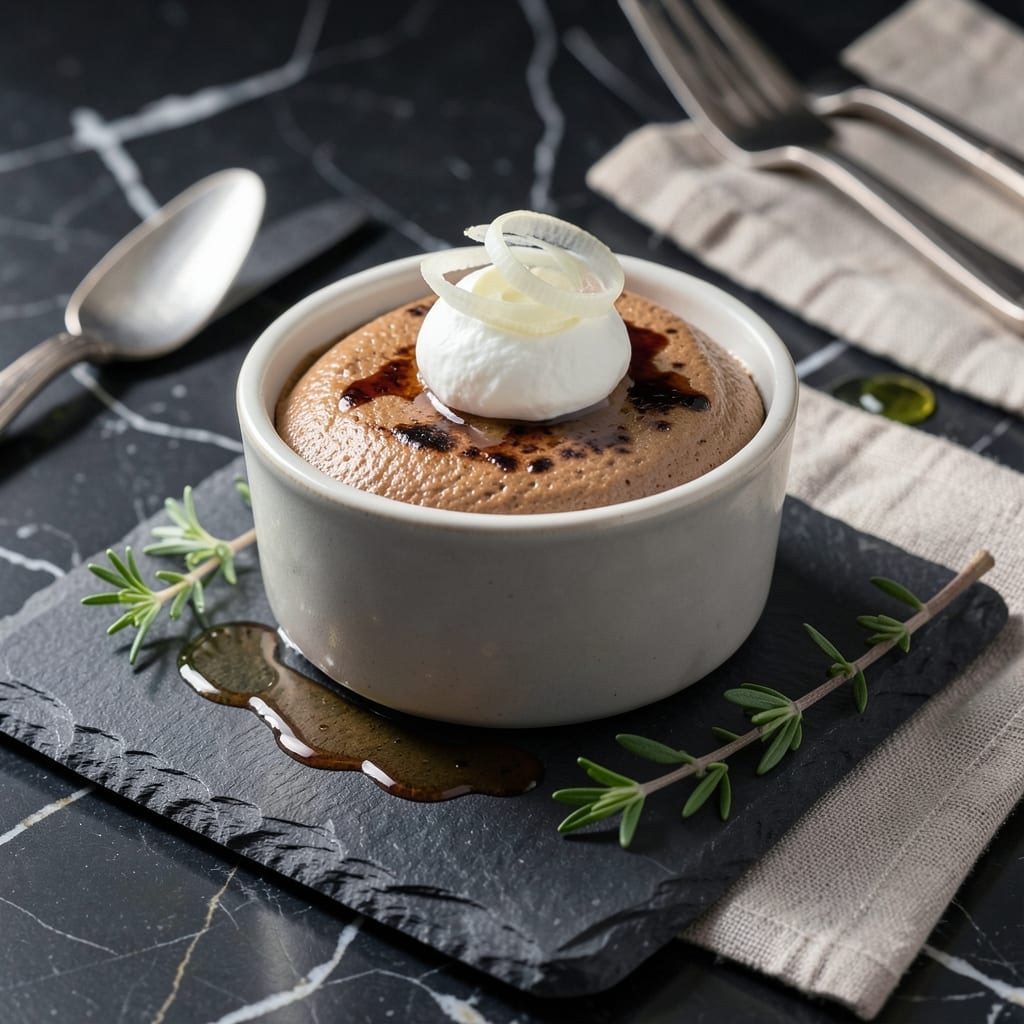
This chicken liver mousse delivers a velvety texture with deep, rich flavor that elevates any appetizer spread. A classic French technique transforms humble ingredients into an elegant dish worthy of special occasions.
The secret lies in proper preparation and patience. Cleaning the livers thoroughly removes any bitterness, while slow cooking in butter creates a smooth base. The addition of cream and brandy adds complexity without overpowering the natural taste.
What emerges is a refined spread with a luxurious mouthfeel. The mousse achieves perfect balance between earthy liver notes and creamy richness. Its subtle depth makes it ideal for serving with crusty bread or crackers.
This recipe proves that simple ingredients, when treated with care, can produce extraordinary results. The final product is both sophisticated and approachable for home cooks.
Ingredients for Chicken Liver Mousse
Transform humble chicken livers into an elegant, velvety spread with these refined ingredients.
| Ingredient | Amount | Notes |
|---|---|---|
| Chicken Livers 🍗 | 1 lb | Trimmed of connective tissue |
| Unsalted Butter 🧈 | ½ cup | Divided for cooking and finishing |
| Shallot 🧅 | 1 whole | Finely minced for depth |
| Garlic Cloves 🧄 | 2 cloves | Minced for aromatic base |
| Brandy 🥃 | 2 tbsp | Cognac or Armagnac preferred |
| Heavy Cream 🥛 | ½ cup | Chilled for whipping stability |
| Kosher Salt 🧂 | 1 tsp | Diamond Crystal preferred for balance |
| Fresh Thyme Leaves 🌿 | 1 tbsp | Stems removed for clean flavor |
| Fresh Rosemary 🍃 | 1 tsp | Finely chopped for earthiness |
| Black Pepper 🌶️ | ½ tsp | Freshly cracked for sharpness |
| Dijon Mustard 🟡 | 1 tbsp | Adds subtle tang and depth |
| Lemon Juice 🍋 | 1 tsp | Freshly squeezed for brightness |
The livers are the foundation. Source fresh, vibrant ones from a trusted butcher or specialty grocer like Whole Foods. Avoid any with a grayish tint or strong odor—freshness is non-negotiable. The butter matters too; European-style (higher fat content) yields a richer, smoother finish. Clean the livers meticulously to remove all connective tissue and blood spots, which can impart bitterness.
Out of brandy? Dry sherry or bourbon work as acceptable substitutes. For a non-alcoholic version, 1 tbsp apple cider vinegar plus 1 tbsp water mimics the acidity. Heavy cream is essential for the mousse’s signature texture, but full-fat Greek yogurt (strained) can substitute in a pinch. The herbs can be swapped for dried at one-third the amount, though fresh delivers superior brightness.
This mousse keeps 3 days refrigerated in an airtight container. The flavors deepen overnight, so making it a day ahead is ideal. For longer storage, pipe into ramekins, cover with plastic wrap pressed directly onto the surface, and freeze for up to 1 month. Thaw in the fridge before serving.
Why You’ll Love This Recipe
- One Blender Wonder: I just dump the sautéed livers, butter, shallots, and brandy into the blender—no fancy techniques, just silky mousse in minutes.
- Rich & Deep: The brandy cuts through the richness of the chicken livers and butter, while the shallots and garlic add that perfect savory depth.
- Spread for Days: I slather it on crusty bread for appetizers, pack it in lunches, or serve it with charcuterie—it’s my go-to for effortless entertaining.
- Pocket-Friendly Luxury: Honestly, chicken livers cost pennies compared to store-bought pâté, and this tastes even better—plus it makes enough to share.
Step-by-Step Instructions for Chicken Liver Mousse
This refined technique transforms humble ingredients into a restaurant-quality spread with luxurious texture.
Step 1: Clean and Sear the Chicken Livers
Rinse the 1 lb Chicken Livers under cold water and pat them completely dry with paper towels. Trim away any connective tissue or visible fat with a sharp knife—this ensures a smooth final texture without any gritty bits.
Heat 2 tablespoons of the 0.5 cup Unsalted Butter in a large skillet over medium-high heat until thefoam subsides. Add the cleaned chicken livers in a single layer, being careful not to crowd the pan. Sear for 2-3 minutes per side until browned outside but still pink inside. The livers should be just cooked through but still tender.
Step 2: Sauté Aromatics and Deglaze
Remove the seared chicken livers to a plate and reduce heat to medium. In the same skillet, add the finely minced 1 whole Shallot and cook for 2-3 minutes until soft and translucent, stirring occasionally to prevent browning.
Add the 2 cloves Garlic Cloves minced, 1 tbsp Fresh Thyme Leaves, and 1 tsp Fresh Rosemary, cooking for 30 seconds until fragrant. Immediately deglaze the pan with 2 tbsp Brandy, scraping up all browned bits from the bottom. Let the mixture simmer for 1 minute to cook off the alcohol.
Step 3: Purée the Mixture to Silky Smoothness
Transfer the chicken livers and all pan contents to a food processor. Add the remaining 0.5 cup Unsalted Butter (cut into pieces), 0.5 cup Heavy Cream, 1 tsp Kosher Salt, 0.5 tsp Black Pepper, 1 tbsp Dijon Mustard, and 1 tsp Lemon Juice.
Pulse until completely smooth, scraping down the sides as needed. The mixture should be velvety with no visible lumps—this may take 2-3 minutes of continuous processing. For ultra-smooth results, pass the mixture through a fine-mesh sieve after blending.
Step 4: Chill and Set for Optimal Texture
Transfer the mousse to a serving bowl or ramekins and cover with plastic wrap pressed directly against the surface to prevent a skin from forming. Refrigerate for at least 4 hours or preferably overnight to allow the flavors to meld and the texture to set properly.
The chilled mousse should have a firm yet spreadable consistency. Before serving, let it sit at room temperature for 15-20 minutes to soften slightly. This resting period is crucial for developing the full depth of flavor and achieving the perfect spreadable texture.
Pro Tips For Making Chicken Liver Mousse
- Soak the Livers: Cover chicken livers in milk for 30 minutes before cooking to mellow their bitterness—I learned this the hard way after serving a too-strong batch to dinner guests.
- Low and Slow: Cook the livers on medium-low heat, about 5-6 minutes total, to avoid turning them tough or grainy. High heat ruins the texture every time.
- Deglaze with Brandy: After sautéing shallots and garlic, pour in the brandy while the pan’s still hot to scrape up all those browned bits—they pack serious flavor into the mousse.
- Strain the Mixture: Push the blended mousse through a fine-mesh sieve for an ultra-smooth finish. Sounds fussy, but it removes any lingering grit from the livers.
Serving Suggestions for This Recipe
Elegant Presentation
Serve this spread in a chilled ceramic ramekin for a refined touch. The smooth surface of the dish highlights the mousse’s velvety texture. I love using my Le Creuset stoneware for this—it keeps the mousse cool during summer gatherings. 💛
Bread Pairings
A baguette sliced into ½-inch pieces and lightly toasted makes the perfect vessel. The crisp exterior contrasts beautifully with the creamy mousse. For a rustic option, try sourdough or a ciabatta loaf with its open crumb structure.
Cracker Options
Water crackers provide a neutral base that lets the liver flavor shine. For more complexity, rosemary crisps or parmesan shortbread add complementary herbal notes. I always keep a box of Raincoast Crisps on hand for impromptu entertaining.
Garnishing Touches
A drizzle of aged balsamic glaze adds sweetness and visual appeal. Fresh thyme sprigs or a sprinkle of flaky sea salt like Maldon elevates the presentation. The contrast of dark glaze against the pale mousse is stunning on any table.
Accompaniment Ideas
Offer cornichons and grainy mustard on the side for guests who appreciate a tangy contrast. A small bowl of fig jam provides a sweet counterpoint that pairs surprisingly well with the earthy liver notes. 🌟
Serving Temperature
Always serve the mousse slightly cool but not ice-cold. I take it out of the fridge 15-20 minutes before serving to let the flavors open up. This temperature allows the butter to soften just enough for easy spreading without losing its structure.
Nutrition Facts
Frequently Asked Questions
Can I use duck or beef liver instead?
Yes, but adjust cooking time. Duck liver needs 1-2 minutes less, while beef liver requires 1 minute more to avoid toughness. The flavor profile will differ slightly, with duck being richer.
Why does my mousse taste bitter?
Bitterness comes from under-cleaned livers or overcooking. Always remove all connective tissue and cook just until pink inside. Soaking livers in milk for 30 minutes before cooking can also help.
How long can I keep leftovers?
Properly stored in an airtight container, it keeps for 3 days in the fridge. For longer storage, freeze for up to 1 month, but texture may change slightly upon thawing.
What can I substitute for brandy?
Use dry sherry or bourbon as direct substitutes. For a non-alcoholic version, mix 1 tbsp apple cider vinegar with 1 tbsp water to mimic the acidity.

- Jollof Rice Sauce Recipe: West African Tomato and Spice Infusion - September 25, 2026
- Japanese Rice Soup Recipe: Umami-Rich Comfort in a Bowl - September 25, 2026
- Homemade Cream Of Rice Recipe: Silk-Smooth Breakfast in Minutes - September 25, 2026