
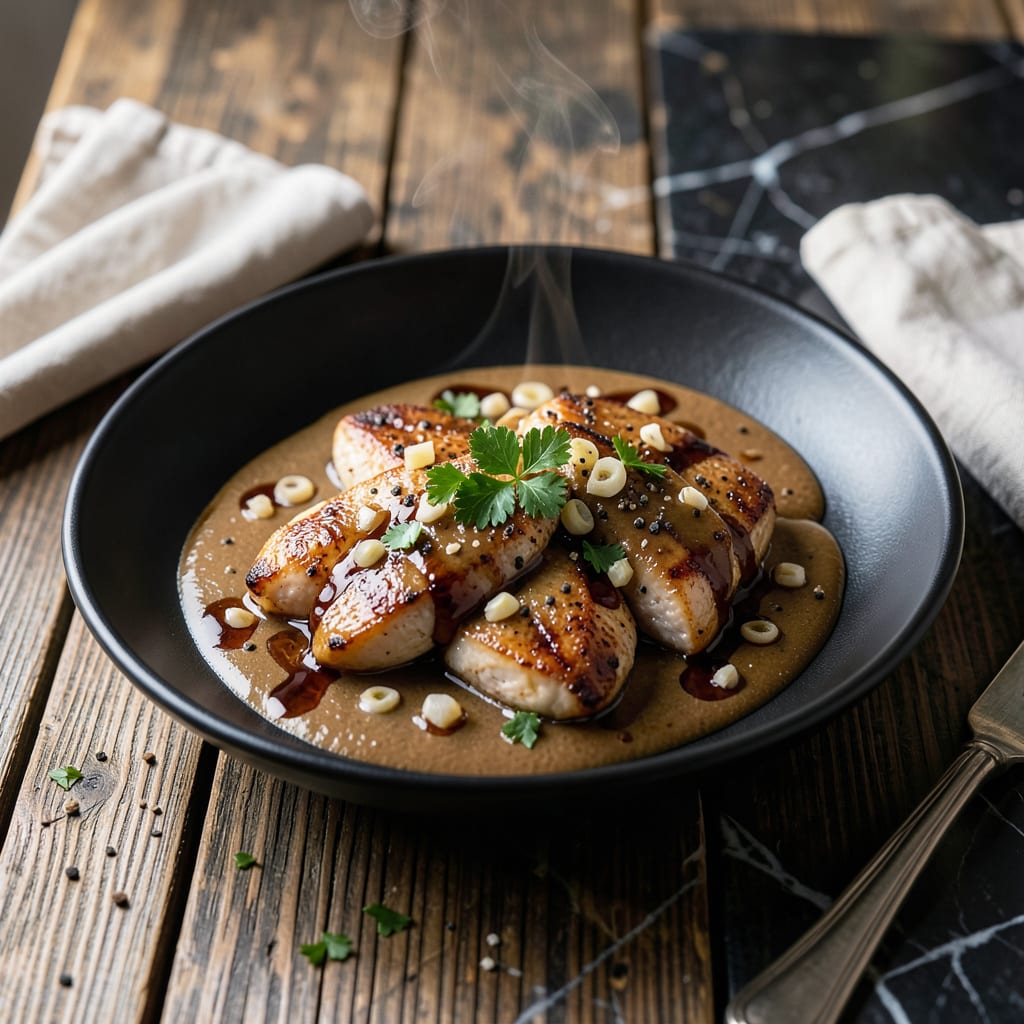
This rich, velvety chicken liver sauce transforms simple dishes into gourmet experiences with its deep, savory complexity. The secret lies in slow cooking the livers in broth until they break down into a silky smooth paste.
Perfect for elevating meats, vegetables, or toast, this sauce delivers iron-rich depth that store-bought versions can’t match. The process is straightforward, with results that taste far more sophisticated than the effort required.
Ingredients for Chicken Liver Sauce
Transform simple ingredients into a luxurious sauce with deep, savory complexity and silky texture.
| Ingredient | Amount | Notes |
|---|---|---|
| Chicken Livers 🍗 | 1 lb | Trimmed of connective tissue |
| Unsalted Butter 🧈 | ½ cup | Divided for cooking and finishing |
| Shallots 🧅 | 2 whole | Finely minced for depth |
| Garlic Cloves 🧄 | 3 cloves | Minced for aromatic base |
| Chicken Broth 🍲 | 2 cups | Low-sodium preferred for control |
| Dry Sherry 🍷 | ¼ cup | Or substitute dry white wine |
| Fresh Thyme Sprigs 🌿 | 2 whole | Leaves stripped from stems |
| Heavy Cream 🥛 | ½ cup | Full-fat for velvety texture |
| Dijon Mustard 🟡 | 1 tbsp | For subtle tang and emulsification |
| Salt 🧂 | 1 tsp | Diamond Crystal kosher preferred |
| Black Pepper 🌶️ | ½ tsp | Freshly ground for best flavor |
[recipeingredientscaler]
The chicken livers must be fresh—look for vibrant color and no off odors. Most butchers at Whole Foods or local meat markets will trim them for you if you ask. The butter should be high-quality, like Plugrá or Kerrygold, as it provides the fat base for the sauce. Shallots add a subtle sweetness that onions can’t match, so don’t skip them (the good stuff, not the pre-chopped kind).
No dry sherry? Dry white wine or apple cider vinegar at half the amount works in a pinch. Heavy cream is essential for the velvety finish, but full-fat coconut milk can substitute for a dairy-free version. The Dijon mustard isn’t just for flavor—it helps emulsify the sauce (trust me on the full-fat version). Fresh thyme is ideal, but dried at one-third the amount is acceptable.
This sauce keeps beautifully. Store in an airtight container in the fridge for up to 5 days, or freeze for 3 months. Reheat gently to avoid separating. The flavors deepen overnight—worth the extra minute to let it sit before serving.
Why You’ll Love This Recipe
- One Pot Wonder: It all comes together in a single skillet—just melt the butter, sauté the shallots, and let the livers soak up the flavor.
- Rich & Deep: The butter and garlic turn the chicken livers into this silky, umami-packed sauce that’s honestly hard to resist.
- Pairs with Everything: I’ve drizzled it over mashed potatoes, toasted bread, even simple pasta—never met a dish it didn’t improve.
- Budget Stretch: A pound of chicken livers costs pennies and makes enough sauce for multiple meals. Between us, it’s my secret for eating well without overspending.
Step-by-Step Instructions for Chicken Liver Sauce
Master this technique for a restaurant-quality sauce with luxurious texture and profound flavor.
Step 1: Clean and Sear the Chicken Livers
Rinse the 1 lb Chicken Livers under cold water and pat them completely dry with paper towels. Trim away any connective tissue or fat with a sharp knife. Season lightly with salt and black pepper—you’ll adjust seasoning later after reduction.
Heat 2 tablespoons of the 0.5 cup Unsalted Butter in a skillet over medium-high heat until foaming. Add the livers in a single layer and sear for 2-3 minutes per side until browned but still slightly pink inside. Overcooking makes them tough. Remove to a plate and keep warm.
Step 2: Build the Aromatic Base
In the same skillet, reduce heat to medium and add the remaining unsalted butter. When melted, add the 2 whole Shallots (finely minced) and cook for 3-4 minutes until translucent and fragrant. The shallots should soften without browning.
Add the 3 cloves Garlic Cloves (minced) and the leaves from 2 whole Fresh Thyme Sprigs. Cook for 30 seconds until the garlic releases its aroma. This flavor foundation will infuse the entire sauce with depth.
Step 3: Deglaze and Simmer the Sauce
Pour in the 0.25 cup Dry Sherry and scrape up all browned bits from the bottom of the pan with a wooden spoon. Let it simmer for 2 minutes until reduced by half. The alcohol should cook off, leaving concentrated flavor.
Add the 2 cups Chicken Broth and bring to a gentle simmer. Return the livers to the pan with any accumulated juices. Simmer for 10 minutes until the liquid reduces by about a third and the livers are fully cooked through.
Step 4: Finish with Cream and Mustard
Reduce heat to low and stir in the 0.5 cup Heavy Cream and 1 tbsp Dijon Mustard. Simmer gently for 3-4 minutes until the sauce thickens enough to coat the back of a spoon. Avoid boiling, which can cause the cream to separate.
Taste and adjust seasoning with the remaining 1 tsp Salt and 0.5 tsp Black Pepper as needed. The sauce should be velvety smooth with balanced richness. Strain through a fine-mesh sieve for ultimate silkiness, pressing on the solids to extract maximum flavor.
Pro Tips For Making Chicken Liver Sauce
- Soak the Livers: Cover chicken livers in milk for 30 minutes before cooking—this removes any bitterness and guarantees a milder, creamier sauce.
- Low and Slow: Cook the livers on medium-low heat, about 5-6 minutes total, or they’ll turn tough and rubbery. I learned this the hard way after overcooking them into hockey pucks.
- Deglaze Well: After sautéing shallots and garlic, pour in the chicken broth and scrape the browned bits from the pan—those little bits pack serious flavor into the sauce.
- Finish with Butter: Swirl in 1-2 tablespoons of cold unsalted butter at the end for a silky, rich finish. Sounds simple, but it makes the sauce cling to pasta or toast like a dream.
Wine and Beer Pairings for chicken liver sauce
Rich Red Wines
A bold, full-bodied Syrah from the Rhône Valley pairs beautifully with this sauce’s deep, savory notes. The peppery finish cuts through the richness, balancing each bite. Look for a Côtes du Rhône for great value at $15-25. 🍷
Crisp Whites
For white lovers, an oaked Chardonnay from Burgundy or California offers enough body to stand up to the sauce. The buttery notes echo the sauce’s texture while the acidity cleanses your palate. Meiomi is my go-to under $20.
Beer Pairings
A malty Dunkelweizen like Weihenstephaner complements the earthy liver flavors with its caramel and bread notes. The effervescence lifts the sauce’s richness. Serve at 45-50°F for optimal flavor.
Rosés
Surprisingly, a dry Provence rosé works wonderfully. Its bright acidity and strawberry notes provide a refreshing contrast. Miraval is widely available and consistently excellent at $20-25. 💫
Non-Alcoholic
For alcohol-free options, try a sparkling apple cider with its crisp sweetness. Martinelli’s Gold offers complexity that stands up to the sauce. Serve well-chilled for maximum refreshment.
Nutrition Facts
Frequently Asked Questions
Can I use chicken livers that are slightly greenish?
No, discard any livers with green spots or off odors. Fresh livers should be deep red or brown with a clean, slightly metallic smell. Green discoloration indicates spoilage and could make you sick.
Why does my sauce turn grainy?
Graininess usually means the cream separated or the sauce wasn’t strained. Always simmer on low heat and strain through a fine-mesh sieve for that silky texture. Press the solids firmly to extract all the flavor.
How can I make this sauce dairy-free?
Replace butter with olive oil and swap heavy cream for full-fat coconut milk. Use the same amounts, but note the flavor will be slightly different. The sauce will still thicken beautifully.
What’s the best way to reheat leftover sauce?
Warm gently in a saucepan over low heat, stirring constantly. Add a splash of broth or water if it’s too thick. Avoid microwaving, which can cause separation.

- Jollof Rice Sauce Recipe: West African Tomato and Spice Infusion - September 25, 2026
- Japanese Rice Soup Recipe: Umami-Rich Comfort in a Bowl - September 25, 2026
- Homemade Cream Of Rice Recipe: Silk-Smooth Breakfast in Minutes - September 25, 2026