
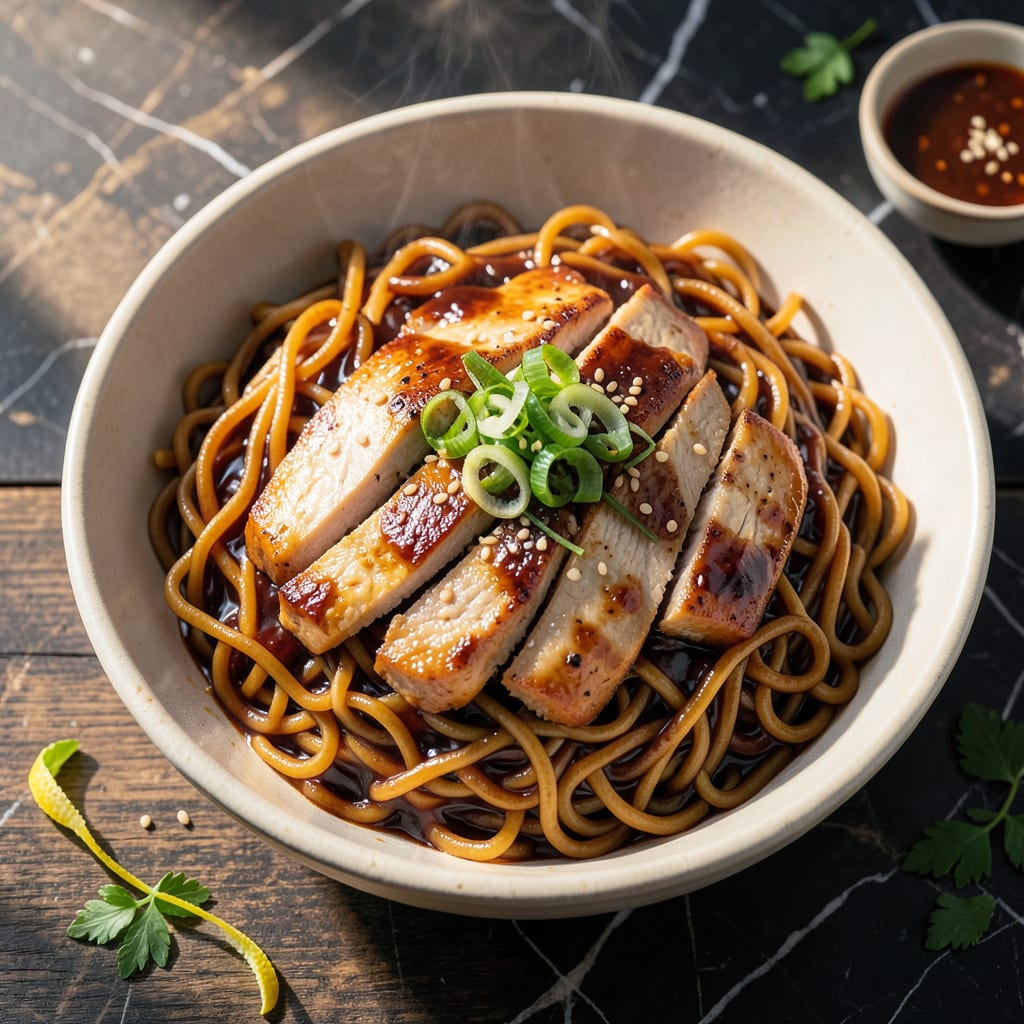
This wok-tossed creation brings bold flavor and satisfying texture to your table with minimal effort. The hoisin sauce adds deep, sweet-savory complexity that elevates every bite.
Tender chicken, chewy noodles, and crisp vegetables come together in a dish that’s ready in 20 minutes. It’s a restaurant favorite made simple for home cooks.
Ingredients for Chicken Lo Mein Recipe with Hoisin Sauce
Fresh noodles, crisp veggies, and bold hoisin come together for this wok-tossed classic.
| Ingredient | Amount | Notes |
|---|---|---|
| Chicken Breast 🍗 | 1 ¼ lb | Boneless, skinless, thinly sliced |
| Lo Mein Noodles 🍜 | 12 oz | Fresh or dried egg noodles |
| Hoisin Sauce 🥫 | ⅓ cup | For deep sweet-savory flavor |
| Soy Sauce 🥫 | 3 tbsp | Low-sodium preferred |
| Sesame Oil 🫒 | 1 tbsp | Toasted for aroma |
| Garlic Cloves 🧄 | 4 cloves | Minced finely |
| Fresh Ginger 🌿 | 1 tbsp | Grated or minced |
| Red Bell Pepper 🌶️ | 1 whole | Thinly sliced for crunch |
| Carrots 🥕 | 2 whole | Julienned or matchstick-cut |
| Green Onions 🧅 | 4 whole | Sliced, whites and greens separated |
| Neutral Cooking Oil 🫒 | 2 tbsp | Vegetable or peanut oil |
| Cornstarch 🌾 | 1 tbsp | For velveting chicken |
| Rice Vinegar 🍚 | 1 tbsp | For brightness |
| Granulated Sugar 🍚 | 1 tsp | Balances hoisin sweetness |
| Sesame Seeds 🌰 | 1 tbsp | Toasted, for garnish |
[recipeingredientscaler]
The chicken needs to be thinly sliced—pound it to even thickness first for uniform cooking. Asian markets have the best selection for fresh lo mein noodles, but dried works too (just boil first). For hoisin, Koon Chun or Lee Kum Kee are top picks. Ginger and garlic should be fresh—no powdered shortcuts here. The red bell pepper adds color and crunch, but snap peas or cabbage work great too.
No hoisin? Mix 2 tbsp soy sauce + 1 tbsp molasses + 1 tsp rice vinegar + pinch garlic powder. Swap chicken for tofu or shrimp if you like. Dried noodles? Boil for 2 minutes less than package says—they’ll finish in the wok. The sesame oil is non-negotiable though (trust me on this). If you’re out of rice vinegar, apple cider vinegar in a pinch, but it’s slightly different.
Leftovers keep 3-4 days in the fridge—reheat in a skillet with a splash of water to revive. Freezes okay, but noodles soften. Prep veggies ahead (store separately in airtight containers) to cut wok time in half. Always toast sesame seeds fresh—takes 30 seconds in a dry pan.
Why You’ll Love This Recipe
- One Pot Wonder: I toss everything in a single pan—chicken, noodles, and that rich hoisin-soy combo—then walk away while it works its magic.
- Sweet-Savory Fix: The hoisin brings this deep, molasses-like sweetness that plays perfectly against the salty soy and nutty sesame oil. Honestly, I could drink the sauce.
- Weeknight Hero: Between us, this feeds my family of four with leftovers for lunch the next day, and it’s ready before the kids finish arguing over who gets the last dumpling.
- Budget Stretcher: A pound of chicken breast and a few pantry staples turn into a meal that feels like takeout but costs a fraction of the price.
Step-by-Step Instructions for Chicken Lo Mein With Hoisin Sauce
Here’s the method. Straightforward, tested, works every time.
Step 1: Velvet the Chicken for Maximum Tenderness
Slice the 1.25 lb Chicken Breast into thin strips against the grain. In a bowl, toss the chicken with 1 tbsp Cornstarch, 1 tbsp Soy Sauce, and 1 tbsp Sesame Oil until each piece is evenly coated. I’ve found this velveting technique transforms ordinary chicken into silky, restaurant-quality bites.
Let it marinate for 15 minutes while you prep the rest. The cornstarch creates a protective barrier that locks in moisture during cooking, while the soy sauce adds umami depth. Don’t skip this step—it’s the difference between chewy and tender chicken.
Step 2: Stir-Fry Aromatics and Vegetables
Heat 1 tbsp Neutral Cooking Oil in a wok or large skillet over high heat until shimmering. Add minced 4 cloves Garlic Cloves and grated 1 tbsp Fresh Ginger, stirring constantly for 30 seconds until fragrant but not browned. Here’s the thing—garlic burns in seconds, so keep it moving.
Add thinly sliced 1 whole Red Bell Pepper and julienned 2 whole Carrots. Stir-fry for 3-4 minutes until the vegetables are crisp-tender. The bell pepper should retain some bite, while the carrots soften slightly. Push everything to one side of the pan.
Step 3: Cook the Chicken and Combine
Add the remaining 1 tbsp Neutral Cooking Oil to the empty side of the pan. Spread the marinated chicken in a single layer and let it sear undisturbed for 1 minute. You’ll see the edges turn opaque—this is when you start stirring. Cook for 2-3 minutes until the chicken is no longer pink.
Return all vegetables to the center and add the 12 oz Lo Mein Noodles. Toss everything together for 1-2 minutes to heat the noodles through. The noodles should absorb some of the chicken’s juices and take on a glossy sheen.
Step 4: Finish with the Signature Sauce
In a small bowl, whisk together 0.33 cup Hoisin Sauce, remaining 2 tbsp Soy Sauce, 1 tbsp Rice Vinegar, and 1 tsp Granulated Sugar. Pour this over the chicken and noodles in the pan. Toss constantly for 1-2 minutes until everything is evenly coated and the sauce thickens slightly.
The hoisin will deepen in color and create a beautiful glaze that clings to every strand of noodle. Taste and adjust seasoning if needed, though the hoisin is already well-balanced. Remove from heat and stir in sliced 4 whole Green Onions (both whites and greens).
Garnish with 1 tbsp Sesame Seeds and serve immediately while hot. The sesame seeds add a nutty crunch that contrasts perfectly with the tender noodles and chicken.
Pro Tips For Making Chicken Lo Mein Recipe With Hoisin Sauce
- Velocity the wok: Crank the heat to smoking hot before the chicken hits the pan—lo mein needs that searing temperature to get those caramelized edges on the breast, otherwise it just steams in its own juices.
- Slice against grain: Cut the chicken breast into thin strips against the grain so each bite stays tender, not chewy. I learned this the hard way after serving rubbery chunks to guests.
- Parcook the noodles: Boil the lo mein noodles for just 2 minutes, drain, and toss with a little sesame oil to keep them from sticking—they’ll finish cooking in the wok with the sauce.
- Bloom the hoisin: Heat the hoisin and soy sauce together for 30 seconds in the wok before adding the noodles—this deepens the flavor and prevents the raw, cloying sweetness straight from the bottle.
Troubleshooting Perfect Results
Sauce Too Thick
If your sauce becomes too thick, add 2-3 tbsp water or chicken broth while tossing. The cornstarch in the velveting can thicken the sauce more than expected. I keep a small bowl of warm water nearby just in case.
Noodles Sticking
Prevent sticking by ensuring your wok or skillet is properly heated before adding oil. Use high heat and peanut oil for its high smoke point. If noodles stick, don’t stir immediately—let them crisp for 30 seconds then release naturally.
Chicken Overcooking
Thinly sliced chicken cooks in 2-3 minutes max. If it’s tough, you likely overcooked it. Pull it from the pan as soon as it turns opaque. The velveting helps, but timing is still key. 💡
Vegetables Soggy
Stir-fry veggies in batches if your pan isn’t large enough. Overcrowding steams instead of searing. Red bell pepper and carrots should retain a slight crunch—if they’re soft, cook them for less time next round.
Flavor Imbalance
Hoisin is salty and sweet, so balance with rice vinegar for acidity. If it’s too sweet, add 1 tsp soy sauce. Taste as you go, and adjust with small increments.
Cold Spots
Ensure even cooking by tossing constantly once the sauce is added. If some noodles are cold, return everything to high heat for 1 minute while stirring continuously. Serve immediately for the best texture. 🔥
Nutrition Facts
Frequently Asked Questions
Can I use a different protein instead of chicken?
Shrimp, beef, or tofu all work well. For shrimp, cook 2-3 minutes total. Beef should be thinly sliced and cooked 1-2 minutes for medium-rare. Press tofu first to remove excess moisture.
What if I don’t have fresh lo mein noodles?
Dried egg noodles or spaghetti work in a pinch. Boil them for 2 minutes less than package instructions, then finish in the wok. They’ll absorb the sauce beautifully.
How do I make this dish gluten-free?
Swap regular soy sauce for tamari and use gluten-free noodles. Check hoisin sauce labels, as some contain wheat. Many brands offer gluten-free versions.
Can I prep ingredients ahead of time?
Yes! Slice veggies and velvet chicken up to 1 day ahead. Store separately in airtight containers in the fridge. This cuts wok time in half.

- Jollof Rice Sauce Recipe: West African Tomato and Spice Infusion - September 25, 2026
- Japanese Rice Soup Recipe: Umami-Rich Comfort in a Bowl - September 25, 2026
- Homemade Cream Of Rice Recipe: Silk-Smooth Breakfast in Minutes - September 25, 2026