
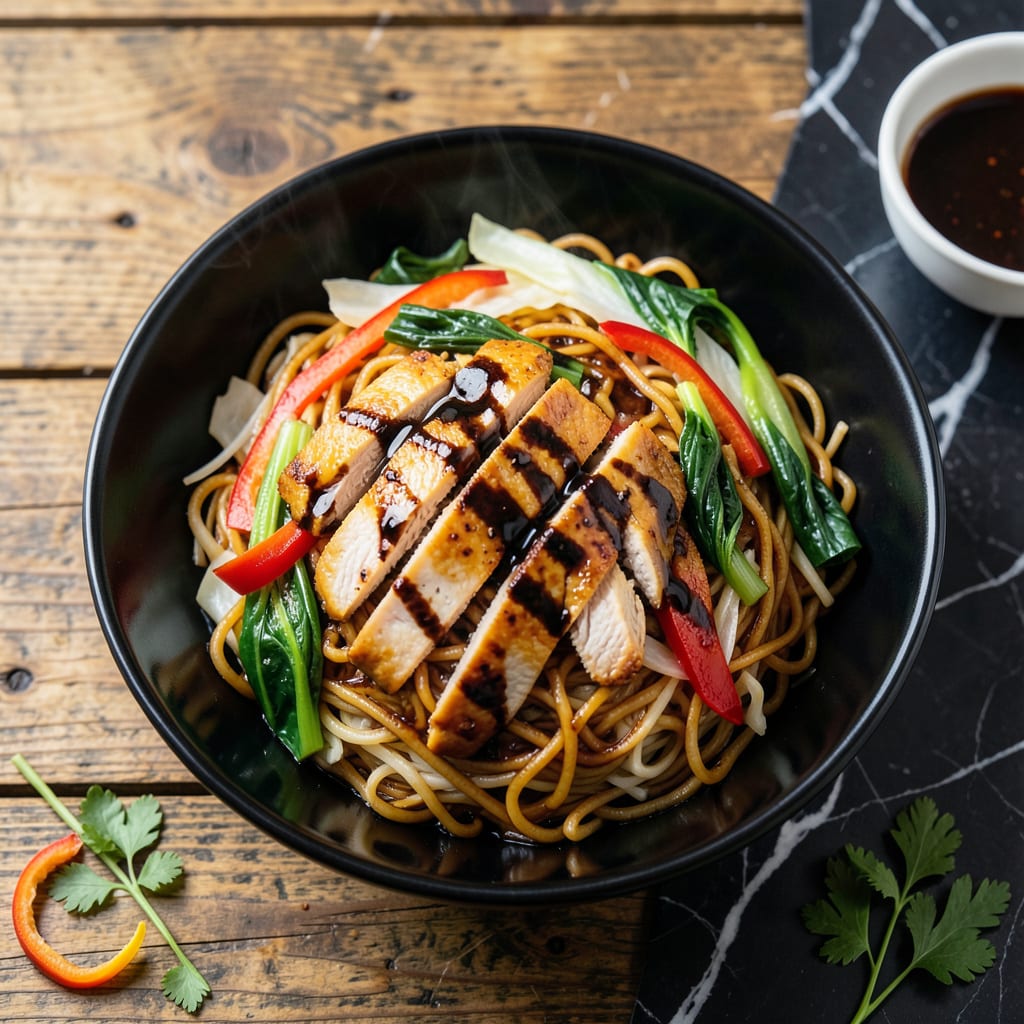
This wok-tossed noodle dish delivers restaurant-quality flavor with tender chicken and chewy lo mein noodles coated in a rich oyster sauce. The key is high heat and quick cooking to maintain the perfect texture.
I developed this method after years of takeout disappointment, focusing on authentic umami depth without complicated techniques. The result is a foolproof weeknight meal that comes together faster than delivery.
Ingredients for Chicken Lo Mein Recipe with Oyster Sauce
Fresh noodles, tender chicken, and bold sauces create authentic wok-tossed flavor at home.
| Ingredient | Amount | Notes |
|---|---|---|
| Lo Mein Noodles 🍜 | 8 oz | Fresh or dried, cooked al dente |
| Boneless Skinless Chicken Breast 🍗 | 1 lb | Thinly sliced against the grain |
| Oyster Sauce 🫒 | ⅓ cup | High-quality for authentic flavor |
| Soy Sauce 🫒 | 3 tbsp | Low-sodium preferred |
| Dark Soy Sauce 🫒 | 1 tbsp | Adds depth and color |
| Sesame Oil 🫒 | 1 tbsp | Toasted for nutty aroma |
| Garlic Cloves 🧄 | 4 cloves | Minced finely |
| Fresh Ginger Root 🌿 | 1 piece | Peeled and grated, about 1 tbsp |
| Green Onions 🧅 | 4 whole | Thinly sliced, white and green parts separated |
| Vegetable Oil 🫒 | 2 tbsp | High smoke point for wok cooking |
| Shaoxing Wine 🍶 | 2 tbsp | Or substitute dry sherry |
| Cornstarch 🌾 | 1 tbsp | Mixed with water for slurry |
| Granulated Sugar 🧂 | 1 tsp | Balances savory flavors |
| White Pepper 🌶️ | ½ tsp | Ground, for authentic taste |
[recipeingredientscaler]
The oyster sauce is non-negotiable for authentic flavor. Lee Kum Kee or Maekrua are top-tier brands—avoid anything with added MSG if you’re sensitive. For the noodles, fresh lo mein from an Asian market delivers the best texture, but dried works in a pinch (look for egg-free varieties). The chicken should be thinly sliced to cook quickly and evenly under high heat.
Need a swap for Shaoxing wine? Dry sherry is almost identical, or use mirin plus a splash of rice vinegar. No fresh ginger? Ground ginger at one-third the amount works, but fresh is ideal. Vegetable oil can be peanut or avocado oil for higher smoke points. For gluten-free, tamari replaces soy sauce, but the texture will differ slightly.
Prep all ingredients before heating the wok—this moves fast. Store unused oyster sauce in a cool, dark place for up to 2 years unopened, 6 months after opening. Fresh ginger keeps in the freezer for 6 months, no peeling needed. Just grate from frozen.
Why You’ll Love This Recipe
- One Pan Wonder: I toss everything in a single wok—noodles, chicken, and that glossy oyster sauce—and dinner’s ready before I can even set the table.
- Umami Bomb: The oyster sauce paired with dark soy gives it this deep, savory richness that makes me sneak bites straight from the pan.
- Feeds a Crowd: Between us, this stretches easily for leftovers or a group, and it reheats like a dream.
- Budget Hero: Honestly, chicken breast and lo mein noodles are cheap, but it tastes like a takeout splurge.
Step-by-Step Instructions for Chicken Lo Mein With Oyster Sauce
Master the wok technique and timing to achieve perfectly sauced noodles every time.
Step 1: Prepare the Chicken and Marinade
Slice the 1 lb Boneless Skinless Chicken Breast thinly against the grain into ¼-inch strips. This ensures tenderness and even cooking. In a bowl, combine the sliced chicken with 1 tbsp Cornstarch, 1 tbsp Soy Sauce, and 1 tbsp Shaoxing Wine.
Mix gently until the chicken is evenly coated. The cornstarch creates a velvety texture, while the soy sauce and wine add depth. Let it marinate for 15 minutes at room temperature while you prep the remaining ingredients. This step is crucial for preventing dry, tough chicken in the final dish.
Step 2: Cook the Chicken and Aromatics
Heat 2 tbsp Vegetable Oil in a wok or large skillet over high heat until shimmering. Add the marinated chicken in a single layer, spreading it out to avoid steaming. Cook undisturbed for 2-3 minutes until the edges turn opaque and begin to brown.
Stir-fry for another 1-2 minutes until the chicken is just cooked through. Remove it from the wok and set aside. In the same wok, add the 4 cloves Garlic Cloves (minced) and 1 piece Fresh Ginger Root (grated). Stir for 30 seconds until fragrant—don’t let them burn, as bitterness will ruin the dish.
Step 3: Combine Noodles and Sauce
Add the cooked 8 oz Lo Mein Noodles to the wok along with the 4 whole Green Onions (sliced, whites and greens separated). Toss everything together over high heat for 1 minute to combine the flavors.
Pour in the 0.33 cup Oyster Sauce, remaining 2 tbsp Soy Sauce, 1 tbsp Dark Soy Sauce, 1 tsp Granulated Sugar, and 0.5 tsp White Pepper. Stir well to coat the noodles evenly. The sauce should cling to the noodles without pooling at the bottom of the wok.
Step 4: Finish and Serve
Return the cooked chicken to the wok and toss everything together for another 1-2 minutes until heated through. Drizzle with 1 tbsp Sesame Oil and toss once more to distribute the nutty aroma evenly.
Garnish with the reserved green onion tops. The noodles should be glossy and well-coated, with the chicken tender and juicy. Serve immediately while hot, as the noodles can absorb the sauce and become dry if left to sit.
Pro Tips For Making Chicken Lo Mein Recipe With Oyster Sauce
- Pre-cook the noodles: Parboil the lo mein noodles for 1-2 minutes less than package instructions—I learned this the hard way after ending up with mushy noodles. They’ll finish cooking in the wok with the sauce.
- Slice chicken thin: Cut the chicken breast into ¼-inch strips against the grain. Sounds tedious, but it guarantees tender bites that cook through in under 2 minutes over high heat.
- Hot wok, cold oil: Heat the wok until it’s nearly smoking, then add the oil. After burning three batches, I finally figured out this prevents sticky chicken and gives that restaurant-quality sear.
- Dark soy for color: Use just 1 teaspoon of dark soy sauce for depth—it adds that classic lo mein color without overpowering the oyster sauce flavor. My grandmother swore by this, and she was right.
Regional Styles of This Dish
Cantonese Style
In Cantonese cuisine, this dish often includes Chinese broccoli or bok choy for freshness. I add 1 cup chopped greens during the final toss. The sauce remains simple—just oyster sauce, soy sauce, and a touch of sugar for balance. 🥢
Sichuan Adaptation
For Sichuan heat, I stir in 1 tbsp chili oil and 1 tsp Sichuan peppercorns with the aromatics. The numbing spice complements the umami perfectly. Some versions include dried chili peppers for extra kick.
Shanghai Approach
Shanghai-style lo mein uses thicker noodles and often adds wood ear mushrooms for texture. I soak ¼ cup dried mushrooms and slice them thinly before stir-frying. The dish has a slightly sweeter profile with extra sugar.
American Chinese
This version typically includes more vegetables like cabbage and carrots. I add 1 cup shredded cabbage and ½ cup julienned carrots when cooking the noodles. The sauce is often thicker, using extra cornstarch slurry.
Vegetarian Twist
Replace chicken with tofu or mushrooms for a plant-based version. I use 14 oz firm tofu, pressed and cubed. The cooking method remains the same, but I add 1 tbsp hoisin sauce for extra depth. 🌱
Nutrition Facts
Frequently Asked Questions
Can I use a different protein instead of chicken?
Yes! Shrimp, beef, or tofu all work well. For shrimp, cook just until pink (2-3 minutes). For beef, slice thinly against the grain and marinate for 20 minutes.
What if my sauce is too thin?
Mix 1 tsp cornstarch with 1 tbsp water and stir into the wok. Cook for 1-2 minutes until thickened. Avoid adding too much at once.
How do I prevent noodles from sticking?
Use high heat and stir constantly. If using dried noodles, undercook them by 1 minute before stir-frying. A well-seasoned wok helps too.
Can I make this ahead of time?
Cook noodles and chicken separately, then store in the fridge for up to 2 days. Reheat in a wok with a splash of water to revive.

- Jollof Rice Sauce Recipe: West African Tomato and Spice Infusion - September 25, 2026
- Japanese Rice Soup Recipe: Umami-Rich Comfort in a Bowl - September 25, 2026
- Homemade Cream Of Rice Recipe: Silk-Smooth Breakfast in Minutes - September 25, 2026