
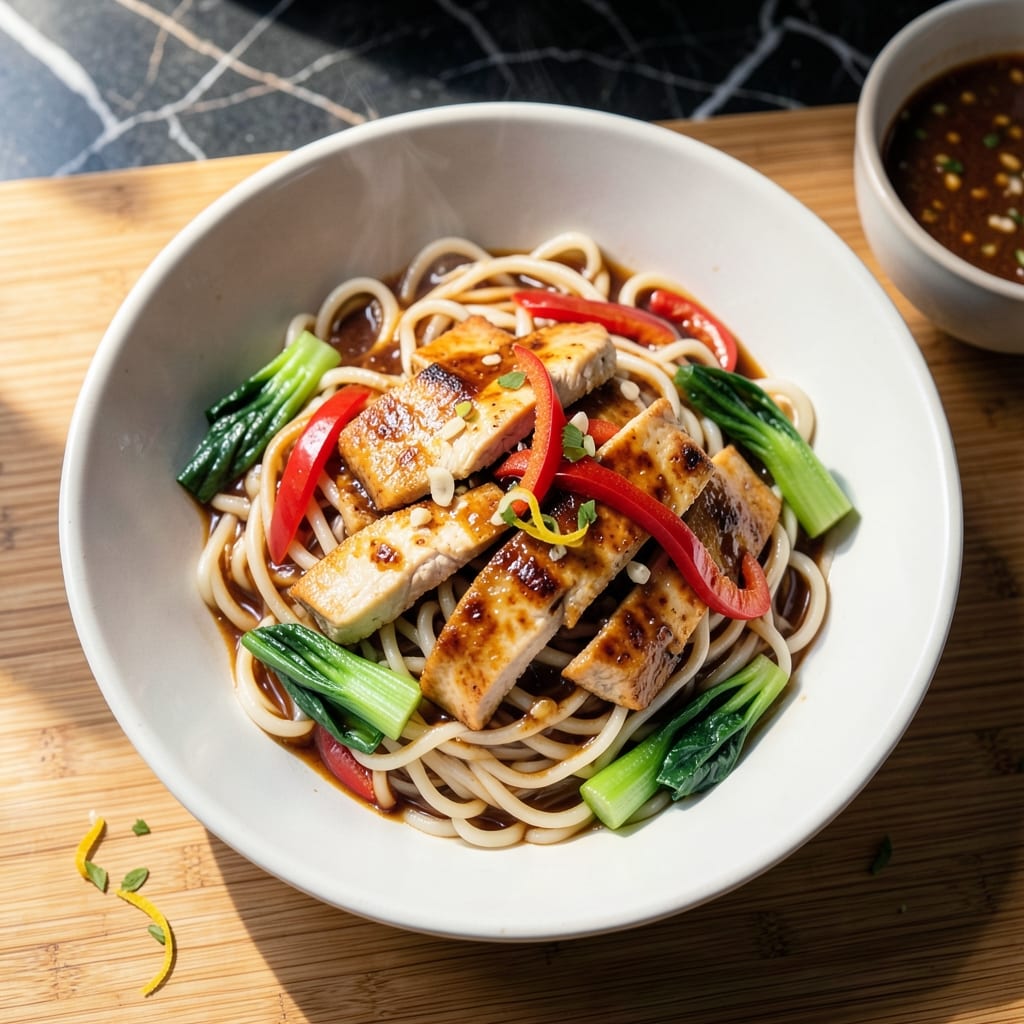
This dish brings authentic takeout flavor to your home kitchen with minimal effort. I developed this version after years of takeout disappointments, perfecting the balance of savory, sweet, and umami.
The secret is velveting the chicken first, then stir-frying with silk-soft rice noodles and fresh vegetables. A hot wok and quick cooking preserve the textures that make this dish special.
You’ll get tender chicken pieces, perfectly coated noodles, and crisp-tender vegetables in every bite. The sauce clings to each strand, delivering restaurant-quality results without the delivery wait.
Ready in 30 minutes, this becomes a weeknight staple once you try it.
Ingredients for Chicken Lo Mein Recipe with Rice Noodles
Velvety chicken, silk-soft noodles, and crisp vegetables. Nothing exotic, just perfect balance.
| Ingredient | Amount | Notes |
|---|---|---|
| Boneless Chicken Breasts 🍗 | 1 ½ lb | Thinly sliced for velveting |
| Rice Noodles 🍜 | 8 oz | Dried, silk-soft texture |
| Soy Sauce 🫙 | ⅓ cup | Low-sodium preferred for balance |
| Oyster Sauce 🫙 | 2 tbsp | For umami depth |
| Dark Soy Sauce 🫙 | 1 tbsp | Adds color and richness |
| Sesame Oil 🫒 | 1 tbsp | Toasted for aroma |
| Shaoxing Wine 🍶 | 2 tbsp | Dry sherry works as substitute |
| Cornstarch 🌾 | 2 tbsp | For velveting chicken |
| Garlic Cloves 🧄 | 4 cloves | Minced for maximum flavor |
| Fresh Ginger 🌿 | 1 tbsp | Grated, adds zing |
| Red Bell Pepper 🌶️ | 1 whole | Thinly sliced for crunch |
| Carrots 🥕 | 2 whole | Julienned for texture |
| Green Onions 🧅 | 4 whole | Sliced, for garnish |
| Neutral Cooking Oil 🫒 | 3 tbsp | High smoke point for wok |
| Granulated Sugar 🧂 | 1 tsp | Balances savory flavors |
The chicken is the foundation—boneless breasts stay tender when velveted. Thighs work too (more flavor, slightly chewier). Source your rice noodles from Asian markets for the best texture—they’re often cheaper there anyway. For the soy sauces, Pearl River Bridge is my go-to for balance. Shaoxing wine is in the international aisle at most Whole Foods or H-Mart locations.
No Shaoxing wine? Dry sherry at one-to-one works fine. Oyster sauce can be swapped for vegetarian mushroom sauce if needed. For the vegetables, snap peas, cabbage, or broccoli all work great—just keep them thinly sliced. The cornstarch is key for that velvet texture, so don’t skip it. If you’re gluten-free, tapioca starch is a decent stand-in (but not ideal).
Prep everything before heating the wok—30 seconds is the max for each ingredient. Leftovers keep 3-4 days in the fridge, but the noodles soak up sauce over time. Freeze without the noodles for up to 3 months (they get mushy).
Why You’ll Love This Recipe
- One Pot Magic: I love that everything cooks in a single pan—just toss the chicken, rice noodles, and sauces together and let the flavors meld.
- Umami Bomb: The combo of soy, oyster, and dark soy sauce creates this deep, savory richness that coats every noodle. Honestly, it’s ridiculous how good it tastes.
- Meal Prep Hero: I make a big batch on Sunday and it reheats beautifully for lunches all week. No soggy noodles, just consistent flavor.
- Budget Stretcher: Boneless chicken breasts and rice noodles are affordable, and this dish feeds my family of four with leftovers for days.
Step-by-Step Instructions for Chicken Lo Mein With Rice Noodles
Here’s the method. Straightforward, tested, works every time.
Step 1: Velvet the Chicken for Maximum Tenderness
Slice the 1.5 lb Boneless Chicken Breasts against the grain into thin strips, about ¼-inch wide. This ensures quick, even cooking and a melt-in-your-mouth texture. Place the chicken in a bowl and add the 2 tbsp Cornstarch, 2 tbsp Shaoxing Wine, and 1 tsp Granulated Sugar.
Use your hands to gently massage the mixture into the chicken until every piece is evenly coated. The cornstarch creates a silky, protective layer that locks in moisture, while the Shaoxing wine tenderizes the meat. Let it sit while you prep the vegetables—this marinating time is crucial for that signature velvet texture.
Step 2: Prep the Vegetables for Quick Cooking
Thinly slice the 1 whole Red Bell Pepper into strips, 2 whole Carrots into julienne, and mince the 4 cloves Garlic Cloves and 1 tbsp Fresh Ginger. Slice the 4 whole Green Onions into 2-inch pieces, keeping the green and white parts separate for garnish later.
This dish comes together fast, so have everything prepped and within reach. I arrange my ingredients in small bowls near the wok—this is called mise en place, and it prevents frantic chopping mid-cook. The uniform cuts ensure even cooking, and the thin slices on the carrots and bell pepper mean they’ll soften quickly without turning mushy.
Step 3: Cook the Chicken and Vegetables in Batches
Heat 2 tbsp Neutral Cooking Oil in a wok or large skillet over high heat until shimmering. Add the marinated chicken in a single layer and cook for 2-3 minutes until just opaque but not fully cooked through. Remove the chicken with a slotted spoon and set aside.
Add the remaining 1 tbsp Neutral Cooking Oil to the wok. Toss in the garlic, ginger, carrots, and bell pepper. Stir-fry for 2-3 minutes until the vegetables are tender-crisp and the aromatics are fragrant. Be careful not to burn the garlic—it turns bitter quickly. Return the chicken to the wok and toss to combine.
Step 4: Soak the Noodles and Finish with Sauce
While the chicken and vegetables cook, soak the 8 oz Rice Noodles in hot water for 5-7 minutes until they’re pliable but still slightly firm. Drain and rinse with cold water to stop the cooking process. This prevents them from turning to mush when stir-fried.
Add the soaked noodles to the wok along with the 0.33 cup Soy Sauce, 2 tbsp Oyster Sauce, 1 tbsp Dark Soy Sauce, and 1 tbsp Sesame Oil. Toss everything together for 1-2 minutes until the noodles are heated through and coated in the glossy, umami-rich sauce. The noodles should absorb the flavors but remain distinct and silky.
Garnish with the reserved green onions and serve immediately while hot.
Pro Tips For Making Chicken Lo Mein Recipe With Rice Noodles
- Soak Noodles First: Cover rice noodles with warm water for 8-10 minutes before cooking—they’ll soften just enough to stir-fry evenly without turning to mush.
- Slice Chicken Thin: Cut boneless chicken breasts into ¼-inch strips so they cook through in 2-3 minutes in the hot wok, staying tender instead of chewy.
- Skip Cold Noodles: I learned this the hard way—never add cold, unsoaked rice noodles directly to the wok, or they’ll stay hard in the middle while the outside burns.
- Use Dark Soy Last: Stir in the dark soy sauce at the very end—its deep color and sweetness shine when added off-heat, rather than caramelizing unevenly during cooking.
Regional Styles of This Dish
Cantonese Style
In Cantonese cuisine, this dish often includes char siu pork alongside chicken, with a slightly sweeter sauce profile. I add 1 tbsp hoisin sauce to the mix and finish with a drizzle of chili oil for heat. The noodles are typically a bit thicker than the standard rice sticks. 🗺️
Sichuan Spicy Version
For Sichuan flair, I add 1 tbsp doubanjiang (fermented chili bean paste) and 1 tsp Sichuan peppercorns to the stir-fry. The numbing heat from the peppercorns pairs perfectly with the umami sauce. Use dried red chilies for extra color and spice.
Shanghai Adaptation
Shanghai-style lo mein leans into dark soy sauce for color, often doubling the amount to 2 tbsp. I also add wood ear mushrooms for texture. The sauce is slightly thicker, clinging to the noodles in a glossy coat.
Thai-Inspired Twist
I swap the soy sauces for 3 tbsp fish sauce and add 1 tbsp lime juice plus 1 tsp palm sugar. Fresh Thai basil and crushed peanuts finish the dish. The flavors are brighter and more aromatic.
American Takeout Style
This version mirrors what you’d get from a US Chinese restaurant. I increase the sugar to 2 tsp and add ½ cup chicken broth for a more abundant sauce. Bean sprouts add crunch, and I always include a side of duck sauce for dipping.
Nutrition Facts
Frequently Asked Questions
Can I use regular wheat noodles instead?
Yes, but they’ll have a different texture. Use 8 oz fresh egg noodles for best results, as they hold up better to stir-frying than dried pasta. Cook them al dente first, then add to the wok.
Why velvet the chicken?
Velveting keeps the chicken juicy and tender. The cornstarch coating locks in moisture, while the Shaoxing wine tenderizes. Skip this step, and you risk dry, chewy meat.
How do I prevent soggy noodles?
Soak the rice noodles just until pliable, then rinse in cold water to stop cooking. Stir-fry them last with the sauce for only 1-2 minutes. This keeps them silky, not mushy.
Can I make this gluten-free?
Use tamari instead of soy sauce, and ensure your oyster sauce is gluten-free. Rice noodles are naturally gluten-free, but check labels for cross-contamination.

- Jollof Rice Sauce Recipe: West African Tomato and Spice Infusion - September 25, 2026
- Japanese Rice Soup Recipe: Umami-Rich Comfort in a Bowl - September 25, 2026
- Homemade Cream Of Rice Recipe: Silk-Smooth Breakfast in Minutes - September 25, 2026