
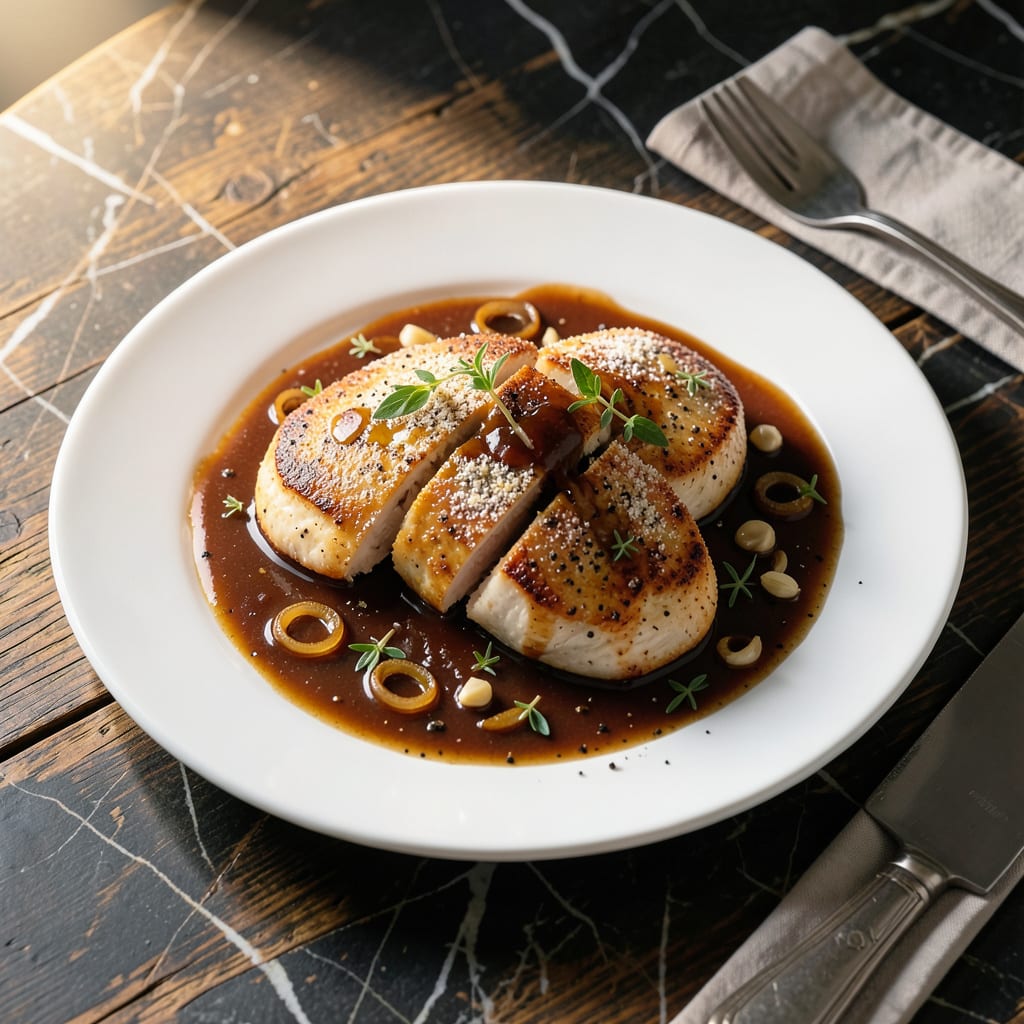
This dish brings restaurant-quality elegance to your home kitchen with its rich, wine-infused sauce. The Madeira wine creates a deep, complex flavor that pairs perfectly with tender chicken.
You’ll achieve a velvety sauce with just a few simple ingredients and 30 minutes of cooking. The result is a sophisticated meal that’s surprisingly easy to prepare.
Ingredients for Chicken Madeira Sauce
Elevate weeknight dinner with these sophisticated yet simple components for a restaurant-worthy dish.
| Ingredient | Amount | Notes |
|---|---|---|
| Chicken Breast Cutlets 🍗 | 1 ½ lb | Boneless, skinless, pounded to 1/4-inch thickness |
| All-Purpose Flour 🌾 | ½ cup | For dredging chicken |
| Unsalted Butter 🧈 | 4 tbsp | Divided for cooking and sauce |
| Olive Oil 🫒 | 2 tbsp | For pan-searing chicken |
| Shallots 🧅 | ½ cup | Finely minced |
| Garlic Cloves 🧄 | 3 cloves | Minced for sauce depth |
| Madeira Wine 🍷 | 1 ½ cups | Dry variety preferred |
| Chicken Stock 🥣 | 1 cup | Low-sodium preferred |
| Heavy Cream 🥛 | ½ cup | For velvety sauce texture |
| Dijon Mustard 🟡 | 1 tbsp | For subtle tang |
| Fresh Thyme Leaves 🌿 | 1 tbsp | Stems removed, chopped |
| Kosher Salt 🧂 | 1 tsp | Diamond Crystal preferred |
| Freshly Ground Black Pepper 🌶️ | ½ tsp | Coarse grind ideal |
| Fresh Parsley 🌿 | 2 tbsp | Chopped, for garnish |
[recipeingredientscaler]
The Madeira wine is non-negotiable here. Look for a dry variety at Total Wine or better liquor stores—avoid the cooking wine aisle (too salty, poor quality). For the chicken, cutlets from the butcher counter are ideal, but you can DIY by butterflying and pounding breasts yourself. The shallots add sweetness without overpowering; substitute yellow onion in a pinch (just use half the amount).
No Madeira? Dry sherry works almost as well, or a mix of dry white wine plus 1 tsp sugar. Chicken stock can be swapped for vegetable stock if needed. Heavy cream alternatives: half-and-half for lighter sauce or coconut milk for dairy-free. The Dijon mustard is subtle but important—don’t skip it (or use regular mustard if that’s what you’ve got).
The sauce keeps beautifully—actually improves overnight as flavors meld. Refrigerate in an airtight container for up to 4 days, or freeze for 3 months. Reheat gently on the stovetop, adding a splash of stock if needed to thin.
Why You’ll Love This Recipe
- One Pan Magic: I love that this comes together in a single skillet—just sear the chicken, sauté the shallots in butter, and let the Madeira sauce work its magic.
- Rich & Deep: The shallots caramelize in the butter and olive oil, creating a sauce so velvety it makes the chicken taste like a restaurant dish.
- Weeknight Hero: Honestly, it’s my go-to for busy evenings when I need something elegant but unfussy to impress without stress.
- Leftovers? Yes Please: The flavors deepen overnight, so I always make extra—next day’s lunch tastes even better straight from the fridge.
Step-by-Step Instructions for Chicken Madeira Sauce
This elegant dish comes together faster than you’d expect with these simple techniques.
Step 1: Dredge and Sear the Chicken Cutlets
Pat the chicken breast cutlets dry with paper towels, then season both sides with the kosher salt and freshly ground black pepper. Dredge each piece lightly in the all-purpose flour, shaking off any excess. This thin coating creates a delicate crust and helps thicken the sauce later.
Heat the olive oil and 2 tbsp of the unsalted butter in a large skillet over medium-high heat until the butter stops foaming. Add the chicken and cook for 3-4 minutes per side until golden brown and cooked through. The cutlets should release easily from the pan when ready to flip. Transfer to a plate and tent with foil to keep warm.
Step 2: Build the Aromatic Base for the Sauce
In the same skillet, reduce heat to medium and add the remaining 2 tbsp unsalted butter. Once melted, add the shallots and cook for 3-4 minutes until softened and just beginning to caramelize. The shallots should turn translucent with golden edges—this builds the sweet foundation for your sauce.
Add the minced garlic cloves and fresh thyme leaves, cooking for 30 seconds until fragrant. Be careful not to let the garlic brown. Stir in the Dijon mustard and cook for another 30 seconds to mellow its sharpness. This aromatic base will infuse the sauce with depth and complexity.
Step 3: Deglaze and Create the Madeira Reduction
Pour in the Madeira wine, using a wooden spoon to scrape up all the browned bits from the bottom of the pan. This deglazing step captures all those concentrated flavors. Simmer for 5-6 minutes until the liquid reduces by about half and the raw alcohol smell dissipates.
Add the chicken stock and continue simmering for another 5 minutes until the mixture reduces slightly. The sauce should coat the back of a spoon but still be thin enough to pour. This reduction concentrates the wine’s rich, nutty flavor that defines this classic sauce.
Step 4: Finish with Cream and Serve
Reduce heat to low and stir in the heavy cream. Simmer for 2-3 minutes until the sauce thickens enough to coat a spoon. Taste and adjust seasoning if needed. The cream adds a velvety texture that balances the wine’s acidity.
Return the chicken to the skillet along with any accumulated juices. Spoon the sauce over the cutlets and let them warm through for 1-2 minutes. Garnish with the fresh parsley and serve immediately. The sauce should pool around the chicken with a glossy, rich appearance that invites dipping with crusty bread or over mashed potatoes.
Pro Tips For Making Chicken Madeira Sauce
- Pound the Cutlets: Chicken breasts cook unevenly if they’re thick in the middle—pound them to an even 1/2-inch thickness with a rolling pin or heavy pan. I learned this the hard way after pulling dry, rubbery centers out of otherwise perfect cutlets.
- Toast the Flour: After dredging the chicken, shake off the excess flour but don’t discard it—toss it into the hot butter and oil to toast for 1-2 minutes before adding shallots. It deepens the sauce’s flavor without extra effort.
- Skip the Overcrowding: Cook the cutlets in batches if needed—crowding the pan steams the chicken instead of browning it, and you’ll lose that golden crust that makes the dish look and taste restaurant-worthy.
- Use the Fond: After removing the chicken, pour in the Madeira wine while the pan’s still hot to deglaze all those browned bits. That’s where the rich, complex flavor hides—I was skeptical until I tried it.
Dietary Considerations for chicken madeira sauce
Gluten-Free Adaptation
Replace the all-purpose flour with 1:1 gluten-free baking flour like King Arthur Measure for Measure. The texture works perfectly for dredging, though you may need to press the coating slightly to help it adhere to the chicken cutlets.
Dairy-Free Option
Swap the heavy cream for full-fat coconut milk and use vegan butter like Miyoko’s. The sauce will have a subtle coconut aroma, but the Madeira wine’s richness still shines through. 💪
Lower-Calorie Version
Use half-and-half instead of heavy cream and reduce butter to 2 tablespoons total. The sauce will be lighter but still creamy. You can also trim the chicken cutlets to ¼ inch thickness to ensure even cooking with less fat.
Keto-Friendly
Replace the all-purpose flour with almond flour for dredging. Use 1 tablespoon cornstarch mixed with 1 tablespoon water to thicken the sauce at the end if needed. This keeps carbs minimal while maintaining that velvety texture.
Low-Sodium Adjustments
Opt for low-sodium chicken stock and omit added salt until the end. The Madeira wine and Dijon mustard provide plenty of flavor. Taste before seasoning—you may find you don’t need any additional salt at all. ✨
Allium-Free Variation
For those avoiding shallots and garlic, use 1 teaspoon asafoetida powder (hing) cooked briefly in the butter. It provides a similar savory depth without the allium family ingredients. The thyme will still give you that aromatic base.
Nutrition Facts
Frequently Asked Questions
Can I substitute the Madeira wine?
Yes! Use dry sherry for nearly identical flavor. In a pinch, combine dry white wine with 1 tsp sugar to mimic Madeira’s sweetness. Avoid cooking wine—it’s too salty.
How do I prevent the sauce from curdling?
Temper the cream by stirring in 2 tbsp of the hot wine mixture before adding it to the pan. Keep heat at low-medium and stir constantly.
What’s the best side dish pairing?
Serve with mashed potatoes to soak up the rich sauce or egg noodles for a hearty meal. Roasted asparagus adds a fresh contrast.
Can I make this ahead?
The sauce improves overnight! Store in an airtight container for up to 4 days. Reheat gently, adding stock if needed.

- Jollof Rice Sauce Recipe: West African Tomato and Spice Infusion - September 25, 2026
- Japanese Rice Soup Recipe: Umami-Rich Comfort in a Bowl - September 25, 2026
- Homemade Cream Of Rice Recipe: Silk-Smooth Breakfast in Minutes - September 25, 2026