
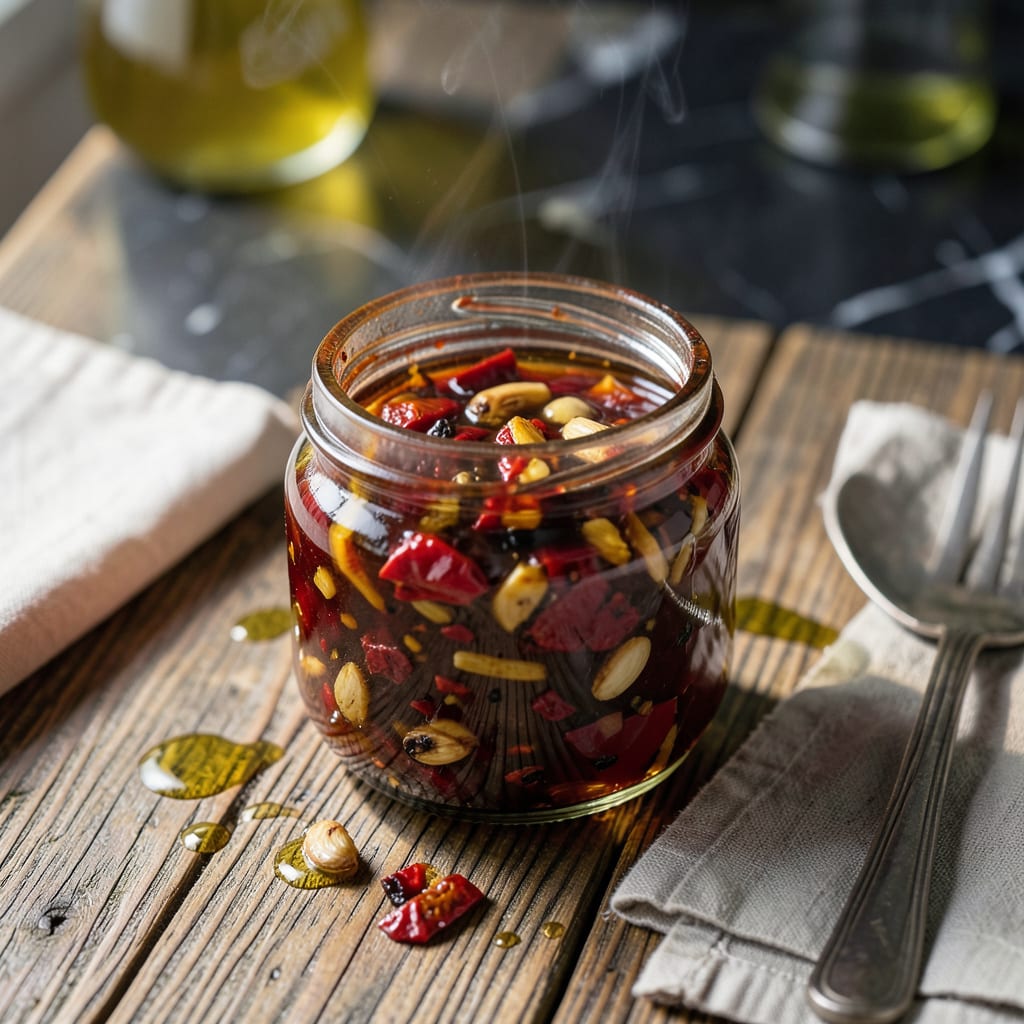
This hot sauce delivers a perfect balance of fiery heat and complex tang that elevates any dish. I developed it to capture that signature depth without overwhelming the palate.
The secret lies in the fermentation process, which builds layers of flavor over 5-7 days. With just a handful of simple ingredients, you’ll create a sauce that’s both bold and versatile.
Ingredients for Chicken Manor Hot Sauce
A handful of bold ingredients transform into complex, fermented heat with time.
| Ingredient | Amount | Notes |
|---|---|---|
| Fresno Peppers 🌶️ | 2 lb | Stems removed, roughly chopped |
| Garlic Cloves 🧄 | 12 cloves | Peeled, smashed |
| White Onion 🧅 | 1 whole | Roughly chopped |
| Apple Cider Vinegar 🍏 | 2 cups | 5% acidity preferred |
| Water 💧 | 1 cup | Filtered for best flavor |
| Kosher Salt 🧂 | 2 tbsp | Diamond Crystal preferred |
| Brown Sugar 🍚 | 2 tbsp | Light or dark works |
| Smoked Paprika 🌶️ | 1 tsp | For depth of flavor |
[recipeingredientscaler]
The peppers are everything here. Fresno peppers give you that bright heat with fruitiness—find them at Whole Foods or any well-stocked produce section. If they look dull or wrinkled, skip them (freshness matters for fermentation). I grab mine from the farmers market when they’re in season, but grocery store peppers work fine too. Just give them a good wash first.
No Fresno peppers? Jalapeños or serranos work but adjust the heat—serranos are hotter. Short on time? Red bell peppers plus a pinch of cayenne gets you close on flavor (but not the fire). The vinegar can be swapped for white vinegar, but apple cider adds that tangy depth. Bragg’s is my go-to brand for consistent quality.
Ferment at room temp for 5-7 days, stirring daily. Once it hits your preferred funk level, strain and bottle. Keeps in the fridge for 6-12 months (if it lasts that long). The flavor just gets better with age.
Why You’ll Love This Recipe
- 5-Minute Blend: I just dump everything in the blender—Fresno peppers, garlic, onion, vinegar, water—and pulse. Honestly, it’s faster than waiting for takeout.
- Fiery & Tangy: The Fresno peppers bring the heat while apple cider vinegar adds that sharp, bright kick I crave.
- Drizzle on Everything: I use it on eggs, tacos, even pizza. Between us, it’s become my secret weapon in the fridge.
- Penny-Pincher Friendly: A handful of cheap ingredients makes a big batch. I’ll be real: it’s way more affordable than store-bought hot sauces.
Step-by-Step Instructions for Chicken Manor Hot Sauce
This method ensures deep flavor extraction with balanced heat and tang every time.
Step 1: Char the Vegetables for Depth
Preheat your oven to 450°F. Spread the 2 lb Fresno Peppers (stemmed and chopped), 12 cloves Garlic Cloves (peeled and smashed), and 1 whole White Onion (roughly chopped) on a baking sheet. You want a single layer so everything chars evenly.
Roast for 20-25 minutes until the peppers blister and blacken in spots, the onion turns deep golden brown, and the garlic cloves are soft and caramelized. This charring step is crucial—it develops the smoky, complex base that defines this sauce. Don’t skip it, even if you’re tempted to speed things up.
Step 2: Blend with Vinegar and Spices
Transfer the charred vegetables to a blender. Add the 2 cups Apple Cider Vinegar, 1 cup Water, 2 tbsp Kosher Salt, 2 tbsp Brown Sugar, and 1 tsp Smoked Paprika. The vinegar should cover the vegetables completely—if it doesn’t, add a splash more water.
Blend on high for 1-2 minutes until completely smooth. You’re looking for a consistent, pourable liquid with no chunks. Stop and scrape down the sides as needed. The mixture will be thin at this stage—that’s normal. The thickness comes later.
Step 3: Simmer to Concentrate Flavors
Pour the blended mixture into a saucepan and bring to a boil over medium-high heat. Once boiling, reduce the heat to medium-low and let it simmer for 15-20 minutes. Stir occasionally to prevent sticking, especially as it starts to thicken.
You’ll know it’s ready when the sauce coats the back of a spoon and has reduced by about a third. The color will deepen to a rich, reddish-brown, and the aroma will be a perfect balance of tangy, smoky, and slightly sweet. Taste and adjust salt if needed, but remember the flavor will concentrate further as it cools.
Step 4: Cool and Strain for Smoothness
Remove the saucepan from heat and let the sauce cool to room temperature, about 30-45 minutes. This step is important for both safety and texture—hot liquids can separate when stored.
Once cooled, pour the sauce through a fine-mesh strainer into a clean jar or bottle. Press gently on the solids with a spoon to extract all the liquid, but don’t force it. The straining removes any remaining seeds or skin, giving you that smooth, professional finish. Your sauce is now ready to use or store.
Pro Tips For Making Chicken Manor Hot Sauce
- Char the Peppers: Blister the Fresno peppers in a dry skillet over medium-high until blackened in spots—this adds a smoky depth that raw peppers just can’t deliver.
- Balance the Vinegar: Use a 1:1 ratio of apple cider vinegar to water to start; I learned this the hard way after making a batch that was so sharp it burned my sinuses.
- Skip the Seeds: Remove all the seeds and white pith from the peppers unless you want a hot sauce that’s more fire than flavor—those bits pack most of the heat.
- Rest the Blend: Let the blended sauce sit for at least 24 hours before tasting; the flavors mellow and meld, and the garlic’s bite softens into something way more balanced.
Common Mistakes When Making This Recipe
Skipping the Char
Don’t rush past the roasting step—it’s what gives this sauce its depth. Without charring, you’ll miss the smoky complexity that balances the heat. I’ve tried skipping it for speed, and the result was noticeably flatter. 🌡️
Overcrowding the Pan
Spread your peppers, onions, and garlic in a single layer on the baking sheet. Crowding causes steaming instead of charring, which gives you a watery sauce instead of concentrated flavor. Use two sheets if needed.
Under-Salting the Blend
With 2 cups Apple Cider Vinegar and 2 cups of vegetables, 2 tbsp Kosher Salt is just right. Taste before simmering—if it’s bland, add more salt. It’s easier to adjust now than after reduction.
Boiling Too Vigorously
Keep your simmer gentle at medium-low heat. A rolling boil can cause the vinegar to evaporate too quickly, leaving you with a harsh, overly concentrated sauce. Stir frequently to prevent scorching.
Skipping the Strain
Even after blending, there will be seeds and skin fragments. Straining through a fine-mesh sieve ensures a smooth, professional texture. Press gently but don’t force it—this prevents bitterness.
Storing While Warm
Let the sauce cool completely to room temperature before bottling. Trapping heat in a sealed container can create pressure or even cause spoilage. I wait at least 45 minutes before transferring. 💡
Nutrition Facts
Frequently Asked Questions
Can I use different peppers?
Try jalapeños for milder heat or serranos for extra kick. Habaneros work too but reduce the quantity by half. Each variety changes the flavor profile slightly.
How long does it keep?
Properly bottled and refrigerated, your sauce stays fresh for 6-12 months. The flavor actually improves with age as it mellows. Always use clean utensils to prevent contamination.
Why char the vegetables first?
Charring creates a smoky depth that raw peppers can’t provide. It’s the secret to that complex, restaurant-quality flavor. Skip this step and you’ll miss the sauce’s signature richness.
Can I make it less spicy?
Remove all pepper seeds and membranes before roasting. You can also replace 1 lb of Fresnos with red bell peppers for milder heat while keeping good flavor.

- Jollof Rice Sauce Recipe: West African Tomato and Spice Infusion - September 25, 2026
- Japanese Rice Soup Recipe: Umami-Rich Comfort in a Bowl - September 25, 2026
- Homemade Cream Of Rice Recipe: Silk-Smooth Breakfast in Minutes - September 25, 2026