
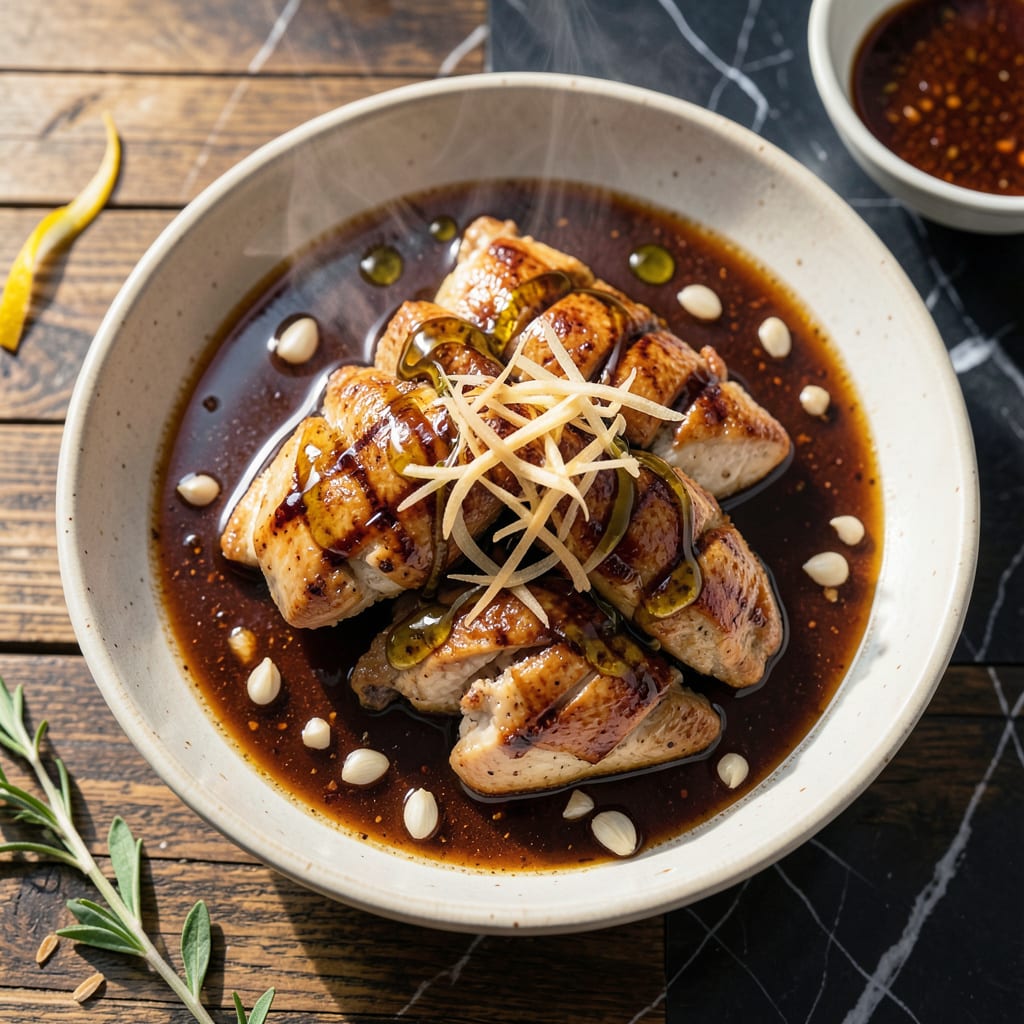
This marinade transforms ordinary chicken into something extraordinary. The combination of soy sauce and brown sugar creates a sweet-salty balance that tenderizes while adding depth.
Use it for grilling, baking, or stovetop cooking. Store in the fridge for up to 5 days, or freeze for longer shelf life. The flavors intensify with time.
Ingredients for Chicken Marinade Recipe Soy Sauce Brown Sugar
Nine ingredients create this transformative sweet-salty marinade for extraordinary chicken every time.
| Ingredient | Amount | Notes |
|---|---|---|
| Soy Sauce 🫒 | ½ cup | Low-sodium preferred for balance |
| Brown Sugar 🍚 | ½ cup | Light or dark, packed firmly |
| Olive Oil 🫒 | ¼ cup | Extra-virgin for depth |
| Apple Cider Vinegar 🍏 | 2 tbsp | Balances sweetness with acidity |
| Garlic Cloves 🧄 | 4 cloves | Minced finely for even distribution |
| Fresh Ginger 🌿 | 1 tbsp | Grated for maximum flavor infusion |
| Honey 🍯 | 2 tbsp | Adds natural sweetness and shine |
| Dijon Mustard 🧂 | 1 tbsp | Enhances depth and emulsifies |
| Black Pepper 🌶️ | 1 tsp | Freshly ground for boldness |
[recipeingredientscaler]
The soy sauce is the backbone here. Kikkoman low-sodium is my go-to—regular can be overpowering unless you cut it with water. Brown sugar adds caramelization; Domino or C&H brands dissolve reliably. Ginger and garlic should be fresh (the jarred stuff lacks punch). For the olive oil, California Olive Ranch or any cold-pressed extra-virgin works beautifully. This marinade clings best to boneless, skinless cuts.
No low-sodium soy sauce? Use regular and reduce by one-third. Out of brown sugar? White sugar plus 1 tsp molasses per half-cup. Apple cider vinegar can be swapped with rice vinegar (milder) or white vinegar (sharper). The honey is optional—maple syrup or agave work if you need vegan. Dijon mustard can be replaced with whole-grain mustard for texture.
This keeps beautifully in the fridge for 5 days—actually improves as flavors meld. Freeze in ice cube trays for up to 3 months. Always marinate chicken in the fridge, never at room temperature. Discard used marinade unless boiling for 3 minutes to kill bacteria.
Why You’ll Love This Recipe
- 5-Minute Mix: Honestly, I just dump the soy sauce, brown sugar, olive oil, vinegar, and garlic in a bowl and stir—no fancy steps.
- Sweet-Savory Magic: The brown sugar caramelizes while the soy and garlic give it that deep, umami-rich punch I crave.
- Grill or Skillet: I’ve used this marinade for weeknight stir-fries, weekend BBQ, and even meal-prep chicken bowls—it works everywhere.
- Budget Stretcher: A few pantry staples transform cheap chicken thighs into something restaurant-worthy, and leftovers taste even better the next day.
Step-by-Step Instructions for Chicken Marinade
Master the technique behind this flavor-packed blend with precision and ease.
Step 1: Combine Wet Ingredients for Emulsion Base
In a medium bowl, whisk together the 0.5 cup Soy Sauce, 0.25 cup Olive Oil, and 2 tbsp Apple Cider Vinegar vigorously until the mixture begins to emulsify. You’ll notice the liquid transform from separated to slightly opaque as the oil and vinegar incorporate.
This step ensures the marinade clings properly to the chicken rather than pooling at the bottom of the dish. The acidity from the vinegar also starts tenderizing the meat immediately upon contact.
Step 2: Incorporate Sweet and Aromatic Elements
Add the 0.5 cup Brown Sugar, 2 tbsp Honey, and 1 tbsp Dijon Mustard to the bowl. Stir until the brown sugar fully dissolves and the honey blends seamlessly into the liquid. The mixture should appear glossy and slightly thickened.
The mustard acts as a natural emulsifier, preventing separation, while the sugars create a caramelized crust during grilling. Ensure no sugar granules remain visible before proceeding.
Step 3: Introduce Fresh Aromatics and Spices
Finely mince the 4 cloves Garlic Cloves and grate the 1 tbsp Fresh Ginger directly into the marinade. Add the 1 tsp Black Pepper and stir thoroughly to distribute the aromatics evenly throughout the mixture.
The garlic and ginger infuse the liquid with pungent, warm notes that penetrate deeply into the chicken. Freshly ground black pepper adds a subtle heat that balances the sweetness. Let the marinade sit for 5 minutes to allow the flavors to meld.
Step 4: Test and Adjust Consistency
Dip a spoon into the marinade and observe the texture. It should coat the back of the spoon lightly but drip off slowly. If the mixture appears too thick, add 1-2 teaspoons of water to achieve the desired viscosity.
Taste the marinade and adjust the balance if needed—though the measurements are precise, personal preference for sweetness or acidity may vary slightly. This step guarantees the marinade adheres perfectly to the chicken without sliding off.
Pro Tips For Making Chicken Marinade Recipe Soy Sauce Brown Sugar
- Marinate Overnight: Give the chicken at least 4 hours in the fridge with the soy sauce and brown sugar mix—overnight if you can. I learned this the hard way after serving bland chicken that only marinated for 30 minutes.
- Dissolve the Sugar: Warm the brown sugar slightly in the olive oil before mixing with other ingredients. Sounds weird, but it works—prevents grainy clumps in your marinade.
- Crush the Garlic: Smash the garlic cloves with the flat of your knife before mincing—it releases more flavor into the soy sauce and vinegar. My grandmother swore by this, and she was right.
- Skip the Metal Bowl: Use glass or plastic for marinating, especially with the vinegar and soy sauce. After ruining a batch with a metallic taste, I finally figured out the acid reacts with metal.
Common Mistakes When Making Great chicken marinade recipe soy sauce brown sugar
Over-Salting Pitfall
Using regular soy sauce without adjustment can make your marinade too salty. I always opt for low-sodium soy sauce or cut regular with 2-3 tbsp water. Taste before adding chicken—it should be flavorful, not overpowering. 💡
Sugar Settling Issues
If brown sugar settles at the bottom, your chicken won’t get even flavor. Stir the marinade vigorously before each use, or warm it slightly (30 seconds in microwave) to help dissolve sugar completely. This ensures every bite is perfectly balanced.
Marinating Too Long
Boneless chicken only needs 2-4 hours in this acidic marinade. Go beyond 6 hours and the vinegar starts breaking down proteins too much, turning meat mushy. For whole chickens, 4-6 hours max works best.
Room Temperature Danger
Never marinate chicken on the counter. Bacteria multiply rapidly between 40-140°F. Always refrigerate in a sealed container. I use Ziploc bags laid flat—they marinate faster and store neatly. ❄️
Reusing Raw Marinade
Discard marinade after raw chicken contact unless you boil it for 3 full minutes first. This kills bacteria. I often reserve a portion before adding chicken to use as a finishing sauce—just
Uneven Coating
For thorough coverage, place chicken and marinade in a bag, press out air, and massage gently. This distributes the liquid evenly. Turn the bag every 30 minutes if marinating over 1 hour for consistent flavor penetration.
Nutrition Facts
Frequently Asked Questions
How long should I marinate chicken in this?
For boneless cuts, 2-4 hours is ideal. Whole pieces can handle 4-6 hours maximum. Any longer and the vinegar may make the meat mushy.
Can I use this for other proteins?
This works beautifully with pork chops, salmon, or even tofu. Adjust marinating time: 30-60 minutes for fish, 1-2 hours for pork.
What if I don’t have apple cider vinegar?
Rice vinegar or white vinegar work in a pinch. Use the same 2 tablespoons measurement. Rice vinegar is milder, while white is sharper.
Can I make this ahead and store it?
Yes! It keeps in the fridge for 5 days or freeze for 3 months in airtight containers. Flavors actually improve after 24 hours.

- Jollof Rice Sauce Recipe: West African Tomato and Spice Infusion - September 25, 2026
- Japanese Rice Soup Recipe: Umami-Rich Comfort in a Bowl - September 25, 2026
- Homemade Cream Of Rice Recipe: Silk-Smooth Breakfast in Minutes - September 25, 2026