
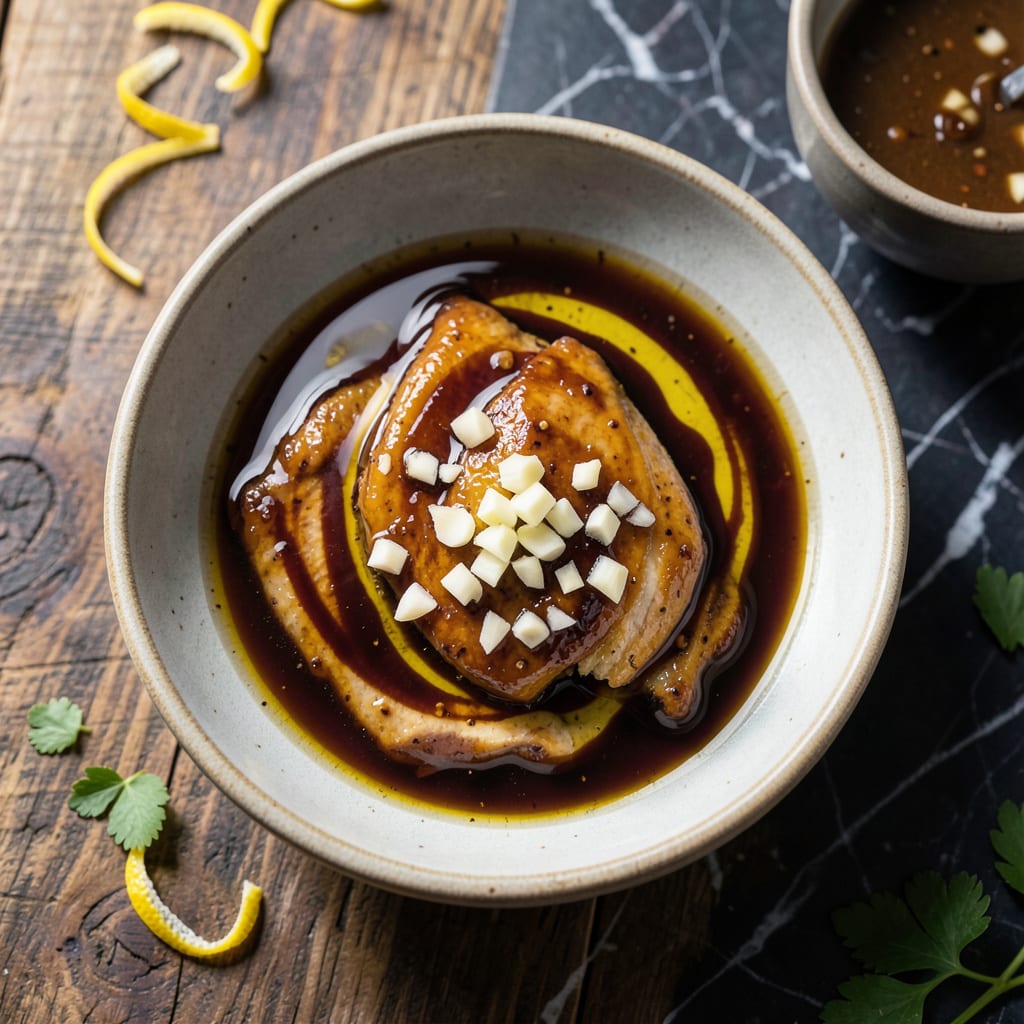
This marinade transforms ordinary chicken into perfectly juicy, flavorful cuts every time. A balanced blend of oils, acids, and spices works deep into the meat, ensuring each bite is packed with taste.
With just a few minutes of prep, you’ll have a tender foundation for grilling, baking, or roasting. The result is consistently moist, well-seasoned chicken that never disappoints.
Ingredients for Chicken Marinade Sauce
Nine ingredients transform chicken with bold, balanced flavor every single time.
| Ingredient | Amount | Notes |
|---|---|---|
| Extra-Virgin Olive Oil 🫒 | ¾ cup | High quality, fruity finish |
| Soy Sauce 🥢 | ¼ cup | Low-sodium preferred for balance |
| Honey 🍯 | 3 tbsp | Raw or pure for depth |
| Lemon Juice 🍋 | 3 tbsp | Freshly squeezed, no bottled |
| Apple Cider Vinegar 🍏 | 2 tbsp | Or substitute white wine vinegar |
| Garlic Cloves 🧄 | 4 cloves | Minced for even distribution |
| Dijon Mustard 🟡 | 1 tbsp | Smooth, not grainy variety |
| Worcestershire Sauce 🍶 | 1 tbsp | Adds umami depth to marinade |
| Smoked Paprika 🌶️ | 1 tsp | For subtle smoky undertones |
| Ground Black Pepper 🌶️ | 1 tsp | Freshly cracked if possible |
[recipeingredientscaler]
The olive oil base matters here. Look for cold-pressed extra-virgin with a fruity finish—California Olive Ranch or Bertolli are solid choices. The honey should be raw if you can swing it (farmers markets are goldmines). For the soy sauce, Kikkoman or San-J low-sodium let you control the salt without sacrificing flavor. Skip the pre-minced garlic in jars—fresh cloves pack way more punch.
No honey? Maple syrup or agave at a 1:1 swap. Apple cider vinegar can be white wine or rice vinegar—just keep the quantity the same. Out of Dijon? Whole-grain mustard works too (the texture blends right in). The Worcestershire adds depth, but a splash of fish sauce (or extra soy) gets you close. Smoked paprika not in your pantry? Regular paprika plus a pinch of liquid smoke does the trick.
This keeps in the fridge for 3-4 days in a sealed jar. Shake it up before using since the ingredients settle. Works for 4-6 lbs of chicken—double if you’re doing a big batch. Freezing? Pour into ice cube trays for single-serving portions (good for 3 months).
Why You’ll Love This Recipe
- 5-Minute Mix: I dump all the ingredients in a bowl, whisk, and boom—chicken’s ready for the fridge or grill.
- Sweet-Tangy Magic: The honey and apple cider vinegar dance together, giving every bite that sticky, crave-worthy glaze.
- Grill to Meal Prep: I slather it on chicken thighs for dinner, then use leftovers for lunch wraps the next day.
- Pantry Staples: Olive oil, soy sauce, honey—nothing fancy, just stuff I always have on hand.
Step-by-Step Instructions for Chicken Marinade Sauce
Here’s the method. Straightforward, tested, works every time.
Step 1: Combine the Wet Base Ingredients
In a medium bowl, whisk together the 0.75 cup Extra-Virgin Olive Oil, 0.25 cup Soy Sauce, 3 tbsp Honey, and 3 tbsp Lemon Juice until fully emulsified. The honey might resist at first—just keep whisking until it dissolves completely into the liquid.
This base creates the foundation of your marinade. The olive oil carries the flavors deep into the chicken, while the soy sauce and lemon juice work together to tenderize the meat. You’ll notice the mixture starts to look slightly creamy as the honey incorporates.
Step 2: Add the Acidic and Umami Elements
Stir in the 2 tbsp Apple Cider Vinegar and 1 tbsp Worcestershire Sauce. The vinegar adds a bright tang that balances the richness of the oil, while the Worcestershire contributes that unmistakable umami depth.
I always use apple cider vinegar here for its mellow fruitiness, but white wine vinegar works in a pinch. At this point, your marinade should have a complex, layered aroma—savory, slightly sweet, with a subtle sharpness. This is where the magic starts to happen.
Step 3: Incorporate the Aromatics and Spices
Add the 4 cloves minced Garlic Cloves, 1 tbsp Dijon Mustard, 1 tsp Smoked Paprika, and 1 tsp Ground Black Pepper. The garlic and mustard add pungent depth, while the smoked paprika delivers that subtle, smoky backbone.
Use freshly minced garlic for the best flavor distribution—pre-minced garlic just doesn’t have the same punch. Whisk everything together until the spices are fully suspended in the liquid. The Dijon mustard acts as an emulsifier, helping all these bold flavors meld together seamlessly.
Step 4: Rest and Infuse the Flavors
Let the marinade sit at room temperature for 15-20 minutes before using. This resting period allows all the flavors to marry and mellow. You’ll notice the aroma becomes more cohesive and the colors deepen slightly as the spices hydrate.
For the most tender, flavorful chicken, use this marinade on 1.5-2 pounds of chicken and let it soak for at least 4 hours, or overnight for maximum impact. The acidic elements in the lemon juice and vinegar will work their tenderizing magic while the oil and spices infuse every bite with flavor.
Pro Tips For Making Chicken Marinade Sauce
- Marinate Overnight: Give the chicken at least 4 hours in the fridge with the soy sauce, honey, and vinegar—overnight if you can. I learned this the hard way when my first attempt tasted bland after just 30 minutes.
- Warm the Honey: Microwave the honey for 10-15 seconds before mixing—it blends smoothly with the olive oil and vinegar instead of clumping at the bottom.
- Balance the Acid: If the lemon juice and apple cider vinegar make the marinade too sharp, add a teaspoon of brown sugar. Sounds weird, but it works.
- Skip the Metal Bowl: Use glass or plastic for marinating—metal can react with the acid in the lemon juice and vinegar, giving the sauce a metallic taste.
Serving Suggestions for This chicken marinade sauce
Grilled Chicken
Use this marinade for 4-6 chicken breasts or 8-10 thighs. Grill over medium-high heat for 6-8 minutes per side until internal temp hits 165°F. The sugars in honey caramelize beautifully, creating a glossy, flavorful crust. 🔥
Baked Chicken
Arrange marinated pieces on a baking sheet at 375°F for 25-30 minutes. Baste with extra marinade halfway through for maximum flavor. I love how the edges get slightly crispy while the inside stays juicy.
Chicken Skewers
Cut chicken into 1.5-inch cubes and thread onto skewers. Grill for 8-10 minutes total, turning occasionally. The smaller pieces absorb marinade flavors even more intensely.
As a Dressing
Reserve some marinade before adding raw chicken. Drizzle over grilled veggies or use as a salad dressing. Thin with 1-2 tbsp water if needed. The bold flavors work wonderfully on greens or roasted potatoes.
Marinating Tips
For boneless cuts, 2-4 hours is ideal. Bone-in pieces benefit from 6-12 hours. Always marinate in the fridge, not on the counter. I use a zip-top bag—it’s easier to turn and ensures even coverage.
Garnish Ideas
Sprinkle with chopped cilantro or parsley before serving. A squeeze of fresh lemon brightens all the flavors. For extra heat, add red pepper flakes to the finished dish rather than the marinade itself. 💫
Nutrition Facts
Frequently Asked Questions
How long should I marinate chicken for best flavor?
For boneless cuts, 2-4 hours is ideal. Bone-in pieces benefit from 6-12 hours in the fridge. Never marinate at room temperature to prevent bacterial growth.
Can I reuse leftover marinade?
Never reuse marinade that touched raw chicken. To use as a sauce, reserve some before adding meat or boil used marinade for 3-5 minutes to kill bacteria.
What’s the best container for marinating?
A zip-top bag works best as it ensures even coverage and easy cleanup. Glass or food-safe plastic containers also work well. Avoid metal, which can react with acidic ingredients.
Why does my marinade separate?
Separation is normal! The oil and water-based ingredients naturally separate. Just whisk or shake before using. The flavors will still infuse perfectly into your chicken.

- Jollof Rice Sauce Recipe: West African Tomato and Spice Infusion - September 25, 2026
- Japanese Rice Soup Recipe: Umami-Rich Comfort in a Bowl - September 25, 2026
- Homemade Cream Of Rice Recipe: Silk-Smooth Breakfast in Minutes - September 25, 2026