
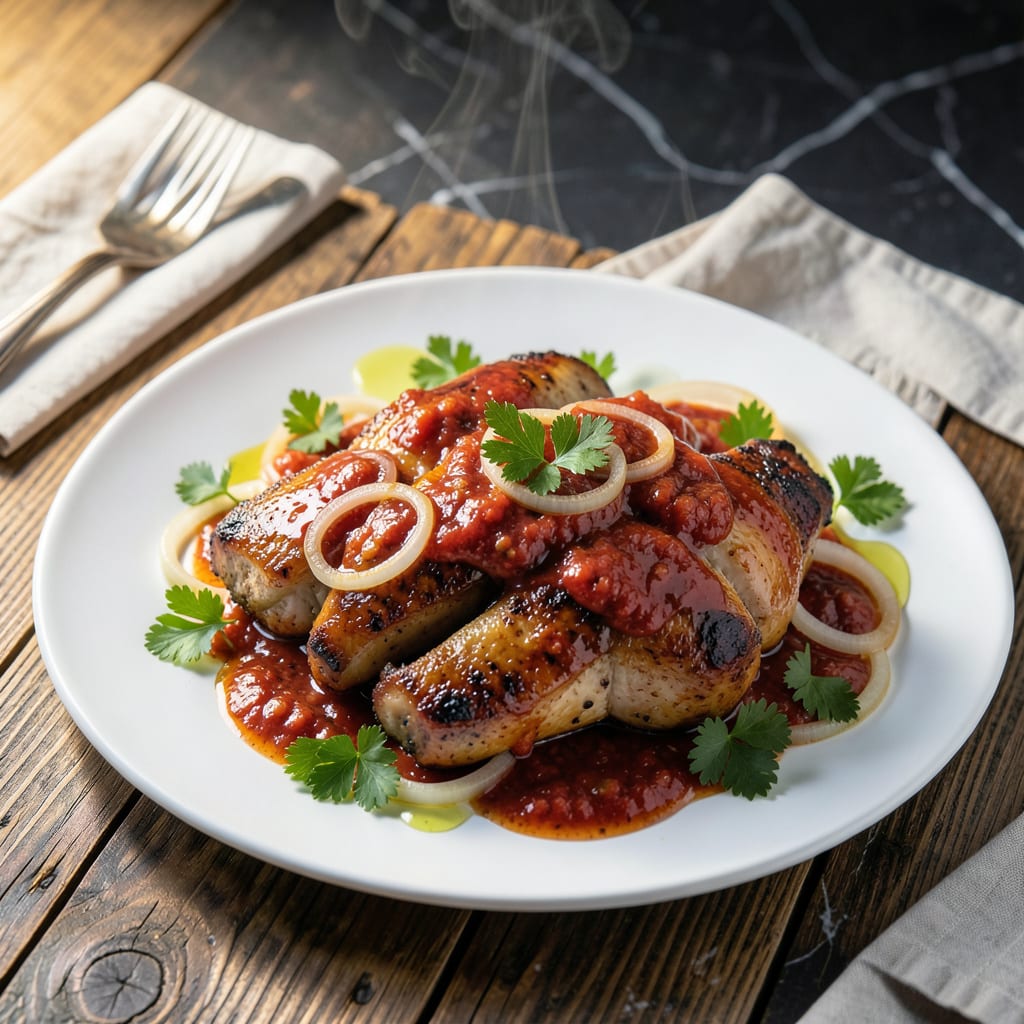
This tangy tomato-based sauce is the classic companion to crispy fried chicken. I developed this version to capture the traditional Maryland flavor with a balanced sweet and savory profile.
Simple to prepare with pantry staples, this sauce comes together in 15 minutes. It stores well in the fridge, making it perfect for meal prep and quick weeknight dinners.
Ingredients for Chicken Maryland Sauce
Pantry staples come together for this balanced tangy sauce in minutes.
| Ingredient | Amount | Notes |
|---|---|---|
| Tomato Sauce 🍅 | 1 ½ cups | Plain, no herbs added |
| Apple Cider Vinegar 🍏 | ¼ cup | Provides signature tang |
| Worcestershire Sauce 🫒 | 2 tbsp | Adds depth and umami |
| Brown Sugar 🍚 | 2 tbsp | Light or dark works |
| Dijon Mustard 🟡 | 1 tbsp | Smooth, not whole grain |
| Garlic Powder 🧄 | 1 tsp | Not garlic salt |
| Onion Powder 🧅 | 1 tsp | Balances sweetness |
| Smoked Paprika 🌶️ | ½ tsp | Essential for Maryland flavor |
| Salt 🧂 | ½ tsp | Adjust to taste |
| Black Pepper 🌶️ | ¼ tsp | Freshly ground preferred |
[recipeingredientscaler]
The tomato sauce base is key—Hunts or Muir Glen are solid choices for consistent flavor. I grab mine from Costco when I’m stocking up. The apple cider vinegar should be the raw, unfiltered kind (look for the cloudy stuff) for that authentic Maryland bite. Worcestershire sauce adds complexity, and Lea & Perrins is the only brand I trust here. Don’t skip it.
No apple cider vinegar? White vinegar with a pinch of sugar gets you close. Brown sugar can be swapped for honey or maple syrup (though it changes the flavor slightly). Dijon mustard not in the fridge? Yellow mustard at half the amount works fine. The smoked paprika is non-negotiable for that signature taste—Penzeys has great quality if your grocery store selection is sad.
This keeps beautifully in the fridge for up to 2 weeks. I make a double batch and store it in a glass jar—tastes even better after a day or two as the flavors meld. Freezes for 3 months if you want to keep it longer.
Why You’ll Love This Recipe
- 5-Minute Mix: I just dump all the ingredients—tomato sauce, apple cider vinegar, Worcestershire, brown sugar, Dijon—into one pot and stir. No chopping, no fuss.
- Sweet-Tangy Kick: That first hit of brown sugar sweetness followed by the sharp vinegar and mustard? Honestly, it’s the reason I make this every other week.
- BBQ or Weeknight: Slather it on grilled chicken for a cookout, or simmer drumsticks in it for a Tuesday dinner. Works both ways.
- Double Batch Wins: I always make extra—it keeps for a week and turns leftovers into something crave-worthy. Saves me money and time.
Step-by-Step Instructions for Chicken Maryland Sauce
Here’s the method I use to create this signature sauce with perfect balance every time.
Step 1: Combine Tomato Base and Vinegar
In a medium saucepan over medium heat, pour in the 1.5 cups Tomato Sauce and 0.25 cup Apple Cider Vinegar. I always use plain tomato sauce here—any added herbs would compete with the Maryland flavor profile we’re building.
Stir to combine and bring to a gentle simmer. You’ll notice the vinegar’s sharp aroma softens as it blends with the tomato. This tangy foundation is what makes Maryland sauce distinctive.
Step 2: Add Umami and Sweet Elements
Whisk in the 2 tbsp Worcestershire Sauce, 2 tbsp Brown Sugar, and 1 tbsp Dijon Mustard. The Worcestershire adds depth while the sugar balances the acidity—light or dark brown works equally well.
I use smooth Dijon rather than whole grain to maintain a velvety texture. Stir continuously for 2-3 minutes until the sugar fully dissolves and the mixture thickens slightly. Watch for small bubbles at the edges—this signals it’s ready for the next step.
Step 3: Incorporate Spices and Seasonings
Reduce heat to low and add the 1 tsp Garlic Powder, 1 tsp Onion Powder, 0.5 tsp Smoked Paprika, 0.5 tsp Salt, and 0.25 tsp Black Pepper. The smoked paprika is non-negotiable—it’s what gives this sauce its authentic Maryland character.
Stir well to distribute the spices evenly. Taste and adjust salt if needed, but remember the flavors will concentrate as it reduces. Let it simmer gently for 5 minutes to allow the spices to bloom.
Step 4: Finish and Adjust Consistency
After simmering, the sauce should coat the back of a spoon but still be pourable. If it’s too thick, add a splash of water. If too thin, let it reduce for another 2-3 minutes.
Remove from heat and let it rest for 10 minutes. The flavors will meld together during this time, and the sauce will thicken slightly as it cools. Serve warm over crispy fried chicken for the classic Maryland experience.
Pro Tips For Making Chicken Maryland Sauce
- Simmer Low and Slow: Keep the heat at a gentle simmer—boiling the sauce will make the vinegar and Worcestershire too sharp. I learned this the hard way after ruining a batch with aggressive heat.
- Balance the Sugar: Brown sugar can overpower, so add it gradually and taste as you go. My grandmother swore by this, and she was right: less is often more.
- Skip the Cheap Vinegar: Use good-quality apple cider vinegar—it actually changes the outcome. The cheap stuff leaves a harsh aftertaste that lingers in the sauce.
- Bloom the Mustard: Mix the Dijon mustard into the warm tomato sauce first to mellow its bite. Sounds weird, but it works and blends the flavors better than dumping everything in at once.
Regional Styles of This Dish
Mid-Atlantic Classic
This version stays true to the Maryland roots with its signature tangy-sweet balance. The smoked paprika is the star, giving that unmistakable regional character. I grew up eating this sauce at local crab shacks and church picnics. 🗺️
Southern Style
For a deeper, richer profile, I add 1 tbsp molasses and a dash of hot sauce to the base recipe. This nod to Virginia traditions brings warmth and complexity. The molasses also gives the sauce a darker, more caramelized appearance.
Chesapeake Bay Twist
In coastal Maryland areas, seafood lovers often incorporate 1 tsp Old Bay seasoning into the mix. This adds a subtle seafood-friendly note that pairs wonderfully with crab cakes too. The Old Bay works beautifully with the existing smoked paprika.
Pennsylvania Dutch
The Amish communities in Lancaster County often use apple butter instead of tomato sauce. I substitute 1.5 cups apple butter for a sweeter, fruitier version. Reduce the brown sugar by half to compensate for the apple butter’s natural sweetness.
DC Metro Version
In the nation’s capital, you’ll find this sauce with a touch of sophistication. I add 1 tbsp balsamic vinegar and 1 tsp honey for a more refined flavor profile. This variation works particularly well with upscale fried chicken dishes. 💫
Eastern Shore
The rural Eastern Shore of Maryland prefers a simpler approach. I omit the Dijon mustard and Worcestershire sauce, letting the pure tomato and vinegar shine. This version highlights the agricultural roots of the region with its clean, straightforward flavors.
Nutrition Facts
Frequently Asked Questions
Can I make this sauce ahead of time?
The flavors actually improve after 24 hours in the fridge. Store in an airtight container and it’ll keep for up to 2 weeks.
What can I use instead of apple cider vinegar?
White vinegar with 1 tsp sugar works in a pinch. For a milder tang, try rice vinegar or lemon juice. Avoid balsamic—it overpowers the sauce.
Why is my sauce too thin?
Simmer it longer—5-7 minutes usually thickens it. If still thin, mix 1 tsp cornstarch with water and stir in. Let it cool slightly; it thickens as it sits.
Is smoked paprika essential?
Yes! It’s the key to authentic Maryland flavor. If unavailable, use regular paprika plus a pinch of liquid smoke. But smoked paprika is ideal.

- Jollof Rice Sauce Recipe: West African Tomato and Spice Infusion - September 25, 2026
- Japanese Rice Soup Recipe: Umami-Rich Comfort in a Bowl - September 25, 2026
- Homemade Cream Of Rice Recipe: Silk-Smooth Breakfast in Minutes - September 25, 2026