
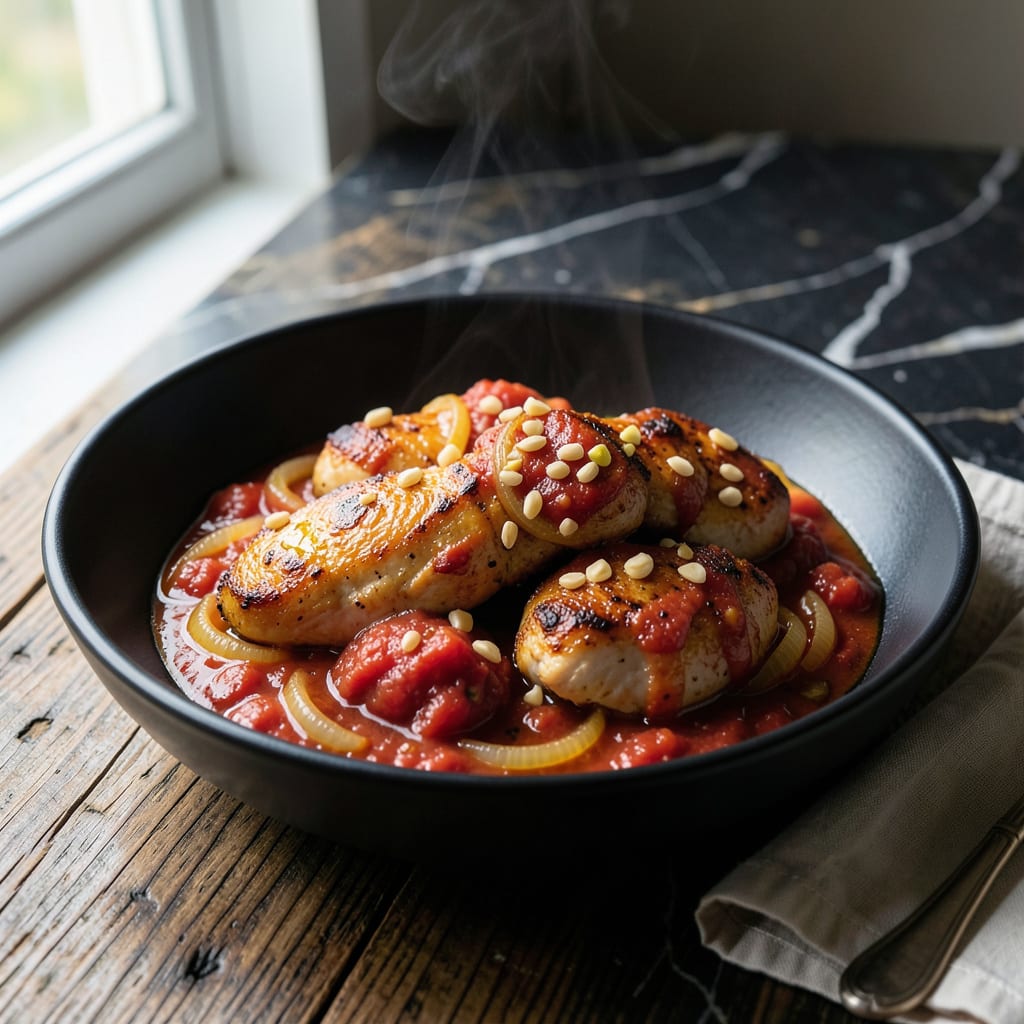
This chicken meat sauce delivers rich, hearty flavor through slow simmering that transforms simple ingredients into something extraordinary.
I’ve perfected this technique to ensure the sauce clings perfectly to pasta while the chicken stays tender. The result is a dish that tastes like it simmered all day, yet comes together in under an hour.
Ingredients for Chicken Meat Sauce
Transform simple pantry staples into a rich, hearty sauce that clings perfectly to pasta.
| Ingredient | Amount | Notes |
|---|---|---|
| Boneless, Skinless Chicken Thighs 🍗 | 1 ½ lb | Cut into bite-sized pieces |
| Olive Oil 🫒 | 2 tbsp | Extra-virgin preferred |
| Yellow Onion 🧅 | 1 whole | Finely diced for base |
| Garlic Cloves 🧄 | 4 cloves | Minced for depth |
| Crushed Tomatoes 🍅 | 28 oz | San Marzano recommended |
| Tomato Paste 🍅 | 2 tbsp | For concentrated richness |
| Dry Red Wine 🍷 | ½ cup | Cabernet or Merlot |
| Chicken Stock 🥣 | 1 cup | Low-sodium preferred |
| Dried Oregano 🌿 | 1 tsp | Mediterranean variety |
| Dried Basil 🍃 | 1 tsp | Crushed for even distribution |
| Red Pepper Flakes 🌶️ | ½ tsp | Adjust to heat preference |
| Bay Leaf 🍃 | 1 whole | Removed before serving |
| Kosher Salt 🧂 | 1 ½ tsp | Diamond Crystal brand |
| Freshly Ground Black Pepper 🌶️ | 1 tsp | Coarse grind preferred |
| Heavy Cream 🥛 | ¼ cup | Optional for finishing |
[recipeingredientscaler]
The chicken is the foundation here. Boneless, skinless thighs are ideal for their fat content and resistance to drying—avoid breasts which can turn stringy. Costco or Whole Foods offer consistent quality. For crushed tomatoes, San Marzano brands provide the best balance of acidity and sweetness. The wine should be dry and drinkable—nothing you wouldn’t pour in a glass.
No wine on hand? Substitute with additional chicken stock and a tbsp of balsamic vinegar. Fresh tomatoes can replace canned in season, but you’ll need about 8-10 medium for equivalent volume. For herb flexibility, fresh oregano or basil at triple the amount works beautifully. The heavy cream is optional but adds a luxurious finish—half-and-half works in a pinch.
The sauce develops flavor as it cools. It will keep 4-5 days refrigerated in an airtight container and freezes beautifully for 3 months. For best texture, thaw frozen sauce in the refrigerator overnight before reheating gently to preserve the chicken’s tenderness.
Why You’ll Love This Recipe
- One Pot Wonder: Honestly, I just brown the chicken thighs, toss in onions, garlic, and crushed tomatoes, and let it simmer—minimal cleanup, maximum flavor.
- Rich and Hearty: The slow-cooked garlic and onions with juicy chicken thighs make this sauce so deep and satisfying.
- Meal Prep Magic: It reheats beautifully, so I make a big batch for pasta night, then use leftovers for sandwiches or pizza topping.
- Budget Stretcher: Boneless thighs are affordable, and this recipe feeds my family for two nights without skimping on taste.
Step-by-Step Instructions for Chicken Meat Sauce
Master the technique for a deeply flavorful sauce with tender chicken every time.
Step 1: Brown the Chicken and Build the Base
Heat the 2 tbsp olive oil in a large Dutch oven over medium-high heat until it shimmers. Add the 1.5 lb boneless, skinless chicken thighs in a single layer, ensuring they don’t touch. Sear undisturbed for 4-5 minutes until deep golden brown on one side.
Flip and cook for another 3-4 minutes until browned. Remove the chicken and set aside. The fond left in the pot will form the flavor foundation. Reduce heat to medium, add the finely diced yellow onion, and cook for 5 minutes until translucent and softened.
Step 2: Develop Aromatics and Deglaze
Add the 4 cloves minced garlic cloves to the onion and cook for 1 minute until fragrant. Stir in the 2 tbsp tomato paste and cook for 2 minutes, stirring constantly, until it darkens slightly. This step intensifies the umami depth.
Pour in the 0.5 cup dry red wine and scrape up all the browned bits from the bottom of the pot. Simmer for 3 minutes until the liquid reduces by half. The wine should lose its raw edge and mellow into the base.
Step 3: Simmer with Tomatoes and Herbs
Return the chicken to the pot. Add the 28 oz crushed tomatoes, 1 cup chicken stock, 1 tsp dried oregano, 1 tsp dried basil, 0.5 tsp red pepper flakes, 1 whole bay leaf, 1.5 tsp kosher salt, and 1 tsp freshly ground black pepper.
Stir to combine, then bring to a gentle simmer. Reduce heat to low, cover partially, and let it cook for 45-50 minutes, stirring occasionally. The sauce should thicken slightly, and the chicken should be fall-apart tender.
Step 4: Finish with Cream and Adjust
Discard the bay leaf and stir in the 0.25 cup heavy cream. Simmer uncovered for 5 minutes to allow the flavors to meld. Taste and adjust the kosher salt and freshly ground black pepper if needed.
The sauce should coat the back of a spoon with a rich, velvety texture. If it’s too thick, thin it with a splash of chicken stock. Serve hot over pasta or with crusty bread to soak up every last bit.
Pro Tips For Making Chicken Meat Sauce
- Brown the Chicken First: Sear the thighs in olive oil until golden before adding onions—this builds a deep, savory base that crushed tomatoes alone can’t achieve.
- Dice Onions Fine: Finely chopping the yellow onion ensures it melts into the sauce, so you get sweetness in every bite without chunky texture.
- Skip Raw Garlic: I learned this the hard way—adding minced garlic too early burns it; sauté it just 30 seconds after the onions soften to keep it fragrant, not bitter.
- Simmer Uncovered: After adding crushed tomatoes, let the sauce reduce uncovered for 15–20 minutes so it thickens and clings to pasta instead of sitting in a watery pool.
Troubleshooting This Dish
Sauce Too Thin
If your sauce hasn’t thickened after 45-50 minutes, remove the lid and increase heat to medium-low. Simmer uncovered for 10-15 minutes to reduce excess liquid. I often mash a few chicken pieces slightly to release their starches, which helps bind the sauce naturally. 💡
Chicken Overcooked
If the chicken becomes stringy or dry, it likely cooked too long before the sauce developed. Next time, reduce initial searing to 3-4 minutes per side and check for doneness at 40 minutes. For rescue, shred the chicken and stir it back in—it’ll absorb flavors from the sauce.
To prevent this, maintain a gentle simmer, not a boil. The sauce should barely bubble.
Sauce Too Acidic
A pinch of sugar (1-2 tsp) balances acidity from tomatoes and wine. Alternatively, add a carrot while simmering, then remove it before serving. This trick works wonders without altering the sauce’s color or texture.
Bland Flavor
If the sauce tastes flat, it likely needs salt or umami. Start with ½ tsp kosher salt, then add 1 tsp tomato paste or a splash of fish sauce. I always taste before adding the final heavy cream, as it can mellow sharp flavors. ✨
Cream Curdling
If the heavy cream separates, temper it first by mixing with ¼ cup hot sauce before adding to the pot. Stir constantly while incorporating. Avoid boiling after adding cream—keep heat at low to maintain a smooth, velvety texture.
Nutrition Facts
Frequently Asked Questions
Can I use chicken breast instead of thighs?
You can, but thighs stay juicier. If using breasts, reduce cooking time to 30-35 minutes to prevent dryness.
What pasta pairs best with this sauce?
Wide noodles like pappardelle or fettuccine hold up well. For a heartier bite, try rigatoni or penne.
How can I make this sauce ahead?
Prepare the sauce without cream, refrigerate for up to 2 days. Reheat gently, then stir in cream before serving.
Why does my sauce taste bitter?
Overcooked tomato paste or wine can cause bitterness. Next time, cook paste for only 1-2 minutes and reduce wine by half.

- Jollof Rice Sauce Recipe: West African Tomato and Spice Infusion - September 25, 2026
- Japanese Rice Soup Recipe: Umami-Rich Comfort in a Bowl - September 25, 2026
- Homemade Cream Of Rice Recipe: Silk-Smooth Breakfast in Minutes - September 25, 2026