
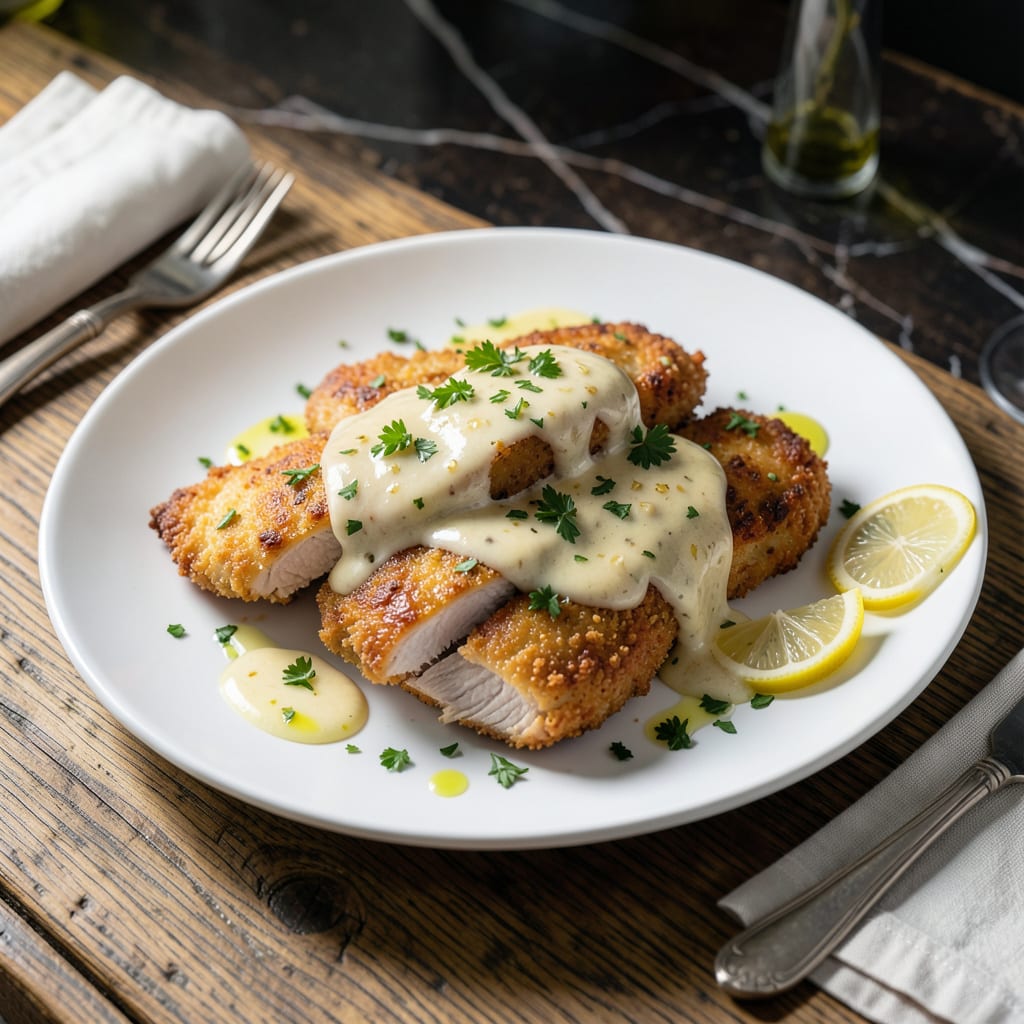
This lemon-butter sauce transforms crispy chicken milanese into a restaurant-quality dish with minimal effort. The bright citrus and rich butter create a perfect balance that enhances the golden cutlets without overpowering them.
Ready in 5 minutes, this simple sauce uses pantry staples for a foolproof finish. Drizzle it over hot cutlets just before serving to preserve the coating’s crunch.
Ingredients for Chicken Milanese Sauce
Nine ingredients transform simple pantry staples into this restaurant-quality sauce.
| Ingredient | Amount | Notes |
|---|---|---|
| Unsalted Butter 🧈 | ½ cup | High-quality, European-style preferred |
| Fresh Lemon Juice 🍋 | ⅓ cup | About 2-3 large lemons |
| Lemon Zest 🍋 | 1 tbsp | Finely grated, from organic lemons |
| Garlic Cloves 🧄 | 2 cloves | Minced or pressed |
| Shallot 🧅 | 1 whole | Finely diced for subtle sweetness |
| Dry White Wine 🍷 | ¼ cup | Sauvignon Blanc or Pinot Grigio |
| Chicken Stock 🥣 | ¼ cup | Low-sodium preferred for balance |
| Heavy Cream 🥛 | 2 tbsp | Optional for richer texture |
| Kosher Salt 🧂 | ½ tsp | Diamond Crystal brand recommended |
| Freshly Ground Black Pepper 🌶️ | ¼ tsp | Coarse grind preferred |
[recipeingredientscaler]
The butter is non-negotiable—European-style has higher fat content (82-85%) and lower water, which means it emulsifies better and won’t separate. Plugrá or Kerrygold are widely available at most grocery stores and perform beautifully. For the wine, any dry white will work, but avoid cooking wines with added salt. Look for something you’d actually drink—Sauvignon Blanc adds a crisp note that complements the lemon perfectly.
No white wine? Substitute with extra chicken stock plus 1 tsp vinegar. Shallots can be replaced with half a small onion (finely diced), though the flavor will be slightly more pungent. If omitting the heavy cream, increase the butter by 1 tbsp for richness. The zest is key—don’t skip it (worth the extra minute). For a lighter version, reduce butter by half and use olive oil for the remainder.
This sauce is best used immediately but can be stored in an airtight container in the fridge for up to 3 days. Reheat gently over low heat, whisking in a splash of water if it separates. Do not boil, or the butter may break. For longer storage, freeze without the cream for up to 1 month.
Why You’ll Love This Recipe
- Five-Ingredient Magic: I love how this sauce comes together with just butter, lemon, garlic, shallot, and zest—no fuss, no long shopping list.
- Bright and Zingy: The fresh lemon juice and zest give it that perfect tangy kick that cuts through the richness of the chicken.
- Dinner in 15: Honestly, it’s ready faster than the chicken finishes cooking, so it’s my go-to for busy weeknights.
- Stretches Further: I always double the batch—it keeps beautifully and tastes just as good drizzled over leftovers the next day.
Step-by-Step Instructions for Chicken Milanese Sauce
Master this technique to create a velvety lemon-butter sauce that complements crispy cutlets beautifully.
Step 1: Sauté Aromatics in Butter
Melt the 0.5 cup Unsalted Butter in a saucepan over medium heat until it begins to foam. Immediately add the finely diced 1 whole Shallot and cook for 2-3 minutes until translucent and just beginning to soften at the edges.
Add the 2 cloves Garlic Cloves and cook for an additional 30 seconds until fragrant. Watch carefully—garlic burns easily and will turn bitter if left too long. The butter should be golden yellow, not browned, at this stage to preserve its clean flavor for the finished sauce.
Step 2: Deglaze with Wine and Build the Base
Pour in the 0.25 cup Dry White Wine and simmer for 3-4 minutes until the liquid reduces by half. Use a wooden spoon to scrape up any browned bits from the bottom of the pan—this adds depth to the sauce.
Add the 0.25 cup Chicken Stock and bring to a gentle simmer. Let it cook for 5 minutes until the liquid has reduced slightly and the flavors begin to concentrate. The sauce should coat the back of a spoon but still be thin enough to drizzle.
Step 3: Emulsify with Lemon and Finish
Reduce the heat to low. Stir in the 0.33 cup Fresh Lemon Juice, 1 tbsp Lemon Zest, 0.5 tsp Kosher Salt, and 0.25 tsp Freshly Ground Black Pepper. Cook for 1-2 minutes to meld the flavors.
Remove the pan from heat and stir in the 2 tbsp Heavy Cream. This creates a silky emulsion that clings to the chicken. Taste and adjust seasoning if needed—the sauce should have a bright, balanced lemon flavor with a subtle richness from the butter.
Step 4: Serve Immediately Over Crispy Cutlets
Use the sauce right away while warm. The butter will begin to solidify slightly as it cools, so timing is essential. Drizzle generously over freshly fried or baked Chicken Milanese—this ensures the cutlets stay crispy while the sauce adds moisture and flavor.
Garnish with additional lemon zest if desired. The sauce should pool slightly on the plate without overwhelming the cutlets, creating a perfect balance of textures and flavors in every bite.
Pro Tips For Making Chicken Milanese Sauce
- Bloom the Aromatics: Cook the minced shallot and garlic in the butter over medium-low heat until soft and fragrant—about 3-4 minutes—before adding any liquid. I learned this the hard way after rushing it once and ending up with a raw, harsh garlic taste.
- Zest First, Juice Later: Always zest the lemon before juicing it. It’s nearly impossible to do after, and you’ll need both the zest and juice for that bright, balanced flavor the sauce demands.
- Skip the Boil: Resist the urge to crank up the heat and boil the sauce. A gentle simmer—just a few bubbles—keeps the butter emulsified and prevents it from separating into a greasy mess.
- Strain for Silkiness: After cooking, strain out the shallots and garlic if you prefer a smoother sauce. I skip this when I’m lazy, but the texture is noticeably more elegant when I don’t.
Common Mistakes When Making Great chicken milanese sauce
Overcooking the Butter
Butter burns quickly over high heat, turning from golden to brown in seconds. Keep your saucepan at medium heat and watch for foaming, not browning. Once butter browns, it develops bitter notes that ruin the sauce’s clean, bright flavor. 🔥
Skipping the Zest
Lemon juice adds acidity, but the 1 tbsp Lemon Zest brings essential oils and aroma. Without it, your sauce will taste flat. Use a microplane for fine, fluffy zest that disperses evenly throughout the sauce.
Over-Reducing the Wine
Let the 0.25 cup Dry White Wine reduce by half, not to a syrupy consistency. Too much reduction concentrates the alcohol without balancing it with the stock, making the sauce taste harsh rather than harmonious.
Adding Cream Too Early
The 2 tbsp Heavy Cream must be added off-heat to prevent curdling. High temperatures cause cream to separate, giving your sauce a grainy texture. Stir gently to create a silky emulsion that coats the back of a spoon.
Ignoring Temperature Timing
Serve this sauce immediately over hot cutlets. If it sits too long, the butter solidifies, creating a greasy layer instead of a smooth drizzle. I always prep my chicken first, so the sauce is the last step.
Seasoning Last
Taste and adjust seasoning before adding the cream. The 0.5 tsp Kosher Salt and 0.25 tsp Freshly Ground Black Pepper need time to meld with the acidic and rich elements. It’s easier to balance flavors without the cream’s fat obscuring them.
Nutrition Facts
Frequently Asked Questions
Can I make this sauce ahead of time?
Store in an airtight container in the fridge for up to 3 days. Reheat gently over low heat, whisking in a splash of water if it separates. Avoid boiling to prevent breaking the emulsion.
What can I substitute for white wine?
Use extra chicken stock plus 1 tsp vinegar for acidity. A splash of vermouth or apple cider vinegar works in a pinch. The flavor will be slightly different but still balanced.
Why does my sauce look grainy?
This happens if the heavy cream curdles from high heat. Always add cream off-heat and stir gently. If it separates, whisk vigorously over low heat to re-emulsify.
Can I use margarine instead of butter?
Not recommended. Margarine has higher water content and lower fat, which affects the sauce’s texture and flavor. European-style butter gives the best results.

- Jollof Rice Sauce Recipe: West African Tomato and Spice Infusion - September 25, 2026
- Japanese Rice Soup Recipe: Umami-Rich Comfort in a Bowl - September 25, 2026
- Homemade Cream Of Rice Recipe: Silk-Smooth Breakfast in Minutes - September 25, 2026