
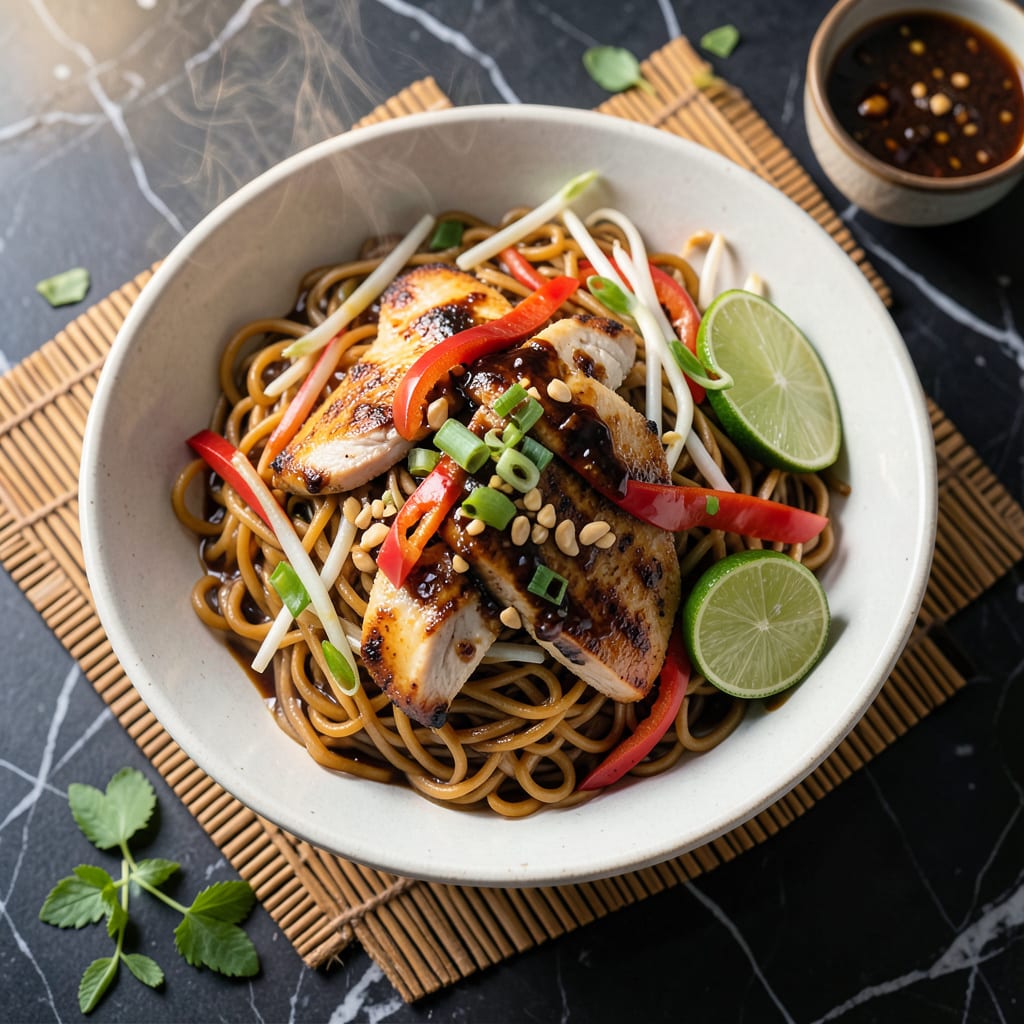
This chicken pad thai delivers restaurant-quality flavor without fish sauce, using tamarind paste for that signature tang. The dish balances sweet, sour, and savory notes perfectly.
Tender chicken, rice noodles, and crushed peanuts come together with a simple sauce that’s just as delicious as the traditional version. Ready in 30 minutes with easy-to-find ingredients.
Ingredients for Chicken Pad Thai Recipe Without Fish Sauce
Rice noodles, chicken, and peanuts create the perfect balance of sweet, sour, and savory flavors.
| Ingredient | Amount | Notes |
|---|---|---|
| Rice Noodles 🍜 | 8 oz | Flat, medium-width preferred |
| Boneless Chicken Breast 🍗 | 1 lb | Thinly sliced for quick cooking |
| Tamarind Paste 🌿 | 3 tbsp | For authentic tangy flavor |
| Dark Brown Sugar 🍚 | 3 tbsp | Packed for sweetness balance |
| Low-Sodium Soy Sauce 🫒 | 3 tbsp | Or tamari for gluten-free |
| Rice Vinegar 💧 | 2 tbsp | Mild acidity for sauce |
| Garlic Cloves 🧄 | 3 cloves | Minced for aromatic base |
| Shallot 🧅 | 1 whole | Finely chopped for depth |
| Large Eggs 🥚 | 2 whole | Lightly beaten for texture |
| Roasted Peanuts 🥜 | ½ cup | Unsalted, roughly chopped |
| Bean Sprouts 🌱 | 1 cup | Fresh for crunch |
| Green Onions 🧅 | 3 whole | Thinly sliced for garnish |
| Lime 🍋 | 1 whole | Cut into wedges for serving |
| Vegetable Oil 🫒 | 2 tbsp | High-smoke point for stir-frying |
| Red Pepper Flakes 🌶️ | ½ tsp | Optional for heat |
[recipeingredientscaler]
The tamarind paste is non-negotiable for authentic flavor—look for it in the international aisle at larger supermarkets or Whole Foods. For the rice noodles, medium-width flat noodles (often labeled as pad thai noodles) work best. Avoid vermicelli as it can get mushy. Chicken breast should be sliced thinly against the grain for tenderness. I always pick up my peanuts from Trader Joe’s—their roasted unsalted are perfect.
No tamarind paste? Equal parts lime juice and brown sugar can sub in a pinch, though the flavor won’t be identical. For a gluten-free version, tamari replaces soy sauce at a 1:1 ratio. Out of shallots? Red onion at half the amount works. The bean sprouts can be omitted if you dislike the texture, but they add a nice fresh crunch. For extra protein, firm tofu can be added alongside the chicken.
Sauce can be made 2 days ahead and stored in the fridge. Cooked noodles keep for 3-4 days in an airtight container, though they’re best fresh. Always soak the rice noodles in hot water before cooking—10-15 minutes is ideal.
Why You’ll Love This Recipe
- One-Pan Wonder: I soak the rice noodles while the chicken cooks—everything comes together in a single skillet.
- Sweet-Tangy Magic: The tamarind and brown sugar create that classic pad thai balance, no fish sauce needed.
- Meal Prep Hero: Honestly, it reheats beautifully for lunch the next day without getting mushy.
- Budget Stretch: Boneless chicken breast and rice noodles feed four for under ten bucks.
Step-by-Step Instructions for Chicken Pad Thai Without Fish Sauce
Master the technique for perfectly balanced sweet-tangy noodles with ideal texture every time.
Step 1: Soak Noodles and Prep Sauce Components
Place the 8 oz rice noodles in a large bowl and cover with warm water. Soak for 8-10 minutes until pliable but still slightly firm. This prevents overcooking during stir-frying and ensures the perfect al dente texture.
While the noodles soak, combine the 3 tbsp tamarind paste, 3 tbsp dark brown sugar, 3 tbsp low-sodium soy sauce, and 2 tbsp rice vinegar in a small bowl. Whisk vigorously until the mixture is smooth and the sugar fully dissolves. This balanced sauce forms the flavor foundation, delivering the signature tangy-sweet profile without fish sauce.
Step 2: Cook Chicken and Aromatics
Heat 1 tbsp vegetable oil in a wok or large skillet over medium-high heat until shimmering. Add the thinly sliced 1 lb boneless chicken breast and stir-fry for 4-5 minutes until just cooked through and no longer pink. Transfer to a plate and set aside.
In the same pan, add the remaining 1 tbsp vegetable oil. Sauté the minced 3 cloves garlic cloves and finely chopped 1 whole shallot for 1-2 minutes until fragrant and translucent. Be careful not to let the garlic burn, as it will impart a bitter flavor to the dish.
Step 3: Integrate Noodles and Eggs
Drain the soaked rice noodles and add them to the pan with the aromatics. Pour in the prepared tamarind sauce and toss everything together using tongs. Cook for 2-3 minutes, stirring constantly, until the noodles begin to soften and absorb the sauce.
Push the noodles to one side of the pan and pour the lightly beaten 2 whole large eggs into the empty space. Scramble the eggs quickly until just set, then mix them into the noodles. The eggs should coat the noodles in a light, silky layer, adding richness and binding the dish together.
Step 4: Finish with Garnishes and Serve
Return the cooked chicken to the pan and add the 1 cup bean sprouts and 0.5 cup roasted peanuts. Toss everything together for 1-2 minutes until heated through. The bean sprouts should retain a slight crunch, while the peanuts add a satisfying textural contrast.
Transfer the pad thai to serving plates and garnish with thinly sliced 3 whole green onions and 0.5 tsp red pepper flakes for a touch of heat, if desired. Serve immediately with lime wedges on the side for a bright, citrusy finish that enhances the dish’s tangy depth.
Pro Tips For Making Chicken Pad Thai Recipe Without Fish Sauce
- Soak Noodles Right: Cover rice noodles in warm water for 15-20 minutes until pliable but still slightly firm—I learned this the hard way after ending up with mushy strands that turned to paste in the wok.
- Slice Chicken Thin: Cut the boneless chicken breast into ¼-inch strips against the grain, which guarantees quick cooking and tender bites every time.
- Balance the Sauce: Mix 3 parts tamarind paste with 2 parts dark brown sugar and 1 part low-sodium soy sauce, then taste as you go—sounds weird, but it works for that perfect sweet-tangy kick without fish sauce.
- Heat the Wok Hot: Crank the heat to high and let the wok get smoking hot before adding oil, otherwise your chicken and noodles will steam instead of sear.
Make-Ahead Tips for This chicken pad thai recipe without fish sauce
Sauce Prep Ahead
Mix the tamarind paste, brown sugar, soy sauce, and rice vinegar up to 2 days before cooking. Store in an airtight container in the fridge. The flavors meld beautifully overnight. 💡
Noodle Prep
Soak the rice noodles in warm water for 8-10 minutes before cooking, then drain. If you must prep early, soak and drain up to 1 hour ahead, but keep them covered with a damp towel to prevent drying.
Chicken Storage
Slice the chicken breast thinly and store in the fridge for up to 1 day before cooking. For longer storage, freeze raw chicken in a sealed bag for up to 3 months. Thaw overnight in the fridge before using.
Garnish Prep
Chop the peanuts, bean sprouts, and green onions up to 1 day ahead. Store each in separate airtight containers in the fridge. The sprouts stay crispest when kept in a paper towel-lined container.
Reheating Tips
Reheat leftover pad thai in a skillet over medium heat with a splash of water. Stir-fry for 3-4 minutes until hot. Microwaving works in 30-second bursts, stirring between each. ❄️
Meal Assembly
For the quickest weeknight meal, prep all ingredients the night before. Store sauce, noodles, chicken, and garnishes separately. Combine everything fresh when ready to cook for the best texture.
Nutrition Facts
Frequently Asked Questions
What can replace fish sauce in pad thai?
Tamarind paste with soy sauce creates the closest flavor match. The combination delivers the tangy-salty balance that defines authentic pad thai.
How do I prevent noodles from sticking?
Soak rice noodles in warm water for 8-10 minutes only. Over-soaking makes them gummy. Stir-fry with enough oil over medium-high heat to keep them separate.
Can I make this dish gluten-free?
Yes! Use tamari instead of soy sauce and check that your tamarind paste and rice noodles are certified gluten-free. The rest of the ingredients are naturally gluten-free.
Why is my pad thai sauce too sweet?
Balance it with more rice vinegar or a squeeze of lime. Start with 1 tbsp at a time until the sweetness mellows. The acidity will restore the proper flavor profile.

- Jollof Rice Sauce Recipe: West African Tomato and Spice Infusion - September 25, 2026
- Japanese Rice Soup Recipe: Umami-Rich Comfort in a Bowl - September 25, 2026
- Homemade Cream Of Rice Recipe: Silk-Smooth Breakfast in Minutes - September 25, 2026