
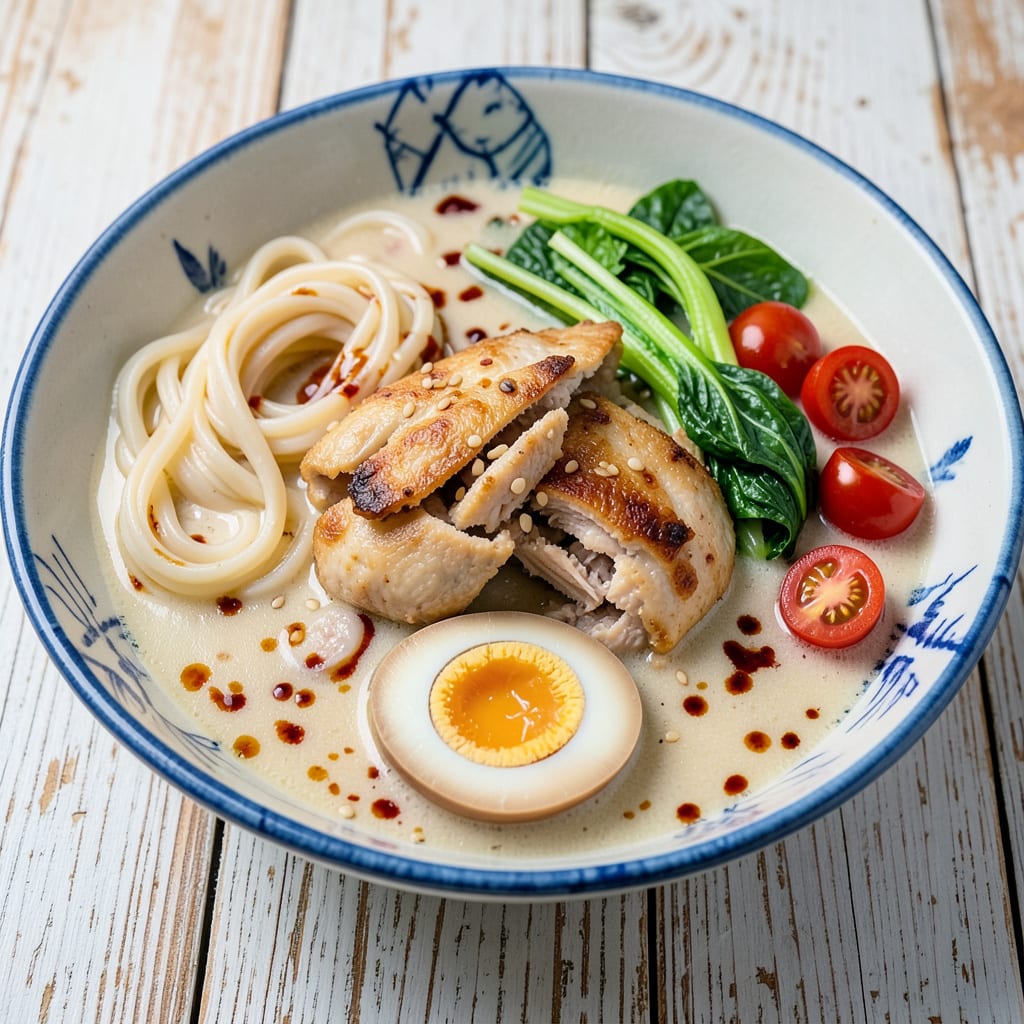
Chicken paitan is a rich, creamy Japanese ramen broth made by simmering chicken bones and fat until emulsified. It delivers a velvety texture with deep umami flavor, often paired with medium-thick noodles for balance.
This isn’t your average chicken broth—it’s a labor of love that transforms humble ingredients into something extraordinary. The secret lies in the slow extraction of collagen from bones and the careful emulsification of fat, creating that signature cloudy, luxurious mouthfeel that coats your palate. I’ve found that the best versions develop complex layers of flavor through hours of gentle simmering, often incorporating aromatics like garlic and ginger for depth. ✨
What sets chicken paitan apart from other ramen styles is its versatility. While traditional pork-based paitan can feel heavy, this chicken version offers a lighter yet still deeply satisfying richness. The medium-thick noodles aren’t just a suggestion—they’re essential for standing up to the broth’s body while still allowing you to appreciate its silky consistency in every bite. 💫
💡 In This Article
- How Chicken Paitan Broth Achieves Its Creamy Texture
- Best Noodles and Toppings for Chicken Paitan Ramen
How Chicken Paitan Broth Achieves Its Creamy Texture
The magic begins with collagen extraction from chicken bones during 8-12 hours of simmering. As connective tissues break down at 180-200°F, they release gelatin that thickens the broth naturally. The real transformation happens when rendered chicken fat gets vigorously emulsified into this collagen-rich liquid, creating microscopic fat droplets suspended throughout.
This process mimics how mayonnaise forms—fat dispersed in water—but with meaty depth. 🔥
Bone marrow plays a crucial role in richness. Chicken leg bones contain about 15-20% marrow by weight, which melts during cooking and contributes unctuous mouthfeel. Unlike traditional tonkotsu paitan that uses pork bones cooked at rolling boils, chicken paitan typically simmers at a gentle 160-180°F to prevent fat separation.
The lower temperature preserves delicate chicken flavors while still achieving that signature cloudy appearance from emulsified fats. ✨
What most people don’t realize is that the emulsification happens in stages. First, the collagen creates a viscous base. Then, as fat renders from skin and bones, it gets whipped into the broth through constant stirring or rapid boiling. The final texture depends on the fat-to-collagen ratio—ideal versions contain about 8-12% fat by volume.
This balance creates a broth that’s rich but not greasy, coating your tongue without heaviness. 💫
The simmering technique differs from Western stock methods. Instead of skimming fat, paitan actively incorporates it. Chefs often use a combination of chicken feet (high in collagen), wings (fatty), and carcasses for balanced extraction.
The result is a broth with 3-5 times more body than regular chicken stock, yet with a cleaner finish than pork-based versions. The umami comes from natural glutamates in chicken bones, enhanced by slow caramelization of meat proteins. ⚡
Temperature control is everything. Too hot, and the fat separates; too cool, and collagen won’t extract properly. Professional kitchens use precise 170-175°F ranges maintained for hours. Home cooks can approximate this with a slow cooker on low or an oven at 200°F.
The payoff is a broth that achieves what food scientists call “perceived creaminess”—a sensory experience where texture and flavor work in perfect harmony. 🌟
Compare this to tonkotsu paitan, which relies on pork bones boiled aggressively for 12-18 hours to break down tougher connective tissues. Chicken paitan’s gentler approach preserves more delicate flavors while still delivering that satisfying mouth-coating quality. The difference is like comparing heavy cream to crème fraîche—both rich, but with distinct character and weight. 💛

- Jollof Rice Sauce Recipe: West African Tomato and Spice Infusion - September 25, 2026
- Japanese Rice Soup Recipe: Umami-Rich Comfort in a Bowl - September 25, 2026
- Homemade Cream Of Rice Recipe: Silk-Smooth Breakfast in Minutes - September 25, 2026