
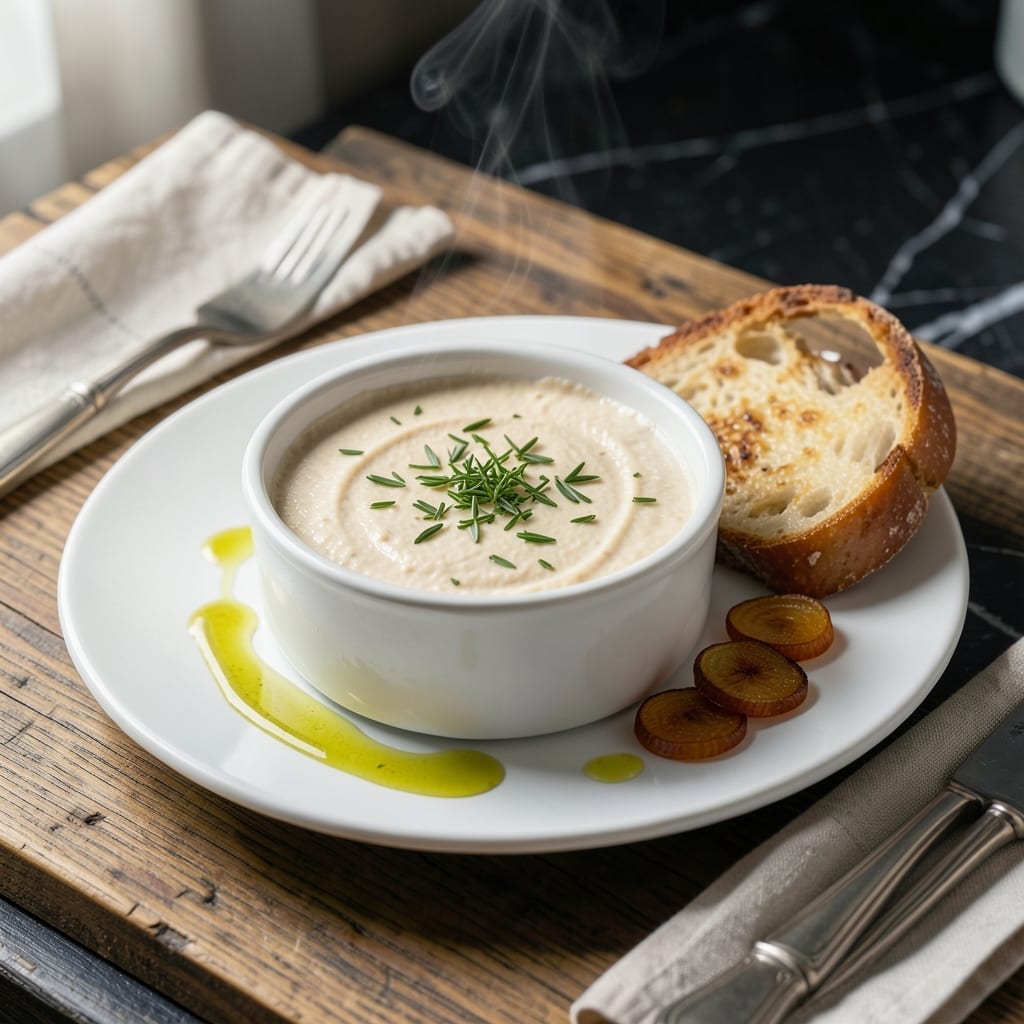
This chicken pâté delivers silky smooth texture with layers of herbed depth that elevate any appetizer spread. The technique transforms simple ingredients into a spread worthy of special occasions.
The secret lies in proper cooking and blending—poached chicken becomes tender and easy to purée, while butter and cream create that luxurious mouthfeel. Fresh herbs add brightness without overpowering the delicate chicken flavor.
You’ll achieve a refined spread that’s rich yet balanced, perfect for serving with crusty bread or crackers. The result is consistently elegant, whether for entertaining or a sophisticated snack.
This method ensures professional-quality pâté with minimal effort. Here’s how to make this versatile dish.
Ingredients for Chicken Pate
Elegant appetizer requires chicken, herbs, cream, and butter for silky texture and refined flavor.
| Ingredient | Amount | Notes |
|---|---|---|
| Boneless Skinless Chicken Breasts 🍗 | 1 ½ lb | Poached until fully cooked |
| Unsalted Butter 🧈 | 8 tbsp | Softened to room temperature |
| Heavy Cream 🥛 | ½ cup | Full-fat for creaminess |
| Fresh Tarragon 🌿 | 2 tbsp | Finely chopped, stems removed |
| Fresh Thyme Leaves 🍃 | 2 tsp | Stems discarded, finely minced |
| Shallot 🧅 | 1 whole | Finely diced for aromatic base |
| White Wine 🍷 | ½ cup | Dry variety for poaching liquid |
| Chicken Stock 💧 | 1 ½ cups | Low-sodium preferred for control |
| Dijon Mustard 🟡 | 1 tbsp | Smooth variety for tangy depth |
| Lemon Juice 🍋 | 1 tbsp | Freshly squeezed for brightness |
| Kosher Salt 🧂 | 1 tsp | Diamond Crystal preferred for texture |
| White Pepper 🌶️ | ½ tsp | Freshly ground for subtle heat |
| Bay Leaf 🌿 | 1 whole | For poaching liquid infusion |
The chicken quality is paramount. Boneless, skinless breasts from a reputable butcher or Whole Foods ensure optimal texture after poaching. For the herbs, seek vibrant, fresh bunches—tarragon and thyme should have a bright aroma when crushed between your fingers. The butter must be European-style (82% fat) for superior mouthfeel. Avoid pre-shredded cheese or pre-minced garlic, as they lack the necessary freshness.
Substitutions must maintain the delicate balance. Chicken thighs can replace breasts but require careful cooking to avoid dryness. Half-and-half works in place of heavy cream, though the texture will be slightly less luxurious. If tarragon is unavailable, dried at one-third the amount suffices, but fresh is strongly preferred. The white wine can be replaced with additional chicken stock plus a splash of lemon juice.
Poached chicken keeps for 3 days refrigerated in its liquid. The finished pâté stays fresh for 4-5 days in an airtight container. For longer storage, portion into small containers and freeze for up to 3 months. Always bring to room temperature before serving for optimal spreadability.
Why You’ll Love This Recipe
- One Pot Wonder: I just toss the chicken, butter, and herbs in a pot—no fancy steps, no mess.
- Buttery Herb Magic: The tarragon and thyme melt into the butter and cream, making it rich and impossible to resist.
- Party Starter: I serve this with crackers at gatherings, and it’s always the first thing to disappear.
- Leftovers Luxury: Honestly, it tastes even better the next day spread on toast or stuffed in a sandwich.
Step-by-Step Instructions for Chicken Pate
Master the technique of transforming poached chicken into a luxurious spread with velvety texture.
Step 1: Poach the Chicken Breasts with Aromatics
In a medium saucepan, combine the 1.5 lb boneless skinless chicken breasts, 0.5 cup white wine, 1.5 cups chicken stock, 1 whole shallot, 1 whole bay leaf, 1 tsp kosher salt, and 0.5 tsp white pepper. Bring to a gentle simmer over medium heat.
Reduce heat to low and poach for 12-15 minutes until the chicken is fully cooked through and registers 165°F on an instant-read thermometer. The liquid should remain at a bare simmer—vigorous boiling will make the chicken tough. Remove from heat and let the chicken cool in the poaching liquid for 10 minutes to retain moisture.
Step 2: Blend Chicken with Butter and Cream
Drain the chicken and discard the poaching liquid. Transfer the chicken to a food processor along with 8 tbsp unsalted butter (softened) and 0.5 cup heavy cream. Pulse until the mixture is mostly smooth, scraping down the sides as needed.
The butter should be fully incorporated and the texture should start to look like a coarse paste. This step requires patience—rushing will result in a grainy texture. The mixture will lighten in color as the butter emulsifies with the chicken.
Step 3: Incorporate Herbs and Seasonings
Add the 2 tbsp fresh tarragon, 2 tsp fresh thyme leaves, 1 tbsp Dijon mustard, and 1 tbsp lemon juice to the food processor. Process continuously for 1-2 minutes, stopping to scrape the bowl occasionally, until the pate achieves a silky, uniform consistency.
The herbs should be completely integrated, with no visible flecks remaining. Taste and adjust seasoning if needed, though the poaching liquid likely infused sufficient salt. The pate should have a bright, herbaceous aroma with a subtle tang from the mustard and lemon.
Step 4: Chill and Set the Pate
Transfer the mixture to a serving dish or ramekins, smoothing the top with a spatula. Cover tightly with plastic wrap, pressing it directly onto the surface to prevent a skin from forming. Refrigerate for at least 4 hours, or preferably overnight, to allow the flavors to meld and the texture to firm up.
Chilling is essential—it transforms the mixture from a soft puree into a spreadable pate with the proper consistency. The surface should appear slightly glossy when properly set. Serve with crusty bread, crackers, or cornichons for contrast.
Pro Tips For Making Chicken Pate
- Chill the Butter: Use ice-cold unsalted butter for a flakier texture—I learned this the hard way after my first batch turned greasy.
- Poach the Chicken: Simmer the breasts in lightly salted water until just cooked (165°F) to keep the pate moist, not dry.
- Strain the Herbs: After chopping tarragon and thyme, press them through a fine sieve to remove tough stems that ruin the smoothness.
- Add Cream Last: Fold in the heavy cream at the very end to prevent curdling—this saves you from a split, grainy mess.
Troubleshooting Perfect Results
Grainy Texture Fix
If your pâté turns out grainy, the chicken likely wasn’t poached long enough or the butter wasn’t sufficiently softened. Return the mixture to the food processor with an additional 2 tbsp softened butter and pulse until smooth. For prevention, ensure chicken reaches 165°F and butter sits at room temperature for 30 minutes before blending. 💡
Runny Pâté Solution
A pâté that won’t hold its shape usually needs more chilling time or insufficient butter. Refrigerate for an additional 2 hours—overnight is ideal. If still loose, blend in 1-2 tbsp cold butter and chill again. The emulsion needs time to fully set.
Bland Flavor Rescue
Under-seasoned pâté often results from timid poaching liquid. Boost flavor by stirring in ½ tsp kosher salt, 1 tsp lemon juice, or ½ tsp Dijon mustard after initial blending. Taste as you adjust—herbs can be intensified with 1 tsp fresh tarragon or thyme.
Overly Dense Pâté
This happens when the mixture is over-processed or lacks sufficient fat. Fold in 2-3 tbsp heavy cream by hand after blending to lighten the texture. For future batches, ensure you’re using the full 8 tbsp butter and ½ cup cream as specified. 🔥
Separated Mixture
If the pâté separates during blending, the ingredients were likely too cold. Let the mixture sit at room temperature for 15 minutes, then re-process. To prevent this, ensure all ingredients are at room temperature before starting, especially the butter and cream.
Skin Formation
To avoid a skin forming on top during chilling, press plastic wrap directly onto the pâté’s surface before refrigerating. If a skin has already formed, simply stir it back in with a spatula before serving. This keeps the spread smooth and professional-looking.
Nutrition Facts
Frequently Asked Questions
Can I use chicken thighs instead of breasts?
Yes, but adjust cooking time to 18-20 minutes for poaching. Thighs have more fat, which adds richness but may alter texture slightly.
Why does my pâté look pale after blending?
The butter lightens the color naturally. For deeper hue, add a pinch of paprika or extra fresh herbs before chilling.
How long can I keep this in the fridge?
Properly stored in an airtight container, it stays fresh for 4-5 days. For longer storage, freeze for up to 3 months.
What if I don’t have a food processor?
Use a blender or finely chop chicken by hand, then mash with butter. The texture won’t be as smooth, but it’ll still taste great.

- Jollof Rice Sauce Recipe: West African Tomato and Spice Infusion - September 25, 2026
- Japanese Rice Soup Recipe: Umami-Rich Comfort in a Bowl - September 25, 2026
- Homemade Cream Of Rice Recipe: Silk-Smooth Breakfast in Minutes - September 25, 2026