
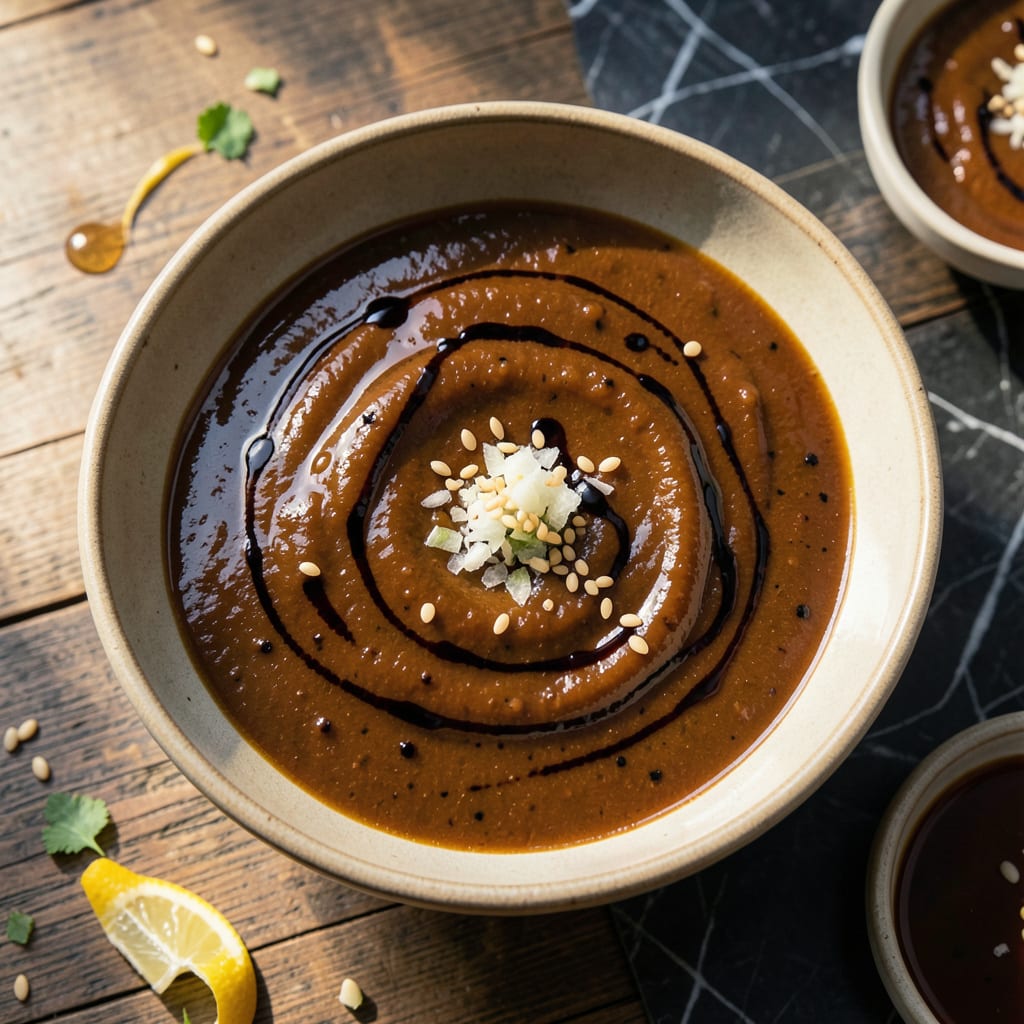
This Hawaiian-inspired soy-ginger glaze transforms simple chicken into a restaurant-quality poke bowl experience. The balanced combination of savory soy sauce, fresh ginger, and subtle sweetness creates a versatile sauce that enhances every ingredient.
With just 5 ingredients and 5 minutes of mixing, you’ll have a bold, umami-rich sauce ready to drizzle over chicken, rice, and vegetables. It’s the perfect finishing touch for homemade poke bowls.
Ingredients for Chicken Poke Bowl Sauce
Seven simple ingredients create this bold Hawaiian-inspired soy-ginger glaze for poke bowls.
| Ingredient | Amount | Notes |
|---|---|---|
| Soy Sauce 🫒 | ½ cup | Low-sodium preferred for balance |
| Fresh Ginger 🌿 | 2 tbsp | Peeled and finely grated |
| Honey 🍯 | 3 tbsp | Substitute with agave if needed |
| Rice Vinegar 🍚 | 2 tbsp | Unseasoned variety essential |
| Sesame Oil 🫒 | 1 tsp | Toasted for depth of flavor |
| Garlic Cloves 🧄 | 2 cloves | Peeled and minced |
| Green Onions 🧅 | 2 tbsp | Finely chopped for garnish |
[recipeingredientscaler]
The soy sauce is the foundation—Kikkoman or San-J tamari for gluten-free. Fresh ginger is non-negotiable (the jarred stuff lacks punch). Whole Foods or Asian markets have the best selection. Look for ginger that feels firm and heavy, with smooth, taut skin. For the honey, local raw adds complexity, but any variety works.
No honey? Pure maple syrup or agave at a 1:1 ratio. Rice vinegar can be swapped with apple cider vinegar (slightly fruitier). Skip the sesame oil? A neutral oil loses the nutty depth, but it’ll still work. The garlic can be from a jar in a pinch (fresh is better). Trader Joe’s has great pre-minced ginger if you’re short on time.
This glaze keeps in the fridge for 1 week in a sealed jar. The flavors meld and deepen over time. Freezes for 3 months—portion into ice cube trays for easy single servings. Shake well before using as ingredients may settle.
Why You’ll Love This Recipe
- Five-Minute Magic: I whisk these five ingredients together faster than my coffee reheats in the microwave.
- Sweet-Savory Balance: The honey and soy sauce create this ridiculous harmony that makes me sneak spoonfuls straight from the bowl.
- Meal Prep MVP: Drizzle it on Monday’s chicken, and it’s still bright and bold by Thursday’s leftovers.
- Pantry Staples Only: No last-minute grocery runs—just soy sauce, ginger, and the usual suspects already in my cupboard.
Step-by-Step Instructions for Chicken Poke Bowl Sauce
Master this technique to create a balanced, umami-rich glaze that elevates any poke bowl.
Step 1: Prepare the Aromatics Foundation
Begin by finely grating the 2 tbsp Fresh Ginger and mincing the 2 cloves Garlic Cloves. This step is crucial as the fine texture ensures even distribution throughout the sauce and prevents any unpleasant textural surprises in the final dish.
Combine these aromatics in a small bowl. I always use a microplane for the ginger—it extracts maximum juice and flavor while leaving behind the fibrous parts that can make the sauce gritty. The garlic should be minced to a near-paste consistency for optimal flavor infusion.
Step 2: Create the Liquid Base
In a small saucepan, combine the 0.5 cup Soy Sauce, 3 tbsp Honey, and 2 tbsp Rice Vinegar. The soy sauce provides the salty backbone, while the honey adds balanced sweetness and the rice vinegar contributes essential acidity.
Use low-sodium soy sauce if available—this gives you better control over the final seasoning. The unseasoned rice vinegar is non-negotiable; seasoned varieties contain added sugar and salt that will throw off the carefully calibrated balance of this sauce.
Step 3: Infuse and Reduce the Mixture
Add the grated ginger and minced garlic to the saucepan with the liquid ingredients. Place over medium heat and bring to a gentle simmer. Cook for 3-4 minutes, stirring frequently, until the mixture begins to thicken slightly and the raw edge of the garlic mellows.
Watch for small bubbles to form around the edges of the pan—that’s your visual cue that the mixture is at the correct temperature. Don’t allow it to reach a rolling boil, as this can cause the honey to caramelize too quickly and create a bitter flavor.
Step 4: Finish and Balance the Sauce
Remove the saucepan from heat and stir in the 1 tsp Sesame Oil. The toasted variety adds a deep, nutty dimension that complements the other flavors beautifully. Let the sauce cool to room temperature—this takes about 15-20 minutes.
As it cools, the sauce will thicken further. Taste and adjust the balance if needed, though the initial proportions should yield a perfectly harmonized flavor profile. The sesame oil should be added off heat to preserve its delicate aroma.
Step 5: Garnish and Serve
Once cooled, transfer the sauce to a serving dish or jar. Stir in the 2 tbsp Green Onions just before using to maintain their fresh, crisp texture and vibrant color. The finely chopped green onions add a bright, fresh note that cuts through the richness of the sauce.
This sauce keeps well in the refrigerator for up to 5 days in an airtight container. The flavors will continue to meld and deepen over time, making it even more delicious the next day. Stir before each use as the ingredients may separate slightly during storage.
Pro Tips For Making Chicken Poke Bowl Sauce
- Grate Ginger Fine: Use a microplane for the ginger—it releases more juice and blends smoothly into the sauce instead of leaving stringy bits. I learned this the hard way after chewing on fibrous ginger in my first few attempts.
- Balance the Honey: Add the honey gradually, tasting as you go—too much can overpower the soy and rice vinegar. About 1 tablespoon per 3 tablespoons of soy sauce usually hits the sweet-savory mark.
- Bloom the Sesame Oil: Warm the sesame oil slightly before mixing—just 10 seconds in the microwave—to wake up its nutty flavor. Sounds weird, but it works.
- Rest the Sauce: Let the sauce sit for at least 15 minutes after mixing so the flavors meld. I skip this when I’m in a rush, but the difference in depth is noticeable.
Storing and Reheating This Dish
Refrigerator Storage
Transfer the cooled sauce to an airtight container—I use a 16 oz mason jar. It stays fresh in the fridge for up to 7 days. The flavors actually improve after 24 hours as they meld together. ❄️
Freezer Storage
For longer storage, freeze in ice cube trays for 3 months. Once solid, pop the cubes into a freezer bag. This lets you thaw just what you need. Leave ½ inch headspace to prevent expansion issues.
Thawing Method
Move frozen sauce to the fridge overnight for gradual thawing. For quick use, place the sealed container in cold water for 1-2 hours. Avoid microwaving directly from frozen to preserve texture.
Room Temperature Use
Let the sauce sit at room temperature for 15-20 minutes before using. This brings out the aromatics beautifully. Stir well as natural separation may occur during storage.
Reheating Tip
Gently warm in a small saucepan over low heat for 2-3 minutes, stirring constantly. Never boil, as this can make the honey overly thick. Add 1 tsp water if it seems too viscous. 🔥
Nutrition Facts
Frequently Asked Questions
Can I make this sauce ahead of time?
Yes! It actually tastes better after 24 hours as the flavors meld. Store in an airtight container in the fridge for up to 7 days.
What can I substitute for honey?
Pure maple syrup or agave work perfectly at a 1:1 ratio. Avoid artificial sweeteners as they can alter the texture and taste.
Why did my sauce turn out too thick?
Overcooking can cause the honey to caramelize. Thin it with 1 tsp water and warm gently over low heat while stirring.
Can I use this sauce for other dishes?
It’s delicious on grilled chicken, as a salad dressing, or drizzled over roasted vegetables. The versatility makes it a pantry staple.

- Jollof Rice Sauce Recipe: West African Tomato and Spice Infusion - September 25, 2026
- Japanese Rice Soup Recipe: Umami-Rich Comfort in a Bowl - September 25, 2026
- Homemade Cream Of Rice Recipe: Silk-Smooth Breakfast in Minutes - September 25, 2026