
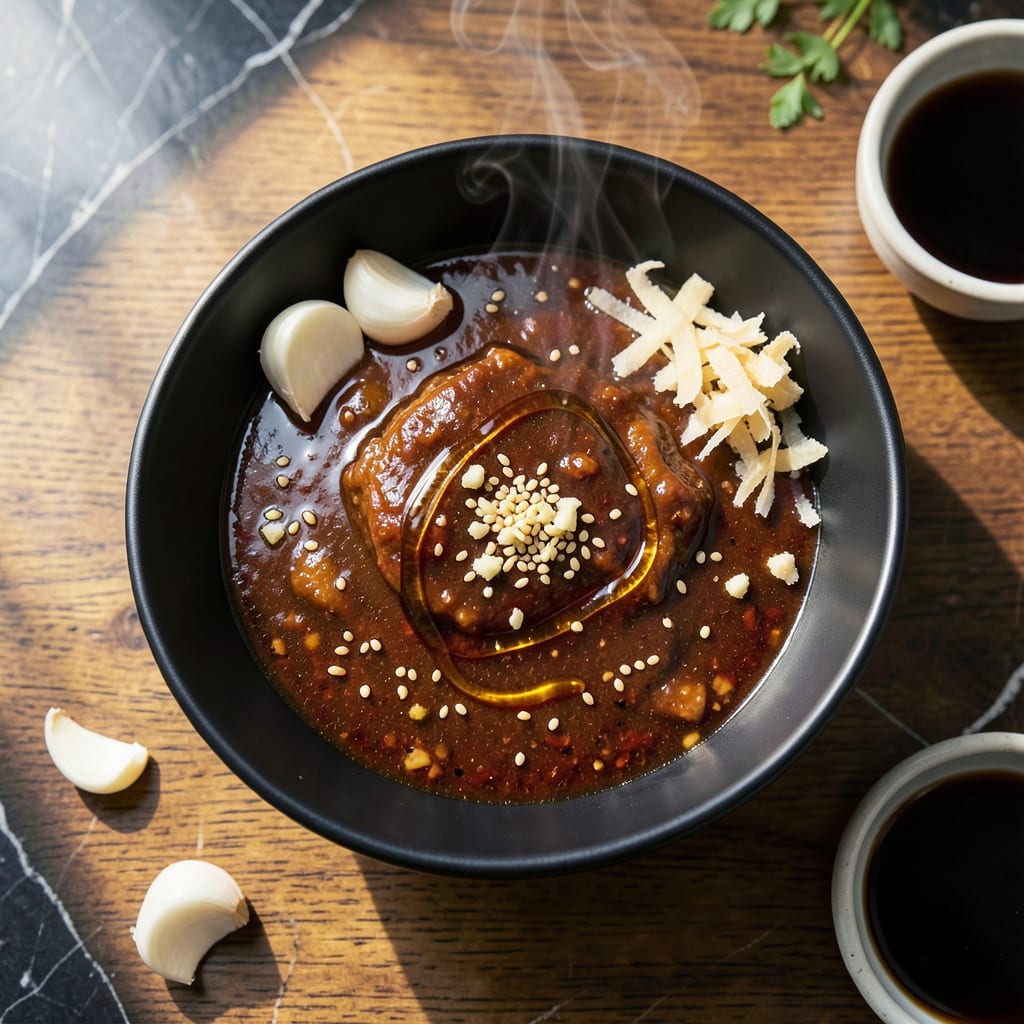
This sauce transforms simple noodles into a restaurant-quality bowl with its umami-rich depth and balanced flavors. I developed it to capture the essence of classic ramen without the hours of simmering.
With just 10 minutes of prep and common pantry staples, you’ll have a versatile drizzle that elevates instant ramen, grilled chicken, or stir-fried veggies. Store it in the fridge for up to a week.
Ingredients for Chicken Ramen Sauce
Ten pantry staples create this restaurant-quality sauce in minutes. Bold, balanced, and versatile.
| Ingredient | Amount | Notes |
|---|---|---|
| Low-Sodium Soy Sauce 🫒 | ½ cup | For umami depth without over-salting |
| Rice Vinegar 🍶 | ¼ cup | Adds bright acidity |
| Sesame Oil 🫒 | 2 tbsp | Toasted for nutty aroma |
| Honey 🍯 | 2 tbsp | Balances savory and acidic notes |
| Fresh Garlic Cloves 🧄 | 4 cloves | Minced for even distribution |
| Fresh Ginger Root 🌿 | 1 tbsp | Grated fine for smooth texture |
| Miso Paste 🍲 | 2 tbsp | White or red variety works |
| Gochujang Paste 🌶️ | 1 tbsp | Adjust for spice preference |
| Chicken Broth Concentrate 🍗 | 1 tbsp | Or 1/4 cup prepared broth |
| Toasted Sesame Seeds 🌰 | 1 tbsp | For garnish and crunch |
[recipeingredientscaler]
The miso and gochujang are non-negotiable for that umami-rich depth—look for them in the Asian aisle at Kroger or Whole Foods. White miso is milder and sweeter, while red packs a deeper, saltier punch. For the gochujang, Sempio is a reliable brand that’s widely available. Don’t skip toasting the sesame oil; it adds a nutty complexity that raw oil just can’t match (worth the extra minute).
No gochujang? Sriracha plus a pinch of sugar gets you close, though the fermented depth won’t be the same. Swap honey for brown sugar or maple syrup if you’re avoiding bee products. The chicken broth concentrate can be vegetable broth for a vegetarian twist. Fresh ginger and garlic are ideal, but jarred minced works in a pinch—just use half the amount.
This sauce keeps for 1 week in the fridge, but it’s so quick you’ll probably make it fresh every time. Store in a glass jar for best results. The flavors deepen after a day, so if you can wait, do (though I never do).
Why You’ll Love This Recipe
- Five-Minute Mix: I just whisk soy sauce, rice vinegar, sesame oil, honey, and garlic in one bowl—no cooking required.
- Sweet & Tangy Magic: The honey balances the sharp rice vinegar and punchy garlic so every bite is crave-worthy.
- Meal-Prep Superstar: I double the batch and drizzle it over chicken, noodles, or veggies all week long.
Step-by-Step Instructions for Chicken Ramen Sauce
This umami-packed sauce comes together quickly with a few simple techniques.
Step 1: Bloom the Aromatics in Sesame Oil
Heat the 2 tbsp Sesame Oil in a small saucepan over medium heat until it shimmers. Add the 4 cloves Fresh Garlic Cloves, minced, and 1 tbsp Fresh Ginger Root, grated, and cook for 1-2 minutes until fragrant and just beginning to turn golden.
This step is crucial—it mellows the sharpness of the raw garlic and ginger while deepening their flavors. Stir constantly to prevent burning, as garlic can go from perfect to bitter in seconds. You’ll know it’s ready when the kitchen smells intensely aromatic.
Step 2: Build the Umami Base
Add the 2 tbsp Miso Paste, 1 tbsp Gochujang Paste, and 1 tbsp Chicken Broth Concentrate to the saucepan. Cook for 1-2 minutes, stirring constantly, until the mixture darkens slightly and becomes smooth and glossy.
The miso and gochujang will thicken the sauce while adding layers of savory depth. The gochujang also introduces a subtle heat that balances the richness. Keep the heat at medium to avoid scorching the pastes, which would make the sauce bitter.
Step 3: Balance with Liquids and Sweeten
Pour in the 0.5 cup Low-Sodium Soy Sauce and 0.25 cup Rice Vinegar. Stir well to combine, then add the 2 tbsp Honey. Bring the mixture to a gentle simmer over medium heat.
The soy sauce adds saltiness and depth, while the rice vinegar cuts through the richness with its bright acidity. The honey rounds out the flavors, balancing the savory, spicy, and acidic elements. Simmer for 3-4 minutes until the sauce thickens slightly and all the flavors meld together.
Step 4: Finish and Store
Remove the saucepan from heat and let the sauce cool to room temperature. The sauce will thicken further as it cools. Stir in the 1 tbsp Toasted Sesame Seeds just before using or storing, reserving a pinch for garnish if desired.
Transfer the sauce to an airtight jar or container. It will keep in the refrigerator for up to 2 weeks. Before using, give it a good stir to redistribute the sesame seeds and any settled ingredients. This sauce is versatile—drizzle it over ramen, use it as a marinade, or toss with roasted vegetables.
Pro Tips For Making Chicken Ramen Sauce
- Bloom the Garlic: Cook the minced garlic in sesame oil for 30-45 seconds until fragrant but not brown—I learned this the hard way after burning a few batches into bitter oblivion.
- Balance the Honey: Use 1 tablespoon less honey than you think, then adjust—low-sodium soy sauce needs sweetness, but too much makes the sauce cloying rather than complex.
- Skip the Boil: Simmer the sauce gently instead of boiling to keep the rice vinegar’s brightness from evaporating off as harsh acidity.
- Rest the Sauce: Let it sit 10 minutes before using—sounds weird, but it works: the flavors meld and the garlic’s sharp edge softens into the background.
Make-Ahead Tips for Leftovers
Batch Prep
I always double or triple this recipe—it scales perfectly. Combine all ingredients in a medium saucepan instead of small. The sauce keeps beautifully, so making extra saves time for busy weeknights. 💡
Proper Containers
Store in glass mason jars or airtight plastic containers. I prefer wide-mouth 16-ounce jars for easy scooping. Avoid metal containers, as they can react with the acidic vinegar over time.
Fridge Storage
Your sauce will stay fresh in the fridge for up to 2 weeks. The flavors actually improve after 24-48 hours as the ingredients meld together. Always use a clean, dry spoon to prevent contamination.
Freezing Option
For longer storage, freeze in ice cube trays first. Once solid, transfer cubes to a freezer bag. Thaw individual portions in the fridge overnight or microwave for 30 seconds. Freezer life is 3 months with minimal quality loss.
Reviving Thickness
If the sauce thickens too much in storage, thin with 1-2 tsp warm water or chicken broth. Stir well to reconnect any separated ingredients. This happens naturally with the sesame oil.
Prep Ahead Uses
Having this ready means 5-minute meals. Toss with cooked noodles, drizzle over proteins, or use as a stir-fry sauce base. I love having it on hand for impromptu flavor boosts. ⚡
Nutrition Facts
Frequently Asked Questions
Can I make this sauce ahead of time?
It keeps for up to 2 weeks in the fridge. The flavors deepen after 24-48 hours as the ingredients meld together.
What if I don’t have gochujang?
Substitute with 1 tbsp sriracha plus 1/2 tsp sugar. The flavor won’t be identical but will still add heat and depth. White miso remains essential for umami.
How do I adjust the spice level?
Reduce or omit the gochujang for milder sauce. For extra heat, add 1/2 tsp red pepper flakes while simmering. Always taste as you go!
Can I freeze this sauce?
Yes! Freeze in ice cube trays, then transfer to a bag. Thaw overnight in the fridge or microwave for 30 seconds. It lasts 3 months frozen.

- Jollof Rice Sauce Recipe: West African Tomato and Spice Infusion - September 25, 2026
- Japanese Rice Soup Recipe: Umami-Rich Comfort in a Bowl - September 25, 2026
- Homemade Cream Of Rice Recipe: Silk-Smooth Breakfast in Minutes - September 25, 2026