
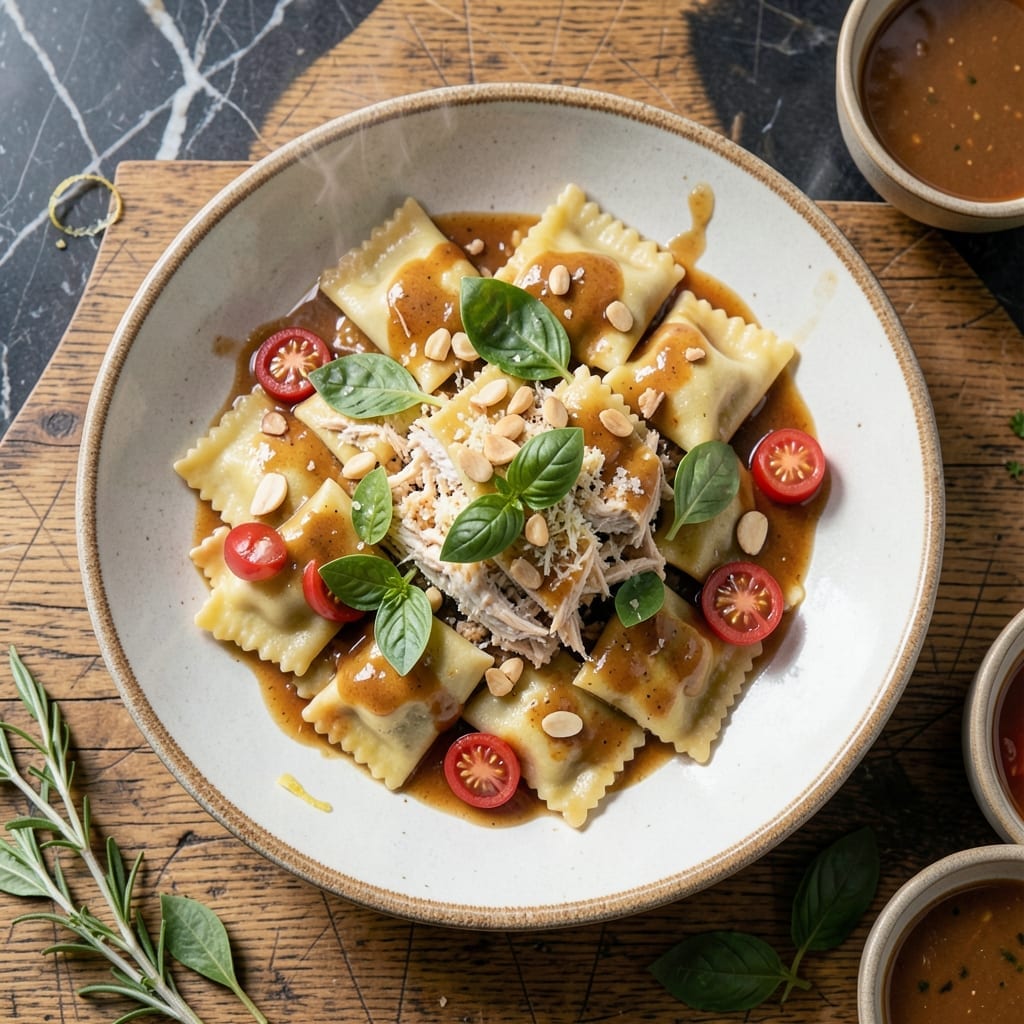
There’s a special satisfaction in crafting homemade ravioli, and this version elevates the classic with a rich chicken and cheese filling. The process transforms simple ingredients into a elegant dish worthy of any dinner table.
What makes this recipe stand out is the balance between tender pasta and a creamy sauce that complements the savory filling. I’ve streamlined the method so you can achieve restaurant-quality results without spending hours in the kitchen.
The chicken filling is seasoned perfectly, while the cheese adds a smooth, melty texture that pairs beautifully with the delicate pasta. Every bite delivers a harmony of flavors and textures.
Serve this with confidence at your next gathering, or enjoy it as a comforting weeknight meal. Here’s how to make it.
Ingredients for Chicken Ravioli
Simple ingredients transform into elegant, cheese-stuffed pockets with creamy sauce and savory chicken.
| Ingredient | Amount | Notes |
|---|---|---|
| All-Purpose Flour 🌾 | 3 cups | Plus extra for dusting |
| Large Eggs 🥚 | 4 whole | Room temperature preferred |
| Olive Oil 🫒 | 2 tbsp | Extra-virgin for richness |
| Salt 🧂 | 1 tsp | Divided for dough and filling |
| Water 💧 | ¼ cup | As needed for dough |
| Boneless Chicken Breast 🍗 | 1 lb | Cooked and finely shredded |
| Ricotta Cheese 🧀 | 1 cup | Whole-milk for creaminess |
| Parmesan Cheese 🧀 | ½ cup | Freshly grated from block |
| Garlic Cloves 🧄 | 3 cloves | Minced for filling |
| Fresh Parsley 🌿 | ¼ cup | Chopped, for filling |
| Heavy Cream 🥛 | 1 cup | For creamy sauce |
| Unsalted Butter 🧈 | 4 tbsp | For sauce base |
| Chicken Broth 🍲 | ½ cup | Low-sodium preferred |
| Black Pepper 🌶️ | ½ tsp | Freshly ground preferred |
| Nutmeg 🌰 | 0.125 tsp | Freshly grated if possible |
The chicken is the foundation here. Boneless, skinless breasts stay tender when cooked gently—poach them in the broth you’ll use later for extra flavor. For the cheeses, whole-milk ricotta and fresh Parm give that melt-in-your-mouth texture. I grab mine from Whole Foods when I’m feeling fancy, but any supermarket deli case works (just avoid the pre-shredded stuff).
No ricotta? Cottage cheese at the same amount works in a pinch—just blend it smooth first. Fresh out of Parm? Pecorino Romano has a sharper bite that cuts through the cream. Short on time? Rotisserie chicken shreds up perfectly for the filling. The nutmeg might seem weird, but trust me—it wakes up the cheese flavors (skip it if you hate it).
Fresh pasta dough keeps 1 day in the fridge, but it’s honestly best used right away. Assembled ravioli freeze beautifully—3 months on a tray first, then into bags. The sauce? Make it fresh, but leftovers reheat nicely with a splash of broth.
Why You’ll Love This Recipe
- One Bowl Wonder: I just dump the flour, eggs, olive oil, and water in one bowl—no fancy equipment, no mess.
- Ridiculously Good: The homemade pasta dough with that touch of olive oil makes the ravioli taste like it’s from a little Italian nonna’s kitchen.
- Freezer Friendly: I double the batch, freeze half, and boom—dinner in 10 minutes on those no-time nights.
- Pocket Change: Flour, eggs, and a drizzle of olive oil cost less than takeout, and I get way more servings.
Step-by-Step Instructions for Chicken Ravioli
Here’s the method. Simple steps, amazing results, every time.
Step 1: Make the Pasta Dough
On a clean surface, mound the 3 cups all-purpose flour and make a well in the center. Add the 4 large eggs, 2 tbsp olive oil, ½ tsp salt, and ¼ cup water into the well.
Gradually incorporate the flour into the wet ingredients using a fork until a shaggy dough forms. I always start mixing from the inside out, pulling in a little flour at a time. Knead the dough for 8-10 minutes until smooth and elastic—you’ll know it’s ready when it springs back when pressed.
Wrap the dough in plastic and let it rest at room temperature for 30 minutes. This relaxation period makes the dough much easier to roll out thinly without springing back.
Step 2: Prepare the Cheese and Chicken Filling
In a bowl, combine the 1 cup ricotta cheese, ½ cup parmesan cheese, 1 lb shredded chicken breast, minced 3 cloves garlic, ¼ cup parsley, remaining ½ tsp salt, and ½ tsp black pepper.
Stir in the ⅛ tsp nutmeg—this tiny amount adds a subtle warmth that ties all the flavors together. Mix until everything is evenly combined. The filling should be thick but still spreadable. I like to taste it at this point and adjust seasoning if needed.
Step 3: Roll, Fill, and Cut the Ravioli
Divide the rested dough into 4 portions and roll each through a pasta machine (or by hand) until it’s paper-thin, about 1/16-inch thick. Lay one sheet on a floured surface and place 1 tsp portions of filling about 2 inches apart along the dough.
Brush the dough around the filling with water, then lay a second sheet of dough on top. Press around each mound of filling to seal, being careful not to trap any air pockets. Use a ravioli cutter or sharp knife to cut into individual squares. Dust with extra flour to prevent sticking.
Step 4: Cook the Ravioli and Make the Creamy Sauce
Bring a large pot of salted water to a rolling boil. Add the ravioli in batches and cook for 3-4 minutes until they float to the surface and the dough is tender. Drain carefully, reserving ½ cup pasta water.
While the ravioli cook, melt the 4 tbsp unsalted butter in a large skillet over medium heat. Add the 3 cloves minced garlic and cook for 30 seconds until fragrant. Pour in the 1 cup heavy cream and ½ cup chicken broth, then simmer for 3-4 minutes until slightly thickened.
Add the cooked ravioli to the sauce and toss gently to coat. If the sauce is too thick, add some reserved pasta water 1 tbsp at a time until it reaches your desired consistency. The sauce should cling beautifully to each cheese-stuffed pocket.
Pro Tips For Making Chicken Ravioli
- Rest the Dough: After mixing the flour, eggs, and olive oil, let the dough rest for 30 minutes under a damp towel—I learned this the hard way when my ravioli kept cracking during boiling.
- Roll It Thin: Use a pasta machine to get the dough paper-thin, about 1-2mm thick. Sounds tedious, but it works: anything thicker turns into dumplings, not delicate ravioli.
- Seal Tightly: Press the edges of each ravioli firmly with your fingers or a fork, then double-check for gaps. My grandmother swore by this, and she was right: even a tiny opening ruins the filling.
- Salt the Water: Use at least 1 tablespoon of salt per quart of boiling water—more than you think, especially since the dough itself is lightly seasoned. This actually changes the outcome of the flavor.
Essential Equipment for Perfect Results
Pasta Machine Essentials
For perfectly thin and even pasta sheets, a pasta machine is non-negotiable. I use the Marcato Atlas 150—it clamps to my counter and rolls dough to paper-thin consistency in minutes. Look for models with 10+ thickness settings for versatility. 💡
Ravioli Tools
A ravioli mold or crimp wheel makes shaping and sealing pockets much easier. The Norpro ravioli mold creates uniform 2-inch squares and ensures even filling distribution. Without one, a sharp chef’s knife works fine for cutting.
Rolling Surface
Use a large wooden cutting board or clean counter for rolling dough. Wood provides just enough grip to prevent slipping. Dust generously with flour before starting. I keep a bench scraper nearby to lift and turn the dough easily.
Cooking Equipment
A large stockpot with at least 8-quart capacity gives ravioli room to float freely. Pair it with a slotted skillet for draining. For the sauce, a 12-inch skillet provides enough surface area for proper reduction.
Precision Tools
Invest in a kitchen scale for accurate ingredient measurements, especially for the dough. A 1-tbsp cookie scoop ensures consistent filling portions. These small tools make a big difference in achieving professional results.
Storage Solutions
After cooking, keep ravioli warm in a colander set over the pot with hot water. For fresh dough, wrap tightly in plastic wrap and refrigerate up to 24 hours. A pasta drying rack comes in handy if you’re making extra batches. 🔥
Nutrition Facts
Frequently Asked Questions
Can I use store-bought ravioli instead?
Use 20 oz cheese ravioli and skip the dough steps. Boil as directed, then add to your homemade chicken filling and sauce. This cuts prep time to 20 minutes.
How do I prevent the filling from leaking?
Seal edges tightly by pressing out all air before cutting. Use a bit of water to help the dough stick together. Avoid overfilling—1 tsp per ravioli is ideal.
Can I make this ahead of time?
Yes! Assemble ravioli and freeze on a tray for 1 hour, then transfer to a bag. Cook from frozen, adding 1-2 minutes to boiling time. Sauce is best made fresh.
What if my dough is too sticky?
Add flour 1 tbsp at a time while kneading. If it’s too dry, sprinkle water 1 tsp at a time. The dough should feel smooth, not tacky.

- Jollof Rice Sauce Recipe: West African Tomato and Spice Infusion - September 25, 2026
- Japanese Rice Soup Recipe: Umami-Rich Comfort in a Bowl - September 25, 2026
- Homemade Cream Of Rice Recipe: Silk-Smooth Breakfast in Minutes - September 25, 2026