
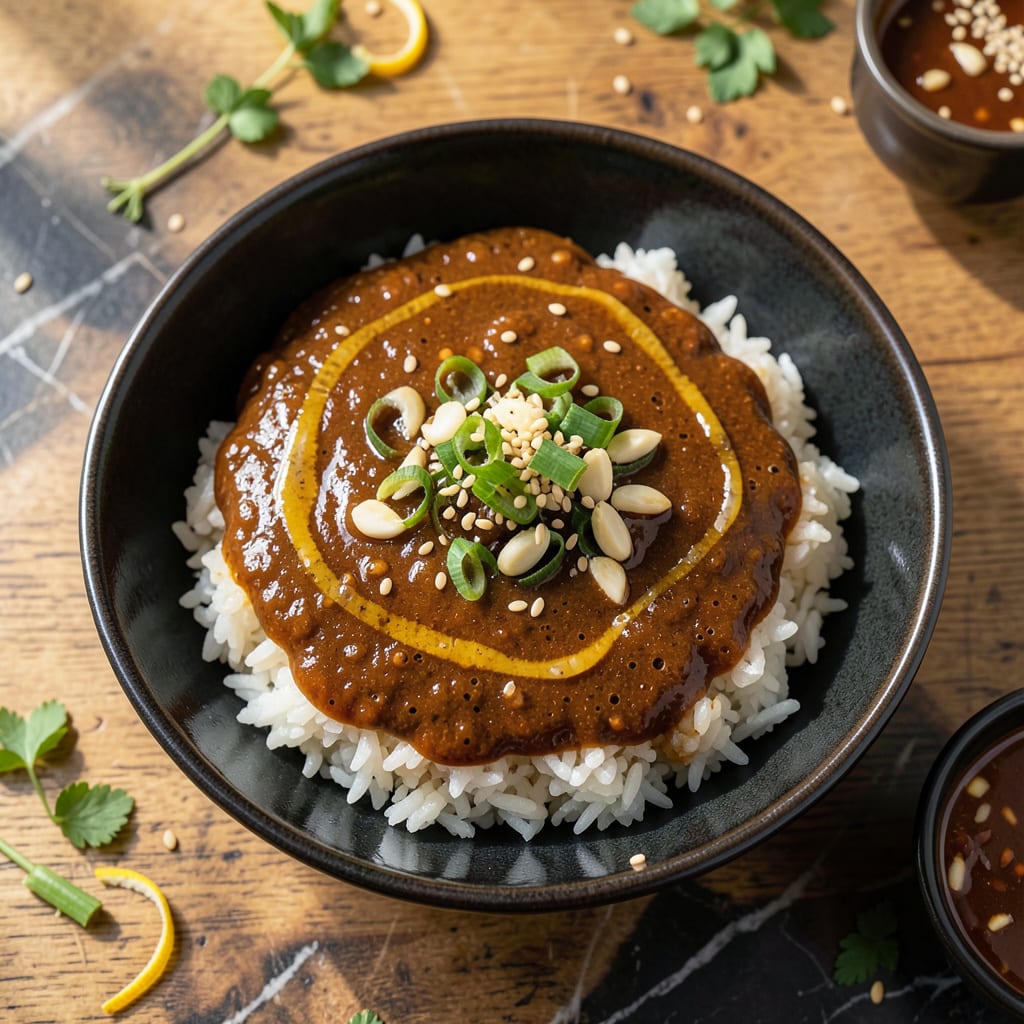
I stumbled onto this sauce while trying to save a bland chicken rice bowl, and it completely transformed the dish. Just a few simple ingredients come together to create that perfect savory umami kick.
This liquid gold keeps for 5 days in the fridge, so you can make a batch and have it ready to elevate any bowl. It’s the secret weapon your rice bowls have been missing.
Ingredients for Chicken Rice Bowl Sauce
Eight ingredients transform bland bowls into flavor bombs instantly.
| Ingredient | Amount | Notes |
|---|---|---|
| Soy Sauce 🥢 | ½ cup | Low-sodium preferred for balance |
| Rice Vinegar 🍚 | ¼ cup | Or substitute apple cider vinegar |
| Honey 🍯 | 2 tbsp | Maple syrup for vegan option |
| Sesame Oil 🫒 | 1 tbsp | Toasted for nutty flavor |
| Fresh Ginger 🌿 | 1 tbsp | Grated or finely minced |
| Garlic Cloves 🧄 | 3 cloves | Minced for maximum flavor |
| Sriracha 🌶️ | 1 tbsp | Adjust for heat preference |
| Lime Juice 🍈 | 1 tbsp | Freshly squeezed preferred |
[recipeingredientscaler]
The soy sauce is non-negotiable—Kikkoman or Tamari for gluten-free. Most grocery stores carry both near the Asian foods aisle. I grab my rice vinegar from Whole Foods (their 365 brand is solid), but any standard supermarket version works. Sesame oil loses potency fast, so check the date—Kadoya is a reliable brand that stays fresh.
No honey? Maple syrup or agave at a 1:1 swap. Out of rice vinegar? Apple cider vinegar gets you 90% there. Sriracha too spicy? Swap in gochujang at half the amount for a milder, sweeter heat. The ginger and garlic can be pre-minced from the jar (I won’t tell), but fresh tastes brighter.
This keeps 5 days in the fridge—glass jar, tight lid. The flavors deepen overnight, so make it a day ahead if you can. Freeze in ice cube trays for 3 months if you won’t use it fast enough.
Why You’ll Love This Recipe
- 5-Minute Whisk: Honestly, just dump, whisk, and you’re done—the honey and sesame oil blend together like they were made for each other.
- Sweet-Savory Balance: The honey mellows the soy sauce’s saltiness while the ginger adds a little zing that keeps me reaching for another bite.
- Meal Prep Hero: I make a big batch on Sunday and it keeps the chicken rice bowls exciting all week, no sad leftovers here.
- Pantry Staples: Between us, I always have these ingredients on hand, so it’s my go-to when the fridge looks bare but I need dinner fast.
Step-by-Step Instructions for Chicken Rice Bowl Sauce
This simple process delivers a bold, balanced sauce that transforms your bowl.
Step 1: Combine the Liquid Base
In a medium bowl, whisk together the 0.5 cup Soy Sauce and 0.25 cup Rice Vinegar until fully combined. I like to do this first to let the flavors start mingling—it makes a noticeable difference in the final result.
Use a bowl with a pour spout if you have one; it makes transferring the sauce later much easier. The soy sauce provides the deep umami base, while the rice vinegar adds that essential tangy brightness.
Step 2: Add Sweetness and Depth
Next, stir in the 2 tbsp Honey and 1 tbsp Sesame Oil. The honey balances the saltiness of the soy sauce, while the sesame oil adds a rich, nutty aroma that’s characteristic of this style of sauce.
Whisk vigorously for 30 seconds until the honey fully dissolves and the mixture becomes smooth. You’ll notice the sauce start to take on a beautiful glossy sheen—this is the sesame oil emulsifying with the other ingredients.
Step 3: Incorporate the Aromatics
Add the 1 tbsp Fresh Ginger and minced 3 cloves Garlic Cloves. These ingredients add layers of complexity to the sauce. The ginger provides a warm, slightly peppery note, while the garlic contributes its signature pungent kick.
Stir well to distribute the aromatics evenly throughout the sauce. Let it sit for 5 minutes to allow the flavors to develop—you’ll start to smell the garlic and ginger working their magic.
Step 4: Finish with Heat and Acidity
Finally, whisk in the 1 tbsp Sriracha and 1 tbsp Lime Juice. The sriracha brings a gentle heat that builds gradually, while the lime juice adds a bright, citrusy finish that cuts through the richness.
Taste and adjust the seasoning if needed. If you prefer more heat, you can add additional sriracha in ½ teaspoon increments. The sauce should be well-balanced—savory, sweet, tangy, and slightly spicy all at once.
Your sauce is now ready to drizzle over your chicken rice bowl. It keeps well in the refrigerator for up to 5 days in an airtight container.
Pro Tips For Making Chicken Rice Bowl Sauce
- Bloom the Ginger: Sauté the fresh ginger in sesame oil for 30 seconds before adding liquids—it mellows the bite and fills the sauce with warmth.
- Balance the Honey: I learned this the hard way—taste before adding all the honey, since some brands are sweeter than others and can overpower the soy.
- Skip the Boil: Heat the sauce gently to combine the honey, but don’t let it boil or the vinegar will turn harsh and the sauce can separate.
- Finish with Sesame: Stir in the sesame oil at the very end, off the heat, to preserve its nutty aroma—adding it early just wastes the flavor.
Common Mistakes When Making Perfect Results
Over-Salting the Sauce
Using regular soy sauce instead of low-sodium can make your sauce too salty. I learned this the hard way when my first batch overpowered the entire bowl. Always taste before adding extra salt. 🔥
Skipping the Rest Time
Letting the sauce sit for 5-10 minutes after mixing allows the flavors to meld properly. If you use it immediately, the ginger and garlic won’t have time to infuse their full potential.
Uneven Honey Dissolving
Cold honey clumps in the mixture. Warm it slightly in the microwave for 10 seconds or whisk vigorously for 30 seconds to ensure smooth integration. A glossy finish means it’s fully combined.
Wrong Vinegar Choice
Apple cider vinegar works in a pinch, but it adds a fruitier tang than rice vinegar’s clean acidity. If substituting, reduce the amount by ½ tablespoon to avoid overpowering the sauce.
Ignoring Spice Balance
Adding all the Sriracha at once can overwhelm. Start with ½ tablespoon, taste, then adjust. The heat should complement, not dominate, the umami and sweetness.
Storage Mistakes
An airtight container is non-negotiable for fridge storage. I use a glass jar with a tight lid to keep it fresh for the full 5 days. Leaving it in a bowl with plastic wrap leads to absorption of fridge odors.
Nutrition Facts
Frequently Asked Questions
Can I make this ahead of time?
The flavors actually improve after 24 hours in the fridge. Store in an airtight container for up to 5 days.
What if I don’t have rice vinegar?
Apple cider vinegar works as a substitute, but use ½ tablespoon less since it’s stronger. The taste will be slightly fruitier but still delicious.
How do I adjust the spice level?
Start with ½ tablespoon Sriracha, taste, then add more in small increments. For milder heat, try gochujang instead.
Can I freeze leftover sauce?
Yes! Freeze in ice cube trays for up to 3 months. Thaw in the fridge overnight before using.

- Jollof Rice Sauce Recipe: West African Tomato and Spice Infusion - September 25, 2026
- Japanese Rice Soup Recipe: Umami-Rich Comfort in a Bowl - September 25, 2026
- Homemade Cream Of Rice Recipe: Silk-Smooth Breakfast in Minutes - September 25, 2026