
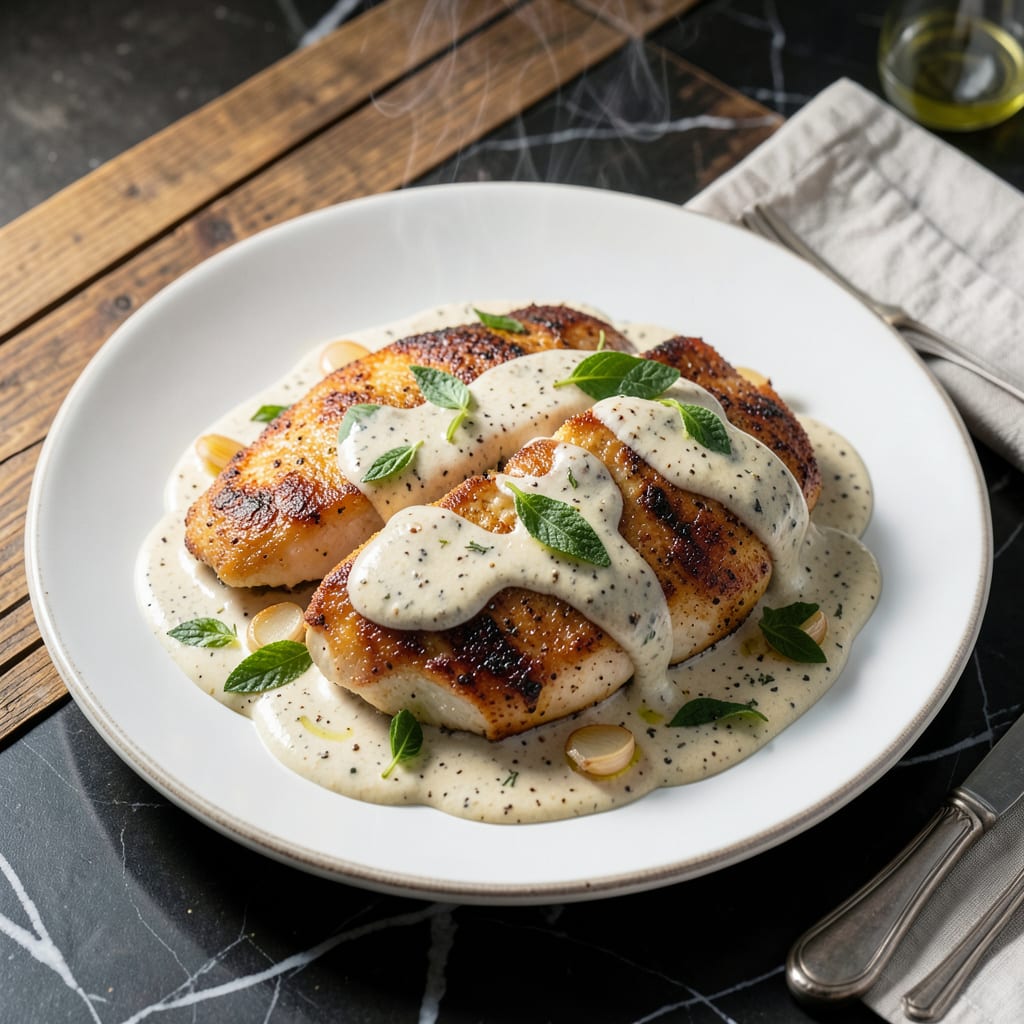
This recipe transforms simple chicken into a restaurant-quality dish with a rich, herb-infused cream sauce. The sage adds an earthy depth that pairs beautifully with the velvety texture.
With 30 minutes and basic ingredients, you’ll create tender chicken smothered in a luxurious sauce. Perfect for a weeknight dinner that feels special.
Ingredients for Chicken Sage Cream Sauce
Transform simple chicken into restaurant-quality indulgence with these carefully selected ingredients.
| Ingredient | Amount | Notes |
|---|---|---|
| Boneless Skinless Chicken Breasts 🍗 | 1 ½ lb | Pounded to even thickness |
| All-Purpose Flour 🌾 | ½ cup | For dredging chicken |
| Unsalted Butter 🧈 | 4 tbsp | Divided for cooking and sauce |
| Olive Oil 🫒 | 2 tbsp | For searing chicken |
| Fresh Sage Leaves 🌿 | 20 whole | Chopped, loosely packed |
| Garlic Cloves 🧄 | 3 cloves | Minced for sauce |
| Shallot 🧅 | 1 whole | Finely diced |
| Heavy Cream 🥛 | 1 ½ cups | Full-fat for best texture |
| Chicken Stock 🍲 | ½ cup | Low-sodium preferred |
| Dry White Wine 🍷 | ¼ cup | Sauvignon Blanc or Pinot Grigio |
| Dijon Mustard 🟡 | 1 tbsp | Smooth, not whole grain |
| Kosher Salt 🧂 | 1 tsp | Diamond Crystal preferred |
| Freshly Ground Black Pepper 🌶️ | ½ tsp | Coarse grind preferred |
| Fresh Parsley 🌿 | 2 tbsp | Chopped, for garnish |
[recipeingredientscaler]
The chicken quality is paramount for this preparation. Opt for air-chilled boneless, skinless breasts from Whole Foods or a reputable butcher—this ensures better texture and flavor retention. Pounding to even thickness guarantees uniform cooking. For the sage, seek out fresh bundles with vibrant color (avoid wilted or yellowing leaves). The heavy cream should be ultra-pasteurized for stability in sauces.
Substitutions must maintain the dish’s integrity. Chicken thighs can replace breasts (adjust cooking time accordingly). No fresh sage? Use dried rubbed sage at one-third the quantity, though fresh is strongly preferred. For the wine, substitute additional chicken stock with 1 tsp lemon juice. The Dijon mustard is essential for emulsification—do not omit.
Store raw chicken in its original packaging on a tray for 1-2 days maximum. Fresh sage keeps wrapped in damp paper towels for 5 days. The completed dish reheats gently—avoid boiling which can cause separation. Consume within 3 days for optimal texture.
Why You’ll Love This Recipe
- One Pan Wonder: I sear the chicken in butter and olive oil, then make the sauce right in the same pan—minimal cleanup, maximum flavor.
- Rich and Earthy: The fresh sage leaves infuse the cream sauce with this warm, aromatic depth that pairs perfectly with the tender chicken.
- Weeknight MVP: Between us, this is my go-to for busy evenings when I need something elegant but unfussy.
- Budget Stretcher: Chicken breasts stay affordable, and a little fresh sage goes a long way in making this taste like a restaurant dish.
Step-by-Step Instructions for Chicken Sage Cream Sauce
Master the technique for a restaurant-quality sauce with perfectly tender chicken every time.
Step 1: Prepare and Sear the Chicken
Pound the 1.5 lb boneless skinless chicken breasts to an even ½-inch thickness for consistent cooking. Season both sides with 1 tsp kosher salt and 0.5 tsp freshly ground black pepper. Dredge lightly in 0.5 cup all-purpose flour, shaking off excess to avoid gummy coating.
Heat 2 tbsp olive oil and 2 tbsp unsalted butter in a large skillet over medium-high heat until the butter foams. Add the chicken and cook for 4-5 minutes per side until golden brown and cooked through. Transfer to a plate and tent with foil to keep warm.
Step 2: Build the Aromatic Base
In the same skillet, reduce heat to medium and add the remaining 2 tbsp unsalted butter. Once melted, add 1 finely diced shallot and cook for 3-4 minutes until translucent and starting to caramelize.
Add 3 minced garlic cloves and 20 chopped fresh sage leaves, stirring constantly for 30-45 seconds until fragrant. Be careful not to let the garlic burn—this would introduce bitterness to the sauce.
Step 3: Deglaze and Create the Cream Sauce
Pour in 0.25 cup dry white wine to deglaze the pan, scraping up all browned bits with a wooden spoon. Let the wine reduce by half, about 2-3 minutes, until the liquid is syrupy and glossy.
Add 0.5 cup chicken stock, 1.5 cups heavy cream, and 1 tbsp Dijon mustard. Stir to combine, then simmer over medium-low heat for 5-7 minutes until the sauce thickens enough to coat the back of a spoon.
Step 4: Finish and Serve
Return the chicken to the skillet, spooning the sauce over it. Simmer for 2-3 minutes to heat the chicken through and allow flavors to meld. The sauce should cling to the chicken with a velvety texture.
Garnish with 2 tbsp chopped fresh parsley and serve immediately over pasta, mashed potatoes, or with crusty bread to soak up the rich, herb-infused sauce. The sage should provide a distinct earthy aroma, perfectly balanced by the creamy texture.
Pro Tips For Making Chicken Sage Cream Sauce
- Pound the Chicken: Even thickness means even cooking—I learned this the hard way after too many dry, overdone edges. Aim for ½-inch thick pieces, especially with boneless breasts.
- Fry Sage First: Toss the fresh sage leaves in the hot butter and olive oil for 30 seconds before adding chicken. Sounds weird, but it works: the oil absorbs that aromatic flavor before the sauce even starts.
- Skip the Overcrowding: Resist the urge to fit all the chicken in one pan. After burning three batches, I finally figured out that giving each piece space guarantees a golden crust instead of steamed, sad meat.
- Use Warm Cream: Adding cold cream to the hot pan can make the sauce break. I was skeptical until I tried it—warming the cream first (just 30 seconds in the microwave) makes a real difference in keeping the sauce silky smooth.
Best Sauces and Condiments for This Dish
Herb-Infused Oils
Drizzle with sage-infused olive oil just before serving for an extra layer of aroma. I make mine by heating ½ cup olive oil with 5 fresh sage leaves until fragrant, then straining. This enhances the dish’s earthy notes beautifully. 🌿
Acidic Balancers
A squeeze of fresh lemon juice cuts through the richness of the cream sauce perfectly. I add about 1 tsp per serving right before eating. The acidity brightens all the flavors without overpowering the sage.
Cheese Enhancements
Sprinkle with grated Parmesan cheese for a salty, nutty contrast to the creamy sauce. I use about 2 tbsp per serving. The cheese melts slightly into the sauce, creating a more complex flavor profile.
Bread Pairings
Serve with crusty sourdough bread to soak up every bit of the velvety sauce. I warm slices in the oven at 350°F for 5 minutes to make them perfectly crisp. This adds a satisfying textural contrast to the tender chicken.
Fresh Herb Garnish
Beyond parsley, try garnishing with fresh thyme leaves or chopped chives for added color and flavor. I use about 1 tbsp of either per serving. These herbs complement the sage without competing with it.
Spicy Kick
For heat lovers, add a pinch of red pepper flakes to the sauce while it simmers. I start with ¼ tsp and adjust to taste. The spice provides a nice counterpoint to the creamy, herbal flavors. 🔥
Nutrition Facts
Frequently Asked Questions
Can I use dried sage instead of fresh?
Yes, but use 1/3 the amount since dried is more concentrated. Fresh sage provides the best flavor, but dried works in a pinch.
How do I prevent the sauce from curdling?
Keep the heat at medium-low and stir constantly. Adding cream to hot liquid slowly helps prevent separation.
What can I serve with this dish?
Pair with pasta, mashed potatoes, or crusty bread. The sauce is rich, so lighter sides like steamed veggies balance it well.
Can I make this ahead of time?
Cook the chicken and sauce separately, then combine when reheating. Store in the fridge for up to 3 days.

- Jollof Rice Sauce Recipe: West African Tomato and Spice Infusion - September 25, 2026
- Japanese Rice Soup Recipe: Umami-Rich Comfort in a Bowl - September 25, 2026
- Homemade Cream Of Rice Recipe: Silk-Smooth Breakfast in Minutes - September 25, 2026