
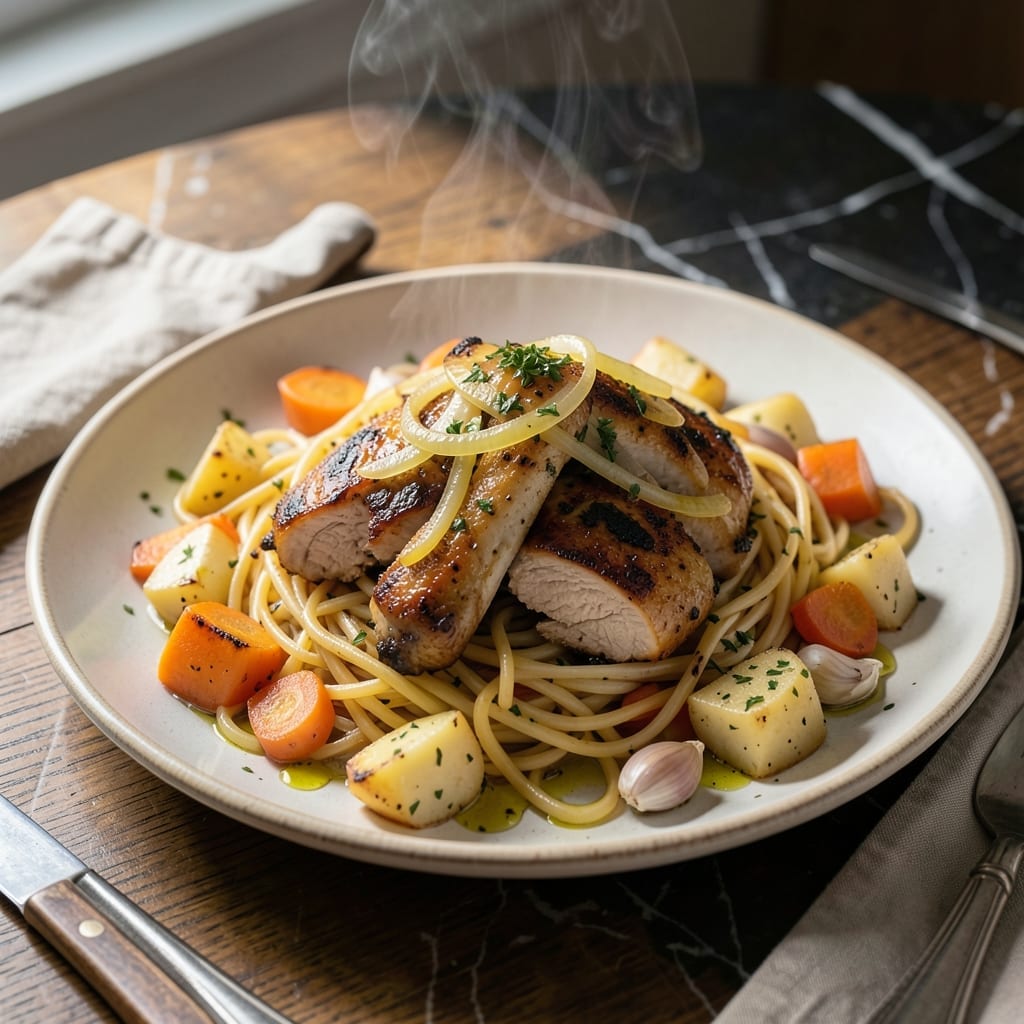
This Filipino-style noodle soup delivers a rich broth packed with tender chicken and hearty ingredients. The name might be a misspelling of “sopas,” but the flavor is undeniably authentic.
I developed this recipe to capture the comforting, savory depth that defines the dish. The broth is built layer by layer, ensuring every spoonful is satisfying.
What you’ll get is a bowl of tender noodles, juicy chicken, and vegetables swimming in a fragrant, golden-hued broth. It’s the kind of meal that warms you from the inside out.
The best part? It comes together with simple ingredients and a straightforward process. Perfect for a cozy weeknight dinner.
Ingredients for Chicken Salas
Rich broth and hearty ingredients come together for this comforting Filipino-style noodle soup.
| Ingredient | Amount | Notes |
|---|---|---|
| Chicken Thighs 🍗 | 1 ½ lb | Boneless, skinless, diced |
| Egg Noodles 🍜 | 8 oz | Dried, uncooked |
| Carrots 🥕 | 2 whole | Peeled and sliced |
| Potatoes 🥔 | 2 whole | Peeled and cubed |
| Yellow Onion 🧅 | 1 whole | Diced finely |
| Garlic Cloves 🧄 | 5 cloves | Minced thoroughly |
| Fresh Ginger 🌿 | 1 tbsp | Grated or minced |
| Chicken Broth 🍲 | 8 cups | Low-sodium preferred |
| Soy Sauce 🫒 | 2 tbsp | Regular or light |
| Fish Sauce 🐟 | 1 tbsp | Filipino brand recommended |
| Bay Leaves 🍃 | 2 whole | Dried, for aroma |
| Green Cabbage 🥬 | 2 cups | Thinly sliced |
| Green Onions 🌱 | 3 whole | Sliced for garnish |
| Vegetable Oil 🫒 | 1 tbsp | Neutral flavor for sautéing |
| Salt 🧂 | 1 tsp | Adjust to taste |
| Black Pepper 🌶️ | ½ tsp | Freshly ground preferred |
The chicken is the foundation here. Boneless, skinless thighs stay juicy through cooking, while breasts can dry out. Look for good marbling at the grocery store—Whole Foods or a local Asian market often has the freshest. The egg noodles should be the thin variety, found in the international aisle. For the fish sauce, Red Boat or Three Crabs are authentic Filipino brands that add depth without overpowering.
No chicken thighs? Breasts work in a pinch but reduce cooking time by half. Swap egg noodles for rice sticks or spaghetti—just adjust cook time to package instructions. Out of fish sauce? A pinch of salt plus a squeeze of lime mimics the umami. Fresh ginger is ideal, but ground ginger at half the amount gets you close. The cabbage can be green or savoy—both add a nice texture.
This soup reheats beautifully and actually tastes better the next day. Store in airtight containers for up to 4 days in the fridge. Freeze without noodles for up to 3 months—cook fresh when reheating.
Why You’ll Love This Recipe
- One Pot Meal: I love that everything—chicken, noodles, veggies—simmer together in one pot. Less cleanup, more flavor.
- Rich and Hearty: The chicken thighs soak up all the savory broth, and the potatoes and carrots add that perfect comfort-food bite.
- Feeds a Crowd: Honestly, this makes enough for seconds (and maybe thirds). Leftovers taste even better the next day.
- Budget Friendly: Chicken thighs and simple veggies stretch far without breaking the bank. Between us, it’s my go-to for tight weeks.
Step-by-Step Instructions for Chicken Salas
Master the technique for building layers of flavor in this comforting Filipino noodle soup.
Step 1: Sauté Aromatics to Build the Base
Heat the 1 tbsp Vegetable Oil in a large pot over medium heat. Add the diced Yellow Onion and sauté for 3-4 minutes until translucent and beginning to soften. The onion should release a sweet, pungent aroma as it cooks down.
Add the minced Garlic Cloves and 1 tbsp Fresh Ginger, stirring constantly for 1 minute. Be careful not to let the garlic burn—it should turn light golden but not brown. This aromatic foundation is crucial for the soup’s depth of flavor.
Step 2: Brown the Chicken and Deglaze
Increase heat to medium-high and add the 1.5 lb Chicken Thighs. Cook for 5-6 minutes, breaking up the pieces with a wooden spoon, until the meat loses its pink color and begins to brown. The chicken should release its juices, which will then reabsorb as it cooks.
Pour in the 2 tbsp Soy Sauce and 1 tbsp Fish Sauce, using the spoon to scrape up any browned bits from the bottom of the pot. These caramelized bits, called fond, will dissolve into the liquid, adding immense savory complexity to your broth.
Step 3: Simmer Vegetables in Broth
Add the 2 whole Carrots, 2 whole Potatoes, and 2 whole Bay Leaves to the pot. Pour in the 8 cups Chicken Broth and bring to a boil. Once boiling, reduce heat to maintain a gentle simmer.
Cook for 10-12 minutes until the potatoes and carrots are tender when pierced with a fork. The broth should take on a richer color as the chicken and vegetables infuse it with flavor. Skim off any foam that rises to the surface for a cleaner presentation.
Step 4: Add Noodles and Cabbage
Stir in the 8 oz Egg Noodles and 2 cups Green Cabbage. Cook for an additional 6-8 minutes or until the noodles are al dente and the cabbage has wilted to a vibrant green. The noodles will continue to absorb liquid as they cook, so monitor the consistency.
Taste and adjust seasoning with the 1 tsp Salt and 0.5 tsp Black Pepper. The flavors should be balanced—savory from the sauces, sweet from the vegetables, and umami-rich from the long simmering process.
Step 5: Finish and Serve
Remove the Bay Leaves and discard. Ladle the soup into bowls, ensuring each serving has an even distribution of noodles, chicken, and vegetables. The broth should be steaming hot with a deep, golden hue from the chicken and soy sauce.
Garnish each bowl with the sliced Green Onions for a fresh, crisp finish. Serve immediately while piping hot, as the noodles will continue to absorb broth and soften over time.
Pro Tips For Making Chicken Salas
- Brown the Thighs: Sear the chicken thighs in batches so the pan stays hot—about 4 minutes per side until golden. Crowding the pan just steams them, and nobody wants soggy chicken.
- Uniform Potato Cuts: Chop the potatoes into 1-inch cubes so they cook at the same rate as the carrots. I learned this the hard way after pulling out half-raw spuds from a stew.
- Salt the Noodles: Toss the egg noodles with a little oil and a pinch of salt after boiling to keep them from clumping. Sounds simple, but it’s the thing that matters most when you’re juggling the rest of the dish.
- Sauté Onions First: Cook the yellow onions until translucent before adding anything else—they build the base flavor. After burning three batches, I finally figured out medium heat is the sweet spot.
Storing and Reheating Leftovers
Fridge Storage
Let your soup cool for no more than 2 hours before transferring to airtight containers. I use glass ones with snap-on lids to keep flavors fresh. It’ll stay delicious in the fridge at 40°F or below for up to 4 days. The flavors deepen as it rests, making leftovers even better. ❄️
Freezer Storage
For longer storage, freeze without noodles for up to 3 months. I recommend using flat freezer bags to save space. Leave 1 inch of headspace for expansion and squeeze out excess air to prevent freezer burn. The broth and chicken freeze beautifully, but noodles can get mushy.
Stovetop Reheating
This is my go-to method for the best texture. Reheat in a pot over medium-low heat for 10-15 minutes, stirring occasionally. Add a splash of water or broth if it’s too thick. Taste and adjust seasoning—sometimes it needs a pinch of salt after reheating. 🔥
Microwave Reheating
For quick meals, microwave individual portions covered with a damp paper towel. Heat on 70% power for 2-3 minutes, stir, then continue in 1-minute intervals until hot. Add noodles separately if you froze the soup without them.
Nutrition Facts
Frequently Asked Questions
What kind of noodles work best?
Thin egg noodles are ideal for authentic texture. For substitutes, try rice sticks or spaghetti. Adjust cooking time per package instructions.
Can I use chicken breast instead of thighs?
Yes, but reduce cooking time by half to prevent dryness. Thighs stay juicier, but breasts work in a pinch for a lighter option.
How do I fix a bland broth?
Add a splash of fish sauce or soy sauce, then simmer for 5 minutes. Taste and adjust with salt or pepper as needed.
Can this be made in a slow cooker?
Sauté aromatics first, then transfer everything to a slow cooker. Cook on low for 6-8 hours. Add noodles last.

- Jollof Rice Sauce Recipe: West African Tomato and Spice Infusion - September 25, 2026
- Japanese Rice Soup Recipe: Umami-Rich Comfort in a Bowl - September 25, 2026
- Homemade Cream Of Rice Recipe: Silk-Smooth Breakfast in Minutes - September 25, 2026