
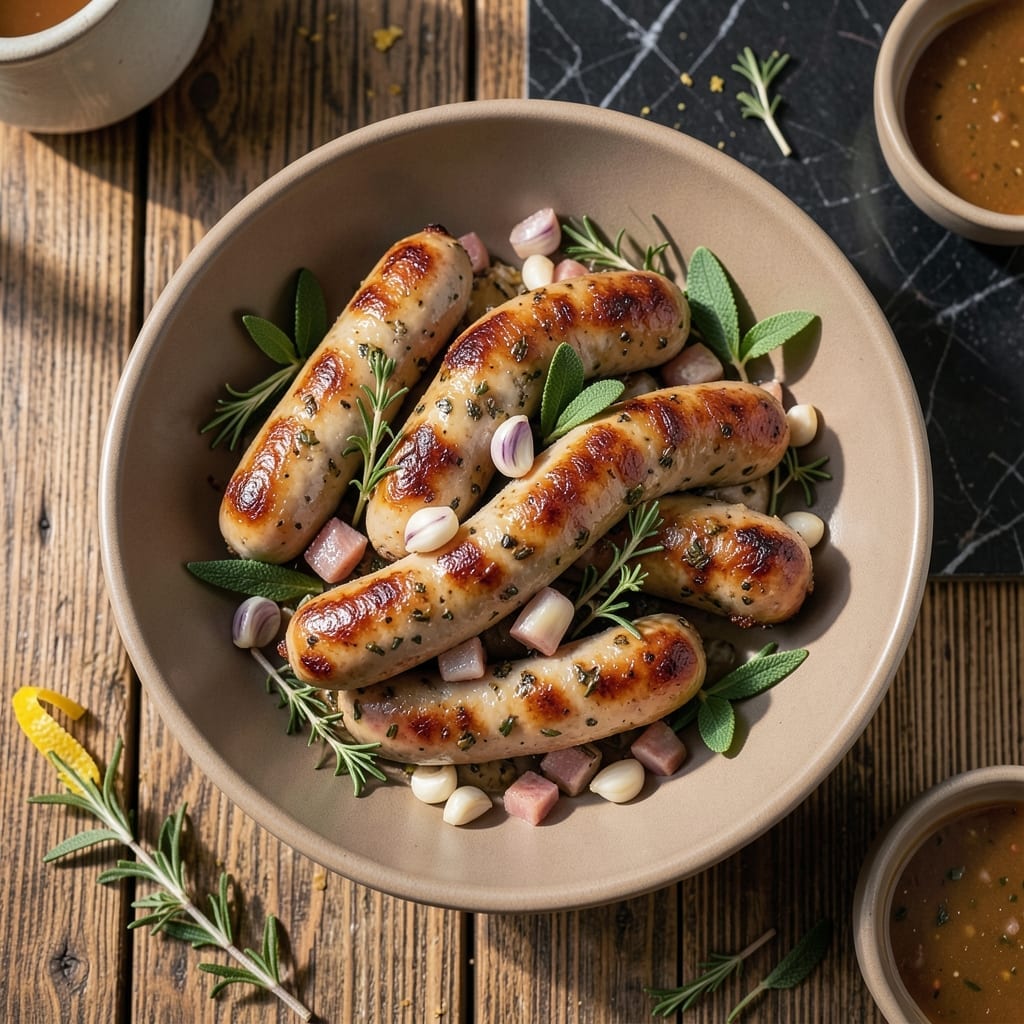
Homemade chicken sausage brings restaurant-quality flavor to your kitchen with a juicy texture that store-bought can’t match.
This recipe combines lean ground chicken with fresh herbs and spices, creating links with a perfect snap. The process is straightforward yet delivers professional results.
What sets this apart is the careful balance of seasonings and the proper chilling time, ensuring the mixture holds together during cooking. The result is juicy, herb-infused sausage bursting with flavor.
Whether grilled, pan-fried, or baked, these links will elevate any meal with their tender texture and aromatic profile.
Ingredients for Chicken Sausage Recipe Homemade
Lean ground chicken meets aromatic herbs and spices for restaurant-quality sausage links at home.
| Ingredient | Amount | Notes |
|---|---|---|
| Ground Chicken 🍗 | 2 lb | Lean, preferably thigh meat |
| Pork Fat 🥓 | ¼ lb | Optional for added juiciness |
| Fresh Sage 🌿 | 2 tbsp | Finely chopped, stems removed |
| Fresh Thyme 🌿 | 1 tbsp | Leaves only, finely minced |
| Fresh Rosemary 🌿 | 1 tbsp | Finely chopped, woody stems discarded |
| Garlic Cloves 🧄 | 4 cloves | Minced to fine paste |
| Kosher Salt 🧂 | 2 tsp | Diamond Crystal preferred |
| Black Pepper 🌶️ | 1 tsp | Freshly ground, coarse |
| Fennel Seeds 🌿 | 1 tsp | Lightly crushed for flavor release |
| Red Pepper Flakes 🌶️ | ½ tsp | Adjust to heat preference |
| Ground Coriander 🌿 | 1 tsp | Freshly ground preferred |
| Dry White Wine 🍷 | ¼ cup | Chilled, for binding moisture |
| Ice Water 💧 | ¼ cup | As needed for mixture consistency |
The ground chicken quality is paramount for juicy results. Thigh meat offers superior fat content and flavor compared to breast (which can yield dry links). Source from a trusted butcher or high-turnover market like Whole Foods. Fresh herbs—sage, thyme, and rosemary—should be vibrant green with no wilting. The pork fat is optional but highly recommended for authentic texture and moisture retention.
Substitutions require careful balance to maintain moisture and flavor. Turkey thigh can replace chicken, though it’s slightly leaner. No fresh herbs? Use dried at one-third the amount, but fresh delivers the aromatic complexity promised. Skip the pork fat? Add 1-2 tbsp olive oil to the mixture. For heat adjustment, cayenne can replace red pepper flakes at one-quarter the volume.
The mixture must chill at least 1 hour (overnight is ideal) for proper binding. Cooked links keep 4 days refrigerated or 3 months frozen. For best texture, avoid overmixing the meat—just until uniformly combined. This prevents tough, dense sausage.
Why You’ll Love This Recipe
- One Bowl Mix: I just dump everything in a bowl, mix, and shape—no fancy equipment, no fuss.
- Herb heaven: The fresh sage, thyme, and rosemary make every bite taste like a cozy kitchen.
- Breakfast to Dinner: I fry a batch for Sunday brunch, then toss leftovers in pasta or soup later that week.
- Stretches Further: A pound of ground chicken and a little pork fat makes way more sausage than I’d buy at the store.
Step-by-Step Instructions for Chicken Sausage
Master the technique for perfectly seasoned links with ideal texture and snap.
Step 1: Combine Meat and Fat Base
Place the 2 lb Ground Chicken and 0.25 lb Pork Fat in a large mixing bowl. I prefer using a stand mixer with the paddle attachment for this step—it ensures even distribution without overworking the meat, which would make the sausage tough.
The pork fat is crucial for juiciness and proper texture. If you’re using very lean ground chicken, don’t skip it. Mix on low speed for just 30 seconds until the fat is evenly incorporated but the mixture still looks slightly marbled.
Step 2: Incorporate Aromatics and Seasonings
Add the 2 tbsp Fresh Sage, 1 tbsp Fresh Thyme, 1 tbsp Fresh Rosemary, 4 cloves Garlic Cloves, 2 tsp Kosher Salt, 1 tsp Black Pepper, 1 tsp Fennel Seeds, 0.5 tsp Red Pepper Flakes, and 1 tsp Ground Coriander to the meat mixture.
Mix on low speed for another 30-45 seconds until all ingredients are uniformly distributed. The herbs should be visible flecks throughout the mixture. Stop mixing as soon as everything is combined—overmixing will create a dense, paste-like texture instead of a proper sausage.
Step 3: Bind with Liquid Components
With the mixer running on low, slowly pour in the 0.25 cup Dry White Wine. This adds moisture and helps distribute the seasonings more evenly. Let it mix for 15 seconds before adding the 0.25 cup Ice Water a little at a time.
The mixture should come together and feel slightly tacky but not wet. You might not need all the ice water—add just enough so the mixture holds when pressed but isn’t soggy. The cold liquid also helps keep the fat firm during mixing, which is essential for that juicy snap in the finished sausage.
Step 4: Test and Adjust Seasoning
To check your seasoning, form a small patty and cook it in a dry skillet over medium heat for 2-3 minutes per side until cooked through. Taste and adjust with additional Kosher Salt or Red Pepper Flakes if needed.
This test cook reveals the true flavor profile since raw meat doesn’t taste the same as cooked. I always do this step—it’s the only way to ensure perfect seasoning before committing to the full batch. Remember that flavors will intensify slightly as the sausage rests.
If the texture seems loose, return the mixture to the fridge for 20-30 minutes to firm up before shaping.
Step 5: Shape and Rest the Sausage
Divide the mixture into 4 equal portions for this serving size. To form links, roll each portion into a 1-inch thick rope about 8 inches long. Twist the rope into a spiral or pinch off 2-inch segments for individual links.
Place the formed sausages on a parchment-lined tray and refrigerate uncovered for at least 1 hour (or up to 24 hours). This resting period allows the proteins to relax and the flavors to meld, which significantly improves both texture and taste. The surface will also dry slightly, creating that characteristic snap when cooked.
Pro Tips For Making Chicken Sausage Recipe Homemade
- Chill the Mixture: After mixing the ground chicken and pork fat with herbs, refrigerate for at least 30 minutes—I learned this the hard way after my first batch turned mushy from the fat melting too soon.
- Use Cold Fat: Keep the pork fat ice-cold until the last minute; warm fat blends unevenly and can make the sausage greasy instead of juicy.
- Avoid Overmixing: Stop kneading the moment the ingredients just come together, or the sausage will turn dense and dry—my grandmother swore by this, and she was right.
- Toast the Herbs: Lightly toast the fresh sage, thyme, and rosemary in a dry pan for 10 seconds to release their oils—sounds weird, but it actually changes the outcome.
Common Mistakes When Making chicken sausage recipe homemade
Overmixing the Meat
Mix just until the ingredients are combined—usually 30-45 seconds on low speed. Overworking the mixture creates dense, tough sausage instead of the tender texture we want. I learned this the hard way with my first batch. 💡
Skipping the Test Cook
Always cook a small patty to taste the seasoning before shaping. Raw meat doesn’t reveal true flavor—this step ensures perfect balance. Adjust with Kosher Salt or Red Pepper Flakes as needed.
Insufficient Chilling
The mixture must rest for at least 1 hour (overnight is better) before cooking. This firms up the fat and helps the sausage hold its shape. Skipping this leads to crumbly links that fall apart on the grill.
Using Warm Ingredients
Keep everything cold—meat, fat, liquids, even the bowl. Warm ingredients cause the fat to melt prematurely, ruining the texture. I place my mixing bowl in the freezer for 10 minutes beforehand.
Overstuffing Casings
If using casings, fill them gently to avoid bursting. Leave space for expansion during cooking. Overstuffed sausages split and lose their shape, wasting all your careful prep work.
Cooking Too Fast
Use medium heat for even cooking without burning the outside. Chicken sausage cooks faster than pork, so 8-10 minutes total is usually perfect. Rushing dries out the links. 🔥
Nutrition Facts
Frequently Asked Questions
Can I use ground turkey instead of chicken?
Yes, but use turkey thigh for best results. It has more fat than breast meat, which helps keep the sausage juicy.
How long can I store the raw mixture?
Store in an airtight container for up to 24 hours in the fridge before cooking. For longer storage, shape into links and freeze for up to 3 months.
Why is my sausage crumbly?
This usually means the mixture wasn’t chilled long enough. Rest for at least 1 hour before cooking to help bind the proteins properly.
What’s the best cooking method?
Pan-frying over medium heat for 8-10 minutes works well. Grilling is another great option—just avoid high heat to prevent drying out.

- Jollof Rice Sauce Recipe: West African Tomato and Spice Infusion - September 25, 2026
- Japanese Rice Soup Recipe: Umami-Rich Comfort in a Bowl - September 25, 2026
- Homemade Cream Of Rice Recipe: Silk-Smooth Breakfast in Minutes - September 25, 2026