
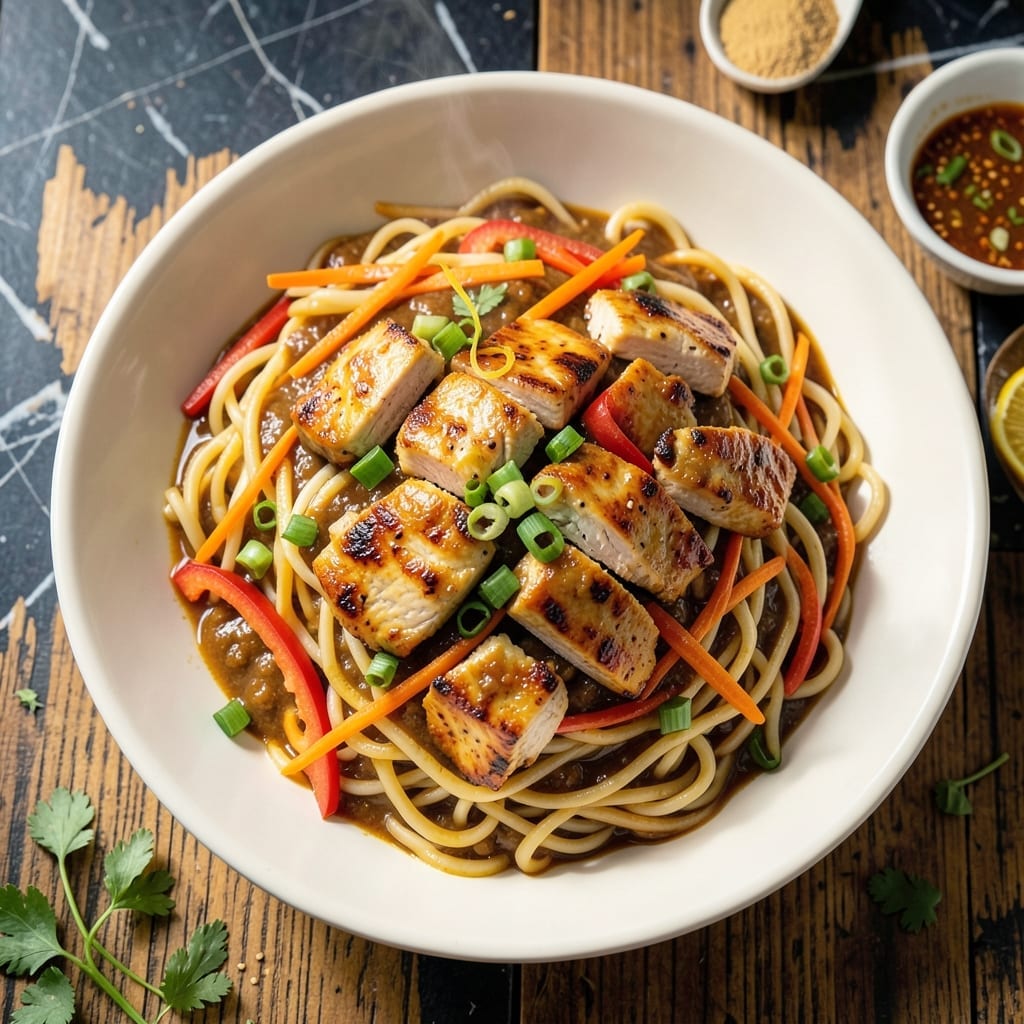
There’s a reason Singapore noodles are a takeout favorite—they deliver bold curry flavor in every bite. This version stays true to tradition with tender chicken, scrambled eggs, and crisp vegetables all tossed with rice noodles.
The key lies in the curry-spiced sauce and proper wok technique. High heat and quick cooking preserve the texture of each ingredient while building layers of smoky, aromatic flavor.
You’ll achieve that signature golden hue and restaurant-quality taste without complicated steps. The dish comes together in 20 minutes with standard pantry staples.
Serve hot for the best experience. Here’s how to make this classic at home.
Ingredients for Chicken Singapore Noodles
Thin rice noodles, bold curry, and crisp veggies make this takeout classic shine at home.
| Ingredient | Amount | Notes |
|---|---|---|
| Rice Stick Noodles 🍜 | 8 oz | Dry, thin variety preferred |
| Boneless Chicken Breast 🍗 | 1 lb | Thinly sliced against grain |
| Large Eggs 🥚 | 2 whole | Lightly beaten for scrambling |
| Carrots 🥕 | 2 whole | Julienned for even cooking |
| Red Bell Pepper 🌶️ | 1 whole | Thinly sliced into strips |
| Green Onions 🧅 | 3 whole | White and green parts separated |
| Garlic Cloves 🧄 | 3 cloves | Minced for maximum flavor |
| Madras Curry Powder 🌿 | 2 tbsp | Essential for authentic spice |
| Soy Sauce 🫒 | 3 tbsp | Low-sodium preferred for control |
| Oyster Sauce 💧 | 1 tbsp | Or vegetarian oyster sauce |
| Shaoxing Wine 🍶 | 2 tbsp | Dry sherry as substitute |
| Sesame Oil 🫒 | 1 tbsp | Toasted variety for depth |
| Neutral Oil 🛢️ | 3 tbsp | High smoke point required |
| Bean Sprouts 🌱 | 1 cup | Rinsed and drained well |
| Salt 🧂 | ½ tsp | Or to taste at finish |
The noodles are everything here. Look for thin rice sticks—they crisp up better than thick ones. Most Asian markets carry them, but Amazon or the international aisle at Kroger work too. The curry powder needs to be Madras for that signature heat and color. If yours is old and dull-smelling, replace it. Chicken should be fresh and boneless—thighs work if you prefer darker meat.
No Shaoxing wine? Dry sherry is your best bet (or skip it entirely). Vegetarian? Swap oyster sauce for mushroom sauce. The veggies are flexible—snow peas or cabbage work great. If you hate bean sprouts, just leave them out. The eggs should be room temperature so they scramble evenly in the hot wok.
Everything cooks in 20 minutes, so prep first—this moves fast. Leftovers keep 3-4 days in the fridge but lose that perfect texture. Best eaten fresh, straight from the wok. Reheat in a dry pan to crisp the noodles back up.
Why You’ll Love This Recipe
- One Pan Wonder: I love that everything—noodles, chicken, eggs, and veggies—cooks together in one skillet, so cleanup is a breeze.
- Umami Bomb: The combination of curry powder, soy sauce, and those charred bits of red bell pepper hits just right every time.
- Weeknight Hero: Honestly, it’s my go-to for busy Tuesdays when I need something filling, fast, and way better than takeout.
- Stretches Far: Leftovers taste even better the next day, and the rice noodles soak up all the flavor without turning mushy.
Step-by-Step Instructions for Chicken Singapore Noodles
Here’s the method that delivers perfectly charred noodles with bold curry flavor every time.
Step 1: Soak and Prep All Ingredients
Place the 8 oz Rice Stick Noodles in a large bowl and cover with hot tap water. Let them soak for 15-20 minutes until flexible but still slightly firm. Drain and rinse with cold water to stop the cooking process, then toss with 1 tbsp Sesame Oil to prevent sticking.
Meanwhile, slice the 1 lb Boneless Chicken Breast into thin strips against the grain. Julienned 2 whole Carrots, thinly slice the 1 whole Red Bell Pepper, and separate the white and green parts of the 3 whole Green Onions. Mince the 3 cloves Garlic Cloves and lightly beat the 2 whole Large Eggs with a pinch of the 0.5 tsp Salt. Have all ingredients measured and within reach—this dish comes together quickly.
Step 2: Velveting the Chicken for Tenderness
In a bowl, combine the sliced chicken with 1 tbsp Soy Sauce, 1 tbsp Shaoxing Wine, and 1 tsp Neutral Oil. Mix well and let marinate for 10 minutes. This step, called velveting, ensures the chicken stays juicy and tender during the high-heat stir-fry.
Heat 1 tbsp Neutral Oil in a wok or large skillet over high heat. Add the marinated chicken in a single layer and sear for 2-3 minutes until just cooked through. Remove the chicken from the wok and set aside. The chicken should be opaque with a slight golden edge but not fully browned—it’ll finish cooking later.
Step 3: Scramble Eggs and Stir-Fry Vegetables
In the same wok, add another 1 tbsp Neutral Oil and swirl to coat. Pour in the beaten eggs and scramble quickly over high heat until just set but still slightly runny. Remove the eggs and set aside with the chicken.
Add the remaining 1 tbsp Neutral Oil to the wok. Stir-fry the minced garlic for 10 seconds until fragrant, then add the carrots and red bell pepper. Cook for 2-3 minutes until the vegetables soften slightly but retain their crispness. Push the vegetables to one side of the wok and add the 2 tbsp Madras Curry Powder. Toast the curry powder for 30 seconds until fragrant—this deepens its flavor.
Step 4: Combine Noodles and Sauce for Final Cook
Add the drained noodles to the wok along with the 3 tbsp Soy Sauce, 1 tbsp Oyster Sauce, and remaining 1 tbsp Shaoxing Wine. Toss everything together with tongs for 2-3 minutes until the noodles are tender and coated in the sauce. The noodles should be chewy and slightly charred in spots.
Return the chicken and scrambled eggs to the wok. Add the 1 cup Bean Sprouts and the green parts of the green onions. Stir-fry for another 1-2 minutes until everything is heated through and the bean sprouts are just wilted. Taste and adjust seasoning with the remaining 0.5 tsp Salt if needed.
Step 5: Finish and Serve Immediately
Transfer the noodles to a serving platter and garnish with the reserved white parts of the green onions. The noodles should have a vibrant yellow hue from the curry powder, with bits of charred vegetables and tender chicken throughout.
Serve immediately while hot—the texture of the noodles changes as they cool. Each bite should deliver a mix of chewy noodles, tender chicken, crisp-tender vegetables, and the aromatic warmth of the curry-spiced sauce.
Pro Tips For Making Chicken Singapore Noodles
- Soak Noodles Right: Cover rice stick noodles in warm water for exactly 15 minutes—they should be pliable but still firm. I learned this the hard way after ending up with mushy noodles that turned the whole dish into a clump.
- Slice Chicken Thin: Cut the boneless chicken breast into ¼-inch thick strips so it cooks through in 2-3 minutes over high heat. After burning a few batches of thick pieces, I finally figured out why restaurants get it so tender.
- Scramble Eggs First: Push scrambled eggs to one side of the wok before adding other ingredients—this keeps them from disappearing into the noodles. Sounds weird, but it actually changes the outcome.
- Prep Everything First: Have all your carrots julienned, bell peppers sliced, and sauces mixed before you start cooking. I skip this when I’m lazy, but the dish is noticeably better when I don’t.
Wine and Beer Pairings for These Flavors
Crisp White Wines
A dry Riesling with its citrus notes and mineral backbone cuts through the curry richness beautifully. I love Chateau Ste. Michelle from Washington state. The slight acidity refreshes your palate between bites of the spiced noodles. 🍷
Light Red Wines
For red lovers, try a chilled Beaujolais like Louis Jadot. Its bright red fruit flavors complement the dish without overpowering. Serve at 55°F to enhance its crispness against the warm spices.
Asian Beers
Singapore noodles pair perfectly with light lagers. Singha from Thailand offers a crisp, clean profile that won’t compete. The carbonation helps cleanse your palate of the curry’s rich, aromatic flavors.
Craft Beer Options
A Belgian witbier with citrus and coriander notes works wonderfully. Try Blue Moon or Hoegaarden for that refreshing contrast. The slight spice in the beer mirrors the dish’s Madras curry seasoning. 🍺
Non-Alcoholic Pairings
For alcohol-free options, ginger beer provides a spicy kick that matches the curry. I recommend Fever-Tree for its intense ginger flavor. The bubbles and heat create a perfect balance with the noodles.
Dessert Wines
A slightly sweet Moscato d’Asti can be a surprising but delightful pairing. Its honeyed notes and gentle fizz complement the savory, spiced flavors of the dish. Serve well-chilled at 45°F for best results.
Nutrition Facts
Frequently Asked Questions
Can I use shrimp instead of chicken?
Shrimp works beautifully and cooks even faster. Use 1 lb peeled shrimp and add them in the final 2-3 minutes of cooking.
Why do my noodles turn out mushy?
Over-soaking is the main culprit. Soak rice noodles for just 15-20 minutes in hot water until pliable but still firm. Drain immediately and rinse with cold water to stop cooking.
What if I don’t have Madras curry powder?
Mix 1 tbsp mild curry powder with 1 tsp each of turmeric and cayenne. It won’t be identical but will give similar color and warmth.

- Jollof Rice Sauce Recipe: West African Tomato and Spice Infusion - September 25, 2026
- Japanese Rice Soup Recipe: Umami-Rich Comfort in a Bowl - September 25, 2026
- Homemade Cream Of Rice Recipe: Silk-Smooth Breakfast in Minutes - September 25, 2026