
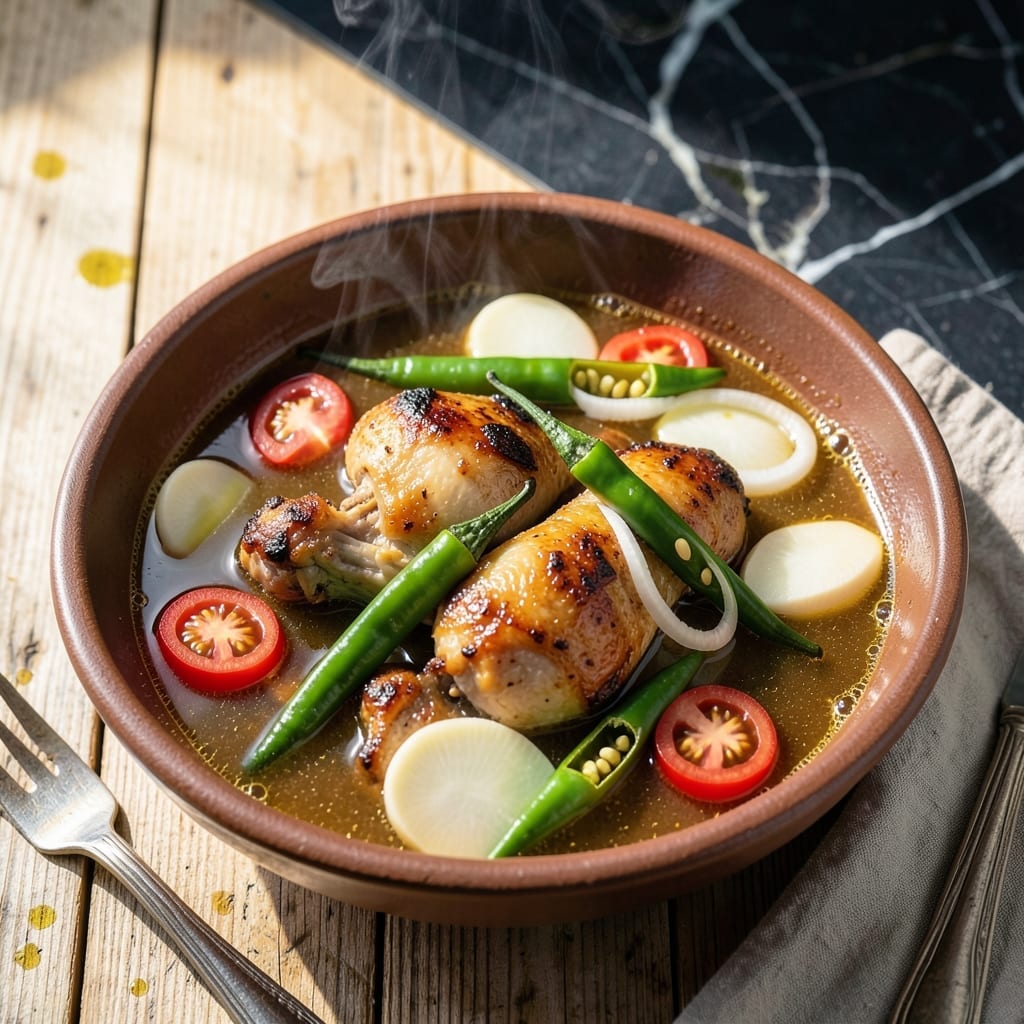
This Filipino classic delivers a perfect balance of sour and savory in every spoonful. The tamarind broth transforms into a tangy base that complements the tender chicken beautifully.
I developed this method to ensure the meat stays juicy while absorbing the bright, citrusy flavors. The key is simmering the chicken just until cooked through, letting the acidity work its magic.
You’ll end up with a comforting soup loaded with vegetables, all swimming in that signature tamarind-infused liquid. The aroma alone will have everyone gathering around the table.
Serve with steamed rice to soak up every last drop of that flavorful broth. Here’s how to make it right.
Ingredients for Chicken Sinigang
A vibrant mix of meat, vegetables, and tangy tamarind for that signature sour-savory depth.
| Ingredient | Amount | Notes |
|---|---|---|
| Chicken Thighs 🍗 | 1 ½ lb | Boneless, skinless preferred |
| Tamarind Paste 🍈 | ½ cup | Or tamarind soup base packets |
| White Onion 🧅 | 1 whole | Medium-sized, quartered |
| Tomatoes 🍅 | 2 whole | Medium, quartered |
| Daikon Radish 🥕 | 8 oz | Peeled, sliced into rounds |
| Long Green Chili Peppers 🌶️ | 2 whole | Optional, for mild heat |
| String Beans 🌿 | 4 oz | Trimmed, cut into 2-inch pieces |
| Kangkong Leaves 🥬 | 2 cups | Water spinach, or substitute bok choy |
| Fish Sauce 🐟 | 2 tbsp | For umami depth, use vegan fish sauce if needed |
| Water 💧 | 6 cups | Or chicken broth for richer flavor |
| Salt 🧂 | 1 tsp | Adjust to taste |
| Black Pepper 🌶️ | ½ tsp | Freshly ground preferred |
The tamarind paste is non-negotiable for authentic flavor. Asian markets carry it in jars or as soup base packets—look for brands like Knorr or Mama Sita’s. Chicken thighs stay juicier than breasts through the simmering process. For the daikon, pick firm, unblemished roots with crisp green tops (a sign of freshness). Trader Joe’s often stocks pre-cut daikon if you’re short on time.
No tamarind? Guava paste or green mangoes can provide the sour base in a pinch. Substitute bok choy or spinach for the kangkong if unavailable. Fish sauce can be omitted or replaced with soy sauce for a vegetarian version, though the flavor profile shifts. The green chilies add subtle heat—jalapeños work too if that’s what you have.
This soup tastes even better the next day as flavors meld. Store in an airtight container in the fridge for up to 3 days. Reheat gently to preserve the tamarind’s bright acidity. Freezing isn’t recommended—the vegetables soften too much upon thawing.
Why You’ll Love This Recipe
- One Pot Wonder: I just dump everything in—chicken thighs, tamarind paste, radish—and let it simmer. Honestly, cleanup’s a breeze.
- Tangy Comfort: That first sip of sour tamarind broth with tender daikon? Ridiculously good.
- Feeds the Crew: I make a big batch for Sunday lunch, and it’s always a hit with both kids and adults.
- Budget Stretcher: Chicken thighs stay juicy and cheap, and the radish soaks up all that flavor. Between us, it tastes like I spent hours.
Step-by-Step Instructions for Chicken Sinigang
This method ensures the chicken remains tender while the broth develops its signature tangy depth.
Step 1: Sear and Brown the Chicken Thighs
Heat a large pot over medium-high heat without oil. Add the 1.5 lb chicken thighs in a single layer, working in batches if necessary to avoid crowding. Sear for 3-4 minutes per side until the exterior turns golden brown and releases easily from the pot.
This initial browning builds a flavor foundation for the broth. Don’t skip this step—it prevents the meat from stewing in its own juices, ensuring the final texture stays firm yet succulent. Transfer the seared chicken to a plate and set aside.
Step 2: Build the Aromatic Base
In the same pot, add the 1 whole white onion (quartered), 2 whole tomatoes (quartered), and 8 oz daikon radish (sliced into rounds). Sauté over medium heat for 4-5 minutes until the onions soften and the tomatoes begin to break down.
Add the 2 whole long green chili peppers (if using) and cook for another 1 minute until fragrant. This layer of aromatics deepens the broth’s complexity before the liquid is introduced. Stir occasionally to prevent sticking, but allow some caramelization for richer flavor.
Step 3: Simmer with Tamarind and Vegetables
Return the chicken to the pot. Pour in the 6 cups water, then stir in the 0.5 cup tamarind paste, 2 tbsp fish sauce, 1 tsp salt, and 0.5 tsp black pepper. Bring to a boil, then reduce heat to maintain a gentle simmer.
Add the 4 oz string beans (cut into 2-inch pieces) and simmer for 10 minutes. The tamarind will dissolve gradually, transforming the broth into a vibrant, tangy liquid. Taste and adjust salt if needed, but remember the fish sauce already contributes significant salinity.
Step 4: Finish with Kangkong Leaves
Stir in the 2 cups kangkong leaves and cook for an additional 3-4 minutes until the leaves wilt and the daikon becomes fork-tender. The greens should retain a slight bite, not turn mushy.
At this stage, the broth should be balanced—sour from the tamarind, savory from the fish sauce, and slightly sweet from the vegetables. Remove from heat immediately to prevent overcooking the chicken, which could make it tough despite the earlier searing.
Serve hot, ensuring each bowl contains a generous portion of the tender chicken, vegetables, and the flavorful broth.
Pro Tips For Making Chicken Sinigang
- Simmer the Daikon First: I learned this the hard way—daikon takes longer to soften than chicken, so add it 5-7 minutes before the thighs to avoid mushy meat or undercooked radish.
- Bloom the Tamarind: Cook the tamarind paste with onions and tomatoes for 2-3 minutes before adding liquid—this mellows the sourness and deepens the flavor.
- Skip the Overcrowding: Resist the urge to dump all the chicken in at once; give each piece space so the broth stays clear and the meat cooks evenly.
- Use Bone-In Thighs: Sounds weird, but it works: bone-in, skin-on thighs add richness to the broth and stay juicier than boneless cuts.
Wine and Beer Pairings for This chicken sinigang
Crisp White Wines
I love pairing this dish with a Sauvignon Blanc from New Zealand—its zesty lime and grapefruit notes echo the tamarind’s brightness. A Pinot Grigio from Italy works too, offering a lighter body that won’t overpower the broth. 🍷
Light Beers
A Filipino San Miguel Pale Pilsen is my go-to—its crisp, clean finish cuts through the sourness beautifully. For craft options, try a Belgian witbier with citrus undertones to complement the tamarind.
Rosé Options
A dry Provence rosé brings strawberry and melon notes that balance the soup’s acidity. Its delicate fruitiness won’t compete with the dish’s bold flavors. I always keep a bottle of Whispering Angel on hand.
Non-Alcoholic Pairings
For a refreshing match, try calamansi juice (Filipino limeade)—its tartness mirrors the broth. Sparkling water with a lime wedge also cleanses the palate between bites. ⚡
Rich Whites
A lightly oaked Chardonnay from California adds buttery notes that contrast the sour broth. Avoid heavily oaked versions, as they can clash with the tamarind’s sharpness. I prefer Kendall-Jackson Vintner’s Reserve.
Avoid These
Steer clear of tannic reds like Cabernet Sauvignon—they’ll taste bitter against the acidity. Sweet wines like Riesling can make the dish feel overly tart. Stick to crisp, dry options for harmony.
Nutrition Facts
Frequently Asked Questions
Can I use chicken breast instead of thighs?
Yes, but thighs stay juicier. If using breasts, reduce simmering to 8-10 minutes to prevent dryness. The tamarind broth helps, but dark meat holds up better.
What if I can’t find tamarind paste?
Use guava paste or green mangoes for similar tang. For convenience, tamarind soup base packets work too. Avoid vinegar—it lacks depth.
How do I fix a broth that’s too sour?
Balance with a pinch of sugar or extra fish sauce. Add more water or chicken broth to dilute if needed. Taste as you adjust.
Can I make this ahead of time?
Flavors meld overnight. Store in an airtight container for up to 3 days. Reheat gently to preserve texture.

- Jollof Rice Sauce Recipe: West African Tomato and Spice Infusion - September 25, 2026
- Japanese Rice Soup Recipe: Umami-Rich Comfort in a Bowl - September 25, 2026
- Homemade Cream Of Rice Recipe: Silk-Smooth Breakfast in Minutes - September 25, 2026