
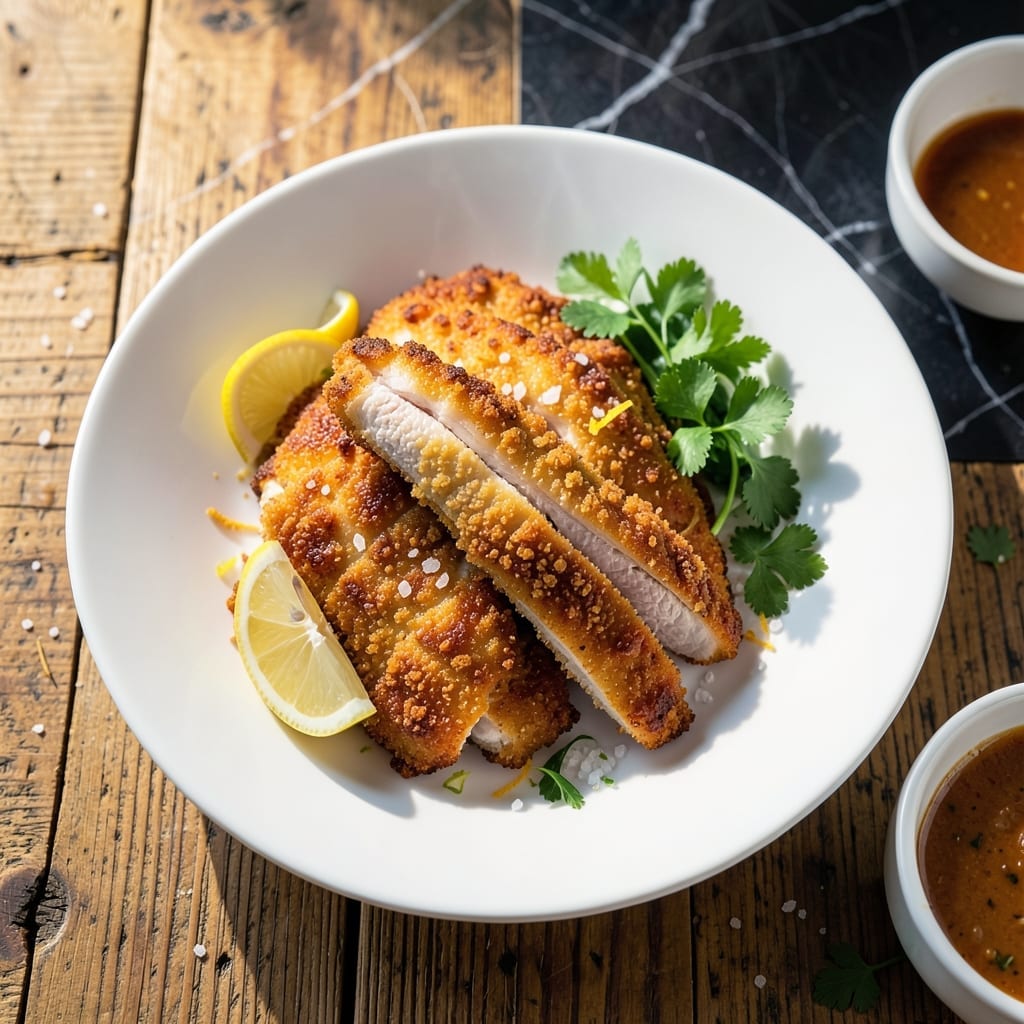
This chicken snitzel delivers the ultra-crispy texture you’ve been chasing, with a golden crust that shatters at the first bite. The secret lies in a precise breading technique and the right oil temperature to achieve that perfect crunch.
I’ve refined this method to ensure the coating stays intact while the meat remains juicy inside. Thinly pounded cutlets and a quick fry at high heat make all the difference, turning simple ingredients into a standout dish.
What you get is a plate of tender chicken encased in a crispy, golden-brown shell that’s impossible to resist. The contrast between the crunch and the succulent meat is what makes this recipe unforgettable.
Serve with lemon wedges and a side of mashed potatoes for a complete meal that feels both comforting and indulgent.
Ingredients for Chicken Snitzel
These ingredients create that ultra-crispy, golden crust with juicy meat inside every time.
| Ingredient | Amount | Notes |
|---|---|---|
| Chicken Breast Cutlets 🍗 | 1 ½ lb | Boneless, skinless, pounded to 1/4-inch thickness |
| All-Purpose Flour 🌾 | 1 cup | For initial dredging |
| Large Eggs 🥚 | 2 whole | Beaten for egg wash |
| Panko Breadcrumbs 🍞 | 2 cups | For ultra-crispy coating |
| Kosher Salt 🧂 | 1 tsp | Plus more to taste |
| Freshly Ground Black Pepper 🌶️ | ½ tsp | For seasoning cutlets |
| Garlic Powder 🧄 | 1 tsp | Adds depth to breading |
| Onion Powder 🧅 | 1 tsp | Balances breading flavors |
| Vegetable Oil 🫒 | 2 cups | For frying, neutral high-smoke point |
| Lemon Wedges 🍋 | 4 pieces | For serving |
| Fresh Parsley 🌿 | ¼ cup | Chopped, for garnish |
| Paprika 🌶️ | ½ tsp | For color in breading |
The chicken cutlets must be thin—1/4-inch thickness is non-negotiable for even cooking and maximum crunch. Panko breadcrumbs are the secret to that shatteringly crisp coating; regular breadcrumbs won’t deliver. I source mine from Whole Foods or any Asian market for the best texture. Look for air-chilled chicken breasts if you want the juiciest result (they retain moisture better than water-chilled).
No panko? Crush cornflakes or stale bread in a food processor for a similar texture. Out of garlic powder? Fresh minced garlic in the egg wash works in a pinch. The vegetable oil can be swapped for peanut or canola oil—anything with a high smoke point. If using self-rising flour, skip the salt in the breading. The paprika adds color but can be omitted without sacrifice.
Breaded cutlets are best fried and served immediately, but you can hold them warm in a 200°F oven for up to 30 minutes. Leftovers keep in the fridge for 2 days—reheat in a toaster oven to revive the crisp. Never microwave; it’ll turn the coating soggy.
Why You’ll Love This Recipe
- Ready in 20: I can bread and pan-fry these cutlets faster than ordering takeout.
- Crispy Perfection: The panko gives that golden crunch while the chicken stays juicy inside.
- Feeds a Hungry Crew: Between us, it’s my go-to for weeknight dinners or casual get-togethers.
- Budget Stretch: Chicken breast cutlets and pantry staples make this dish surprisingly affordable.
Step-by-Step Instructions for Chicken Snitzel
Master the technique for achieving that signature crispy exterior with tender, juicy meat inside.
Step 1: Season and Dredge the Cutlets
Pat the 1.5 lb chicken breast cutlets dry with paper towels. This removes excess moisture so the coating adheres properly. Season both sides evenly with the 1 tsp kosher salt, 0.5 tsp freshly ground black pepper, 1 tsp garlic powder, 1 tsp onion powder, and 0.5 tsp paprika.
Spread the 1 cup all-purpose flour on a plate. Dredge each cutlet through the flour, pressing gently to coat all surfaces. Shake off any excess—you want a thin, even layer. This first coating creates a base for the egg to cling to, ensuring the breading stays put during frying.
Step 2: Create the Egg Wash and Breading Station
In a shallow bowl, beat the 2 whole large eggs until the yolks and whites are fully combined. Place the 2 cups panko breadcrumbs on another plate. The panko’s larger, flakier texture is what gives snitzel its ultra-crispy finish.
Dip each floured cutlet into the egg wash, letting any excess drip off. Then press it firmly into the panko, turning to coat completely. I apply slight pressure to ensure the breadcrumbs stick uniformly. Set the breaded cutlets on a wire rack to rest for 5 minutes—this helps the coating set before frying.
Step 3: Fry to Golden Perfection
Heat the 2 cups vegetable oil in a large, heavy skillet over medium-high heat until it reaches 350-375°F. To test, drop in a pinch of panko—it should sizzle and rise to the surface immediately. Carefully add the cutlets, working in batches to avoid crowding the pan.
Fry for 3-4 minutes per side until the coating turns deep golden brown and the internal temperature reaches 165°F. Avoid flipping too soon; the breading should look set and crisp before turning. Use a slotted spatula to transfer the finished cutlets to a paper towel-lined plate to drain excess oil.
Step 4: Rest and Serve with Fresh Garnishes
Let the snitzel rest for 2-3 minutes before serving. This brief pause allows the juices to redistribute, keeping the meat moist. The coating should remain crisp even after resting if fried properly.
Garnish with the 0.25 cup fresh parsley, chopped, and serve immediately with the 4 pieces lemon wedges on the side. A squeeze of lemon brightens the rich, savory flavors and cuts through the crispy texture. Serve hot for the best experience.
Pro Tips For Making Chicken Snitzel
- Pound Evenly: Use a meat mallet to pound the chicken cutlets to an even 1/4-inch thickness—I learned this the hard way after ending up with half-burnt, half-raw snitzel because the thick parts cooked slower.
- Rest Before Breading: Let the floured, egged, and breaded cutlets rest for 5-10 minutes before frying; this helps the coating adhere and prevents it from sliding off in the pan.
- Skip Cold Chicken: Take the chicken out of the fridge 15-20 minutes before cooking, or it’ll seize up in the hot oil and cook unevenly, no matter how careful you are.
- Double Fry for Crisp: Fry once at 350°F until golden, then rest a minute and fry again at 375°F—sounds like overkill, but it’s the only way to get that shatteringly crisp panko crust that stays put.
Common Mistakes When Making Perfect Results
Skipping the Drying Step
Never skip patting the 1.5 lb chicken breast cutlets dry with paper towels. Excess moisture prevents the flour from adhering, leading to patchy, uneven breading that falls off during frying. I learned this the hard way—dry chicken means crispy chicken. 💡
Overcrowding the Pan
Frying too many cutlets at once lowers the oil temperature, resulting in greasy, soggy breading. Work in batches with 2 cups vegetable oil at 350-375°F. Leave space between pieces so they crisp evenly.
Rushing the Breading
Let the breaded cutlets rest for 5 minutes after coating. This allows the egg wash to set, creating a stronger bond between the chicken and the 2 cups panko breadcrumbs. Skipping this step often causes the coating to slide off.
Using Cold Chicken
Cold chicken straight from the fridge can shock the hot oil, lowering its temperature. Let your cutlets sit at room temperature for 15-20 minutes before frying. This ensures even cooking and a consistently crispy exterior.
Flipping Too Soon
Avoid flipping the cutlets before the breading is fully set—wait until it’s deep golden brown on the first side, about 3-4 minutes. Flipping too early can tear the coating, ruining that perfect crunch.
Skipping the Rest
Always rest the snitzel for 2-3 minutes after frying. This lets the juices redistribute, keeping the meat tender. Serving immediately can cause the juices to spill out, leaving the chicken dry. 🔥
Nutrition Facts
Frequently Asked Questions
Can I use regular breadcrumbs instead of panko?
You can, but panko creates the ultra-crispy texture. Regular breadcrumbs work in a pinch, though the result will be denser. For best results, pulse panko in a food processor if it’s too coarse.
Why did my breading fall off during frying?
This usually happens if the chicken wasn’t dry before dredging or the cutlets didn’t rest after breading. Pat the meat dry and let it sit for 5 minutes post-breading to help the coating adhere.
How do I know when the oil is ready?
Test with a pinch of panko—it should sizzle and float immediately. The ideal temperature is 350-375°F. If it smokes, the oil is too hot.
Can I bake it instead of frying?
Yes, bake at 400°F for 15-20 minutes, flipping halfway. The texture won’t be as crispy, but it’s a healthier option. Spray with oil before baking for extra crunch.

- Jollof Rice Sauce Recipe: West African Tomato and Spice Infusion - September 25, 2026
- Japanese Rice Soup Recipe: Umami-Rich Comfort in a Bowl - September 25, 2026
- Homemade Cream Of Rice Recipe: Silk-Smooth Breakfast in Minutes - September 25, 2026