
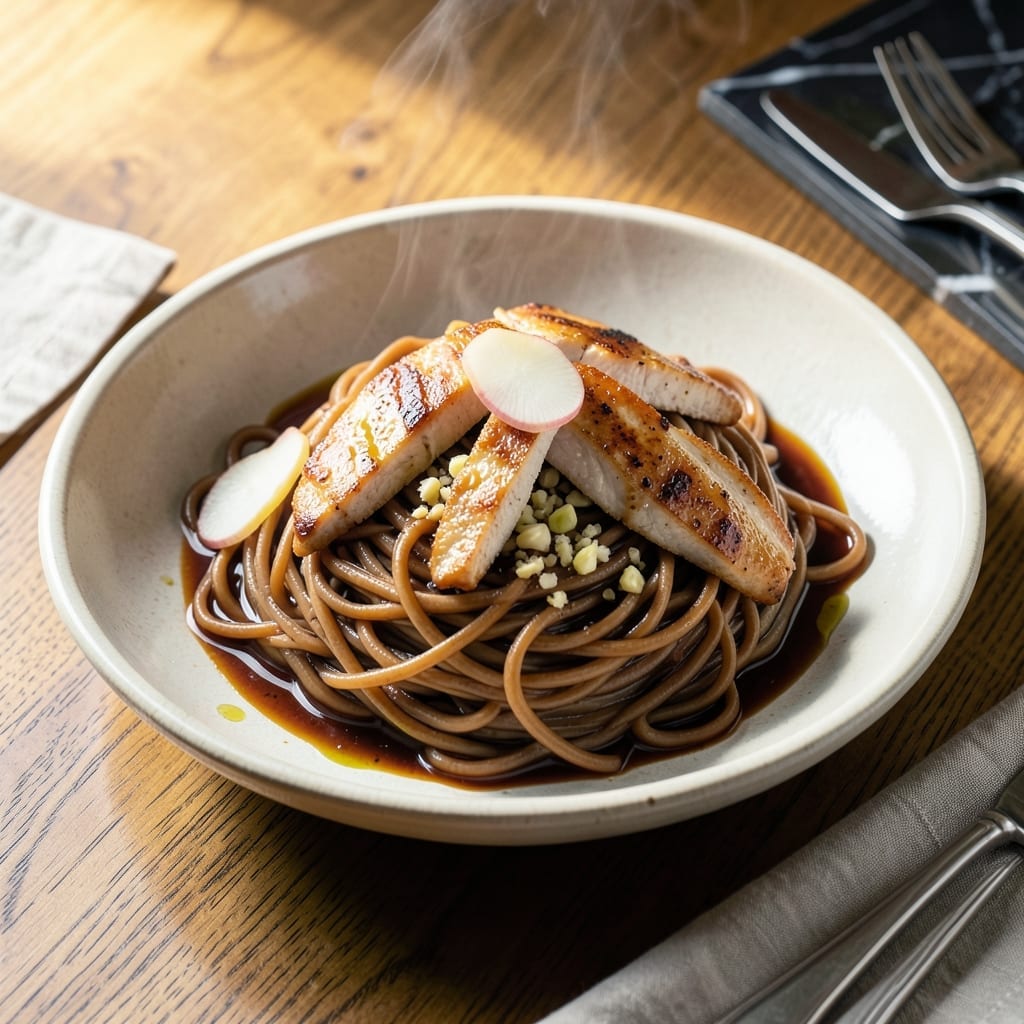
This dish brings together the earthy flavor of soba noodles with perfectly tender chicken for a satisfying meal. The nutty buckwheat base pairs beautifully with the savory protein, creating a balanced plate that’s both hearty and light.
I’ve refined this method to ensure the chicken stays juicy while the soba cooks to ideal texture. A simple soy-ginger marinade enhances the meat without overpowering the noodles’ natural taste.
The key is timing—searing the chicken first, then finishing it alongside the noodles. This keeps everything hot and fresh when served, with no dry or mushy bits.
Garnish with green onions and sesame seeds for a restaurant-worthy finish. Here’s how to make it.
Ingredients for Chicken Soba
Buckwheat noodles and juicy chicken need just a handful of flavorful additions to shine.
| Ingredient | Amount | Notes |
|---|---|---|
| Soba Noodles 🍜 | 8 oz | 100% buckwheat or blend |
| Chicken Breast 🍗 | 1 ½ lb | Boneless, skinless, cut into strips |
| Soy Sauce 🫒 | ⅓ cup | Low-sodium preferred |
| Fresh Ginger 🌿 | 1 tbsp | Grated or minced |
| Garlic Cloves 🧄 | 3 cloves | Minced finely |
| Sesame Oil 🫒 | 1 tbsp | Toasted for depth |
| Rice Vinegar 🧃 | 2 tbsp | Or substitute apple cider vinegar |
| Honey 🍯 | 1 tbsp | Or agave for vegan option |
| Green Onions 🧅 | 4 whole | Thinly sliced for garnish |
| Sesame Seeds 🌰 | 2 tbsp | Toasted for garnish |
| Neutral Oil 🫒 | 2 tbsp | For searing chicken |
| Salt 🧂 | ½ tsp | Kosher or sea salt |
| Black Pepper 🌶️ | ¼ tsp | Freshly ground |
| Chicken Broth 🥣 | ½ cup | Low-sodium for balance |
The soba noodles are the foundation—look for 100% buckwheat at Whole Foods or Asian markets for the most authentic nutty flavor. If you can only find blends, that’s fine (most brands mix in wheat). The chicken stays tender when cut into even strips—avoid overcrowding the pan when searing. For the ginger and garlic, fresh is non-negotiable for the brightest flavor.
No soy sauce? Tamari or coconut aminos work in a pinch. Swap honey for maple syrup or skip it entirely if you prefer less sweetness. Rice vinegar can be replaced with lime juice for a citrusy twist. The sesame oil adds depth, but if you’re out, a drizzle of toasted peanut oil gives a similar richness. Green onions can be subbed with chives or scallions.
Soba cooks fast—rinse under cold water immediately after boiling to stop the cooking. The chicken marinade can sit for 30 minutes or up to 4 hours. Leftovers keep for 3 days in the fridge, though the noodles are best fresh. Freezing isn’t ideal (they get mushy).
Why You’ll Love This Recipe
- One Pot Wonder: I love that everything—chicken, soba, ginger, garlic—cooks together in a single pan. Minimal cleanup, maximum flavor.
- Umami Bomb: The soy sauce, fresh ginger, and garlic create this deep, savory richness that coats every noodle.
- Meal Prep Hero: Honestly, it reheats beautifully for lunches all week. The soba holds its texture, and the chicken stays juicy.
- Budget Friendly: Chicken breast and soba stretch far, and the pantry staples keep costs low. Feeds four without breaking the bank.
Step-by-Step Instructions for Chicken Soba
Master these simple steps for perfectly tender chicken and nutty soba noodles every time.
Step 1: Cook the Soba Noodles
Bring a large pot of water to a rolling boil and add the 8 oz soba noodles. Cook according to package instructions, usually 4-6 minutes, until the noodles are just tender but still have a slight bite.
Drain the noodles and immediately rinse under cold water to stop the cooking process. This prevents them from becoming mushy and removes excess starch. Toss the noodles with the 1 tbsp sesame oil to keep them from sticking together while you prepare the rest of the dish.
Step 2: Sear the Chicken Breast
Pat the 1.5 lb chicken breast dry with paper towels and cut into thin strips. Season with the 0.5 tsp salt and 0.25 tsp black pepper. Heat the 2 tbsp neutral oil in a large skillet over medium-high heat until shimmering.
Add the chicken in a single layer, working in batches if needed to avoid crowding. Sear for 3-4 minutes per side until the chicken is cooked through and has a golden brown crust. Remove from the skillet and set aside.
Step 3: Prepare the Sauce
In the same skillet, add the 1 tbsp fresh ginger and 3 cloves garlic cloves. Sauté for 30 seconds until fragrant. Pour in the 0.33 cup soy sauce, 2 tbsp rice vinegar, 1 tbsp honey, and 0.5 cup chicken broth.
Stir well and let the sauce simmer for 2-3 minutes until it thickens slightly and coats the back of a spoon. The sauce should be glossy and aromatic, balancing sweet, salty, and tangy flavors.
Step 4: Combine and Garnish
Return the cooked chicken to the skillet with the sauce and toss to coat evenly. Add the cooked soba noodles and gently mix until everything is well combined and the noodles are fully coated with the sauce.
Transfer to serving bowls and garnish with the 4 whole green onions, thinly sliced, and the 2 tbsp sesame seeds. The green onions should add a fresh, crisp contrast, while the sesame seeds provide a nutty crunch.
Pro Tips For Making Chicken Soba
- Slice Against the Grain: Cut your chicken breast into thin strips against the grain before cooking—this makes it tender and easier to eat with the soba noodles.
- Blanch the Soba: Rinse your soba noodles under cold water after boiling to stop the cooking process and remove excess starch, so they don’t turn mushy in the sauce.
- Bloom the Aromatics: Cook the minced garlic and grated ginger in a little oil for 30 seconds before adding the chicken—this brings out their full flavor without burning them.
- Reserve Noodle Water: Save about 1/4 cup of the soba cooking water before draining; a splash of it later helps loosen the sauce to coat the noodles evenly.
Flavor Customization for This Dish
Spicy Kick
Add ½ tsp red pepper flakes to the sauce while simmering for a subtle heat that builds with each bite. For serious spice lovers, I stir in 1 tbsp sriracha or 1 tsp gochujang at the end. The heat pairs beautifully with the nutty soba. 🌶️
Citrus Twist
Boost the brightness by adding zest of 1 lime to the sauce along with the rice vinegar. Finish with a squeeze of fresh lime juice just before serving. This variation works especially well in summer when you want a lighter, more refreshing dish.
Umami Depth
Deepens the flavors by stirring 1 tbsp miso paste into the sauce as it thickens. I love white miso for its mild sweetness, but red miso adds a bolder, saltier punch. A dash of fish sauce (½ tsp) can also add complex umami notes without overpowering.
Creamy Texture
For a richer version, whisk 2 tbsp tahini into the sauce off the heat until smooth. Drizzle with extra tahini and sprinkle crushed peanuts on top for crunch. This creates a creamy, velvety sauce that clings perfectly to the noodles.
Herb Freshness
Add ¼ cup chopped cilantro or Thai basil to the finished dish for a burst of freshness. I prefer cilantro for its citrusy notes, but basil adds a sweet, anise-like aroma. Toss the herbs in just before serving to preserve their vibrant color and flavor.
Nutrition Facts
Frequently Asked Questions
Can I use chicken thighs instead of breast?
Thighs stay juicier and have more flavor. Use 1.5 lb boneless thighs and sear for 4-5 minutes per side. They pair wonderfully with soba’s earthy taste.
Why rinse soba noodles after cooking?
Rinsing stops the cooking and removes excess starch, preventing mushy noodles. It also keeps them from sticking together while you finish the dish.
How do I prevent the sauce from being too salty?
Use low-sodium soy sauce and chicken broth. Taste before adding extra salt—the ginger and garlic add depth without overpowering.
What’s the best way to reheat leftovers?
Microwave with a damp paper towel over the bowl for 30-45 seconds. Or warm in a skillet with a splash of water on medium heat for 2 minutes.

- Jollof Rice Sauce Recipe: West African Tomato and Spice Infusion - September 25, 2026
- Japanese Rice Soup Recipe: Umami-Rich Comfort in a Bowl - September 25, 2026
- Homemade Cream Of Rice Recipe: Silk-Smooth Breakfast in Minutes - September 25, 2026