
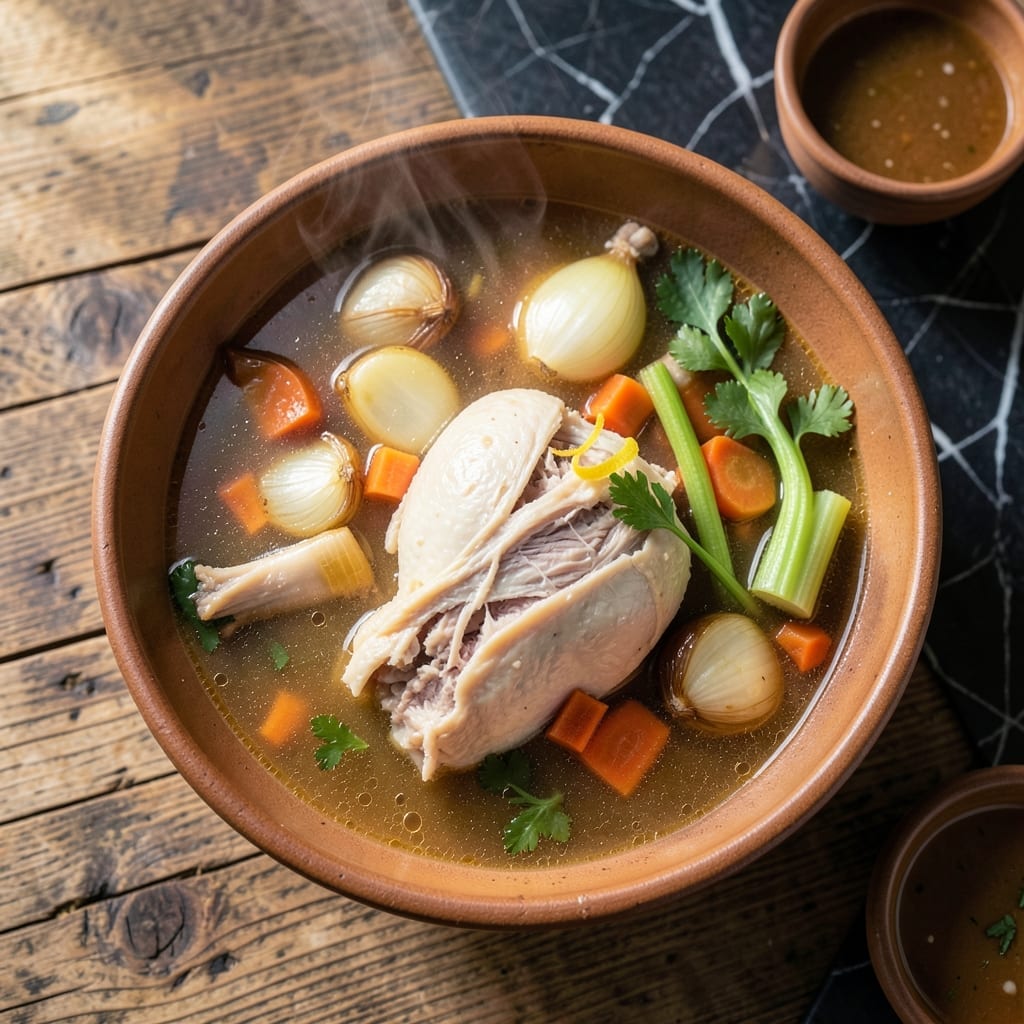
There’s a special satisfaction in transforming a leftover chicken carcass into a pot of golden, aromatic soup. This method extracts every bit of flavor, turning what might be discarded into a rich, comforting meal.
The process begins with simmering the carcass to create a deep, savory stock that forms the soup’s foundation. Vegetables and herbs are added to build layers of taste, resulting in a broth that’s both hearty and nourishing.
By the end, you’ll have a bowl of soup that’s packed with tender chicken pieces, soft vegetables, and a broth that’s savory and deeply flavorful. It’s a dish that feels both economical and indulgent.
Perfect for chilly days or when you want a meal that’s as practical as it is delicious. Here’s how to make it.
Ingredients for Chicken Soup Recipe Chicken Carcass
Turn that leftover chicken frame into rich, golden soup with simple pantry staples.
| Ingredient | Amount | Notes |
|---|---|---|
| Chicken Carcass 🍗 | 1 whole | From roasted or rotisserie chicken |
| Yellow Onions 🧅 | 2 whole | Medium, quartered with skin on |
| Carrots 🥕 | 3 whole | Large, roughly chopped |
| Celery Stalks 🌿 | 3 pieces | Including leafy tops |
| Garlic Cloves 🧄 | 6 cloves | Unpeeled, smashed |
| Fresh Parsley 🌿 | 1 cup | Stems and leaves, tied with kitchen twine |
| Fresh Thyme Sprigs 🌿 | 6 pieces | Whole sprigs for infusion |
| Bay Leaves 🍃 | 2 pieces | Dried or fresh |
| Black Peppercorns 🌶️ | 1 tbsp | Whole, lightly crushed |
| Sea Salt 🧂 | 2 tsp | Adjust to taste at the end |
| Cold Water 💧 | 12 cups | Or enough to cover all ingredients |
| Egg Noodles 🍜 | 8 oz | Uncooked, added near the end |
| Fresh Dill 🌿 | ¼ cup | Chopped, for garnish |
| Lemon Wedges 🍋 | 4 pieces | For serving |
The carcass is everything here—roasted or rotisserie chicken bones have the most flavor. Don’t strip them completely clean; some meat clinging to the bones adds depth. For vegetables, organic if possible (the skins stay on for stock, so fewer pesticides matter). I grab my bones from Whole Foods rotisserie chickens when I’m short on time, but any grocery store works.
No carcass? Raw chicken bones (necks, backs, wings) work—just roast them first for color. Swap parsley stems for celery leaves if that’s what you’ve got. Dried thyme at one-third the amount works in a pinch. The noodles can be any shape—even broken spaghetti if you’re out of egg noodles. Skip the salt at first; reduce the broth and adjust at the end.
Stock keeps 4-5 days in the fridge, 6 months frozen. Strain and cool quickly (ice bath) before storing. The soup itself is best eaten within 3 days—noodles soak up broth. Leftovers reheat beautifully, though you may need to add a splash of water.
Why You’ll Love This Recipe
- Set It and Forget: I just toss the carcass, onions, carrots, and celery into the pot and let it simmer—no babysitting required.
- Deep, Rich Flavor: The carcass and garlic create a broth so rich and savory, it tastes like it cooked all day.
- Meal Prep Hero: I make a big batch and freeze portions for quick lunches or cozy dinners all week.
- Pennywise Comfort: Honestly, using the leftover carcass turns scraps into a hearty, budget-friendly meal that feels like a hug in a bowl.
Step-by-Step Instructions for Chicken Soup from Chicken Carcass
Transform leftover bones into rich, comforting soup with this straightforward approach.
Step 1: Build the Flavorful Stock Base
Place the 1 whole Chicken Carcass in a large stockpot. Add the 2 whole Yellow Onions (quartered with skin on), 3 whole Carrots (roughly chopped), and 3 pieces Celery Stalks (including leafy tops). These vegetables form the aromatic foundation that will infuse your stock with depth.
Toss in the 6 cloves Garlic Cloves (unpeeled and smashed), 1 cup Fresh Parsley (tied with kitchen twine), 6 pieces Fresh Thyme Sprigs, and 2 pieces Bay Leaves. The herb bundle ensures easy removal later while maximizing flavor extraction. Pour in the 12 cups Cold Water, covering all ingredients completely.
Step 2: Simmer for Maximum Extraction
Bring the mixture to a boil over medium-high heat, then immediately reduce to a gentle simmer. Skim off any foam or impurities that rise to the surface during the first 10 minutes—this keeps your stock clear and clean.
Add the 1 tbsp Black Peppercorns (lightly crushed) and 2 tsp Sea Salt. Partially cover the pot and maintain a low, steady simmer for 3 to 4 hours. The longer simmer time extracts every bit of gelatin and flavor from the bones, creating a rich, golden liquid.
Step 3: Strain and Prepare the Soup Base
After simmering, carefully strain the stock through a fine-mesh sieve into a clean pot, discarding all solids. Press gently on the vegetables with a spoon to extract every last bit of liquid, but don’t force pulp through—this keeps your soup smooth and refined.
Taste the strained stock and adjust seasoning if needed, though remember the egg noodles will absorb some salt later. Return the stock to a clean pot and bring it back to a gentle simmer over medium heat.
Step 4: Cook the Egg Noodles Directly in the Stock
Add the 8 oz Egg Noodles to the simmering stock and cook according to package directions, typically 8 to 10 minutes, until tender. Cooking the noodles directly in the stock infuses them with deep chicken flavor that water simply can’t provide.
Stir occasionally to prevent sticking, and watch that the simmer doesn’t become too vigorous, which could break the noodles. The noodles are done when they’re al dente with a slight bite, but fully cooked through.
Step 5: Finish and Serve with Fresh Garnishes
Ladle the hot soup into bowls, ensuring each serving gets a generous portion of noodles. Garnish each bowl with 0.25 cup Fresh Dill (chopped) and serve with 4 pieces Lemon Wedges on the side for a bright, fresh finish.
The dill adds a delicate herbal note that complements the rich chicken stock perfectly, while the lemon wedges allow each person to add a touch of acidity to taste. This final touch elevates the soup from simple to spectacular.
Pro Tips For Making Chicken Soup Recipe Chicken Carcass
- Roast the Carcass: I learned this the hard way—tossing the carcass in the oven at 400°F for 20 minutes before simmering deepens the flavor way more than just dumping it in the pot raw.
- Skim the Foam: As the stock simmers, a layer of foam rises to the top—skim it off with a spoon every 10 minutes or so, or your soup will taste murky instead of clean.
- Char the Veggies: Sounds weird, but it works: throw your onions, carrots, and celery in the same pan as the carcass to char slightly before adding water—it adds a rich, caramelized depth.
- Skip the Salt Early: Resist the urge to season right away—wait until the last 30 minutes of simmering, or the stock will reduce and turn unpleasantly salty.
Serving Suggestions for This chicken soup recipe chicken carcass
Bread Pairings
I love serving this soup with crusty sourdough or a warm baguette. The chewy texture soaks up the rich broth beautifully. Toast slices with garlic butter for extra flavor. It’s the perfect way to stretch the meal further. 🥖
Fresh Salad Sides
A simple green salad with a lemon vinaigrette cuts through the richness. Toss 4 cups mixed greens with 2 tbsp olive oil and 1 tbsp lemon juice. The acidity brightens each spoonful of soup.
Cheese & Crackers
Add a small cheese board with sharp cheddar and water crackers. The salty cheese contrasts nicely with the savory broth. I often include grapes for a touch of sweetness.
Herbed Butter Topping
Mix ¼ cup softened butter with 1 tbsp chopped dill and a pinch of salt. Swirl a spoonful into each bowl for a luxurious finish. This simple touch makes the soup feel extra special.
Extra Garnishes
Set out small bowls of grated Parmesan, crushed red pepper, and extra lemon wedges. Guests can customize their bowls. I always keep freshly ground black pepper on hand too. ✨
Nutrition Facts
Frequently Asked Questions
How long should I simmer the bones?
Simmer for 3 to 4 hours on low heat for maximum flavor extraction. This slow process breaks down collagen, creating a rich, gelatinous broth that’s packed with depth and body.
Can I use raw chicken bones instead?
Yes, but roast them first at 400°F for 20 minutes to develop color and flavor. Raw bones work, but roasting enhances the stock’s richness and complexity significantly.
What if my stock turns cloudy?
Cloudiness often comes from boiling too hard. Maintain a gentle simmer and skim foam regularly. For clearer stock, avoid pressing solids when straining and start with cold water.
Can I freeze the stock?
Cool it quickly, then freeze in airtight containers for up to 6 months. Leave 1-inch headspace for expansion to prevent cracking.

- Jollof Rice Sauce Recipe: West African Tomato and Spice Infusion - September 25, 2026
- Japanese Rice Soup Recipe: Umami-Rich Comfort in a Bowl - September 25, 2026
- Homemade Cream Of Rice Recipe: Silk-Smooth Breakfast in Minutes - September 25, 2026