
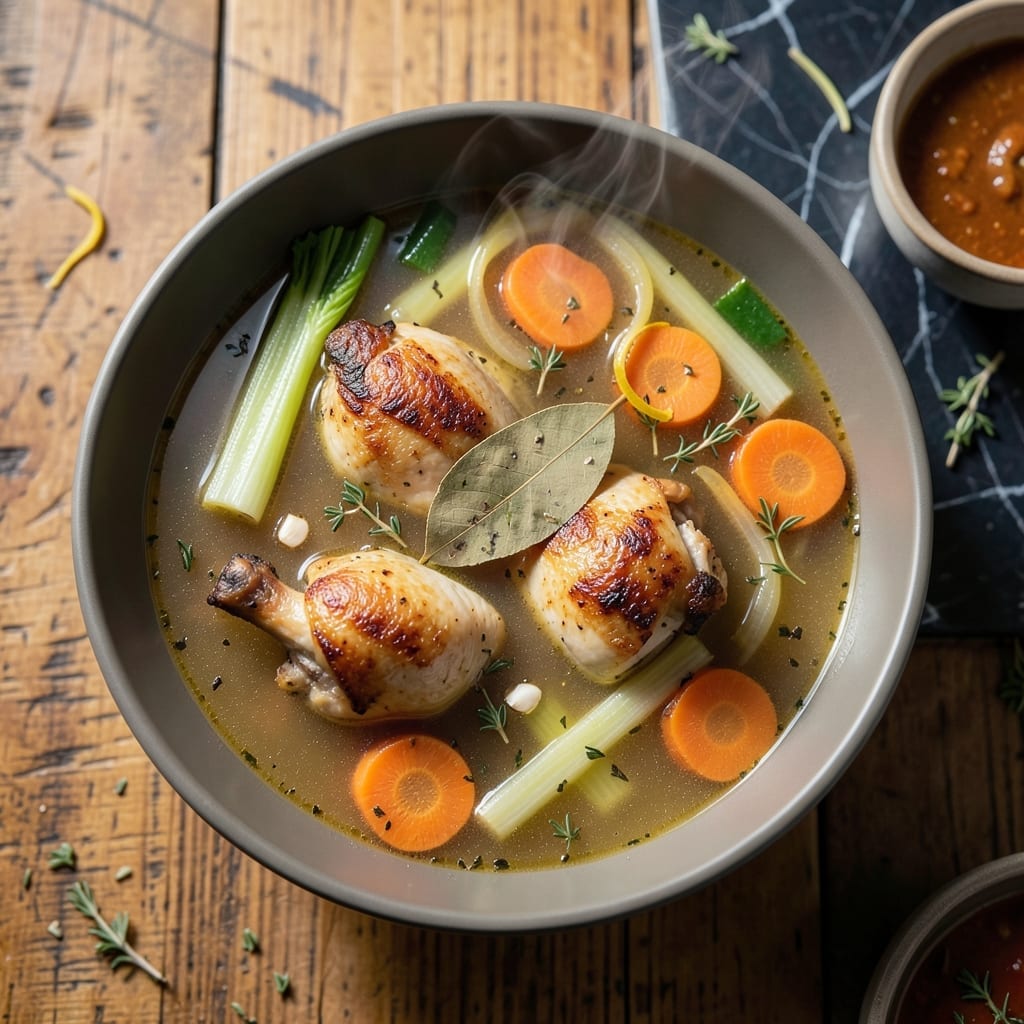
There’s something deeply comforting about a bowl of chicken soup made from scratch, with its rich, homemade broth and perfectly tender shreds of meat.
This recipe focuses on building layers of flavor through a slow-simmered broth made with chicken, vegetables, and aromatic herbs. The result is a soup that’s both nourishing and deeply satisfying, with every spoonful delivering warmth and flavor.
The chicken becomes fall-apart tender as it cooks, infusing the broth with its essence. Vegetables like carrots, celery, and onions add sweetness and depth, while fresh herbs bring a bright finish.
Simple, wholesome, and timeless, this soup is a staple for any kitchen. Here’s how to make it right.
Ingredients for Recipe to Make Chicken Soup
Wholesome ingredients for a rich, slow-simmered homemade chicken soup with tender meat.
| Ingredient | Amount | Notes |
|---|---|---|
| Chicken Thighs 🍗 | 1 ½ lb | Boneless, skinless preferred |
| Chicken Drumsticks 🍗 | 1 ½ lb | Bone-in for richer broth |
| Yellow Onions 🧅 | 2 whole | Medium-sized, quartered |
| Carrots 🥕 | 3 whole | Peeled, cut into chunks |
| Celery Stalks 🌿 | 3 whole | Cut into large pieces |
| Garlic Cloves 🧄 | 6 cloves | Smashed for broth |
| Fresh Parsley 🌿 | ½ cup | Chopped, stems included |
| Fresh Thyme Sprigs 🌿 | 4 whole | Fresh, not dried |
| Bay Leaves 🍃 | 2 whole | Dried, whole leaves |
| Whole Black Peppercorns 🌶️ | 1 tsp | Lightly crushed |
| Kosher Salt 🧂 | 1 ½ tsp | Diamond Crystal preferred |
| Cold Water 💧 | 12 cups | For slow simmering |
| Fresh Dill 🌿 | ¼ cup | Chopped, for garnish |
| Lemon Juice 🍋 | 1 tbsp | Freshly squeezed |
The chicken is the foundation. Bone-in, skin-on pieces (thighs and drumsticks) yield the richest broth, but boneless, skinless works if you prefer. Source from Whole Foods or a trusted butcher for high-quality, pastured birds. For vegetables, organic produce ensures a clean, sweet flavor in the broth. Fresh herbs—parsley, thyme—should be vibrant and fragrant.
Out of chicken? Rotisserie chicken carcass plus a few extra pieces creates excellent broth. No fresh herbs? Dried at one-third the amount. For added depth, a splash of white wine deglazes the pot beautifully. If using store-bought broth, low-sodium lets you control the seasoning. Carrots and celery can be swapped for parsnips or leeks if desired.
Broth keeps in the fridge for 4-5 days or can be frozen for 6-12 months. Skim off any fat after chilling for a cleaner finish. Reheat gently to preserve the tender texture of the chicken. Always store in airtight containers to maintain freshness.
Why You’ll Love This Recipe
- One Pot Wonder: I just dump the thighs, drumsticks, and veggies in, then let the pot do the work—no fuss, no extra dishes.
- Rich Every Time: The dark meat from the thighs and drumsticks makes the broth so deep and satisfying, it never tastes flat.
- Weeknight Hero: Between us, this is my Tuesday dinner savior—ready before the kids start asking “what’s for dinner?” again.
- Budget Stretcher: A whole chicken’s worth of thighs and drumsticks for pennies per bowl, and the leftovers taste even better the next day.
Step-by-Step Instructions for Chicken Soup
This professional method ensures a rich, homemade broth with fall-off-the-bone tender chicken every time.
Step 1: Prepare the Chicken and Aromatics
Pat the 1.5 lb Chicken Thighs and 1.5 lb Chicken Drumsticks dry with paper towels to remove excess moisture. This ensures a cleaner broth and prevents impurities from clouding your soup.
Quarter the 2 whole Yellow Onions, peel and cut the 3 whole Carrots into chunks, and slice the 3 whole Celery Stalks into large pieces. Smash the 6 cloves Garlic Cloves lightly to release their oils. Keep the vegetable pieces large to prevent them from dissolving into the broth during simmering.
Step 2: Build the Broth Base
In a large stockpot, combine the chicken pieces, prepared vegetables, 4 whole Fresh Thyme Sprigs, 2 whole Bay Leaves, 1 tsp Whole Black Peppercorns, and 1.5 tsp Kosher Salt. Pour in the 12 cups Cold Water, ensuring all ingredients are fully submerged.
Bring the mixture to a boil over high heat, then immediately reduce to a gentle simmer. Skim off any foam or impurities that rise to the surface during the first 10 minutes—this keeps your broth clear and clean.
Step 3: Simmer for Maximum Flavor Extraction
Partially cover the pot and maintain a low simmer for 1.5 to 2 hours. The broth should barely bubble, with small, lazy bubbles breaking the surface occasionally. This slow cooking process coaxes out the collagen from the chicken bones, creating a rich, velvety mouthfeel.
You’ll know the broth is ready when the chicken meat pulls away from the bone easily and the drumsticks are completely tender. The carrots and celery should be soft but still hold their shape, infusing the liquid with their sweet, earthy notes.
Step 4: Strain and Shred the Chicken
Using a slotted spoon, remove the chicken from the pot and transfer it to a cutting board. Strain the broth through a fine-mesh sieve into a clean pot or large bowl, pressing gently on the vegetables to extract all their flavor. Discard the solids—they’ve given all they have to the soup.
Once the chicken is cool enough to handle, shred the meat into bite-sized pieces using two forks. Discard the bones and any skin. The chicken should be so tender that it falls apart with minimal effort, ensuring every spoonful is packed with flavor.
Step 5: Finish and Garnish
Return the shredded chicken to the strained broth and warm through over medium-low heat for 5 minutes. Stir in the 0.5 cup Fresh Parsley and adjust seasoning with additional Kosher Salt if needed.
Ladle the soup into bowls and garnish each serving with a sprinkle of 0.25 cup Fresh Dill and a drizzle of 1 tbsp Lemon Juice. The dill adds a bright, herbal note, while the lemon juice lifts all the flavors, balancing the richness of the broth.
Pro Tips For Making Recipe To Make Chicken Soup
- Skim the Foam: In the first 10-15 minutes of simmering, a foamy layer rises to the top—scoop it off with a ladle for a cleaner, more refined broth. I used to skip this and my soup always had that slightly cloudy look.
- Brown the Chicken: Sear the thighs and drumsticks in the pot before adding liquid. About 3-4 minutes per side on medium-high heat gives you a deeper flavor base than just boiling raw chicken.
- Cut Evenly: Chop your onions, carrots, and celery into uniform, bite-sized pieces—about 1/2-inch thick—so everything cooks at the same rate and you don’t end up with mushy celery and crunchy carrots.
- Use Cold Water: Start with cold water when adding your chicken and veggies. Sounds weird, but it works: it helps extract impurities gradually and keeps the meat from seizing up too fast, which means a clearer, more flavorful stock.
Troubleshooting This Recipe
Broth Too Cloudy
Cloudy broth usually means you skipped skimming. After bringing to a boil, skim off the foam and impurities during the first 10 minutes of simmering. A fine-mesh sieve helps too—I use a chinois for crystal-clear results. 💡
Chicken Tough or Dry
Tough chicken often results from a rolling boil. Maintain a gentle simmer—barely bubbling—so the meat stays tender. If it’s already dry, try adding 1 cup extra water and simmering for another 30 minutes to rehydrate.
Bland Broth Flavor
Under-seasoned broth is easily fixed. Start by adding ½ tsp Kosher Salt at a time, tasting as you go. A splash of 1 tbsp Lemon Juice or a handful of fresh herbs can brighten the flavor without overpowering it.
Vegetables Mushy
If your carrots and celery turn to mush, they were likely cut too small. Keep chunks large (at least 2-inch pieces) so they hold up during the long simmer. Add them later if you prefer firmer texture.
Fat Layer on Top
Chilled broth naturally separates with fat on top. Skim it off with a spoon, or use a fat separator. For a richer soup, leave 1-2 tbsp for flavor. I always chill mine overnight for the easiest fat removal. ❄️
Weak Aroma
Aromatics not coming through? Smash the 6 cloves Garlic Cloves more aggressively next time to release their oils. Fresh thyme and parsley stems add depth—don’t skip them!
Nutrition Facts
Frequently Asked Questions
Can I use chicken breasts instead of thighs?
Yes, but they’ll dry out faster. Stick to bone-in thighs and drumsticks for richer broth and juicier meat. If using breasts, reduce simmering to 45 minutes to prevent toughness.
How do I make the broth clearer?
Skim foam during the first 10 minutes of simmering. Strain through a fine-mesh sieve or cheesecloth. For crystal-clear results, chill overnight and skim off solidified fat.
Can I add noodles or rice directly?
Add cooked noodles or rice to bowls before ladling hot broth to prevent mushiness. For 1 cup uncooked pasta, cook separately and store in broth for up to 3 days.
How long can I store leftover soup?
Refrigerate in airtight containers for up to 4-5 days. Freeze for 6 months—leave 1-inch headspace for expansion. Reheat gently to preserve texture.

- Jollof Rice Sauce Recipe: West African Tomato and Spice Infusion - September 25, 2026
- Japanese Rice Soup Recipe: Umami-Rich Comfort in a Bowl - September 25, 2026
- Homemade Cream Of Rice Recipe: Silk-Smooth Breakfast in Minutes - September 25, 2026