
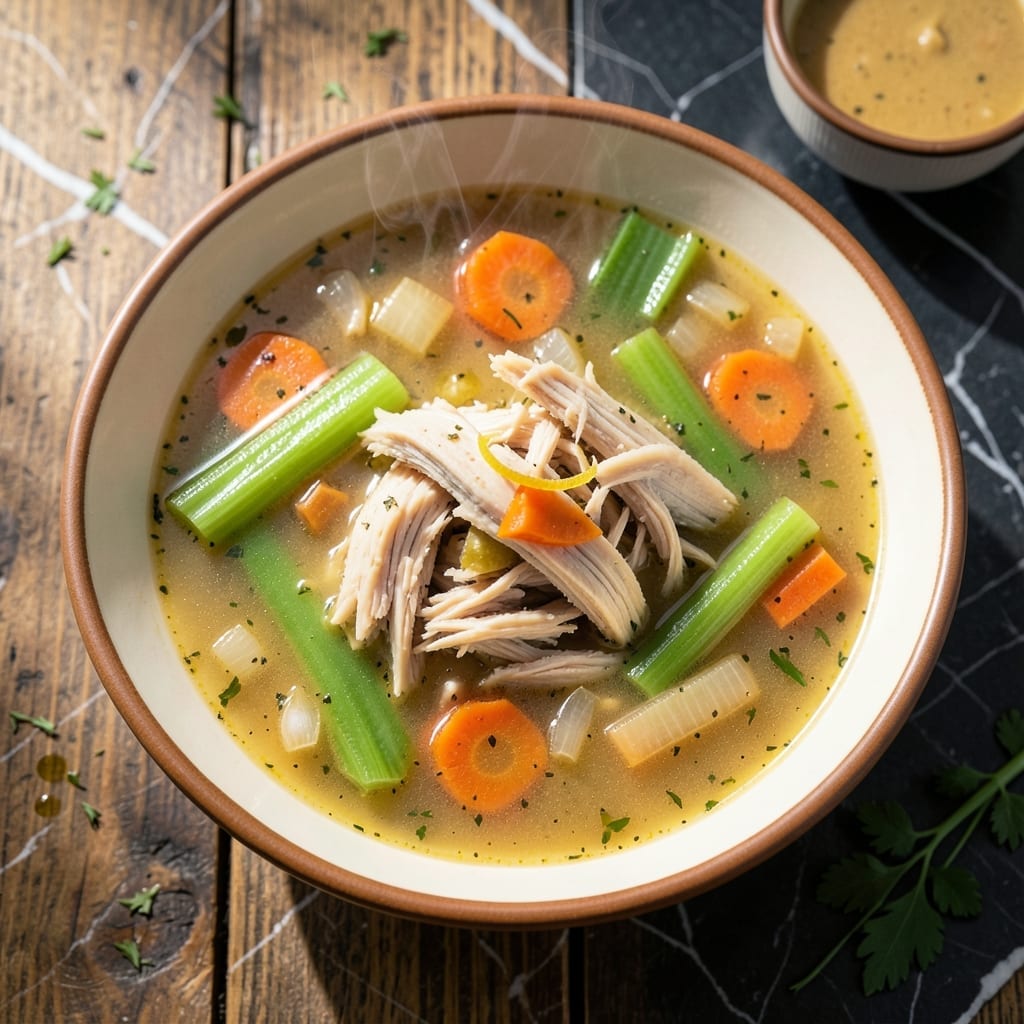
Transform yesterday’s roast chicken into today’s nourishing meal with this zero-waste approach to classic comfort. Every spoonful delivers the warmth and satisfaction of homemade soup without the extra effort.
The beauty lies in its simplicity: a rich broth, tender leftover chicken, and fresh vegetables come together in 30 minutes. This method extracts maximum flavor from ingredients you already have on hand.
You’ll achieve a perfectly balanced soup—savory, aromatic, and deeply satisfying. The chicken becomes even more tender as it simmers, absorbing the broth’s rich flavors.
Ideal for chilly evenings or when you need a wholesome meal with minimal prep. This recipe proves that the best dishes often come from using what you have.
Ingredients for Chicken Soup Recipe with Leftover Chicken
Pantry staples meet leftover magic for this comforting zero-waste soup.
| Ingredient | Amount | Notes |
|---|---|---|
| Leftover Cooked Chicken 🍗 | 2 cups | Shredded or diced, skin removed |
| Chicken Broth 🥣 | 8 cups | Low-sodium preferred for control |
| Yellow Onion 🧅 | 1 whole | Medium, finely diced |
| Carrots 🥕 | 2 whole | Peeled, sliced into rounds |
| Celery Stalks 🌿 | 2 whole | Trimmed, diced small |
| Garlic Cloves 🧄 | 3 cloves | Minced for aromatic base |
| Bay Leaves 🍃 | 2 pieces | Dried, whole for infusion |
| Fresh Thyme Sprigs 🌿 | 3 pieces | Or 1 tsp dried thyme |
| Fresh Parsley 🌿 | ¼ cup | Chopped, for finishing garnish |
| Olive Oil 🫒 | 1 tbsp | Extra-virgin for sautéing |
| Kosher Salt 🧂 | 1 tsp | Adjust to taste after simmering |
| Black Pepper 🌶️ | ½ tsp | Freshly ground preferred |
| Egg Noodles 🍜 | 2 cups | Uncooked, or substitute rice |
The broth is the backbone here. Swanson or Better Than Bouillon make solid store-bought options, but homemade stock (if you’ve got it) takes this to another level. Look for low-sodium versions so you can control the seasoning. The chicken should be from yesterday’s roast—any cut works, but dark meat stays juicier. Most grocery stores have pre-shredded rotisserie chicken if you want to skip the cooking step entirely.
No fresh thyme? Dried thyme at one-third the amount works fine. Swap the egg noodles for rice, orzo, or ditalini—whatever’s in your cabinet. Out of carrots? Parsnips or sweet potatoes add a nice twist. The celery can be skipped in a pinch, but it adds that classic mirepoix depth. If your leftovers are seasoned heavily, taste before adding extra salt.
This tastes even better the next day. Keeps in the fridge for 4-5 days or freezes for 3 months. I like to store it in portions—perfect for quick lunches or when you need a cozy pick-me-up (worth the extra minute).
Why You’ll Love This Recipe
- No Fuss Meal: I just dump in the leftover chicken and veggies—no raw meat prep, no waiting.
- Rich Homemade Taste: The broth soaks up the chicken’s flavor, and the carrots and celery add sweetness that feels fancy.
- Weeknight Lifesaver: Between us, it’s my Tuesday night secret for a warm meal without the effort.
- Zero Waste Win: Honestly, it’s the best way to use up that last bit of roast chicken before it goes bad.
Step-by-Step Instructions for Chicken Soup With Leftover Chicken
This method transforms scraps into something deeply satisfying with minimal effort.
Step 1: Sauté the Aromatic Base
Heat the 1 tbsp Olive Oil in a large pot over medium heat until it shimmers. Add the 1 whole Yellow Onion, 2 whole Carrots, and 2 whole Celery Stalks, cooking for 5-6 minutes until softened and just beginning to color.
The vegetables should release a sweet, earthy aroma that signals they’re ready. I stir occasionally but let them sit long enough to develop a light golden edge—this builds flavor depth. Add the 3 cloves Garlic Cloves and cook for 30 seconds until fragrant, stirring constantly to prevent burning.
Step 2: Build the Broth and Simmer
Pour in the 8 cups Chicken Broth and scrape up any browned bits from the bottom of the pot. Add the 2 pieces Bay Leaves and 3 pieces Fresh Thyme Sprigs, then bring to a boil over high heat.
Once boiling, reduce to a gentle simmer and let it cook for 15 minutes to meld the flavors. The broth should take on a rich, golden hue. I taste at this point and adjust with the 1 tsp Kosher Salt and 0.5 tsp Black Pepper if needed, though I usually wait until the end for final seasoning.
Step 3: Add Noodles and Chicken
Stir in the 2 cups Egg Noodles and cook for 8-10 minutes until al dente. The noodles should be tender but still have a slight bite. If using rice instead, adjust the cooking time accordingly—rice typically needs 15-18 minutes to soften fully.
Once the noodles are nearly done, add the 2 cups Leftover Cooked Chicken and cook for an additional 2 minutes just to heat through. The chicken should be warm but not overcooked, as it’s already fully prepared. This ensures it stays juicy and doesn’t turn dry or stringy.
Step 4: Finish and Serve
Remove the pot from heat and discard the bay leaves and thyme sprigs. Stir in the 0.25 cup Fresh Parsley and let it sit for 1 minute to wilt slightly and infuse its bright, herbal note.
Taste and adjust seasoning with more kosher salt or black pepper if needed. Ladle the soup into bowls while hot, ensuring each serving has a generous mix of noodles, chicken, and vegetables. The parsley adds a pop of color and freshness that ties everything together beautifully.
Pro Tips For Making Chicken Soup Recipe With Leftover Chicken
- Shred Chicken Last: Add the leftover chicken only in the final 10 minutes to prevent it from turning rubbery—I learned this the hard way after overcooking it into stringy oblivion.
- Sweat the Veggies: Cook the onion, carrots, and celery in a little oil for 5-7 minutes until soft before adding broth, or your soup will taste raw and one-dimensional.
- Skip the Boil: Keep the soup at a gentle simmer, never a rolling boil, or your broth will turn cloudy and the flavors will dull.
- Use Stale Bread: Toss in a handful of day-old bread cubes at the end for a quick, rustic thickener—sounds weird, but it works and saves you from making a separate roux.
Essential Equipment for This Dish
Quality Stock Pot
A heavy-bottomed 5-6 quart pot is essential for even heat distribution and preventing hot spots. I use my All-Clad stainless steel pot—it’s durable, heats evenly, and has a tight-fitting lid that locks in flavor. 🔥
Sharp Chef’s Knife
A good 8-inch chef’s knife makes quick work of dicing vegetables. I prefer Wüsthof or Victorinox brands for their comfort and precision. A sharp knife is safer and makes prep work much more enjoyable.
Wooden Spoon
Use a long wooden spoon for stirring—it won’t scratch your pot and can reach the bottom easily. I keep one dedicated to soups and sauces. It’s perfect for scraping up those flavorful browned bits.
Ladle for Serving
A 1-cup ladle ensures perfect portions every time. I like the OXO Good Grips version with its comfortable handle. It makes serving hot soup safe and mess-free.
Cutting Board
A large plastic or bamboo cutting board gives you ample space for chopping all your vegetables at once. I use a 12×18-inch board to keep my workspace organized and efficient.
Measuring Cups
Accurate measurements matter, especially for broth and noodles. I use Pyrex glass measuring cups because they’re heatproof and easy to read. A 4-cup measure is perfect for this recipe.
Nutrition Facts
Frequently Asked Questions
How long does it take to make?
From start to finish, this recipe takes about 30 minutes. The longest part is simmering the broth with vegetables for 15 minutes.
Can I use rotisserie chicken?
Rotisserie chicken works perfectly. Remove the skin and shred or dice 2 cups of meat. It’s a great time-saver.
What if my broth is too salty?
If using store-bought broth, opt for low-sodium versions. If it’s still too salty, add a peeled potato to absorb excess salt while simmering.
Can I add other vegetables?
Yes! Try adding 1 cup of diced potatoes, green beans, or corn. Just adjust cooking time if using harder veggies.

- Jollof Rice Sauce Recipe: West African Tomato and Spice Infusion - September 25, 2026
- Japanese Rice Soup Recipe: Umami-Rich Comfort in a Bowl - September 25, 2026
- Homemade Cream Of Rice Recipe: Silk-Smooth Breakfast in Minutes - September 25, 2026