
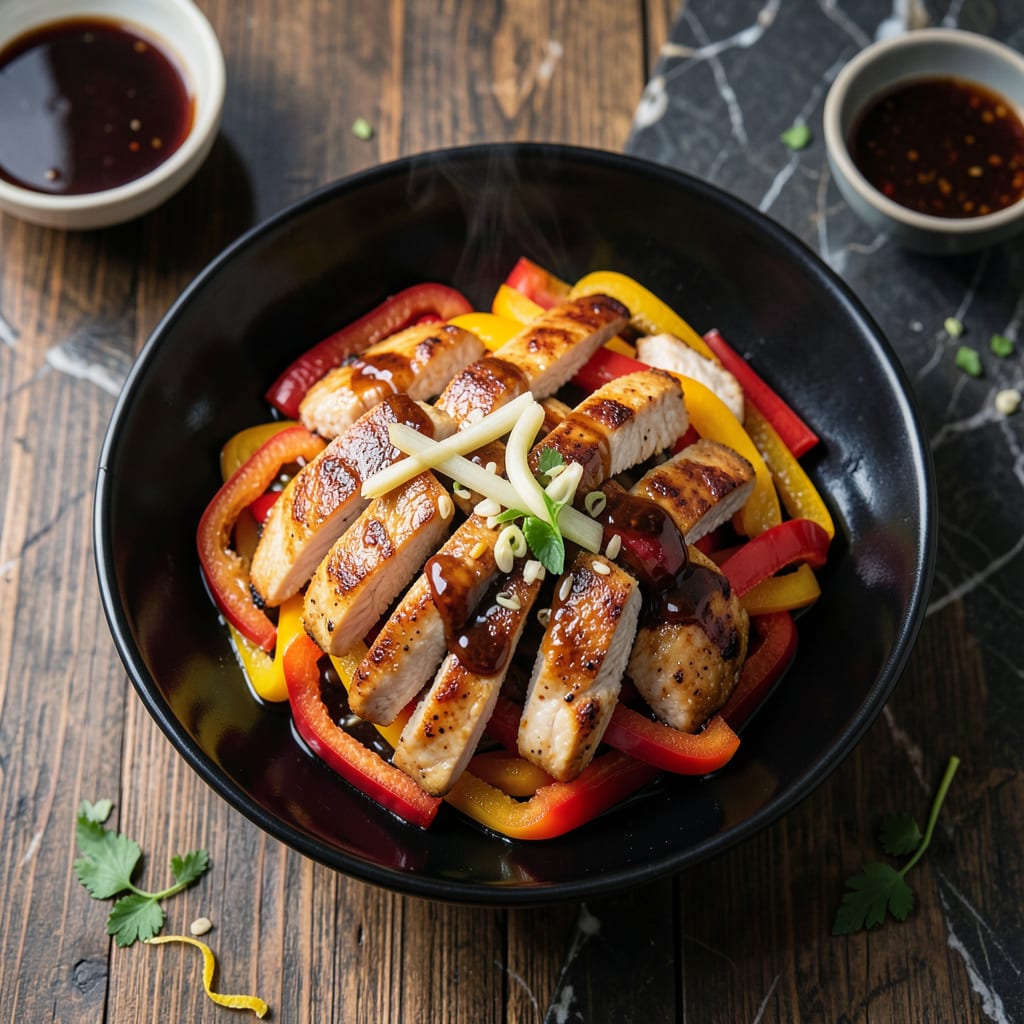
This stir fry brings together tender chicken with a glossy, sweet-savory glaze that coats every bite. The simple sauce builds depth from soy sauce and brown sugar, creating a balance that’s both rich and approachable.
Ready in under 30 minutes, this dish transforms basic ingredients into a restaurant-worthy meal. The high-heat cooking ensures the chicken stays juicy while the vegetables retain their crisp texture.
Ingredients for Chicken Stir Fry Recipe with Soy Sauce and Brown Sugar
Tender chicken meets glossy sweet-savory glaze with crisp vegetables for restaurant-worthy results at home.
| Ingredient | Amount | Notes |
|---|---|---|
| Boneless Skinless Chicken Breast 🍗 | 1 ½ lb | Thinly sliced for even cooking |
| Soy Sauce 🫒 | ½ cup | Low-sodium preferred for balance |
| Light Brown Sugar 🍚 | ⅓ cup | Packed for accurate measurement |
| Garlic Cloves 🧄 | 4 cloves | Minced for maximum flavor |
| Fresh Ginger Root 🌿 | 1 tbsp | Grated or finely minced |
| Bell Peppers 🌶️ | 2 whole | Assorted colors, thinly sliced |
| Broccoli Crowns 🥦 | 2 cups | Cut into small florets |
| Carrots 🥕 | 2 whole | Julienned or thinly sliced |
| Green Onions 🧅 | 4 whole | Sliced on diagonal for garnish |
| Vegetable Oil 🫒 | 3 tbsp | High smoke point for stir-frying |
| Sesame Oil 🫒 | 1 tsp | Toasted variety for finishing |
| Cornstarch 🌾 | 1 tbsp | Mixed with water for slurry |
| Rice Vinegar 🍯 | 2 tbsp | Balances sweetness in sauce |
| Red Pepper Flakes 🌶️ | ½ tsp | Optional for heat adjustment |
[recipeingredientscaler]
The chicken quality matters most here. Opt for air-chilled breasts from Whole Foods or Costco for superior texture and flavor. Fresh ginger and garlic are non-negotiable—avoid pre-minced jars which lack potency. For the vegetables, organic bell peppers offer better color retention during high-heat cooking. Always slice against the grain for maximum tenderness in the chicken.
Low-sodium soy sauce allows better control over seasoning, but regular works if reduced slightly. Coconut sugar at one-to-one ratio substitutes for brown sugar. No fresh ginger? Ground ginger at one-quarter the amount works, though fresh is superior. For a gluten-free version, tamari replaces soy sauce directly. The vegetable selection is flexible—snap peas or mushrooms also hold up well to stir-frying.
Store prepped vegetables in airtight containers with paper towels to absorb moisture for up to 3 days. The sauce components can be mixed 1 day ahead. Leftovers keep 4-5 days refrigerated, though vegetables soften over time. Reheat in a skillet rather than microwave to maintain texture integrity.
Why You’ll Love This Recipe
- One Pan Dinner: I love that everything cooks in a single skillet. The chicken and sauce come together in minutes with barely any cleanup.
- Sweet-Savory Magic: The brown sugar caramelizes with the soy sauce, garlic, and ginger into this glossy, finger-licking glaze. Honestly, I could drink it straight from the pan.
- Weeknight Lifesaver: Between us, this is my go-to when I need dinner ready before the kids finish their homework. It’s unfussy and always hits the spot.
- Stretches Far: Leftovers taste even better the next day, and it feeds my family of four without breaking the bank. I’ll be real—it’s saved me more than once on busy weeks.
Step-by-Step Instructions for Chicken Stir Fry With Soy Sauce and Brown Sugar
Master the wok technique for perfectly tender chicken and crisp vegetables with this method.
Step 1: Prepare the Chicken and Sauce Base
Slice the 1.5 lb boneless skinless chicken breast into thin, even strips—about ¼-inch thick. This ensures quick, uniform cooking without drying out. Place the chicken in a bowl and toss with 1 tbsp cornstarch until evenly coated. The cornstarch creates a velvety texture and protects the meat from the high heat.
In a separate bowl, whisk together the 0.5 cup soy sauce, 0.33 cup light brown sugar, 1 tbsp fresh ginger root (grated), and 2 tbsp rice vinegar until the sugar dissolves. This sauce will caramelize beautifully as it cooks, balancing sweet and savory flavors.
Step 2: Stir-Fry the Aromatics and Vegetables
Heat 2 tbsp vegetable oil in a wok or large skillet over high heat until shimmering. Add the 4 cloves garlic cloves (minced) and stir for 15-20 seconds until fragrant but not browned. Immediately add the 2 whole bell peppers (thinly sliced), 2 cups broccoli crowns, and 2 whole carrots (julienned).
Stir-fry for 3-4 minutes until the vegetables are crisp-tender with bright color. The bell peppers should soften slightly but retain a slight bite. If the wok looks dry, add the remaining 1 tbsp vegetable oil. Keep the ingredients moving constantly to prevent burning.
Step 3: Cook the Chicken and Combine
Push the vegetables to one side of the wok and add the coated chicken in a single layer. Let it sear undisturbed for 1-2 minutes until the edges turn opaque white. Then, stir-fry for another 2-3 minutes until the chicken is cooked through and no longer pink.
Pour the sauce over the chicken and vegetables. Stir everything together and cook for 1-2 minutes until the sauce thickens slightly and coats the ingredients evenly. The sauce should glaze the chicken and vegetables without pooling at the bottom.
Step 4: Finish and Garnish
Remove from heat and stir in the 1 tsp sesame oil and 0.5 tsp red pepper flakes (if using). Taste and adjust seasoning if needed—the soy sauce provides plenty of saltiness, but you may want a touch more sweetness or acidity.
Garnish with the 4 whole green onions (sliced on diagonal) and serve immediately while hot. The green onions add a fresh, sharp contrast to the rich, savory-sweet stir fry. Each serving should have an even mix of chicken and vegetables with a glossy, clinging sauce.
Pro Tips For Making Chicken Stir Fry Recipe With Soy Sauce And Brown Sugar
- Velocity Slice Chicken: Cut the chicken breast into 1/4-inch strips against the grain—this shortens cook time to 2-3 minutes in the wok and guarantees tenderness, not chewy rubber.
- Bloom Aromatics First: Toss the minced garlic and grated ginger into the oil for 15-20 seconds before adding chicken; their flavors mellow and infuse the oil, which then coats every piece.
- Skip Overcrowding: I learned this the hard way—cook the chicken in two batches so it sears instead of steams; dumping it all in drops the temp and turns the sauce watery.
- Balance the Sauce: Mix the soy sauce and brown sugar 2:1 by volume (e.g., 3 Tbsp soy to 1.5 Tbsp sugar) right in the measuring cup—saves a bowl and hits the sweet-salty note every time.
Troubleshooting This Dish
Sauce Too Thin
If your stir fry sauce isn’t thickening, create a quick slurry with 1 tbsp cornstarch mixed with 1 tbsp cold water. Stir this into the simmering sauce and cook for 1-2 minutes until it reaches your desired consistency. I keep cornstarch in my pantry specifically for this. 💡
Chicken Toughness
The chicken can turn rubbery if overcooked. Slice it thinly—¼-inch thick—and cook in batches to avoid crowding the wok. Remember, it only needs 3-4 minutes total at high heat. Crowding steams the meat instead of searing it.
Vegetables Too Soft
For crisp vegetables, stir-fry them separately first, then set aside. Add them back to the wok with the cooked chicken and sauce just before serving. This prevents overcooking. High heat is key—keep your wok screaming hot throughout the process.
Sauce Overpowering
If the soy sauce flavor is too strong, balance it with 1 tsp rice vinegar or a pinch of brown sugar. Taste as you go—this dish should be sweet-savory, not salty. I often add an extra ½ tsp brown sugar to round out the flavors.
Sticking Problems
Food sticking means your wok isn’t hot enough or you need more oil. Heat the wok until it’s nearly smoking before adding vegetable oil. If needed, add 1 tbsp oil between batches. A well-seasoned wok or non-stick skillet helps tremendously.
Burnt Garlic
Garlic burns easily at high heat. Add it to cold oil and cook just until fragrant—15-20 seconds max. If it browns, it’s already bitter. Remove it immediately if this happens to prevent a bitter aftertaste in your dish. 🔥
Nutrition Facts
Frequently Asked Questions
Can I use chicken thighs instead of breasts?
Thighs stay juicier and handle high heat well. Use 1.5 lb boneless thighs and trim excess fat. They cook in the same 3-4 minutes as breasts.
How do I make this dish gluten-free?
Swap regular soy sauce for tamari and ensure your cornstarch is certified gluten-free. All other ingredients are naturally gluten-free. Always check labels to be safe.
Can I prep ingredients ahead?
Yes! Slice chicken and veggies up to 1 day ahead. Store separately in airtight containers. Mix sauce ingredients up to 24 hours in advance.
What if my sauce is too salty?
Balance it with 1 tsp brown sugar or a splash of rice vinegar. Add ¼ cup water to dilute if needed. Taste as you adjust.

- Rice Mix Recipe: Fluffy Grains With Customizable Flavor Boost - September 25, 2026
- Soupy Rice Recipe: Broth-Soaked Grains With Rustic Depth - September 25, 2026
- Rice Paper Pancakes Recipe: Crispy Vietnamese Breakfast Delight - September 25, 2026