
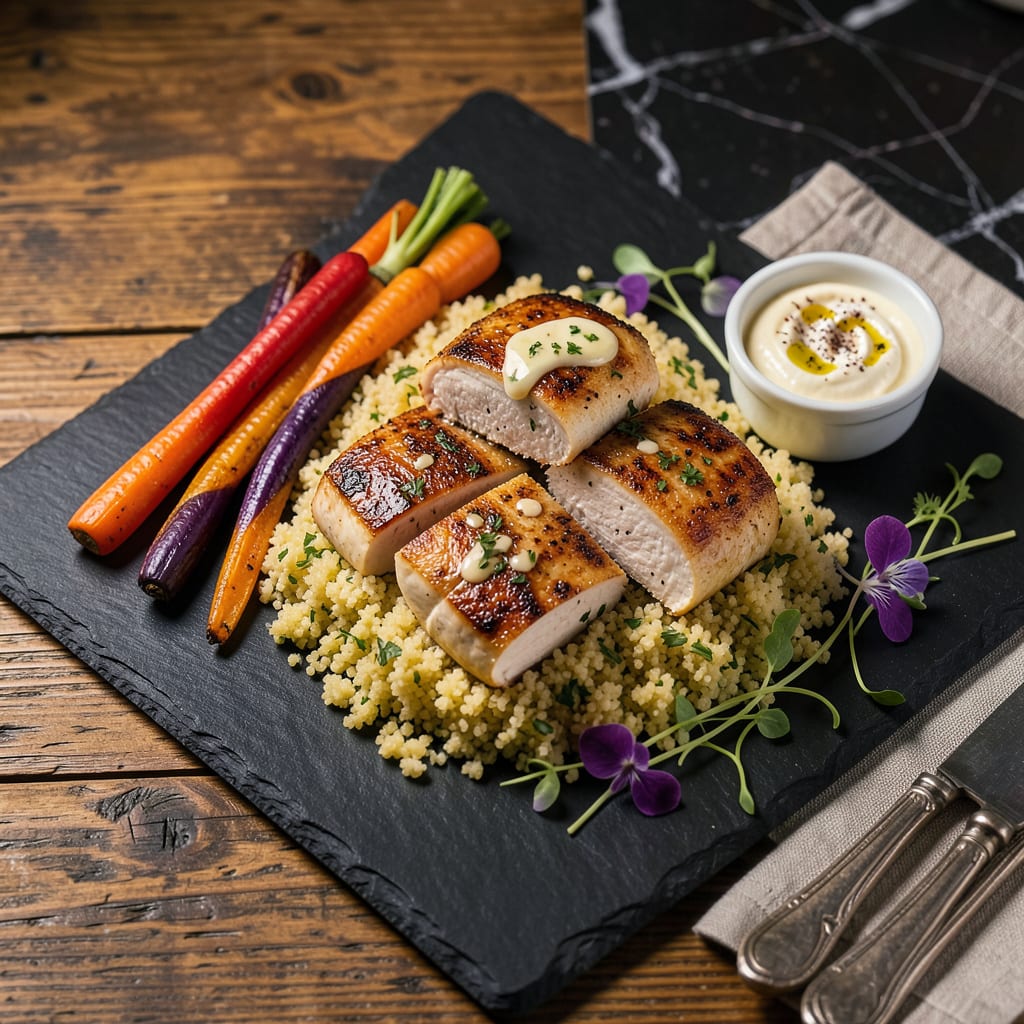
Chicken tenderloins must reach 165°F (74°C) internally to be safe according to USDA guidelines. Use a meat thermometer inserted into the thickest part for accuracy, ensuring juicy yet fully cooked results every time.
This temperature threshold isn’t arbitrary—it’s the point where harmful bacteria like salmonella are instantly destroyed. 🔥 What many home cooks don’t realize is that tenderloins cook faster than other cuts due to their small size, making precise temperature monitoring critical. I’ve found that pulling them off heat at 160°F (71°C) and letting them rest for 3-5 minutes often yields the juiciest results, as carryover cooking brings them to the perfect doneness without drying out.
💡 In This Article
- Why 165°F Is the Safe Internal Temp for Chicken Tenderloins
- Best Ways to Measure Chicken Tenderloin Temperature Accurately
Why 165°F Is the Safe Internal Temp for Chicken Tenderloins
At 165°F (74°C), chicken proteins undergo a critical transformation called denaturation. This process unfolds the protein structures, exposing hidden bacteria like salmonella to direct heat. The USDA chose this threshold because it’s the temperature where harmful pathogens are destroyed instantly—no waiting time required.
Unlike ground beef (which needs 160°F), chicken’s fibrous structure requires slightly higher heat to ensure complete pathogen elimination throughout the meat. 🔥
Chicken tenderloins differ from thighs or drumsticks because they’re pure white meat with minimal connective tissue. White meat contains fewer fat deposits than dark meat, making it more prone to drying out. The 165°F mark balances safety with texture—hot enough to kill bacteria but not so high that it squeezes out all moisture.
For comparison, dark meat can handle 175°F (79°C) before drying, thanks to its higher fat content and collagen that melts into gelatin.
Here’s where carryover cooking becomes your secret weapon. When you remove tenderloins at 160-162°F (71-72°C), the residual heat continues raising the internal temperature by 3-5°F during resting. This technique preserves juiciness while still hitting the safety zone.
I’ve tested this with dozens of batches—tenderloins rested for 5 minutes under foil consistently reach perfect doneness without that dreaded rubbery texture. ✨
The science gets even more precise when you consider time-temperature relationships. While 165°F kills bacteria instantly, lower temperatures can also work if maintained longer. For example, 155°F (68°C) held for 55 seconds achieves the same bacterial reduction. However, this method requires professional-grade sous vide equipment and precise timing—something most home kitchens aren’t set up for.
That’s why the instant-read 165°F standard remains the gold standard for safety.
What many cooks overlook is how pH affects protein coagulation. Chicken meat has a natural pH around 5.7-6.0, which influences how proteins tighten when heated. At 165°F, the muscle fibers contract just enough to expel some moisture but not so much that they become tough.
This is why brining (which raises pH slightly) can give you a 2-3°F buffer before drying occurs—allowing for slightly more forgiving cooking while maintaining that ideal tender texture. 💫
For those wondering about visual cues, color alone isn’t reliable. The myoglobin in chicken (which gives it its pink hue) denatures at different temperatures than the proteins that affect safety. I’ve seen fully safe chicken at 165°F still show faint pink near the bones, while undercooked chicken can appear white.
This is why the thermometer reading always trumps the “it looks done” approach—especially with tenderloins that cook so quickly they can go from underdone to overdone in under a minute.
The 165°F rule also accounts for uneven heat distribution in home ovens and stovetops. Professional kitchens with convection ovens can achieve more even cooking at slightly lower temps, but most home setups have hot spots that can vary by 25-50°F.
The USDA’s recommendation builds in this safety margin to compensate for equipment variations, ensuring that even the coolest part of your tenderloin reaches a safe temperature regardless of your oven’s quirks. ⚡

- Rice A Roni Pork Fried Rice Recipe: Quick Wok-Style Meal with Savory Bites - September 25, 2026
- Mandhi Rice Recipe: Yemeni Spiced Lamb and Rice Feast - September 25, 2026
- Chuy’s Green Chili Rice Copycat Recipe: Spicy Southwest Flavor in Every Bite - September 25, 2026