
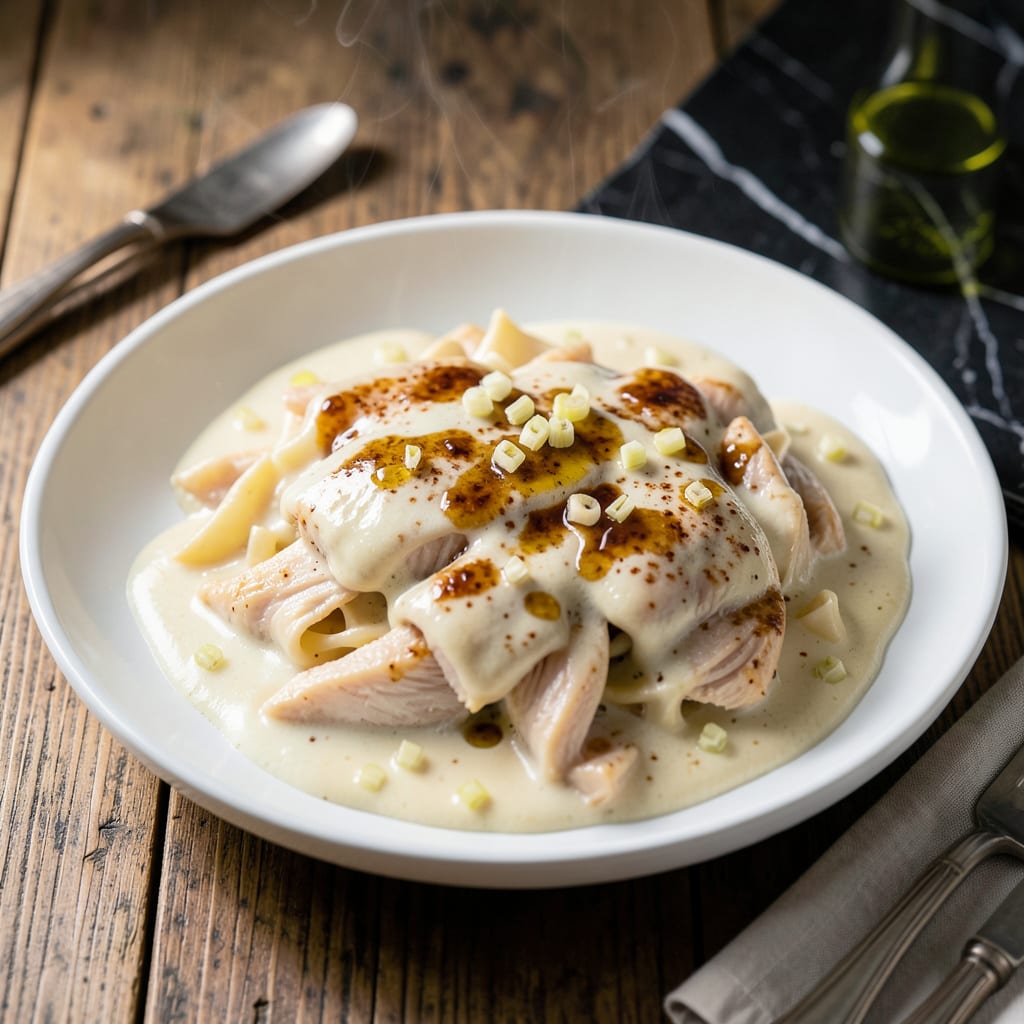
This creamy chicken tetrazzini sauce transforms simple ingredients into a rich, velvety base that elevates any pasta dish. I developed this recipe to capture the classic flavors without the fuss.
The secret lies in a smooth roux foundation combined with chicken broth and cream, creating a sauce that’s both luxurious and perfectly balanced for layering with noodles and chicken.
Ingredients for Chicken Tetrazzini Sauce
Velvety richness starts with a handful of pantry staples and fresh aromatics.
| Ingredient | Amount | Notes |
|---|---|---|
| Unsalted Butter 🧈 | ½ cup | For roux, room temperature |
| All-Purpose Flour 🌾 | ½ cup | Sifted for smooth consistency |
| Whole Milk 🥛 | 1 ½ cups | Full-fat for creaminess |
| Heavy Cream 🥛 | 1 cup | Cold, for best results |
| Low-Sodium Chicken Broth 🍲 | 2 cups | Warm, for even incorporation |
| Garlic Cloves 🧄 | 3 cloves | Minced finely for even flavor |
| White Onion 🧅 | ½ whole | Finely diced for texture |
| Dijon Mustard 🟡 | 1 tbsp | For depth and tang |
| Worcestershire Sauce 🫒 | 1 tsp | Adds umami complexity |
| Nutmeg 🌰 | ¼ tsp | Freshly grated preferred |
| Kosher Salt 🧂 | 1 tsp | Adjust to taste |
| Ground Black Pepper 🌶️ | ½ tsp | Freshly cracked for best flavor |
[recipeingredientscaler]
The roux is foundational here. Land O’Lakes unsalted butter is my go-to for its consistent fat content and neutral flavor. King Arthur all-purpose flour ensures a smooth, lump-free base. For the broth, Swanson low-sodium chicken broth provides balanced seasoning without overwhelming the dish. Always use room-temperature dairy to prevent curdling—cold cream can break the emulsion.
No whole milk? Half-and-half works at a 1:1 ratio, but the sauce will be slightly thinner. Out of Dijon? Whole-grain mustard adds texture, though the flavor profile shifts slightly. If avoiding alcohol, substitute coconut aminos for Worcestershire (1:1), but note the depth of flavor will differ. Nutmeg can be omitted, but it adds a subtle warmth that complements the creaminess.
This sauce holds beautifully in the fridge for 3-4 days in an airtight container. For longer storage, freeze in portioned containers for up to 3 months. Reheat gently on the stove to maintain the velvety texture—microwaving can cause separation.
Why You’ll Love This Recipe
- One Pot Magic: I melt the butter, whisk in flour, then slowly add milk and broth—no fancy techniques, just simple steps to a velvety sauce.
- Rich & Creamy: The heavy cream makes this sauce so lush it clings to pasta like a dream. Honestly, it’s the kind of comfort food I crave.
- Meal Prep Hero: I double the batch and freeze half for those nights I’m too tired to cook. (Yes, even on a Tuesday night)
- Budget Friendly: A little butter, flour, and broth stretch into a sauce that feels indulgent without breaking the bank.
Step-by-Step Instructions for Chicken Tetrazzini Sauce
Master this velvety sauce with professional technique for restaurant-quality results every time.
Step 1: Create a Perfect Roux Base
Melt the 0.5 cup unsalted butter in a heavy saucepan over medium heat until foaming subsides. This even heating prevents browning and ensures a smooth foundation for your sauce.
Whisk in the 0.5 cup all-purpose flour all at once, creating a thick paste. Cook for 2-3 minutes, stirring constantly, until the mixture turns pale golden and smells nutty. This cooking step removes the raw flour taste and builds flavor complexity.
Step 2: Build the Creamy Liquid Foundation
Gradually whisk in the 2 cups warm low-sodium chicken broth, ensuring each addition is fully incorporated before adding more. The mixture will thicken considerably as the broth hits the hot roux.
Add the 1.5 cups whole milk and 1 cup heavy cream, continuing to whisk constantly over medium heat until smooth. Bring to a gentle simmer and cook for 5 minutes, allowing the sauce to thicken enough to coat the back of a spoon.
Step 3: Infuse with Aromatics and Seasonings
Stir in the 0.5 whole white onion (finely diced) and 3 cloves garlic cloves (minced). Cook for 3-4 minutes until the onion becomes translucent and the garlic releases its fragrance without browning.
Add the 1 tbsp Dijon mustard, 1 tsp Worcestershire sauce, 0.25 tsp nutmeg, 1 tsp kosher salt, and 0.5 tsp ground black pepper. Simmer for an additional 2 minutes to meld all flavors, stirring constantly to prevent sticking.
Step 4: Achieve the Perfect Creamy Consistency
Reduce heat to low and let the sauce gently simmer for 5-7 minutes, stirring occasionally. The sauce should reach a velvety consistency that ribbons off the whisk and maintains its shape briefly before dissolving back into the mixture.
Taste and adjust seasoning if needed, though the carefully measured ingredients should provide perfect balance. Remove from heat immediately when the desired thickness is achieved to prevent over-reduction.
Pro Tips For Making Chicken Tetrazzini Sauce
- Warm Your Dairy: Take the whole milk and heavy cream out of the fridge 15-20 minutes before using—cold dairy can cause the sauce to seize up when added to the hot roux.
- Toast the Flour: Cook the butter and flour together for a full 2 minutes after they combine, stirring constantly, to remove the raw flour taste that can make your tetrazzini sauce gritty.
- Thin Gradually: Add the chicken broth in small splashes, fully incorporating each addition before the next, to prevent lumps in your velouté base.
- Season in Layers: Since you’re using unsalted butter and low-sodium broth, taste and season with salt after each major addition—milk, cream, and broth all need their own adjustment.
Pro Cooking Tips for This Recipe
Roux Perfection
Use a heavy-bottomed saucepan like All-Clad to prevent hot spots. I melt butter over medium heat until it foams but doesn’t brown—this takes about 2 minutes. A flat whisk helps incorporate flour smoothly. 🌡️
Preventing Lumps
Gradually add warm broth while whisking constantly. If lumps appear, switch to a silicone spatula and press them against the pan walls. Cold dairy can cause curdling, so always use room-temperature milk and cream.
Flavor Development
Cook the roux until it smells nutty—this removes raw flour taste. For deeper flavor, let it turn a shade darker, but don’t exceed light golden. I add Dijon mustard and Worcestershire early to bloom their flavors in the fat.
Simmer the sauce for at least 5 minutes after adding aromatics to fully develop the flavors.
Consistency Control
The sauce should coat the back of a spoon. If too thick, add warm broth 1 tbsp at a time. If too thin, simmer longer—it’ll thicken as it cools. I test by running a finger through sauce on the spoon; it should leave a clean path.
Seasoning Balance
Taste before final seasoning—the low-sodium broth lets you control salt. Start with ½ tsp salt, then adjust. Fresh nutmeg (about ¼ tsp) brightens the creaminess. A pinch of white pepper keeps the sauce visually clean. 💡
Nutrition Facts
Frequently Asked Questions
Can I make this sauce ahead of time?
Yes! Prepare it up to 2 days ahead and store in an airtight container in the fridge. Reheat gently on low heat, stirring constantly to prevent separation.
What if my sauce is too thick?
Thin it with warm chicken broth or milk, 1 tablespoon at a time, until it reaches your desired consistency. Avoid adding cold liquid, which can cause curdling.
Can I use a different type of milk?
For best results, stick to whole milk. 2% milk works but may yield a slightly thinner sauce. Avoid skim milk, as it lacks the fat needed for creaminess.
How do I prevent lumps in the roux?
Whisk constantly while adding flour to the melted butter. If lumps form, press them against the pan with a spatula to dissolve. Always use sifted flour for a smoother base.

- Jollof Rice Sauce Recipe: West African Tomato and Spice Infusion - September 25, 2026
- Japanese Rice Soup Recipe: Umami-Rich Comfort in a Bowl - September 25, 2026
- Homemade Cream Of Rice Recipe: Silk-Smooth Breakfast in Minutes - September 25, 2026