
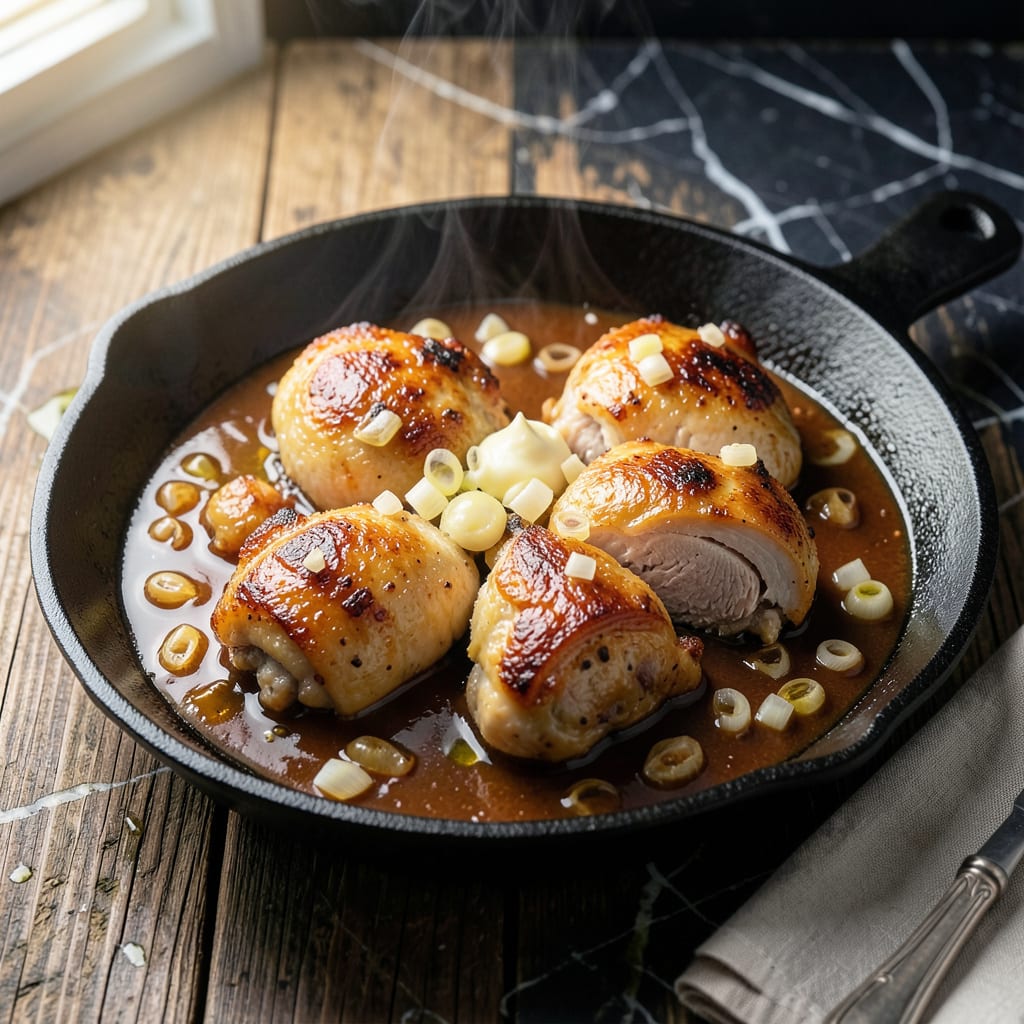
Transform your chicken dinner with this rich, savory pan sauce that comes together in minutes.
By using the fond left from searing chicken thighs, you create a deeply flavorful reduction that pairs perfectly with the meat. The simple technique ensures a silky, restaurant-quality finish every time.
Ingredients for Chicken Thigh Pan Sauce
Nine ingredients transform pan drippings into a silky, restaurant-quality sauce in minutes.
| Ingredient | Amount | Notes |
|---|---|---|
| Chicken Pan Drippings 🍗 | ¼ cup | From seared chicken thighs |
| Unsalted Butter 🧈 | 2 tbsp | For silky finish |
| Shallots 🧅 | 2 tbsp | Finely minced for depth |
| Garlic Cloves 🧄 | 2 cloves | Minced for aromatic base |
| Dry White Wine 🍷 | ½ cup | Sauvignon Blanc or Pinot Grigio |
| Low-Sodium Chicken Broth 🍲 | ½ cup | For depth of flavor |
| Dijon Mustard 🟡 | 1 tbsp | For tangy complexity |
| Fresh Thyme Leaves 🌿 | 1 tsp | Stripped from stems |
| Kosher Salt 🧂 | ½ tsp | Diamond Crystal preferred |
| Freshly Ground Black Pepper 🌶️ | ¼ tsp | To taste |
[recipeingredientscaler]
The pan drippings are non-negotiable here—this is where all that deep, savory flavor lives. Use the fond from searing chicken thighs (bone-in, skin-on for maximum richness). Trader Joe’s has great bone-in thighs, but any grocery store will do. The butter should be European-style (higher fat content) if you can swing it, but regular unsalted works fine. Don’t skip the shallots—they add a subtle sweetness that balances the acidity.
No white wine? Dry vermouth works in a pinch, or sub with extra chicken broth plus a splash of lemon juice. Shallots can be swapped for minced red onion. Fresh thyme is ideal, but dried thyme at one-third the amount gets the job done. If you’re out of Dijon, whole-grain mustard adds great texture. The wine doesn’t need to be fancy—anything drinkable will reduce nicely.
This sauce is best fresh but keeps in the fridge for 3-4 days. Reheat gently to avoid separation. Freezing isn’t ideal—the texture changes—but you can do it in a pinch for up to 1 month. Always taste and adjust seasoning after reheating.
Why You’ll Love This Recipe
- One Pan Wonder: I use the same pan from the chicken—just add butter, shallots, and wine to the drippings. No extra dishes, no fuss.
- Ridiculously Good: That wine and garlic combo with the caramelized shallots? I could drink it with a spoon.
- Weeknight Hero: Honestly, it’s my Tuesday Dinner MVP—pairs with pasta, potatoes, or just crusty bread.
- Stretches Further: A splash of wine and a few ingredients turn chicken scraps into a sauce that feels fancy but costs pennies.
Step-by-Step Instructions for Chicken Thigh Pan Sauce
Here’s the method. Simple, fast, and packed with flavor.
Step 1: Sauté Aromatics in the Pan Drippings
After removing your chicken thighs, place the same skillet over medium heat. Add the 2 tbsp Shallots to the 0.25 cup Chicken Pan Drippings and cook for 2-3 minutes, stirring frequently, until they soften and become translucent. You’ll start to smell their sweet, oniony aroma—that’s your cue.
Add the 2 cloves Garlic Cloves and cook for 30 seconds until fragrant. Don’t let it brown or it’ll turn bitter. The goal is to build layers of flavor without overpowering the final sauce.
Step 2: Deglaze with Wine and Broth
Pour in the 0.5 cup Dry White Wine and scrape up all those beautiful browned bits from the bottom of the pan with a wooden spoon. This is where the magic happens—those fond bits dissolve into the liquid, creating an intensely flavorful base.
Let the wine simmer for 2-3 minutes until it reduces by about half. Then add the 0.5 cup Low-Sodium Chicken Broth, 1 tsp Fresh Thyme Leaves, 0.5 tsp Kosher Salt, and 0.25 tsp Freshly Ground Black Pepper. Bring to a gentle simmer.
Step 3: Reduce and Finish with Butter and Mustard
Let the sauce simmer for 5-7 minutes until it thickens slightly and coats the back of a spoon. You’re looking for a consistency that’s rich but not syrupy—it should still be pourable.
Reduce the heat to low and whisk in the 1 tbsp Dijon Mustard and 2 tbsp Unsalted Butter, one piece at a time. The butter creates a silky, glossy finish that ties everything together. Taste and adjust seasoning if needed.
Step 4: Serve Immediately Over Chicken
Pour the sauce over your cooked chicken thighs. The sauce should be thick enough to cling to the meat but still fluid enough to pool slightly on the plate. Serve immediately while hot—the flavors intensify as it cools, but it’s best fresh from the pan.
Each bite delivers rich, savory depth with a tangy kick from the mustard and wine. The thyme adds an earthy note that complements the chicken perfectly.
Pro Tips For Making Chicken Thigh Pan Sauce
- Deglaze While Hot: Pour the white wine into the pan right after removing the chicken while the fond is still sizzling—this lifts all those browned bits that make the sauce rich. I learned this the hard way after scraping at a cooled pan like it owed me money.
- Mince Shallots Fine: Chop the shallots to the size of rice grains so they melt into the sauce instead of floating like sad little chunks. Sounds fussy, but it actually changes the outcome.
- Skip the Boil: Keep the sauce at a gentle simmer, not a rolling boil, or the butter will separate and leave you with a greasy mess. After ruining two sauces, I finally figured out patience wins here.
- Finish With Cold Butter: Take the pan off heat and whisk in cold, cubed butter at the end for a glossy, velvety finish. My grandmother swore by this, and she was right—it thickens the sauce without any flour.
Pro Cooking Tips for Great chicken thigh pan sauce
Perfect Your Fond
Don’t rush removing chicken from the pan. Let it sear until you see a deep golden-brown crust forming—that’s your flavor foundation. I always use bone-in, skin-on thighs for maximum fond. The skin renders fat that becomes the base of your sauce.
Temperature Control
Keep your pan over medium heat when building the sauce. Too hot and your shallots will burn; too low and your reduction will take forever. I use a heavy-bottom stainless steel skillet for even heat distribution. All-Clad makes my favorite.
Deglazing Technique
When adding wine, use a wooden spoon to scrape the browned bits aggressively. Those caramelized bits are pure flavor. Let the wine reduce by half before adding broth—this concentrates the flavor. 🔥
Emulsify Properly
The final butter addition is crucial. Whisk vigorously as you add cold butter off-heat to create a silky emulsion. If your sauce breaks, don’t panic—just whisk in 1 tsp cold water to bring it back together. European-style butter gives the richest finish.
Consistency Check
Your sauce should coat the back of a spoon but still be pourable. If it’s too thin, simmer longer. Too thick? Add a splash of broth. I aim for the consistency of heavy cream. Taste frequently—seasoning often needs adjustment after reduction.
Timing Matters
Start your sauce while chicken rests. The whole process takes 10-12 minutes from start to finish. Serve immediately—the sauce thickens as it cools. I always make extra to drizzle over mashed potatoes. 💡
Nutrition Facts
Frequently Asked Questions
Can I use red wine instead of white?
Yes, but it will create a deeper, more robust flavor. Use a dry red like Cabernet and reduce the amount slightly to 1/3 cup to avoid overpowering the dish.
What if my sauce is too thin?
Simmer it longer over medium-low heat until it thickens. If it’s still too thin, mix 1 tsp cornstarch with water and stir in while simmering.
Can I make this sauce ahead of time?
It’s best fresh, but you can reheat gently. Store in an airtight container in the fridge for up to 3 days. Reheat on low and whisk in 1 tsp water if separated.
How do I fix a broken sauce?
If the butter separates, remove from heat and whisk in 1 tsp cold water or ice cubes. This helps re-emulsify the sauce quickly.

- Jollof Rice Sauce Recipe: West African Tomato and Spice Infusion - September 25, 2026
- Japanese Rice Soup Recipe: Umami-Rich Comfort in a Bowl - September 25, 2026
- Homemade Cream Of Rice Recipe: Silk-Smooth Breakfast in Minutes - September 25, 2026