
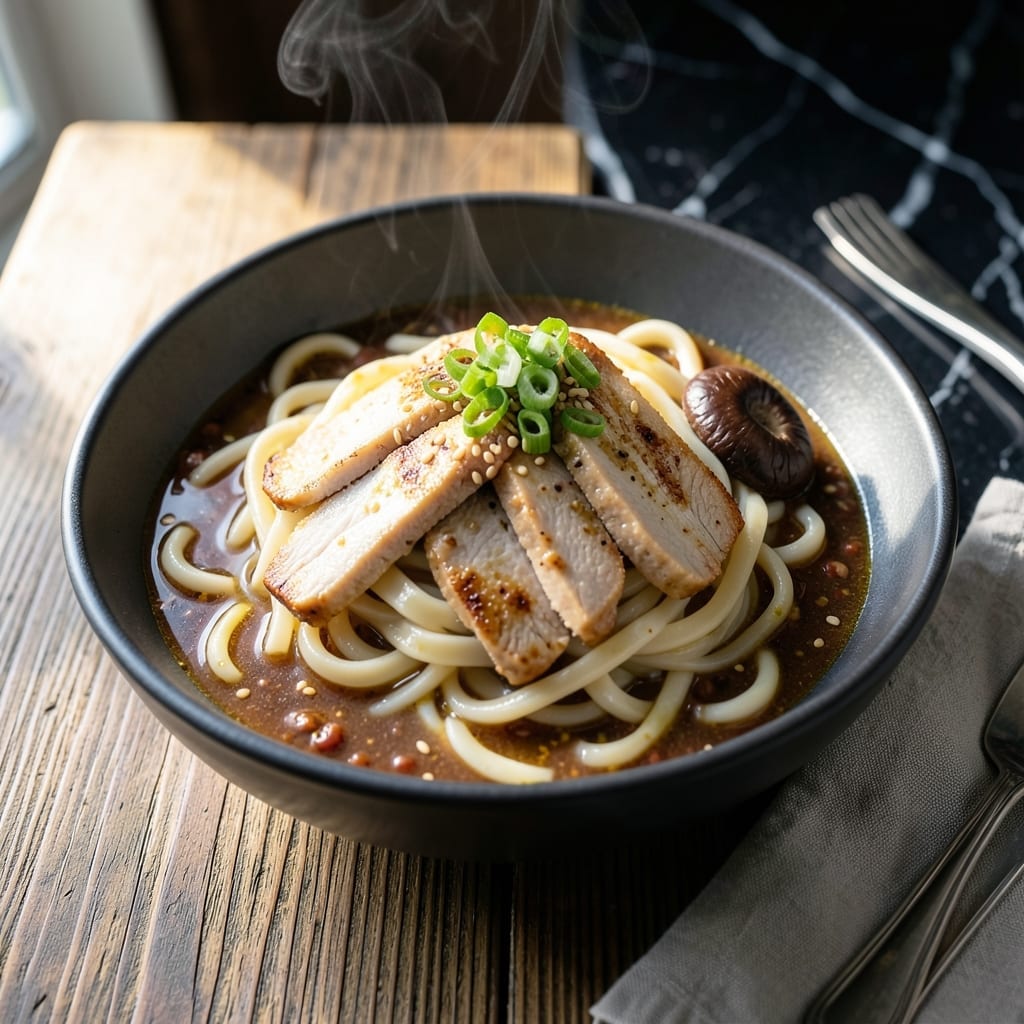
There’s something deeply comforting about a steaming bowl of udon noodles in rich miso broth with tender chicken. This recipe brings the warmth of a Japanese kitchen to your table with minimal effort.
The secret lies in balancing the umami depth of miso with a light, aromatic broth. Fresh udon noodles soak up the flavors beautifully, while poached chicken adds protein without overpowering the dish.
What emerges is a bowl that’s both nourishing and satisfying—silky noodles, tender chicken, and a broth that’s complex yet approachable. The garnishes add freshness and texture to every bite.
Perfect for chilly evenings or when you need a hug in a bowl. Here’s how to make it.
Ingredients for Chicken Udon
Fresh udon, tender chicken, and rich miso broth come together for ultimate comfort.
| Ingredient | Amount | Notes |
|---|---|---|
| Fresh Udon Noodles 🍜 | 1 lb | Vacuum-sealed, not dried |
| Boneless Chicken Breast 🍗 | 1 lb | Skinless, cut into strips |
| Red Miso Paste 🟤 | ½ cup | White miso works too |
| Dashi Stock 🥣 | 4 cups | Or substitute chicken broth |
| Soy Sauce 🫙 | 3 tbsp | Low-sodium preferred |
| Mirin 🍚 | 2 tbsp | Sweet rice wine |
| Sake 🍶 | 2 tbsp | Dry Japanese rice wine |
| Garlic Cloves 🧄 | 3 cloves | Minced finely |
| Fresh Ginger 🌿 | 1 tbsp | Grated or minced |
| Green Onions 🧅 | 4 whole | Thinly sliced for garnish |
| Soft-Boiled Eggs 🥚 | 4 whole | Optional, halved for topping |
| Nori Seaweed Sheets 🌊 | 2 sheets | Cut into strips |
| Sesame Seeds 🌰 | 1 tbsp | Toasted for garnish |
| Vegetable Oil 🫒 | 1 tbsp | For cooking chicken |
The udon noodles are non-negotiable here—look for vacuum-sealed fresh ones in the refrigerated section at Asian markets or the international aisle. If all you can find are dried, they’ll work (just soak and cook longer). The miso matters too: red miso gives that deep umami flavor, but white miso is gentler if you prefer a milder broth.
No dashi? Chicken broth in a pinch—just add a splash of soy sauce for depth. Mirin and sake are worth hunting down at H-Mart or online, but dry sherry can sub for sake. The chicken can be thighs if you like darker meat (they stay juicier). For a quick version, rotisserie chicken works great—just shred and add at the end.
Fresh udon keeps 1-2 days in the fridge, so buy it the day you plan to cook. The broth actually gets better overnight—store it separately and reheat gently. Garnishes like green onions and nori are best fresh, but you can prep them a few hours ahead (keep the nori dry until serving).
Why You’ll Love This Recipe
- One Pot Meal: I just toss the chicken, udon, and broth together—no extra pans, no fuss.
- Umami Bomb: That red miso and dashi combo hits different, rich and savory in every slurp.
- Weeknight Hero: Honestly, it’s my go-to for busy evenings when I need dinner fast.
- Budget Stretcher: A little chicken and udon goes a long way, feeding us for two meals.
Step-by-Step Instructions for Chicken Udon
This is the method I use every time for a bowl of udon that’s rich, satisfying, and full of umami depth.
Step 1: Cook the Chicken Breast
Heat the 1 tbsp vegetable oil in a large pot over medium-high heat. Add the 1 lb boneless chicken breast strips and cook for 5-6 minutes, stirring occasionally, until the pieces are opaque white throughout with no pink remaining.
I like to keep the chicken moving so it doesn’t stick and cooks evenly. Once done, transfer the chicken to a plate and set aside. The residual heat in the pot will help when we start building the broth next.
Step 2: Build the Miso Broth Base
In the same pot, add the 3 cloves minced garlic cloves and 1 tbsp fresh ginger. Sauté for 1 minute until fragrant—you’ll smell the aroma bloom almost immediately. This quick cook mellows the raw edge of the garlic and ginger.
Pour in the 4 cups dashi stock, 3 tbsp soy sauce, 2 tbsp mirin, and 2 tbsp sake. Bring to a gentle simmer over medium heat, then reduce to low. Whisk in the 0.5 cup red miso paste until fully dissolved into a smooth, rich broth.
Step 3: Cook the Udon Noodles
While the broth simmers, cook the 1 lb fresh udon noodles according to package instructions. Fresh udon typically only needs 2-3 minutes in boiling water until the noodles are tender but still chewy—don’t overcook them or they’ll turn mushy in the broth.
Drain the noodles and rinse briefly under cold water to stop the cooking process. This also removes excess starch that could make the broth cloudy. Shake off as much water as possible before adding them to the broth.
Step 4: Combine and Finish
Add the cooked chicken and udon noodles to the miso broth. Stir gently to combine and let everything warm through for 2-3 minutes. The noodles will soak up the flavorful broth, becoming infinitely more delicious.
Taste and adjust seasoning if needed, though the miso and soy sauce should provide plenty of saltiness. The broth should be rich and deeply savory with a slight sweetness from the mirin.
Step 5: Garnish and Serve
Ladle the udon and chicken into deep bowls. Top each serving with half of a soft-boiled egg, a sprinkle of thinly sliced green onions, the nori seaweed sheets cut into strips, and a pinch of sesame seeds.
Serve immediately while hot. The egg yolk should be runny, ready to mix into the broth for extra richness. Each bowl should have a good balance of noodles, chicken, and garnishes for the perfect bite every time.
Pro Tips For Making Chicken Udon
- Slice Chicken Thin: Cut the boneless chicken breast into 1/4-inch thick slices against the grain. I learned this the hard way—thicker pieces turn chewy, while thin slices cook through in 2-3 minutes and soak up the miso broth beautifully.
- Parboil the Udon: Fresh udon needs just 30-45 seconds in boiling water to soften before joining the broth. Skip this and they’ll turn to mush, or worse, steal all your stock.
- Bloom the Miso: Whisk the red miso paste into 2-3 tablespoons of hot dashi stock before adding it to the pot. Sounds weird, but it works: prevents clumping and lets the flavor distribute evenly.
- Use Low Sodium Dashi: Between the miso and soy sauce, your broth will be plenty salty. I was skeptical until I tried it, but low-sodium dashi keeps the dish balanced instead of overwhelmingly salty.
Best Sauces and Condiments for These Flavors
Classic Miso Boost
For extra umami depth, stir in 1 tbsp white miso paste alongside the red miso when building the broth. The combination creates a more complex flavor profile that’s both earthy and slightly sweet. I always keep Miso Master brand on hand for this. 💫
Spicy Chili Oil
Drizzle 1-2 tsp chili oil over each bowl just before serving. The heat cuts through the richness beautifully. I love Lao Gan Ma brand for its balanced spice and aroma. Start with ½ tsp if you’re heat-sensitive.
Citrus Zing
Add a squeeze of yuzu juice or lime right before eating for a bright, citrusy contrast. Just ½ tsp per bowl is enough to wake up all the flavors. You can find yuzu juice at Asian markets or online.
Sesame Drizzle
Whisk together 1 tbsp toasted sesame oil with 1 tsp soy sauce and drizzle over the finished bowls. This adds a nutty aroma that complements the miso perfectly. I use Kadoya brand sesame oil for its rich flavor.
Pickled Ginger
Serve with 1 tbsp pickled ginger on the side for a refreshing palate cleanser between bites. The vinegary tang balances the dish’s richness beautifully. Look for sushi-grade gari in the refrigerated section. 🥢
Sriracha Mayo
Mix 1 tbsp mayonnaise with 1 tsp sriracha and dollop on top. This creamy-spicy condiment adds a modern twist that pairs surprisingly well with the traditional flavors. I prefer Kewpie mayo for its smooth texture.
Nutrition Facts
Frequently Asked Questions
Can I use dried udon instead of fresh?
Yes, but soak them in warm water for 10 minutes first. Dried udon needs 1-2 extra minutes cooking time to soften properly. Fresh noodles are ideal for their chewy texture though.
How do I prevent the broth from becoming too salty?
Start with low-sodium dashi and add miso gradually. Taste as you go—miso packs intense umami. You can always add more, but can’t take it out!
What’s the best way to reheat leftovers?
Store noodles and broth separately. Reheat broth gently on the stove, then add noodles for just 1-2 minutes to prevent mushiness. Add a splash of water if needed.
Can I make this ahead of time?
The broth actually improves overnight! Prepare it a day ahead, but cook noodles fresh. Reheat broth and combine with freshly cooked noodles for best texture.

- Jollof Rice Sauce Recipe: West African Tomato and Spice Infusion - September 25, 2026
- Japanese Rice Soup Recipe: Umami-Rich Comfort in a Bowl - September 25, 2026
- Homemade Cream Of Rice Recipe: Silk-Smooth Breakfast in Minutes - September 25, 2026